@IAmAlenSultanic How would you charge for this kind of service?
And when you hire the team for them, would you set up a monthly recurring fee to train their team? (for example, weekly training)
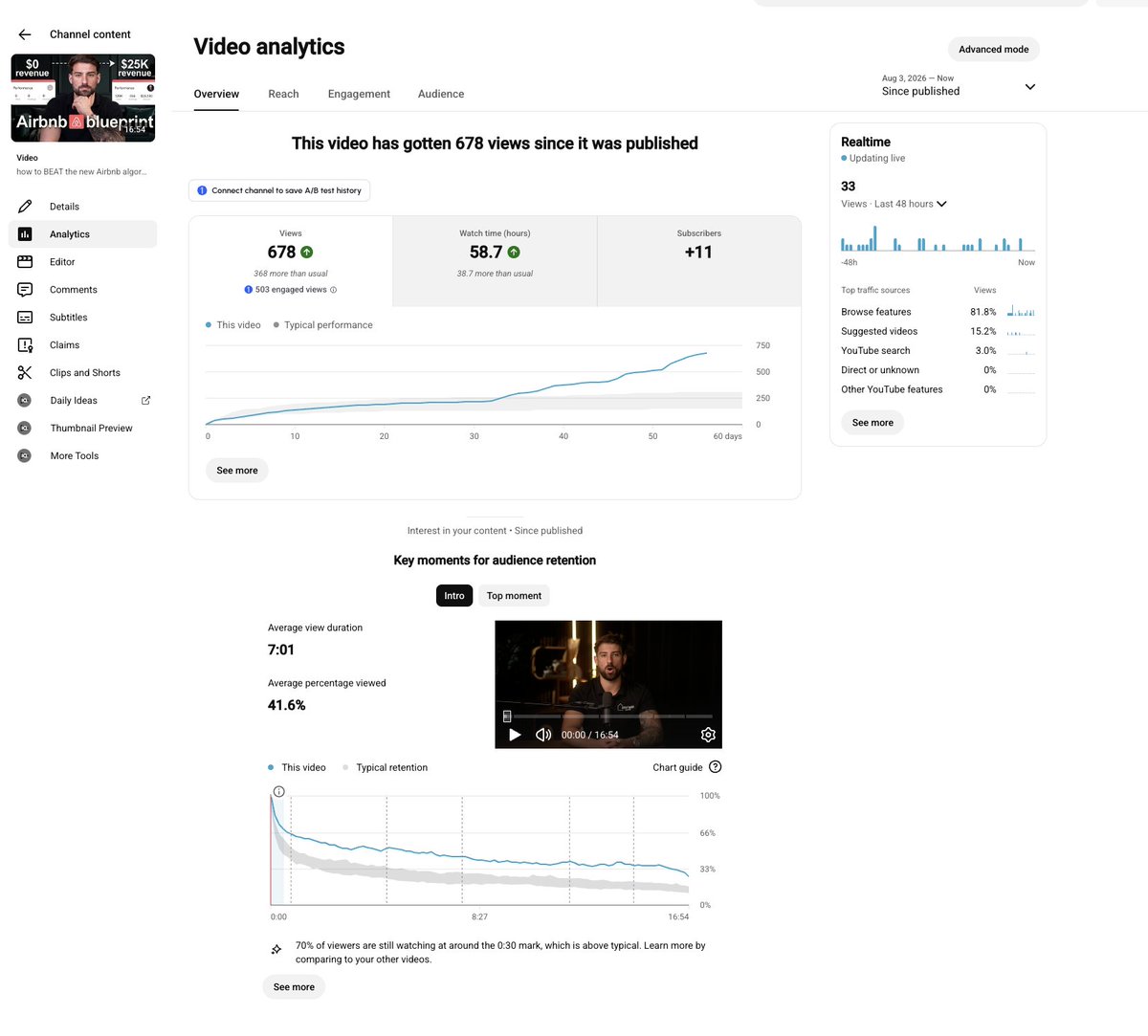
It took about 3 months to start seeing solid results, but now my client in the Airbnb niche is starting to get some momentum.
It took countless iterations on each video to see what works, testing high performing formats, and getting feedback from my coach to get this channel to start popping off.
Feels good because I love seeing my clients and my team win; that's all I care about.
I have a lot more ideas up my sleeve that we're going to be releasing in the upcoming weeks.
Can't wait to start testing them out and eventually make this the #1 channel in the Airbnb niche.
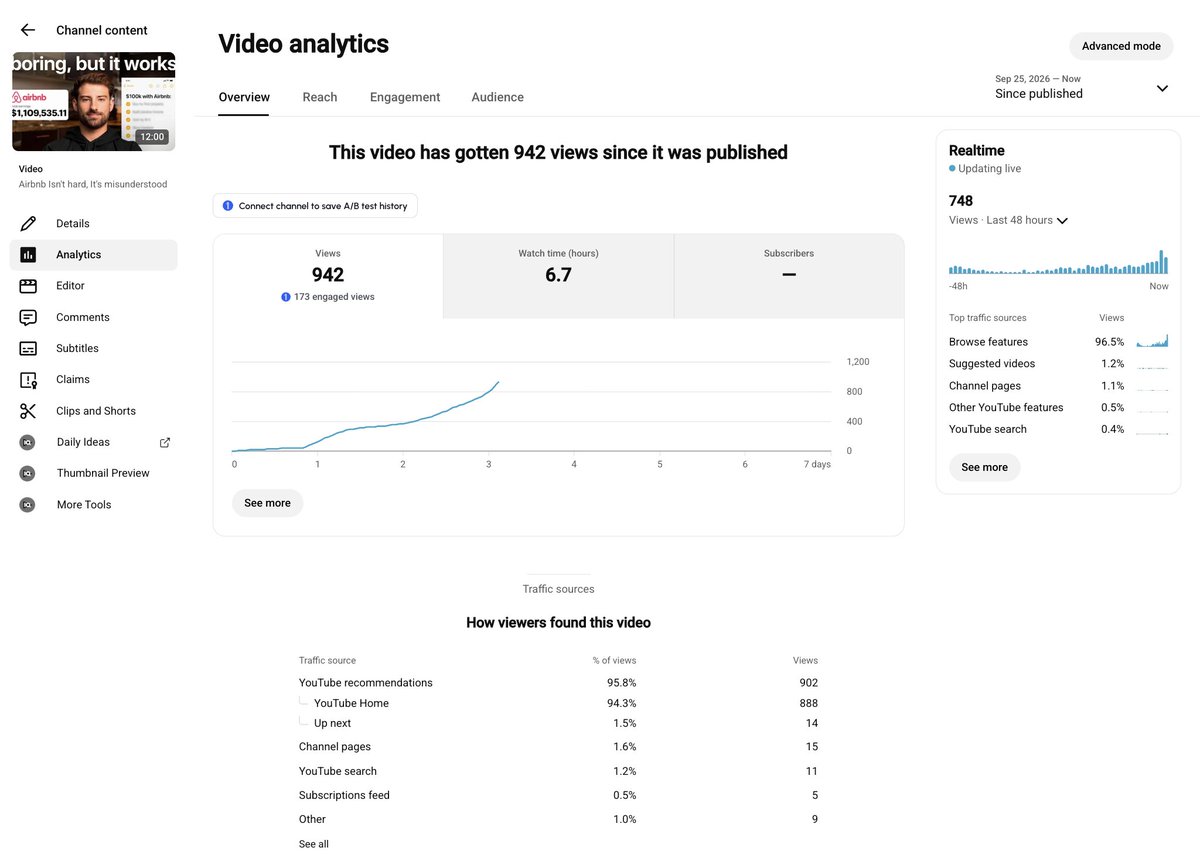
A few hours ago, I posted an Airbnb niche video titled: "Airbnb Isn't hard, it's misunderstood."
I will break down why we came up with this video title and thumbnail packaging, how my team edited the video, and areas of improvement I'm currently working on with my client to make his next videos even better.
If you guys have any suggestions, let me know in the comments. I always appreciate honest feedback.
1. Title and Thumbnail:
I chose the title and thumbnail based on the title format:
"X isn't hard, it's misunderstood."
Here are two videos that inspired me to use this title format:
https://t.co/4msIFzBhXA
https://t.co/Ubaedqo8CJ
For the thumbnail, I drew inspiration from this video because I'm trying to get my client to transition into a cleaner background style that is minimalist and simple:
https://t.co/4msIFzBhXA
2. Video editing style:
The key emphasis is to keep it minimalist with an authentic Airbnb platform feel, without going over the top with visual and sound effects.
The audience I'm targeting is mainly 25 to 44 year olds, so they're a more mature audience.
Mature viewers don't want fancy, unnecessary effects that will annoy them and cause them to click off the video.
3. Scripting:
I really tried to make the hook easy for my audience to relate to and feel the pain by speaking directly to their problems.
I used lines like:
"You've already spent months researching this. You know the model works. You've watched a bunch of Airbnb videos, and you still don't have a single night booked."
And...
"It's not because your photos aren't good enough. It's not because your city's too saturated. It's not because you don't have reviews yet, or the budget to buy a property and compete with the guys who do."
This helped us speak to the right person and address their specific problems.
For the rest of the script, I let my client flow without interjecting too much. It's his video, so I want him to speak naturally.
The only thing I did was add intros to each of the 4 traps along with bullet points for him to speak on.
I also made sure we had a crystal clear idea of what we were covering before the shoot, so I had my client record a 15 minute voice note explaining what he wanted to speak on.
4. Areas of improvement:
This video is by no means perfect. There are a few things I'm working to dial in for our next shoot.
• The background.
The setup needs more natural light, the camera should point more directly at my client, and we need less saturation. This is really important because I'm trying to eliminate the "guru" feel of the video.
• Teleprompter use.
The beginning looks a bit scripted, so I will probably have him deliver the intro off the top of his head next shoot.
• Thumbnail.
The thumbnail looks a bit artificial right now because of the dark background. I'm looking to lighten up the backgrounds moving forward.
I'm Looking for 3 entrepreneurs/creators who want to scale their YouTube channel over the next 90 days.
I’m opening up a pilot case study program, and I’m covering most of the cost.
This is what we're going to do for you:
• Packaging and click through rate (titles & thumbnails)
• Scripting
• Convert viewers into qualified leads
• Video editing
• Facetime calls during the shoot to perfectly shoot the script
• Posting
Requirements:
• Must have an existing business and offer.
• Ready to produce/film consistently
I'm taking on 3 accounts at a deeply discounted rate.
In exchange, if I hite our target numbers, all I ask for is a video testimonial and a case study breakdown.
If you want one of the spots, comment below:
"YouTube."
I'll message you back and then see if you're a good fit for this.
YouTube strategy is a skill that takes time to develop.
It’s a constant game of feedback loops you need to give yourself.
It’s kind of like learning a sport for the first time.
When you’re learning a sport like boxing, you want to give yourself one new thing to work on for the next session.
By training session 10, you’re far better because of the feedback loops you gave yourself.
I remember when I first started transitioning away from the model of posting hundreds of pieces of content a week to posting one quality video per week…
It required breaking habits you would normally use to grow a controversial channel that already has a ton of traction.
When you’re working with a YouTube channel that has fewer than 100 subscribers, the strategy is so much different.
This strategy requires a lot more understanding of the psychology of your target viewers, versus the "post a shit ton of content" strategy focused on everyone and not caring too much about the audience demographic, especially if the client you’re working with is controversial and already charismatic.
The other big difference I noticed was the thumbnail and title packaging.
Thumbnails and titles used a research method of finding gaps in the market and putting them in your own style.
Same thing with scripts, where you’re really focused on just getting the hook to perfectly speak to the viewer you want to attract.
Another thing is focusing on the way the creator speaks and what kind of background in the video they use.
All of these components are things that I’ve had to develop over the last year and am still refining.
It’s a never ending skill set that you have to keep sharpening every day by studying what other creators do.
And most importantly, giving yourself an honest talk when you know you need to improve on certain skill sets.
Most business owners need a YouTube specialist for their channel.
I see too many owners try to build an internal team specifically for YouTube, but they almost always fail because they don’t understand the strategy it takes to succeed.
Most importantly, they just don’t have the time to learn what a video actually needs to get viewers to click, watch, and return for more.
They don’t understand crucial elements like outlier scores, packaging, scriptwriting, topic research, performance tracking, and the different types of content.
And there are many more things I’m not even mentioning here.
They think that just because they have Claude or ChatGPT, they can write a script in five minutes and start shooting right away.
But I’ll say this…
It takes a ton of work behind the scenes just to come up with a winning video topic.
If you’re a business owner putting together a title, thumbnail, and script in under five minutes, you shouldn’t wonder why your channel isn’t getting views or sales.
There are people out there who truly know how YouTube works and how to craft videos that actually convert.
That’s exactly what we do.
We have dedicated thumbnail designers, video editors, scriptwriters, and researchers who know how to properly assemble a high performing video.
The internal team you’ve been planning to build for the last few years won’t know how to do any of this out of the gate.
The only way they’ll figure it out is if they spend months consistently educating themselves on the ever changing platform.
I ranked every YouTube video format.
In this video, I covered 20 formats and ranked them from S tier to F tier.
• S tier is the best ranking.
• F tier is the worst ranking.
I broke down each format based on how well it converts across three key areas:
Views, trust, and sales.
Free tier list template: https://t.co/unNXrNuhi6
Most people don't have enough patience to wait MONTHS for their YouTube videos to pop off in the algorithm.
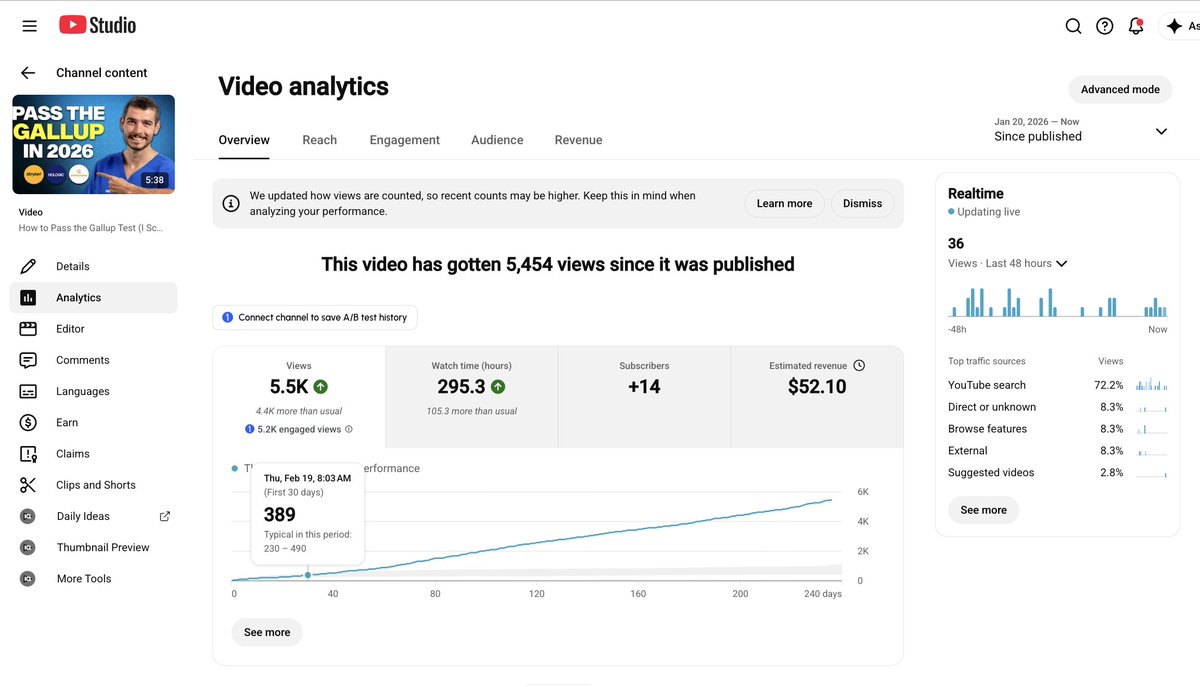
When I first posted this video, it only got 143 views in the first 7 days.
By day 30, it was only at 389 views.
Around day 40 is when the algorithm started pushing this video to search audiences looking to get into medical device companies.
Now, it's at 5.5k views, pushing it to extremely qualified people who are specifically searching "gallup test," "medical device," and "medical device sales."
That's the beauty of YouTube that no other social media platform can match.
You can post a video that initially doesn't do well, and then it randomly grows fast.
That's why I always tell my clients to be patient for at least 3 to 6 months.
Because the algorithm WILL eventually push it, as long as we create an extremely valuable video with the right title and thumbnail packaging.
How I'm able to show up to all of my clients YouTube shoots without having to be there in person pressing the record button.
As a strategist, my sole purpose is to handle the research and write the BEST performing videos.
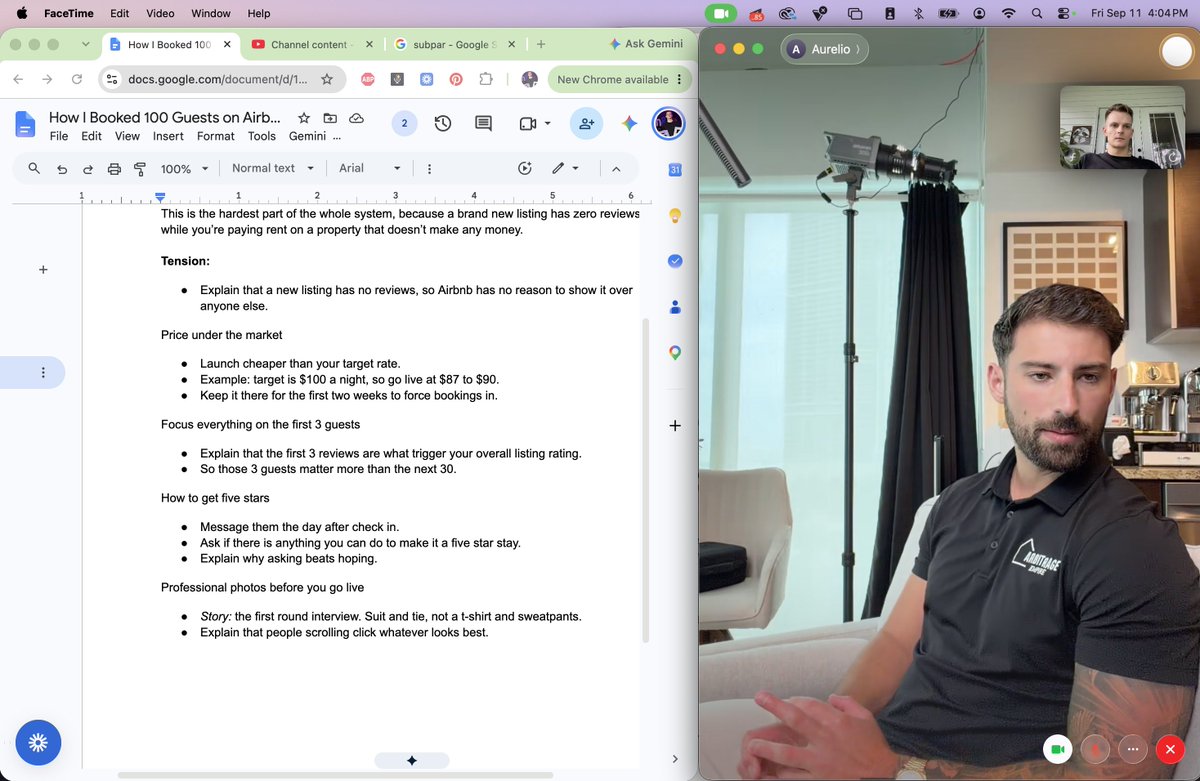
The client hires and pays his own local videographer separately, and I show up on FaceTime to hold him accountable and guide both of them on how to shoot the content.
All the client needs to do is place me on a tripod and point the phone toward himself.
This allows me to give real time feedback on tonality and delivery.
It helps my client know exactly what to say on camera while clarifying any points that might confuse him during the shoot.
Most importantly, it saves the client money because he doesn't have to fly me out to shoot the content in person. It's a win win for both parties.
That way, I can keep my focus on research instead of worrying about when I have to travel next, which takes up a lot of time.
Develop relationships with everyone. This includes teammates, videographers, photographers, and small creators.
Full interview: https://t.co/HKa62liIkX
The way you dress in your YouTube videos actually matters.
The background in your shoots also matters A TON.
You want to communicate directly to the demographic of client you are looking to attract.
If you're targeting a construction audience, think about what a viewer watching your channel expects you to wear to match the vibe of the video.
If you wear a plain black tee and a backwards hat on a construction channel, chances are the blue collar viewer you want to attract will click off the second he sees you wearing something he would never wear.
The same thing applies to your background.
If you film in an Iman Gadzhi style studio, you’ll lose that viewer within the first few seconds of the video.
Instead, you should be shooting in a rugged warehouse or outside on an actual job site.
Being congruent with the avatar you are targeting on YouTube actually matters in the long form videos you create...
If you don't get this right, it can create a massive bottleneck in your entire YouTube strategy.
youtube's algorithm director just killed every piece of advice you have been given:
here are my biggest takeaways:
-nothing gets "pushed". the system activates when a viewer opens the app, looks at what they have watched, what time it is, what device they are on, then pulls candidate videos and ranks them for that one person. it is not looking at your video and hunting for an audience. it is looking at a person and picking videos.
-the "if my subscribers do not like it the video is dead" belief is wrong. the system learns per audience. it can decide your subscribers are not into this one and non subscribers are, and serve it accordingly. one audience does not get to vote for everyone.
-non subscribers are in there from the first hour. on plenty of channels the majority of the audience in hour one has never watched the channel before.
-do not turn off notify subscribers. you are removing an entire audience the system would otherwise learn from.
-no single metric is the important one. and the weighting is not even the same across viewers or devices. time watched might matter more on tv, likes might matter more on mobile because they are easier to hit there. there is no number to game.
-time spent is not automatically counted as good. they run surveys to separate time from satisfaction, because you can sit through 20 minutes waiting for a payoff that never comes and that is a bad experience, not a good one.
-youtube is not pushing longer videos. people are watching on tvs and choosing longer videos, so the system recommends more of them. same with the bigger desktop thumbnails. fewer options on screen grew long form, because too much choice makes people pick nothing.
-suggested traffic from unrelated topics is not the algorithm misunderstanding your channel. the watch page sidebar is personalized now, not just related videos. people change the channel. and the number one place people watch videos from channels they subscribe to is that sidebar, not the subscriptions feed.
-the one actually useful thing in your analytics: open browse features and pull out the subscriptions traffic source on its own. the audience there never changes, so it is the only slice where the algorithm is not a variable. if click through rate drops there, it is your title and thumbnail, not your targeting.
-even your best videos get around 10% click through rate or less in the subscriptions feed. 90% of the people who deliberately subscribed do not click. that is normal, it is expected, and the system is already built around it.
Here are 4 most important things to know about the YouTube algorithm:
1. Packaging can turn an underperforming channel around.
Packaging means picking the right titles, thumbnails, and ideas for your videos.
The best way to do this is to study outlier scores from top creators, even ones outside your niche.
Outlier scores show which videos got way more views than that channel normally gets.
When you copy that winning format inside your own niche, you have a much better shot at winning too.
2. Trust matters more than ever on YouTube.
In the past, creators could get away with clickbait thumbnails and exaggerated claims. Viewers are smarter now.
Before they trust a creator in the business space, they want to see proof and real results.
3. The info and coaching space is not dying.
It is only dying for people who do not have results.
If you can show that you have actually helped people get results, people will trust you and buy from you.
If someone tells you this space is dead, they probably do not have proof, or they do not know how to use YouTube the right way.
4. There is a science to keeping people watching, and it looks different for entertainment channels versus education channels.
Education channels often get fewer views because of this.
But fewer views does not mean fewer sales.
A lot of times, smaller channels with the right audience get more sales than big channels with huge view counts.