Suleyman argues that Claude’s uncertainty about being conscious reflects Anthropic’s training choices - not evidence of consciousness.
His concern is that embedding this uncertainty into Claude’s training could mislead users about what its responses actually demonstrate.
And there’s something almost absurd about this debate: we’re arguing over whether Claude is conscious when we still can’t agree on what consciousness actually is.
I'll write more about this later. But the discussion is completely overblown.
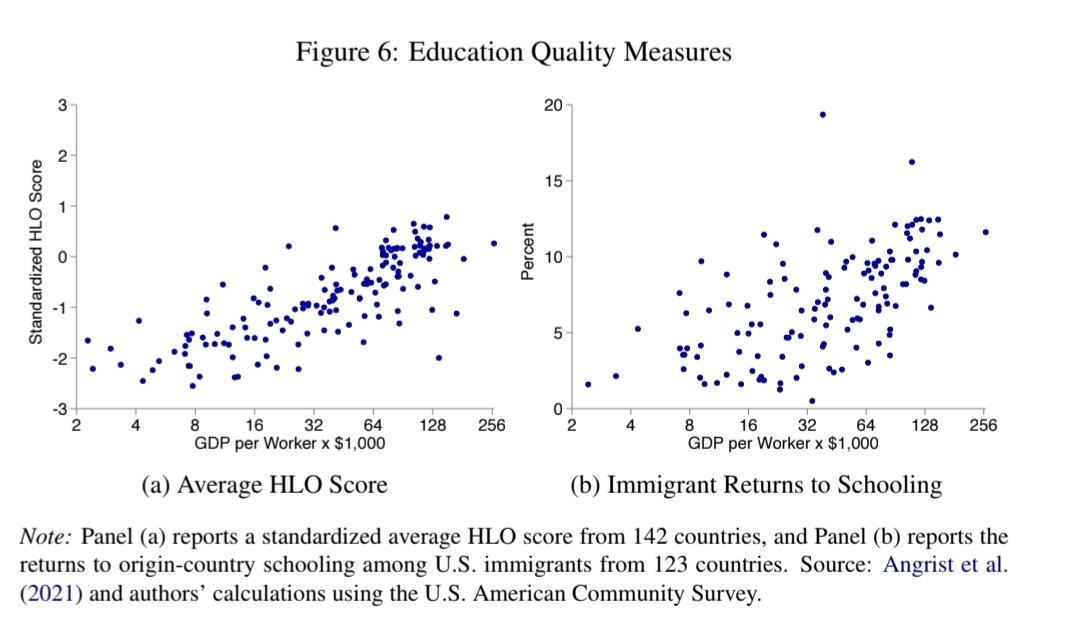
It is fascinating how the publication of a politically correct national IQ measure (HLOs) has given economists the courage to use national IQs to explain global differences in economic development.
Richard Lynn has been vindicated, strongly.
-bangs 10s
-gets in bar fights 1-on-3
-trucks motherfuckers to spring teammates for TDs
-saves coach’s daughter from getting taken advantage of at a party
-smashes his friend’s girlfriend (scumbag move) but lets friend punch him in the face as punishment (honorable)
-takes the blame for his brother’s felony so his nephew doesn’t grow up with a dad in prison
-doesn’t have Instagram
-loves his hometown
American fucking hero.
A surprising amount of adulthood is just finally accepting that no one is coming to impose the structure you need. You either build it, or you drift inside the structures other people built for you.
In meetings, there’s a familiar pattern. Someone asks, “What does everyone think?” and the first person to speak is usually the most confident. That initial comment sets the tone. Others—especially the more reserved—hesitate to challenge it. Over time, the discussion drifts toward a quiet consensus, not because everyone agrees, but because fewer people push back.
That’s how groupthink begins. And it’s costly. Good ideas go unspoken, while early, confident opinions carry disproportionate weight.
A simple fix is to separate idea generation from discussion. Ask people to submit thoughts anonymously or in writing beforehand. This captures a wider range of views and prevents the most assertive voice from dominating early.
This ties to a deeper tension: the “wisdom of crowds” versus the “madness of crowds.”
The wisdom of crowds shows that aggregating many independent judgments often produces accurate answers. Ask one person the distance between New York and Boston, and they might be wrong. Ask a hundred, and their average will be close.
The madness of crowds suggests the opposite. Individuals may be rational alone but less so in groups. Social pressure, conformity, and reputation concerns distort judgment. People stop trying to be right and start trying to look right.
Both are true. The key is independence.
You only get the wisdom of crowds effect when judgments are made independently—ideally anonymously. Once opinions are public, reputational concerns and fear of disagreement creep in, contaminating the signal.
The same group can be wise or mad, depending on how you ask.
If you want truth, you have to design for it.