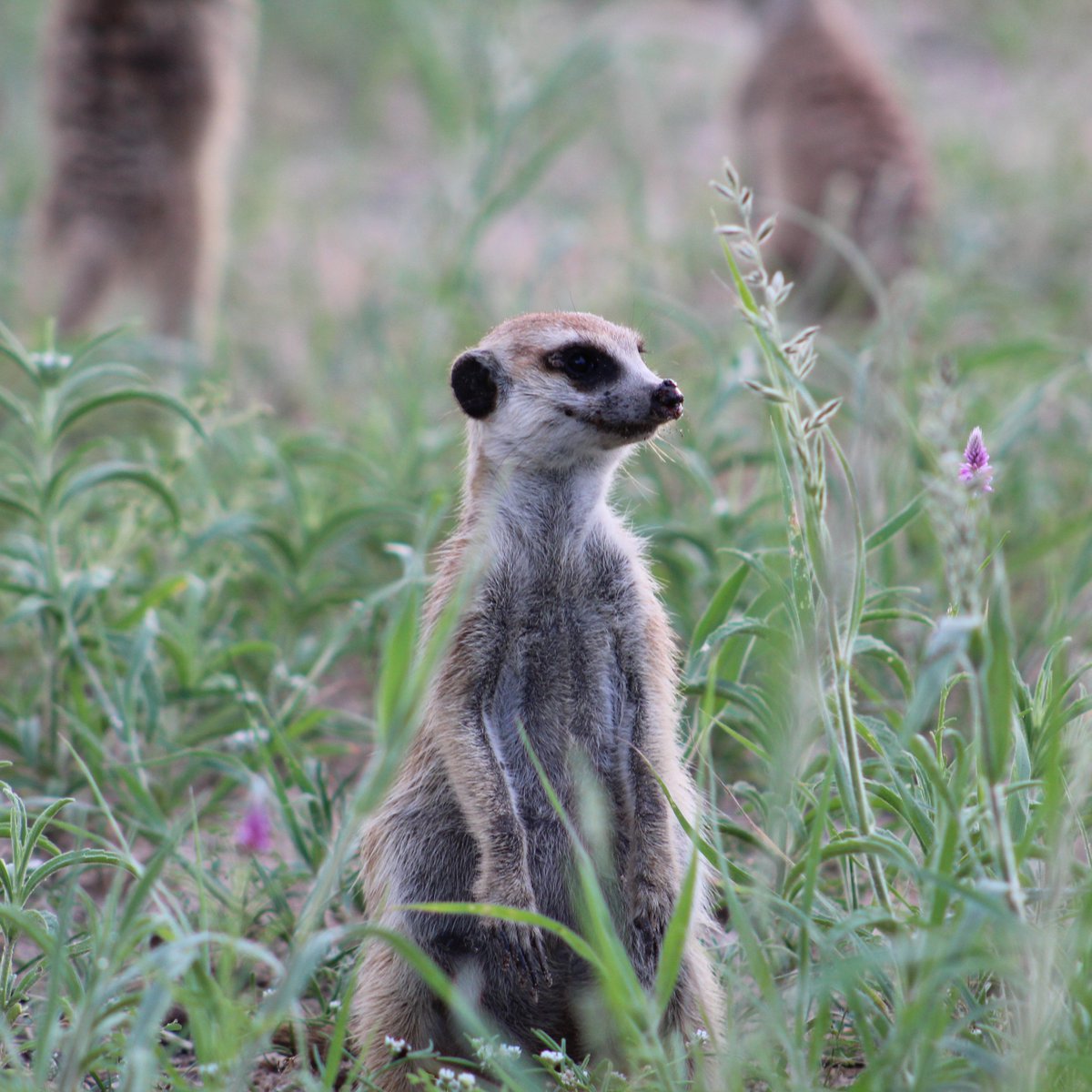
As always, thanks to all the scientists, managers and volunteers that work so tirelessly to collect the data needed to inform such long-term studies. It's fun out there in the desert, but it's remote and the data is hard-won.
My latest meerkat offering is now out and OPEN ACCESS in Oikos: https://t.co/kuWjSeOGEh
"Disentangling the effects of temperature and rainfall on the population dynamics of Kalahari meerkats"
🌧️ vs🌡️
#meerkats#climatechange#Kalahari
A very brief thread 🧵
I believe that our paper is a timely reminder of the importance of rainfall to the ecology of desert animals. In follow-up work, I will identify the proximate mechanisms that underpin various climate-demography relationships in the meerkats. Stay tuned...
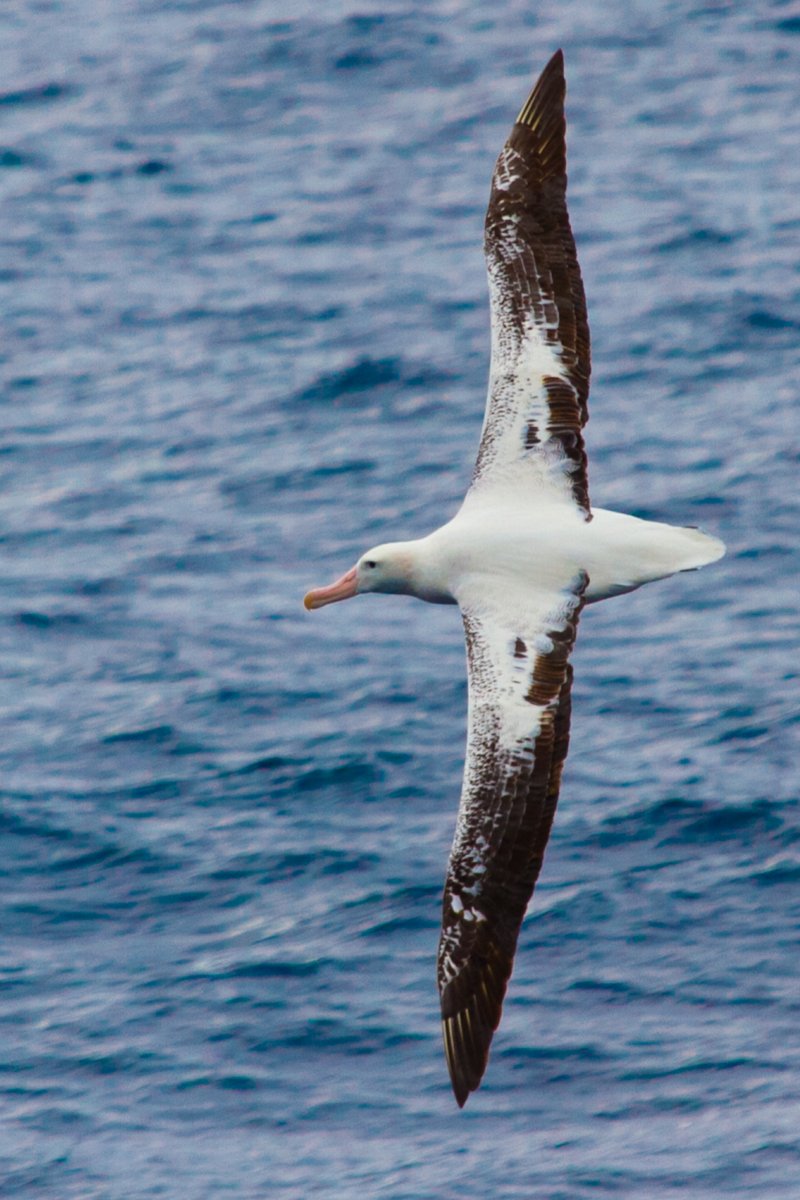
@WileyEcolEvol Many thanks to my co-authors for their hard work on this project including @ThorleyJack@HenriWeimerski1 and @SamCPatrick (who also takes 📸 credit for this albatross!)
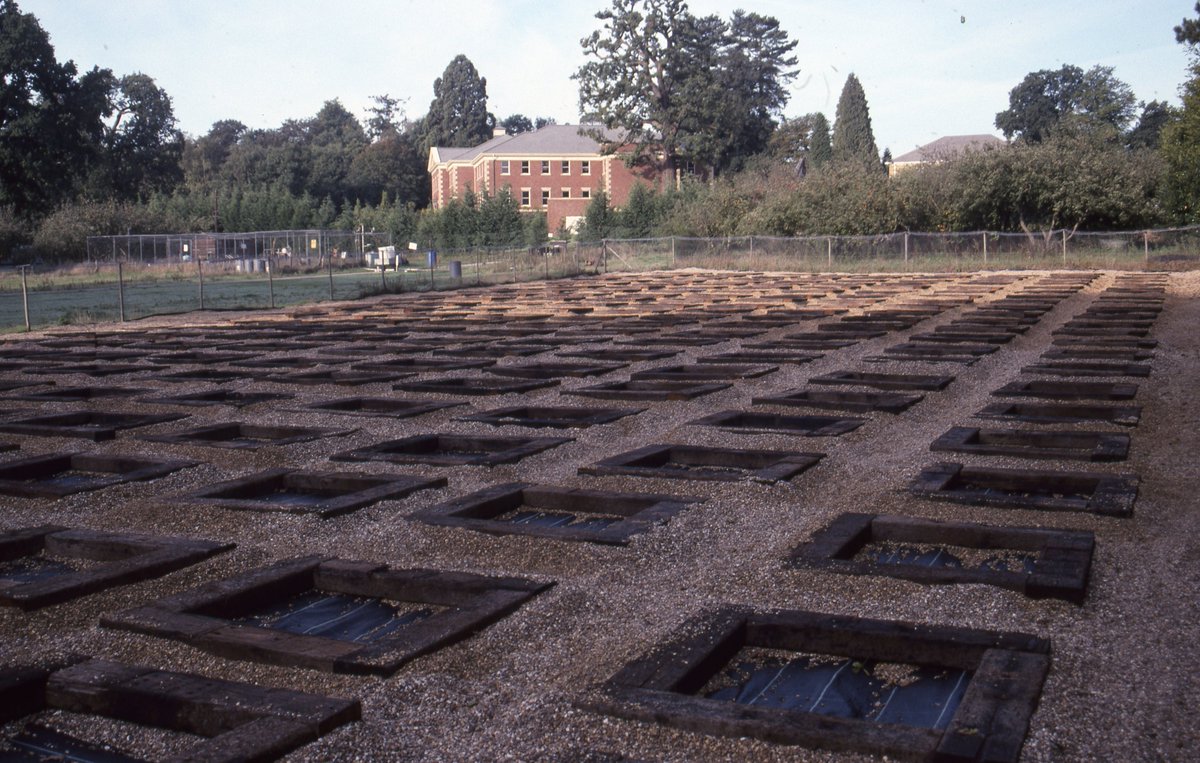
The wonders of ecological succession. These 250 experimental raised beds (1.5x1.5m) were created in 1995 (below) and scrupulously weeded for the next 11 years, with every plant of every species counted and recorded. Weeding stopped at the end of 2006.
Out today in @RSocPublishing! We show that butterflies and moths accumulate so much static electricity that pollen is attracted onto them across air gaps, meaning they don't even need to make contact with the flower to pollinate it! 🦋🌻 https://t.co/UayKqSCOAc 🧵👇
🥳 Another paper from my #PhD is out in @JZoology, together with @MarkusZoettl, @ThorleyJack and K Finn investigating sex ratios of wild social mole-rats! A short 🧵👇
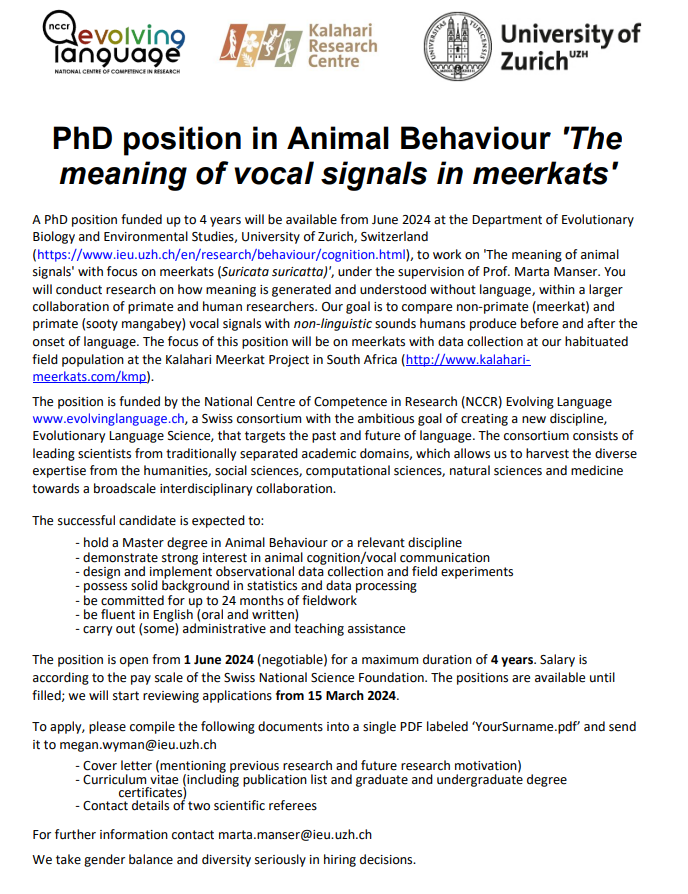
Interested in doing a PhD on what meerkats mean? Or know someone who might? Check out this great opportunity from the @NCCR_Language with Marta Manser at the University of Zürich. Deadline March 15th.
[Thread] I will now explain our new study about people cooperating with honeyguide birds, using Lego and graphs (and Lego graphs). This study was a great team effort: @honeyguiding@honeyguide@jesvanderwal@jesslund01 + many not on Twitter.
MEERKAT PAPER 🎉 Dominance tenure is the strongest determinant of lifetime reproductive success for meerkats. Our new paper explores the ways in which males & females lose dominance, and identifies the factors that affect tenure maintenance in either sex. https://t.co/vrXnmsCxL3
🚨New SEGUL blog post🚨
Go check out the latest addition to the blog by @evesmerrall ! A beautifully written account of life (and death) in the field on the Isle of May.
https://t.co/kmMmyLNV2t
📝Published!
@tash_gillies et al. show that wandering albatrosses types differ in responses to wind conditions, suggesting that plasticity variation limits the extent to which individuals can adjust behaviour to changing environments.
Find out more👉https://t.co/TCgqRN0Z4Y
New paper published in @AnimalEcology, and my first during my time @SEG_UL with @SamCPatrick! We look at #personality-related foraging behaviour in wandering #albatross, and find diffs in (1) foraging time investment and (2) responses to wind conditions https://t.co/mBg8FKv6b1







![domcram's tweet photo. [Thread] I will now explain our new study about people cooperating with honeyguide birds, using Lego and graphs (and Lego graphs). This study was a great team effort: @honeyguiding @honeyguide @jesvanderwal @jesslund01 + many not on Twitter. https://t.co/2RkHGW8tjp](https://pbs.twimg.com/media/GF0dh6WWYAAJxEa.jpg)