Current pub topic: Clarkson 🚜
People say @JeremyClarkson bought a farm (on which he works hard) to avoid inheritance tax. But, so what if he did? What possible reason could anyone have to blame him for caring more about his family and legacy than the government?
And, even if he did, he's raised more awareness for farming than the government or press ever would. So, unless you're in line with the many forms of governmental unfairness, what possible problem could you have with what he's done?
What I want after this world cup is over.
1. USA to NEVER host a World Cup.
2. Infantino to be booted out.
3. Hydration Breaks to never occur when temperatures are at a certain level.
4. Ticket prices to be capped at a reasonable amount.
5. USA to NEVER host a World Cup.
As a new Farmer myself who bought our farm 4 years ago, I can’t tell you how accurate Clarkson’s Farm actually is!
We spent £3.5m buying our farm and subsequently in the past 4 years we’ve had to spend at least £527,000 on farm machinery and much, much more on running the farm. We’ve lost money every year since so far, and have had challenges or refusal from local authorities everytime we’ve tried to diversity, or do something to generate extra income. I cannot stress how difficult it is for farmers who have to rely on farming for their only income.
We don’t get any subsidies or BPS payments at all (because we’re new farmers) and the grant system might as well be in Greek! As a CEO and professional businessman of some note, I felt I could easily apply for the grants myself. I kid you not, you’ve never seen a more complicated form - for ANYTHING!
The farm we bought had been in the same family for 3 generations, but it was sold because it was getting tougher to support the farmers growing family and now I’ve been in it for 4 years I can see why.
It’s a crying shame that more and more food is going to be imported and more skills lost because, for some unknown reason, the government obviously don’t value farmers. Sad.
When Bobby Robson finished his last chemotherapy session in 2007, Dr Ruth Plummer pulled him to one side at the Freeman Hospital in Newcastle.
Bobby thought it was going to be about his health.
Instead, Ruth wanted to talk to him about something else.
Her department was too old.
There was a new Early Cancer Trials Unit being planned at the Northern Centre for Cancer Care, three times bigger than what they already had, with a proper laboratory, modern equipment and room for clinical trials.
But there was one problem.
They did not have the money to kit it out.
So Ruth asked Bobby if he knew anybody who might help.
Bobby went home and spoke to his wife Elsie.
The next day, they started making calls.
Very quickly, what had started as a quiet conversation with Ruth had turned into a committee.
Then the idea came up.
Use Bobby’s name.
He was not comfortable with that at first.
He did not want a charity built around himself.
But the others told him it would open doors, and once Bobby agreed to it, there was no going halfway.
The Sir Bobby Robson Foundation was born.
At the first meeting with the hospital, Don Robson got straight to the point.
How much money was needed to get started?
£500,000.
And Ruth needed it by the summer of 2008 because she wanted the facility running by October.
That was when Bobby knew what he had walked into.
“There could be no slowing down, no pulling out, no getting halfway down the road and turning back.”
The original plan had been simple enough.
Bobby would lend his name, act as a figurehead, and stay in the background.
It did not work out like that.
He went to the meetings.
He did the interviews.
He kept going even when he was not well.
Sometimes he would pull Ruth to one side and ask her:
“What have you bloody well got me into?”
But he never missed a single meeting.
The launch was held at the Copthorne Hotel.
By then, Bobby was fully in it.
“If I’m committed to something, then I’m committed.”
And then the money started coming in.
Within seven weeks, the first target had already been reached.
£560,000.
Then people started turning up at Bobby and Elsie’s house.
The first donation came from a woman carrying an envelope full of cash.
Her husband had recently died, and his final request had been that people at his funeral gave money to Bobby’s charity instead of buying flowers.
She handed over £271.74.
“What can you say to that?”
Then there was Johnny Bliss, a local singer with pancreatic cancer.
His doctors had told him he had months to live, but he still held a concert, sold CDs and raised around £10,000 for the Foundation.
Bobby met him at the Copthorne.
Johnny brought his family with him, and made the men wear their best suits and ties.
Bobby could see he was not well.
“I could have cried.”
And for all the football he had lived through, all the countries, all the clubs, all the games, this became his last big job.
“It’s not about beating Portsmouth any more.”
“It’s about beating death.”
As of today the Sir Bobby Robson foundation has raised over £27 million.
#football
If the Michelle Mone yacht worth £10 million is confiscated and the £148 million owed to taxpayers is 'paid back' that's £158 million right there in the defence pot.
Oh and let's not forget the £500 million owed in taxes by M'Lord Bamford.
#BBCLauraK
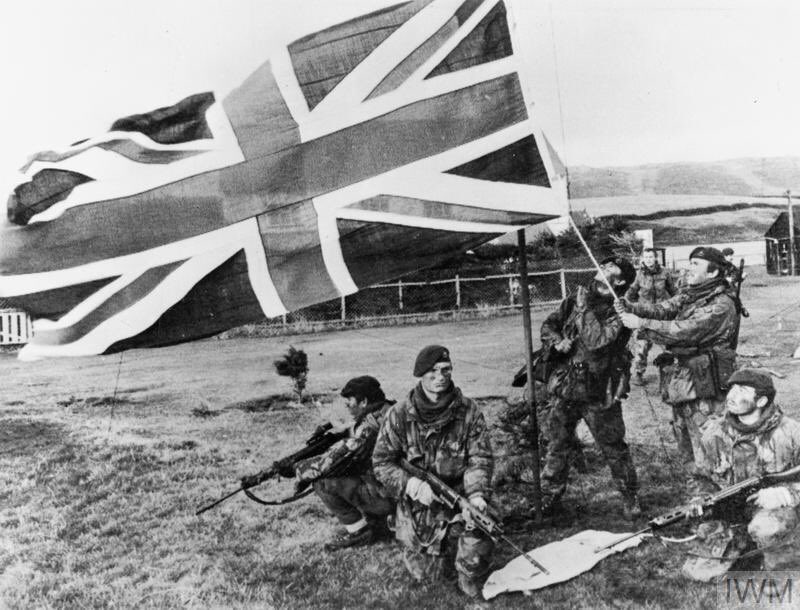
#OnThisDay 1982: Argentina surrenders
@RoyalMarines and @BritishArmy, supported by gunfire from @RoyalNavy, make the final assault on Port Stanley.
The Royal Navy mobilised 112 ships (RN, RMAS, RFA, STUFT). 907 died (649 Argentine, 255 British and 3 locals).
There was a time when a whole country put itself to sleep on a hot mug of malted milk.
Horlicks and Ovaltine were the ritual. Whole milk warmed in a pan, a couple of spoonfuls stirred in, taken last thing in a dressing gown with the wireless turned low. Horlicks even invented an ailment to sell it, the famous 1930s campaign warning of "night starvation," the idea that you went to bed under-fed and woke unrested. Marketing nonsense, of course, but the drink behind it was real, warm and milky and malty, made with proper milk and proper fat, and the half-hour of winding down around it mattered as much as the mug.
It was a small piece of domestic machinery for the end of the day. Warm the milk, sit down, slow the mind, sleep.
Then whole milk fell under suspicion, the ritual gave way to a phone glowing in a dark bedroom, and the warm mug was replaced by a screen engineered to keep you awake and a melatonin gummy to undo the damage. We took away the thing that helped people sleep, then sold them a supplement to fix the sleep we had taken. The pan is still in the cupboard, the milk is still in the fridge, and the half-hour is still there for the taking, the moment you put the phone down.
Wool grows back every year on grass and rain. It warms you better than plastic and feeds the soil when it wears out. We let the trade collapse anyway.
Here is how anyone, anywhere, can help bring it back.
- Read the label. Most "fleece" is plastic. Choose real wool.
- Buy your bed back from oil. Wool duvets breathe, resist fire, and outlast synthetics by decades.
- Put wool underfoot. A wool carpet lasts a generation. Nylon sheds microplastic with every step.
- Insulate with it. Sheep's wool beats foam, and foam is just oil.
- Buy close to the animal. Straight from farms keeps the money with the shearer.
- Compost the old stuff. A wool jumper rots back into the ground. Polyester outlives your grandchildren.
- Back it where the big orders are. Hotels, uniforms, fire rules. They could all specify wool tomorrow.
- Learn the craft. Knit, weave, felt. Every stitch is a vote.
This belongs to no one country. Merino off an Australian ewe, Rambouillet from the American west, Shetland, Harris Tweed. Half the world's wool sits unloved while we dress in oil.
None of this needs a hashtag. Just ordinary choices, made on purpose.
The sheep have done their part for ten thousand years. The rest is us, reading the label.
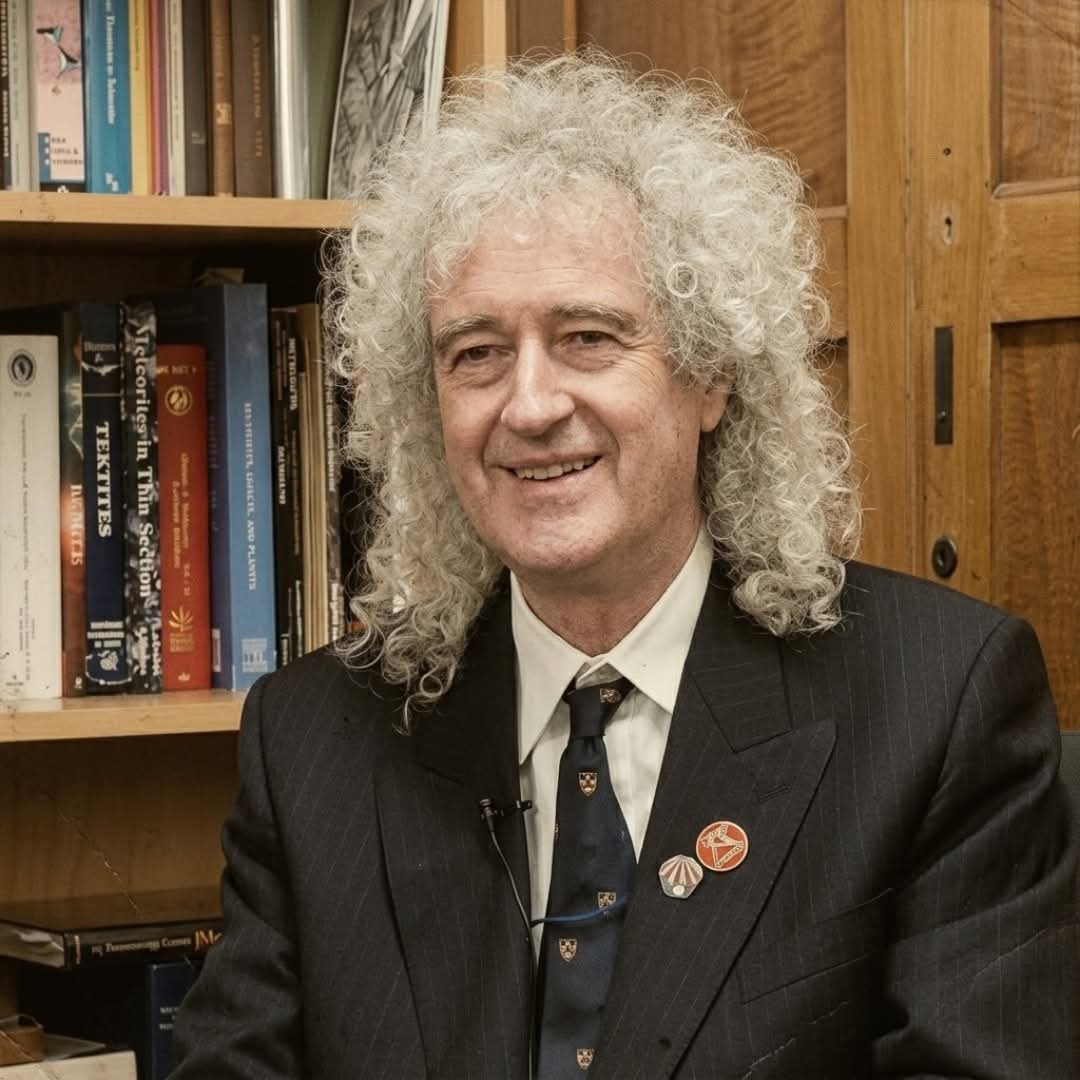
Brian May's PhD thesis sat in the loft of his Surrey home for 33 years. In 2006 — he put everything in his life on hold for a full year, went back to Imperial College, and finished it. His professor said he had a mountain to climb reviewing 30 years of scientific work. Brian May climbed it anyway. The most extraordinary act of academic commitment in rock history.
In 1970 — Brian May began a PhD in astrophysics at Imperial College London.
He supplemented his grant with income from part-time teaching and playing in bands with Roger Taylor. Soon they were joined by Freddie Mercury and John Deacon. Queen was formed.
For four years — Brian tried to do both.
His doctoral thesis on interplanetary dust was taking shape. But the grant was running out. And music was beginning to take over his life.
In 1974 — before leaving — he co-authored two research papers based on his work at the Teide Observatory in Tenerife, Spain.
Then he made a decision.
He abandoned his thesis — or more exactly, as he put it himself — he put it on the back burner. And the rest is history.
The 48,000-word thesis — Radial Velocities in the Zodiacal Dust Cloud — was stored in the loft of his home in Surrey.
It stayed there for 33 years.
Then in 2006 — something changed.
Brian told Time magazine — "Suddenly my subject became very in-demand again. I started talking about astronomy again to people who said — 'Why don't you still do it?' I put everything — and I mean everything — on hold for a year. And they put me in a little office in Imperial College and I got down to it."
His professor was honest about what awaited him.
Professor Rowan-Robinson said — "Brian brought along print outs of what he had written in 1974. It was then that I realised Brian was going to have a mountain to climb — reviewing 30 years of work."
Brian May climbed it.
He re-registered for his PhD in 2006. Less than a year later — he submitted it successfully.
In 2007 — Brian Harold May was awarded his PhD in astrophysics from Imperial College London.
Thirty-three years after he first abandoned it.
For a band called Queen.
He sacrificed his academic career to play rock and roll.
Then sacrificed a year of his rock career to finish what he had started.
Some people simply cannot leave things undone.
BREAKING: The Speaker of the House of Commons was furious to hear that the Government’s long awaited Defence Review is planned to be snuck out on a Friday when the House isn’t sitting.
This can only herald bad news for our nation’s defence.
Sir Lindsay Hoyle has long been a powerful advocate for the Armed Forces from the first day he entered Parliament.
He said he would be "appalled" to see the plan announced without a statement to the Commons first and makes a direct appeal to No10: "That would be an utter disgrace and an utter kick in the face to members of this House.”
It would also be the highest breach of standing orders and an act of cowardice.
A depressing milestone: the First World War lasted 1568 days, but today (11 June) Putin’s invasion of Ukraine enters its 1569th day, with no sign of coming to an end. Donald Trump thought it would be so easy to stop, he could do it on his first day as US President.
We owe those who serve the UK the kit to do the job and the loyalty to stand by them when it's done. We are failing on both.
I’ve spent my whole time in government making that case. Number 10 will not listen, so I am resigning as Minister for the Armed Forces.
Letter to the PM below.🫡🫡🫡⬇️⬇️
On a hillside this summer, a man will pay good money to take the coat off a sheep, then watch that coat earn him almost nothing at all.
This is the wool trade now. A thing his great grandfather built a life on, worn down to a chore he runs at a loss.
So look at the maths square in the face. It costs him around two pounds to shear one ewe. The fleece that comes off her, even now, in the best year for a decade, brings back about a pound and a half if she is a fine crossbred. If she is a hill sheep, a Welsh Mountain or a Swaledale, he might get thirty pence for the whole fleece. British Wool says the price would have to nearly double again just to cover the shearing.
So every sheep he clips, he loses on. And he has to clip every one.
A sheep left in her fleece overheats, cannot walk right, and gets eaten alive by maggots. The wool has to come off, for her sake, whatever it is worth. He pays, quite literally, for the privilege of being kind to his own animals.
Now feel the weight of what we have let go.
Wool once made this country rich. Whole towns were built on the back of it, and the great wool churches still standing across the Cotswolds were paid for with it. To this day the Lord Speaker of the House of Lords sits on a woolsack, set there centuries ago so nobody in the room would forget where England's wealth came from.
A fleece was worth fourteen pounds a kilo in the 1950s. The wool cheque, in his father's day, paid the rent for the year.
Today it will not cover the diesel to deliver it.
And so, in farmyards across the country, men who would rather not are quietly burning the fleeces off their own sheep, because a fire is cheaper than the trip to the depot. A material so fine that a kingdom was built on it, going up in smoke in the yard because nobody will pay a pound for it.
And what did we reach for instead. Plastic. Most of our clothes are now spun from oil, polyester and acrylic and nylon, shedding tiny threads into the sea with every wash, into the fish, into our own blood. It will not rot for generations.
So here we stand. A fibre that grows back every spring on nothing but grass and rain, that warms a child and then feeds the soil when its work is done, burning unwanted in a field.
While we dress ourselves, head to foot, in the very oil it was meant to spare us.
The sheep on that hill is still growing the finest coat in the world. We simply stopped being worthy of it.
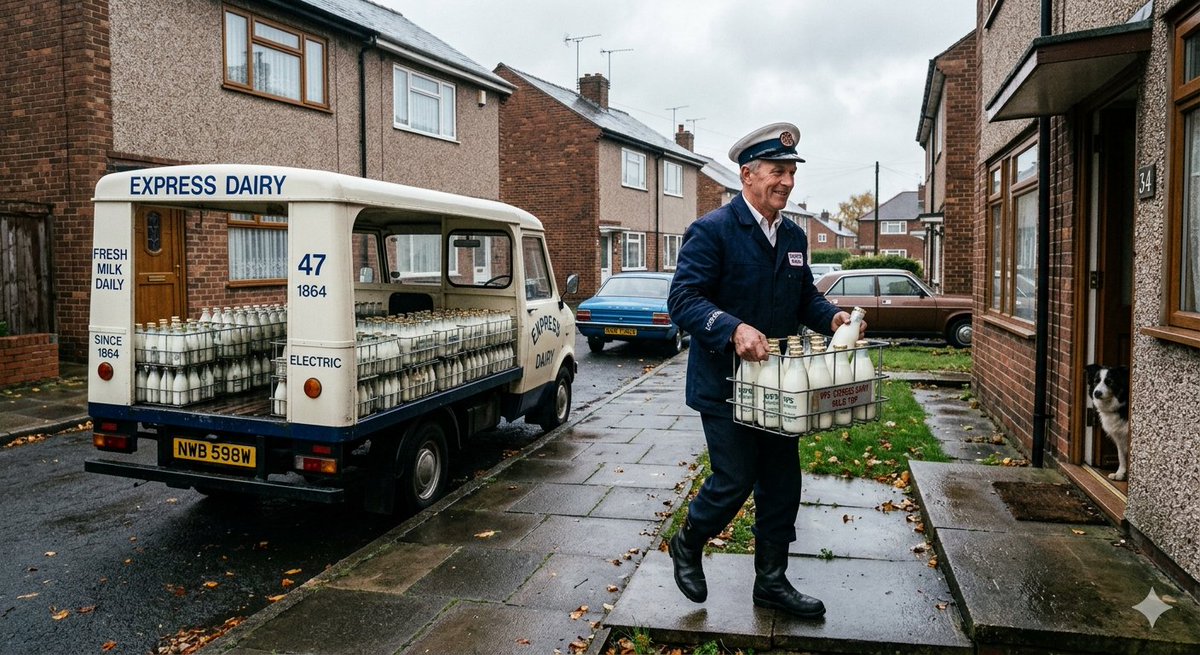
In 1975, more than 90% of milk in Britain was delivered to the doorstep by a milkman before seven in the morning. The float was electric. The bottles were glass. The pint left on the step was waiting for the kettle to go on.
By 2025, doorstep delivery had collapsed to under 3%.
The British milkman, at his peak, was one of the most visible faces of national life. He knew every customer on his round by name. He left bottles in the porch, on the wall, in the rack by the gate. He picked up the empties. The bottles made, on average, more than twenty round trips before being retired.
The milk came from a local dairy. The dairy was supplied by farms within a few miles. The milkman, the dairyman, the farmer, and the customer were, very often, on first-name terms.
Several things broke this between 1980 and 2000.
The fridge had arrived in nearly every British home by the late 1970s. Daily delivery became unnecessary.
The supermarkets moved into milk. Tesco, Asda, and Sainsbury's began undercutting the doorstep on price. The local dairy was bought out, consolidated, or closed.
The glass bottle was replaced by the plastic jug. Plastic doesn't get washed and reused. Each plastic container of milk now generates a piece of single-use waste that takes hundreds of years to break down.
What disappeared, with the milkman, was a piece of daily British life. The same person at your door every morning for twenty years. The clink of bottles at half past five while the rest of the street slept. The conversation when you were in. The note left under the bottle on the day of the funeral.
The milk is still being produced. It is just being produced further away, by fewer and larger farms, shipped further, sold in plastic, by people you will never meet.
A small British revival has been quietly building since around 2015. Milk & More now serves around half a million doorsteps. Independent dairies in Devon, Somerset, Yorkshire, and the Scottish Borders are running their own glass-bottle rounds. Slightly more expensive. Whole milk. Washed bottles. A man at the door who knows the dog's name.
If there is one in your area, sign up.
The system died because nobody fought for it.
It's coming back, in the same way, by the same people.
🚨🔥BREAKING: Arsenal players called up for 2026 World cup:
England 🏴
🔸️Bukayo Saka
🔸️Declan Rice
🔸️Noni Madueke
🔸️Ethan Nwaneri
🔸️Eberechi Eze
Brazil 🇧🇷
🔸️Gabriel Martinelli
🔸️Gabriel Magalhaese
Spain 🇪🇸
🔸️Martin Zubimendi
🔸️Mikel Merino
🔸️David Raya
Sweden 🇸🇪
🔸️Viktor Gyokeres
Belgium 🇧🇪
🔸️Leandro Trossard
Netherlands 🇳🇱
🔸️Jurrien Timber
France 🇫🇷
🔸️William Saliba
Germany 🇩🇪
🔸️Kai Harvetz
Ecuador 🇪🇨
🔸️Piero Hincapie
A total of 16 players, most in the world