Thanks for reading! A bit about us:
2 years ago, we (@thefernandocz & @timjcarden) created @ThoughtleadrX - a premium media agency building personal and company brands.
We work with founders, executives, and investors to dominate socials.
We're passionate about all things longevity, heath & fitness so if you enjoyed this, please retweet & hit "follow" for more breakdowns!
And, equally, making sure you're consuming the right information.
For years, there's been misinformation about health.
So if you're a health founder, you have a RESPONSIBILITY to share your insights.
You have a unique opportunity to correct the misinformation...
Health, longevity & fitness founders: We’ll build your personal/company brand on 𝕏 (and beyond) without you lifting a finger.
To date, we've helped 100+ founders get 3+ Billion combined views.
Interested? Book your free discovery call here: https://t.co/wQA0kp2e5B
8. Get professional guidance.
Regular health check-ups and professional support can help create personalized plans for reducing visceral fat.
They can help you:
• Create tailored strategies
• Monitor progress
• Adjust plans
• Stay accountable
The key is starting today:
Here's the deadliest part about being overweight...
There's ONE silent killer that can cause:
• Cancer
• Diabetes
• Heart disease
Even SKINNY people can have it.
Here's how to destroy visceral fat before it destroys you:
7. Create a sustainable routine.
Quick fixes don't work with visceral fat.
You need consistent, long-term lifestyle changes.
Track your progress using waist measurements rather than just weight.
But here's the most important step:
6. Manage your stress levels.
Chronic stress leads to increased cortisol levels, which promotes visceral fat storage.
Implement stress-reduction techniques:
• Mindfulness meditation
• Deep breathing
• Regular breaks
The next step is often overlooked:
5. Fix your sleep.
Poor sleep quality contributes to visceral fat accumulation.
Aim for 7-9 hours of quality sleep.
But sleep alone isn't enough. You also need to:
4. Add strength training to your routine.
Building muscle improves insulin sensitivity and metabolic health.
Regular strength training helps maintain a healthy body composition.
However, many people miss this crucial next step:
3. Exercise regularly.
Meeting federal guidelines of 150 minutes of physical activity per week can help reduce abdominal fat.
Both aerobic exercise and strength training are effective for reducing visceral fat.
This creates a powerful effect on your metabolic health.
But there's more:
2. Implement strategic fasting windows.
Intermittent fasting has been shown to be effective in reducing visceral fat.
It helps regulate insulin sensitivity and metabolic health.
The next step might surprise you:
The key is eliminating foods that trigger visceral fat storage:
• Trans fats (they increase inflammation)
• Refined sugars (they affect insulin sensitivity)
• Processed foods (they contain both)
Replace them with whole foods, fruits, vegetables, and lean proteins.
The timing of your meals matters too:
The solution isn't just "diet and exercise."
You need a comprehensive approach targeting all mechanisms of fat storage.
Let's break down the 8 steps that actually work:
1. First, fix your diet. But not how you think...
Visceral fat acts like an organ itself:
• Produces cytokines that increase inflammation
• Makes your body resistant to insulin
• Produces angiotensin that raises blood pressure
• Triggers systemic inflammation
But here's where it gets interesting:
Your body shape matters more than your weight.
"Apple-shaped" bodies (carrying weight in the belly) have more visceral fat than "pear-shaped" bodies (carrying weight in hips/thighs).
This is why some "skinny" people can be metabolically unhealthy.
Here's what's actually happening inside your body:
Here's how to check if you're at risk:
For men: Waist size over 40 inches = danger zone
For women: Waist size over 35 inches = danger zone
Measure at the narrowest part between your lowest rib and hip bone.
But there's something crucial you need to understand:
Every additional 2 inches in waist size raises your heart disease risk by 10%.
Studies show people with high visceral fat have nearly double the risk of premature death.
It actively produces hormones and chemicals that lead to chronic inflammation.
But here's what most people don't realize:
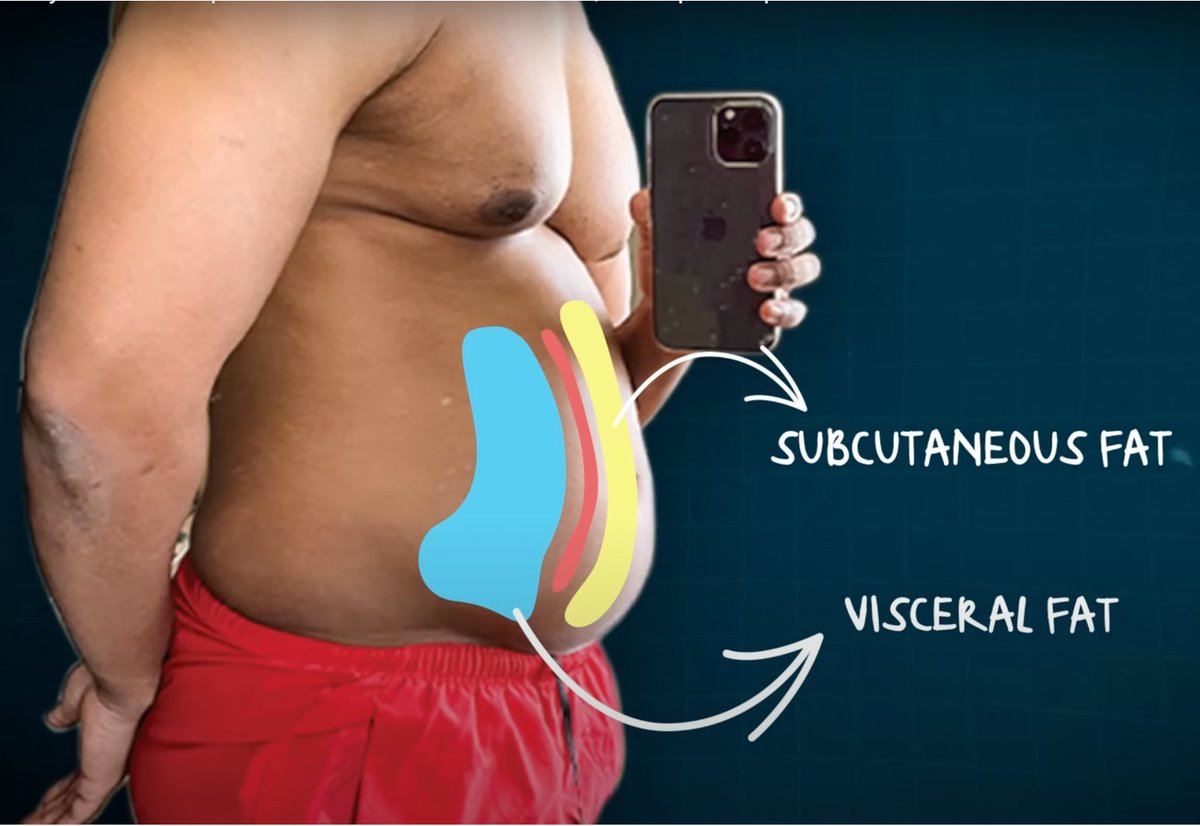
First, let's understand what makes visceral fat so dangerous.
Unlike the fat you can pinch under your skin, visceral fat wraps around your vital organs like your liver, intestines, and stomach.
But here's the scary part: