One day, your home will be empty, and someone will have to decide what to do with your things. They'll open your drawers. They'll find the watch you treasured so much, the car you spent three years paying off, and the clothes you saved for special occasions because you didn't want to wear them out. And they'll make three piles: what to sell, what to give away, and what to throw away. None of it goes with you. Not a single thing. The only thing that goes with you is that afternoon you stayed talking for hours and didn't even realize where the time went. The look on your mom's face when you showed up to visit her without telling her you were coming. Don't collect things... Collect moments with the people you love
- functioning organs
- alive parents
- smartphones with 4g network
- a home with electricity
- better water supply
- enough literate to read & write English
- area with better AQI level
- living in an area with no fear of getting hit by natural disaster
Sometimes I stop complaining to God for being unlucky & get less opportunity in life. Forever grateful to the almighty that he gave me the most beautiful life which I can't even imagine. 🙏
“This is how I make a living. It’s my bread and butter.”
The way he says it so casually while collecting what’s owed? that calm confidence is colder than any threat.
These guys treat violence and money the exact same way, just routine business.
If you're not convinced about Tony Sopranos being a mafia, this is it
🎥 The sopranos
The moment Alex Scott speaks the unpalatable fact that her Jamaican great-great-great-great grandfather owned 26 slaves.
Equally unpalatable is the fact which follows: that the British government forced him to set them free, compensating him and other slave-owners “to the tune of 20 million pounds”.
Reparation is going to be a bit complicated, isn’t it?
The Premier League is great but its now a shiny, glossy product, but in becoming a behemoth, it's lost some magic, through the marketing and cold hard cash.
The EFL, on the other hand, is English football's great masterstroke, the pure essence of the game bottled into 36 games every Saturday. The pyramid must be protected at all costs.
(1) LG OLED 🇰🇷 → The best panel on the market, no debate.
(2) Sony OLED 🇯🇵 → The most natural image for movies and series.
(3) Samsung QLED 🇰🇷 → Unbeatable in rooms with lots of light.
(4) Philips OLED + Ambilight 🇳🇱 → The most underrated.
(5) LG webOS 🇰🇷 → The smoothest operating system of all.
Andrew Garfield sat on a stoop with Elmo and explained grief better than anyone had ever explained it
Elmo: “Elmo’s going around sesame checking in on everybody so Elmo wants to know how Andrew’s doing?”
“I’m thinking about my mum today she passed away not too long ago and you know I just miss her miss her a lot”
“You don’t have to say sorry it’s actually kind of okay to miss somebody that sadness is kind of a gift it’s kind of a lovely thing to feel In a way because it means you really loved somebody when you miss them”
“When I miss my mum I remember all the cuddles I used to get from her all the hugs it makes me feel close to her when I miss her in a strange sort of way’
In 2019, Charlotte Lay walked onto a railway track believing she had reached the end of her life.
A train was approaching.
But the driver, Dave Lay, had been alerted to someone on the tracks. He slowed the train, stopped at a distance, and climbed out.
Charlotte expected anger. She thought she was about to be told off.
Instead, Dave calmly introduced himself and asked her one simple question.
“Hi, my name is Dave. Are you having a bad day?”
Then he sat near her.
He didn't lecture her. He didn't tell her how lucky she was. He simply stayed and talked.
For around 30 minutes, Dave treated Charlotte like a human being having the worst day of her life.
Eventually, she found the strength to leave the tracks.
The next day, Charlotte searched for the train driver who had saved her. She posted in a local social media group, hoping someone might know him.
Dave had been wondering if she was okay too.
They reconnected.
They started messaging.
About two months later, they met for coffee.
And somewhere between conversations, healing and ordinary days together, the stranger who sat beside Charlotte on the tracks became the man she fell in love with.
But their story wasn't finished.
In 2020, Dave began suffering from back pain. He thought it was nothing serious.
Charlotte kept telling him to see a doctor.
Eventually, he listened.
Dave was diagnosed with testicular cancer.
He later said doctors told him that if he had waited much longer to seek medical help, he might not have survived.
The man who once sat beside Charlotte when she wanted to leave this world was now alive because Charlotte refused to stop worrying about him.
In 2022, Charlotte and Dave got married.
Dave later put their story into words perfectly.
“Charlotte may say I saved her life... but she saved my life as well.”
Two strangers met on the worst day of one person's life.
Neither of them knew it yet.
But one simple conversation was about to save them both
Quanto davvero possono cambiare le cose in 100 anni?
A sinistra, lo stadio di Wembley in costruzione nel settembre del 1922. Immerso nel verde, sembra quasi una struttura dispersa nella campagna di una contea inglese.
A destra Wembley ora.
Praticamente è rimasta solo la ferrovia.
📷 by @HistoricSports2
A Nelly Furtado singing the remix of Missy Elliott's Get Ur Freak On (which isn't on any streaming platform) It caught me completely off guard..
Nelly had to publicly ask Missy on TV to drop it on Spotify because even she can’t stream it legally! ✨️ 🎶
On a summer evening in 2015, a man stepped out of a train bathroom carrying enough ammunition to turn a quiet journey into a massacre. What happened in the next minute changed the fate of 554 people.
August 21, 2015.
High speed train Thalys train 9364 was rushing from Amsterdam to Paris at nearly 300 kilometers per hour. The cars were full. Families, tourists, business travelers. Five hundred fifty four passengers were on board.
Among them were three young men from California spending their vacation in Europe.
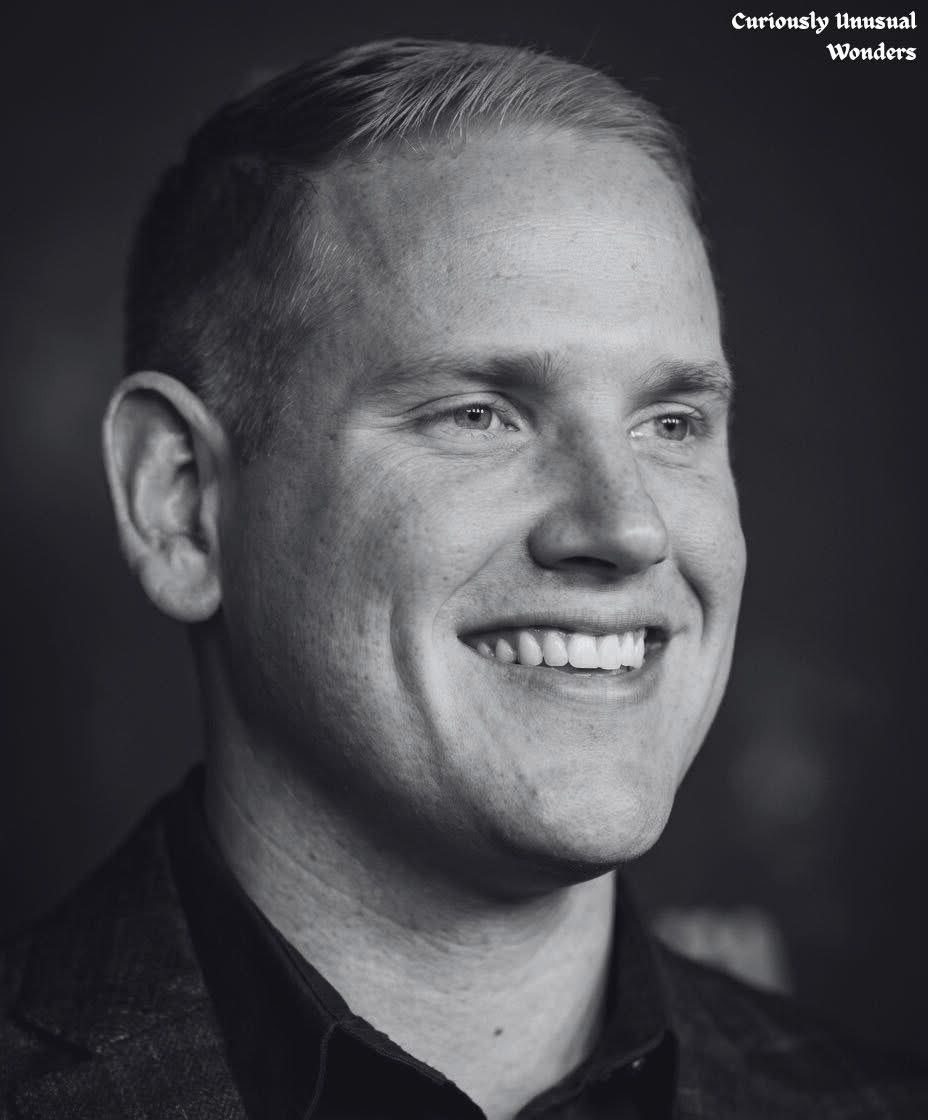
Spencer Stone was 23, an Air Force medical technician.
Alek Skarlatos was 22, fresh home from Afghanistan with the Army National Guard.
Anthony Sadler was a college senior.
They had grown up together. Middle school friends who had crossed an ocean for a holiday.
At 5:45 in the evening the calm broke.
A shirtless man walked out of a restroom holding a Kalashnikov rifle. Inside his backpack were eight loaded magazines. A handgun. Gasoline. A box cutter. Nearly 270 rounds of ammunition.
His name was Ayoub El Khazzani.
His plan was simple. Kill as many people as possible.
The first person who moved was a 51 year old professor named Mark Moogalian.
He did not wait. He rushed forward and grabbed the rifle.
The attacker pulled out a pistol and fired. The bullet tore through Moogalian’s neck. He collapsed to the floor as blood poured out.
In another car, Spencer Stone had been asleep.
The gunshot woke him.
He opened his eyes and saw a train employee sprinting past, chased by a shirtless man with a weapon.
Skarlatos slapped Stone on the shoulder.
Two words.
“Let’s go.”
There was no discussion. No strategy.
Stone ran straight toward the attacker.
Skarlatos followed.
Sadler followed.
Stone reached the gunman first and slammed into him, locking his arms around the man’s neck. The attacker fought wildly, pulling out a box cutter. He slashed Stone across the neck, across the eyebrow, across the thumb. Blood ran down Stone’s face.
Stone did not let go.
Skarlatos grabbed the rifle and began striking the attacker with it. Sadler helped hold the man down. A British businessman named Chris Norman rushed over and joined them.
Together they forced the attacker to the floor and held him there until he lost consciousness.
Then Skarlatos noticed something strange.
The rifle had jammed.
The pistol had no magazine and no round in the chamber.
The weapons were useless.
Stone had not known that when he charged.
With the attacker pinned down, Stone turned to the wounded professor lying on the floor.
Moogalian was bleeding out.
Stone tore off his shirt and wrapped it around the wound. The bleeding did not stop. So he pushed two fingers directly into the wound and pressed down on the artery.
The bleeding slowed. Then it stopped.
Stone held that pressure while blood from his own injuries soaked his clothes. He stayed there until paramedics met the train at the next station.
Both men survived.
Every passenger reached Paris alive.
Three days later, French President François Hollande awarded Stone, Skarlatos, Sadler, and Norman the Legion of Honor, France’s highest decoration. In the United States they were honored at the Pentagon. Stone received the Airman’s Medal and the Purple Heart. Skarlatos received the Soldier’s Medal.
The attacker was later convicted of attempted terrorist murder and sentenced to life in prison.
Life after that day was not simple.
Weeks later, Stone was stabbed outside a bar in Sacramento. The knife punctured his heart and lung. Once again, he survived.
In 2018 their story reached movie screens in The 15:17 to Paris, directed by Clint Eastwood. In an unusual choice, the three friends played themselves.
Skarlatos later served in the Oregon House of Representatives. Sadler became a public speaker. Stone studied international relations and now advocates for veterans.
But the most important moment of their lives lasted less than a minute.
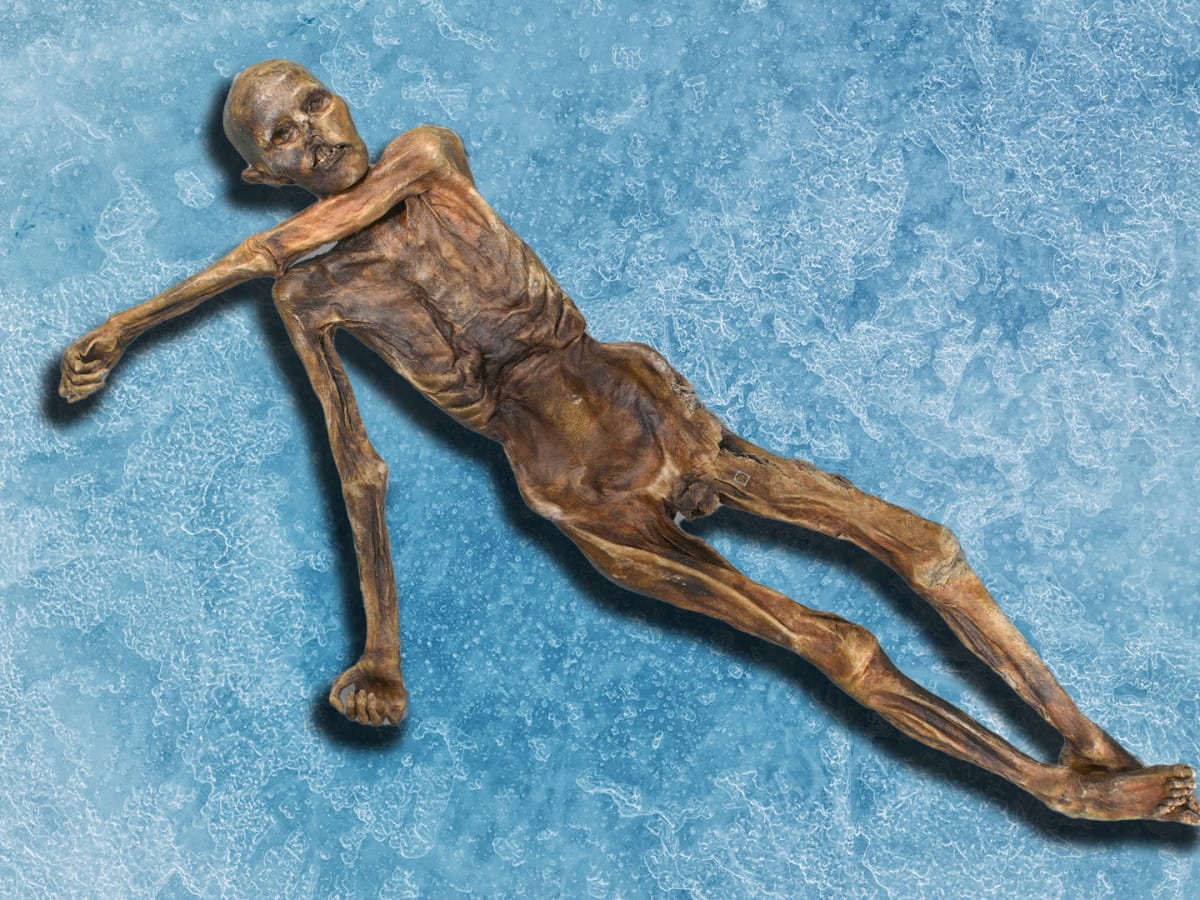
On September 19, 1991, two German hikers named Helmut and Erika Simon were making their way across a high ridge in the Ötztal Alps when they spotted a body partially embedded in the ice.
They assumed they had found a lost mountaineer. They reported it to the authorities. The authorities assumed the same thing.
It took several days, and some increasingly confused experts, before anyone began to suspect that the man in the ice had not recently gotten lost on a hiking trail.
He was 5,300 years old. He had been lying there, preserved by the specific conditions of that particular glacier, since the Copper Age. By the time the Simons found him, every human civilization either of them had ever learned about in school had risen and fallen while he waited in the ice.
His name, eventually, was Ötzi.
Over the following three decades, scientists subjected him to every analytical tool available, and then waited for better tools to be invented and applied those too.
They reconstructed his last meal: ibex meat, red deer, einkorn wheat, eaten within roughly thirty minutes of his death. They found pollen from a hop hornbeam tree in his clothing, which placed him in a specific valley at a specific time of year.
They identified 59 tattoos, placed along joints and pressure points in patterns that correspond so closely to acupuncture meridians that researchers still argue about what that means. They found in his DNA the oldest known case of Lyme disease, and evidence of a genetic predisposition to cardiovascular disease, and the fact that he was probably lactose intolerant.
They knew what he ate for his last meal before they knew how he died.
When they found out how he died, the entire frame of the investigation shifted.
There was an arrowhead lodged in his left shoulder. It had penetrated the subclavian artery.
He would have bled out within minutes, probably faster. The arrow's shaft had been removed, either by Ötzi himself in the moments before he lost consciousness, or by whoever shot him, covering their tracks. His hand showed defensive wounds.
He had someone else's blood on his clothing from at least four different individuals.
Ötzi did not get caught in a storm. He did not fall. He did not wander onto a glacier and succumb to exposure. He was shot in the back during what the forensic evidence strongly suggests was a violent and deliberate attack, by someone who knew him well enough to get close, or was skilled enough not to need to.
Nobody was ever charged. There are no suspects. The case is, technically, still open, which makes it the oldest unsolved murder in human history by a margin so large it is difficult to process.
Somewhere in the Copper Age, someone had a reason to kill this specific man, on this specific ridge, and then disappear back into a world that left almost no written record of anything. We know what Ötzi had for breakfast. We know his genetic risk factors.
We know the season and the approximate time of day. We have reconstructed thirty minutes of his final afternoon with more precision than most modern crime scenes allow. We have no idea who killed him or why. We probably never will.
#drthehistories
After 2 years of using ChatGPT, I can say that it is the technology that has revolutionized my life the most, along with the Internet.
So here are 10 prompts that have transformed my day-to-day life and that could do the same for you.