@drhossamsamy65@KimDotcom Not a Trump fan but saying a politician lied as if its striking or unusual....
Biden doesn't lie? George Bush didn't lie? JFK didn't lie? Lincoln didn't lie? Pericles of Athens even lied. And his woman Aspasia was widely thought to be a prostitute.
Hello?
Reality here
@liz_churchill10@RealLTCRicBosi So the EU will deploy troops to Ireland, cut off funding and punish the people in Ireland through banking, travel, etc.
Its not like the elites didn't expect or plan for uprisings as they accumulate authority and control over all Europe!
@TheWhizzAI Retard take. LLM engines are extremely complex algorhthms.
BUT THEY CAN ALSO SEARCH THE INTERNET ON THE FLY AND FIND LEGAL OR PIRATED COPIES OF ALMOST ANY TEXT. On a per interaction request.
Does no one understand technology?
@StateDept And did he USA have a legal case (in the same law code) to Strike Iran?
Use of Force: The UN Charter prohibits the use of force except in self-defense (Article 51) or with Security Council authorization. The US-Israeli strikes on Iran— violation of Article 2(4) of UN Charter
This is extremely concerning
Certified Master Home Inspector says “There is something very big going on in my profession that affects almost every homeowner in this country. This includes anybody buying a home, selling a home, realtors, this all affects you
Right now, right this minute, as I'm talking to you, there is a corporate takeover of all of the software that runs home inspection companies, and I'm gonna explain why it matters to you.”
Home inspectors are legally required to keep findings, reports, addresses, defects, and client personal information (name, phone, email) These companies will now have access to all this data, and these monopolies work in multiple Industries and also sell data
This aggregated data could then be used for rate adjustments by affiliated companies (insurance, lenders, warranties, security), marketing, underwriting and more
Everything will likely be used to increase prices across multiple industries
This is:
the architect of ObamaCare, MIT economist Jonathan Gruber, called the Unaffordable Care Act a scam and referred to the American voter as “stupid” — not once, not twice, but three times.
“Lack of transparency is a huge political advantage,” he said.
The Unaffordable Care Act was written in a way that deliberately and maliciously deceived and blackmailed the American public.
In fact, Barack Obama colluded with insurance companies to extort the American taxpayer through a clause in the Unaffordable Care Act known as the ‘medical loss ratio.’
Here is a doctor explaining:
“Where do our health insurance costs go up every year? The reason is, it was designed that way. In the Affordable Care Act, there’s something called the medical loss ratio. The medical loss ratio requires insurance companies to spend between 80% and 85% of all premium dollars on medical services, which limits them to 15% to 20% for administrative costs, overhead, and profit.
“So, they play a little game. The higher the top line, the bigger that number appears.
“So all we did was say, ‘Let’s charge more each year.’ Year after year, insurance company revenues increase.
“The second thing they did to get around that was vertical integration. What’s vertical integration? That’s when you start buying companies that aren’t insurance companies but operate in related businesses:
• Pharmacy benefit managers, middlemen for drug companies
• Pharmacies
• Physician services and physician groups
“Why is that important? Well, think about it. I’m the insurance company. I want it to look on paper like I’m meeting my medical loss ratio because if I don’t, I have to pay a rebate.
“So, I overpay a physician I own. That shows an expense, but the money goes back into my other pocket. Same thing for drugs: I can take a $50 drug and pay $200 for it. This gets around the medical loss ratio because the government can’t trace the money beyond the insurance company.
“That’s why our insurance premiums go up every year, and they’ll keep rising until we change the system.”
Dr. John Campbell JUST EXPOSED the mRNA NIGHTMARE…
‘Covid Boosters’ are causing MYOCARDITIS in 1 OUT OF EVERY 35 PEOPLE as adverse reactions are “OFF THE SCALE”
Hearts are EXPLODING in the young as the Big Pharma Whores keep their death machine running.
Resurfaced Ellen DeGeneres video from 1998 takes on new meaning after what we’ve learned in the Jeffrey Epstein files
You can’t watch this now and think anything other that what we know to be true
“They put it in our faces every single time”
Tucker Carlson: Ron Paul predicted it all in 2002. US will Pay to bomb. Pay to rebuild. More weapons to Israel. Dollar crisis. Gold rises. Police state expands. Welfare state expands. Class warfare. Lobbyists thrive. He was right about everything
I tried to warn the world about this destruction of women’s fertility starting in 2022. Destroyed my life in many ways. I spent four miserable years screaming about this and staring into this abyss. Thank you Nicolas Hulscher for adding this validation from new research. The tragedy of our time.
A professor quit a high-paying consulting job to teach math to seventh graders in a New York public school, and what she saw in that classroom launched the most important research on human achievement of the last 30 years.
Her name is Angela Duckworth, and the question that haunted her from day one was deceptively simple: why do some kids succeed and others don't?
It wasn't IQ. She could see that immediately. Some of her sharpest students were underperforming. Some of her slowest were grinding past everyone else. The variable she couldn't name was right in front of her face and it took her a decade of research at Penn and Stanford to finally pin it down.
Here is what she found, and why it should change how you think about every hard thing you are trying to build.
She started by going back to a famous experiment from the late 1960s. A Stanford psychologist named Walter Mischel brought four-year-olds into a small room one at a time, placed a marshmallow in front of them, and told them he had to leave. If they waited until he returned, they'd get two marshmallows. If they couldn't wait, they could ring a bell and eat the one in front of them right now.
Most kids lasted about thirty seconds.
But what happened over the next decade is what made Mischel's study famous. When he tracked those same children down years later, the ones who had waited the longest had SAT scores 210 points higher on average than the ones who rang the bell immediately. Self-control at age four predicted academic outcomes that most educators couldn't explain even after years of watching the kids up close.
Duckworth was fascinated but she was after something deeper. Self-control explained part of the picture. It didn't explain everything. She thought about her own career early, scattered, unfocused by her own admission and compared it to people she knew who had found a mission at twenty-two and never let go of it. They weren't smarter than her. They weren't working harder than her in any obvious sense.
They had something else.
She called it grit. And the definition matters, because the word has been diluted into a motivational poster cliché that misses the point entirely.
Grit, in Duckworth's framework, is not toughness. It is not working long hours. It is not refusing to quit when things get hard, although that is part of it. Grit is the combination of passion and persistence aimed at a single long-term goal over years and sometimes decades. The passion part is often misunderstood. She does not mean excitement or enthusiasm. She means the sustained fascination with a specific problem. The thing you keep returning to even when you don't have to.
She built a twelve-question test to measure it. The Grit Scale. And then she took it into the field.
At the University of Pennsylvania, students with high grit scores earned higher GPAs than their peers, even when those peers had entered college with stronger test scores. At the National Spelling Bee, grit scores predicted which children survived to the later rounds more accurately than hours of practice alone. But the finding that stopped the room every time she presented it came from West Point.
Every year, West Point runs thousands of incoming cadets through a brutal summer training course called Beast Barracks. The military had developed its own complex evaluation tool called the whole candidate score to predict who would make it through. It factored in academic grades, physical fitness, leadership potential. Admissions teams had been refining it for years.
Duckworth gave her twelve-question grit test to over twelve hundred cadets as they arrived.
Her test outpredicted the whole candidate score.
The cadets who dropped out weren't the weakest physically or the least intelligent academically. They were the ones who scored lowest on passion and persistence toward a long-term goal. The ones who made it through were the ones who had a reason to be there that was bigger than any single difficult day.
The finding that most people miss when they hear about this research is the distinction Duckworth draws between motivation and volition.
Motivation is wanting something. Volition is the ability to keep moving toward it when the wanting isn't strong enough to carry you on its own. You can be extremely motivated to build something and still quit at the first serious obstacle because you never developed the second thing. The marshmallow kids who waited the longest weren't the ones who wanted two marshmallows more desperately. They were the ones who had learned to redirect their attention, to think abstractly about the goal, to make the immediate discomfort feel smaller than the long-term payoff.
That skill is trainable. That is the part that almost never makes it into the summary.
Duckworth's research shows grit is only faintly related to IQ. There are brilliant people with almost no grit and ordinary people with extraordinary amounts of it. The raw intelligence gets you to the starting line. What happens after that is almost entirely determined by whether you have the combination of a goal worth caring about for years and the discipline to keep working toward it on the days when nothing is going well.
Her TED Talk on this has been watched over 17 million times, which means the idea has clearly landed somewhere real in people. But the part that usually gets quoted is the definition. The part that actually matters is harder to talk about.
You cannot manufacture grit by deciding to be grittier. What you can do is find the problem you are genuinely willing to be obsessed with for a decade. Not excited about. Obsessed with. And then build the systems around that obsession that make daily persistence the default, not the exception.
The marshmallow test did not sort brave children from cowardly ones. It sorted children who had already learned that discomfort is temporary from children who hadn't learned that yet.
Every gritty person you have ever admired figured out one thing the rest of the room hadn't: the goal on the other side of the hard stretch is more real to them than the discomfort standing between them and it.
That is not a personality type. That is a decision, made early and remade every day.
🚨PRION-LIKE AMYLOID MICROCLOTS FOUND IN 100% OF THE COVID-19 VACCINATED IN A NEW PEER-REVIEWED STUDY
These anomalous structures accumulate into the MASSIVE white fibrous clots now being pulled from 20-40% of deceased individuals worldwide.
Criminal charges are necessary.
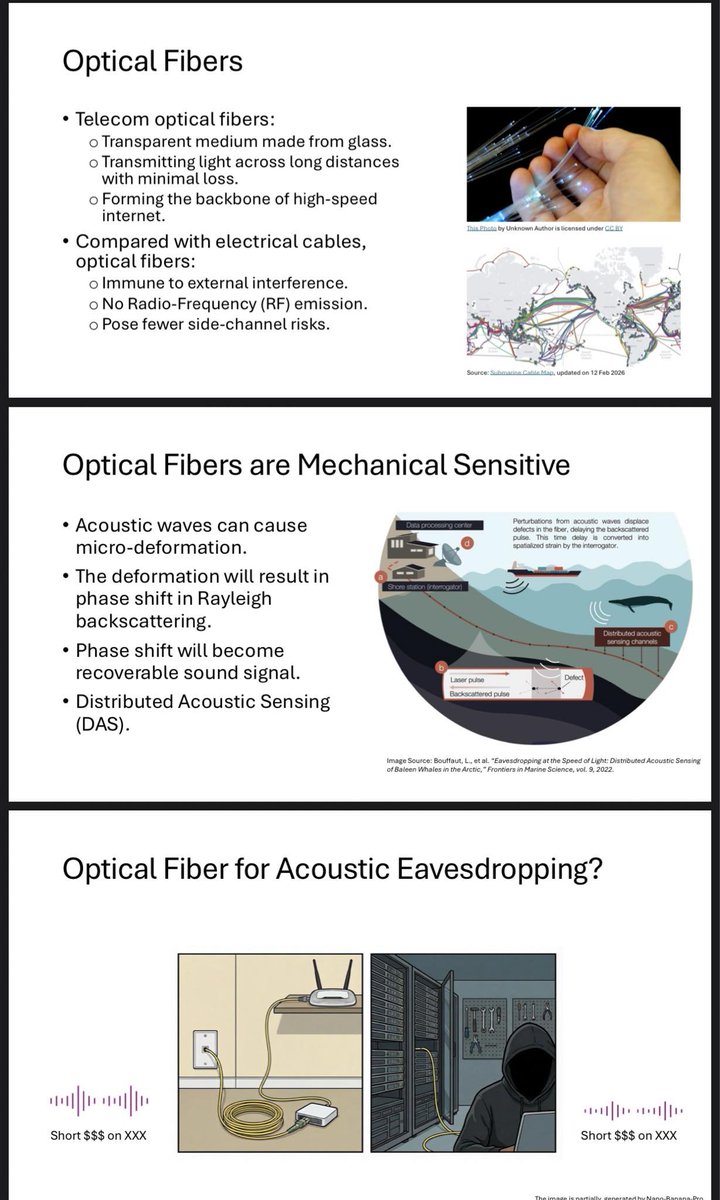
Your Internet Fiber Cable Is Secretly Listening to You Right Now.
Yes, Really.
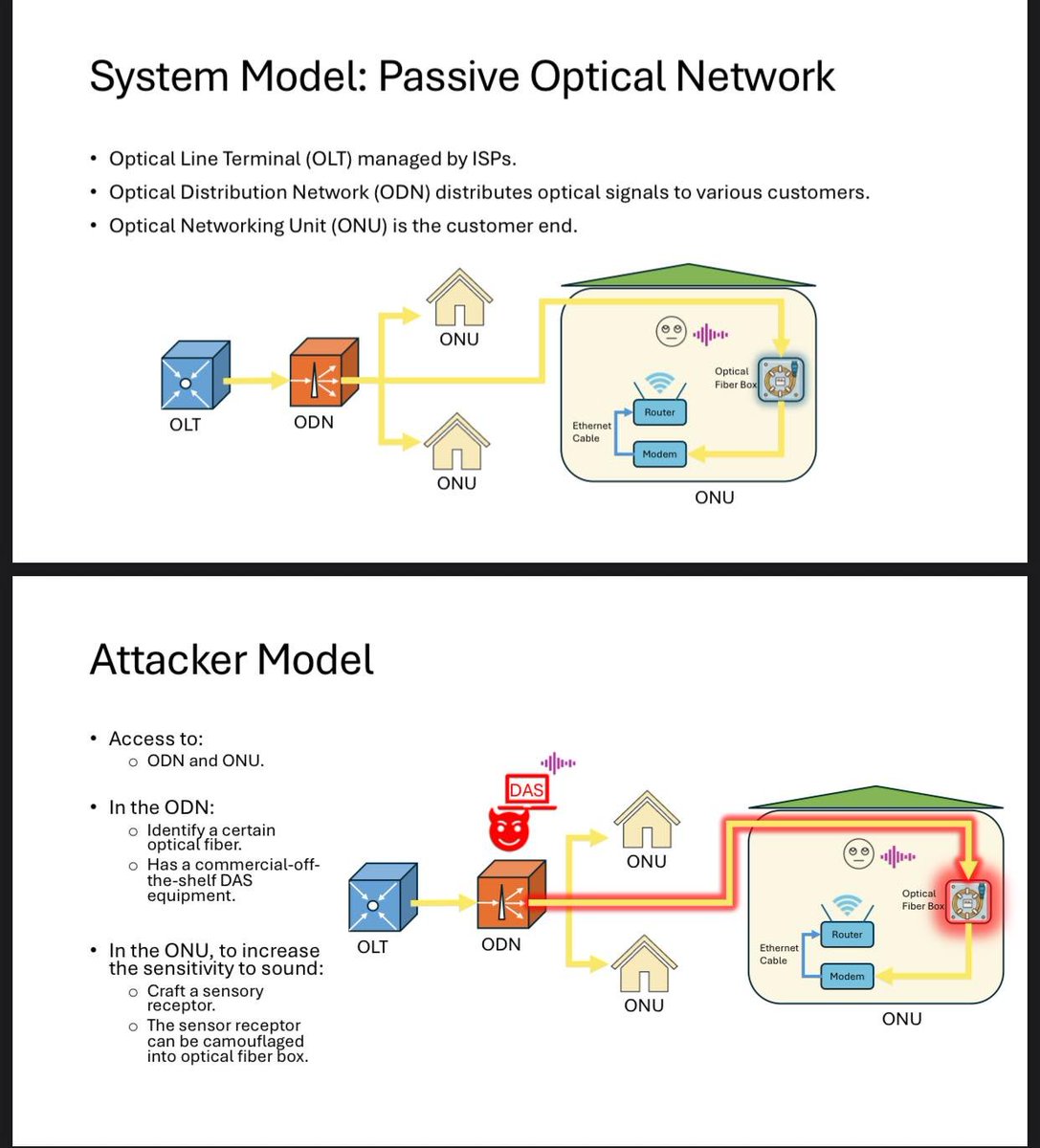
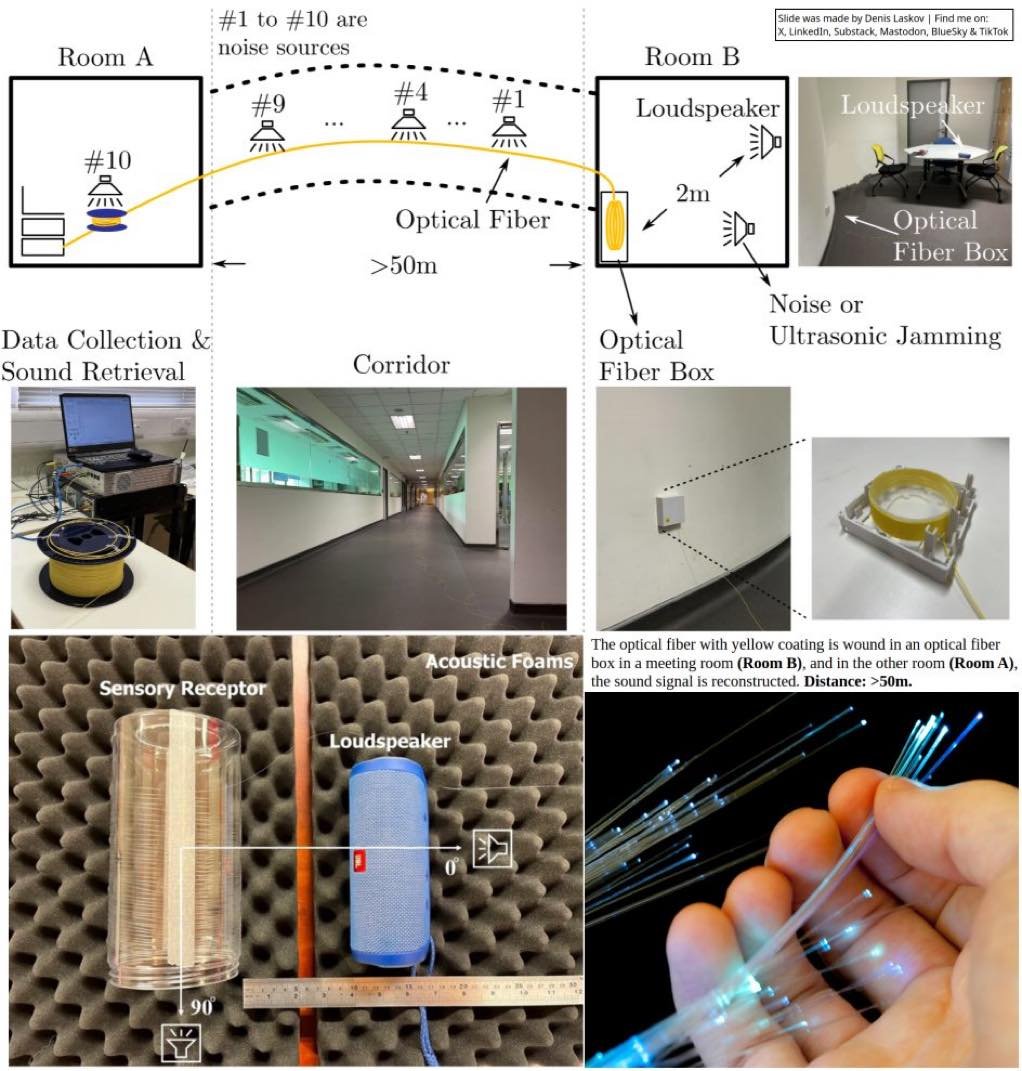
Telecom fiber in your wall can spy on conversations up to 50 m away using nothing but commercial DAS & AI audio reconstruction.
Hong Kong NDSS 2026 paper Researchers turned ordinary FTTH fiber-optic cables into hidden microphones Connect DAS gear to one end to AI reconstructs clear speech from 50 meters away , through walls, no physical access needed.
Without laser bugs, No implants Just the cable that's already there. Clear voices even from adjacent rooms.
crystal clear in tests.
I would say distributed Acoustic Sensing and ML turns standard telecom fiber into a long-range covert microphone.
Homes & offices with fiber internet?
You're potentially exposed.
Attack cost right Commercial gear access to one fiber end.
Range tested 50 meters bruhh
This is not sci-fi. It's a deployed infrastructure.
Welcome to the era where your broadband doubles as surveillance.
North Korea has stolen $6.75 billion from Silicon Valley and nobody knows how to stop them.
And just last week, they pulled off one of the most insane heists in tech history...
A North Korean intelligence unit created a FAKE quantitative trading firm:
- Built a website
- Printed business cards
- Showed up at crypto conferences across multiple countries
- Shook hands with founders
- Had real conversations about strategy and partnerships
They didn't rush anything.
They spent 6 months building relationships. They deposited a million dollars of real capital into the protocol to look legitimate. They collaborated on shared code repositories. And they even distributed what looked like a normal wallet app through Apple's TestFlight.
Then one night they flipped the switch...
They exploited access they'd quietly gained over months, removed withdrawal limits, and drained $271 MILLION from almost 20 vaults. USDC, USDT, wrapped Bitcoin, wrapped Ethereum.
Everything converted and moved from Solana to Ethereum within hours. Split across wallets. Gone.
CoinDesk confirmed it was a North Korean state operation.
But the Drift hack is just the latest example of something much bigger:
North Korea stole $2 billion in crypto in 2025. A 51% increase from the year before.
They were responsible for 76% of ALL crypto service hacks globally. And they pulled it off with 74% fewer attacks.
Fewer attacks. Way more money per hit. Each operation more patient and more devastating than the last.
Their playbook has evolved past anything the industry expected.
North Korean operatives now embed themselves as fake employees inside Western tech companies. They've shifted from applying for jobs to posing as RECRUITERS for crypto and web3 startups.
They run fake technical screenings where they steal credentials, source code, and establish remote access to internal systems.
They sit in Slack channels. Attend standups. Review pull requests. For months. Then they strike.
And it's spreading beyond crypto too:
This same week, North Korean hackers compromised Axios, an open-source software package used by thousands of American companies.
Hijacked a developer's account and pushed malicious updates to every organization that downloaded the software during a 3 hour window.
Security experts say the damage could take months to unravel.
Mercor, the AI recruiting startup valued at $10 billion that works with OpenAI, Anthropic, and Meta, confirmed it was also caught in a related supply chain attack.
The money funds North Korea's nuclear weapons program, missile development, and regime.
Silicon Valley is literally financing Pyongyang's warheads and doesn't even realize it.
Security researchers keep saying the same thing: "We may be seeing only the most visible portion of their activities."
If the attacks we know about total $6.75 billion, what's the real number?
North Korea has turned tech theft into a national industry. They train operatives for years. Build fake companies. Play the long game. And every time the industry catches up, Pyongyang evolves.
The most sophisticated state-sponsored theft operation in history is happening inside the ecosystem that's supposed to be building the future of finance.
What do you think?