Wide Martian landscape from Perseverance sol 1865
Panorama assembled from Mastcam-Z images, color-balanced and contrast-enhanced to reveal subtle tonal differences in the rocks and terrain. Sky extended for aesthetic framing.
Credit: NASA/JPL-Caltech/ASU/MSSS/Thomas Thomopoulos
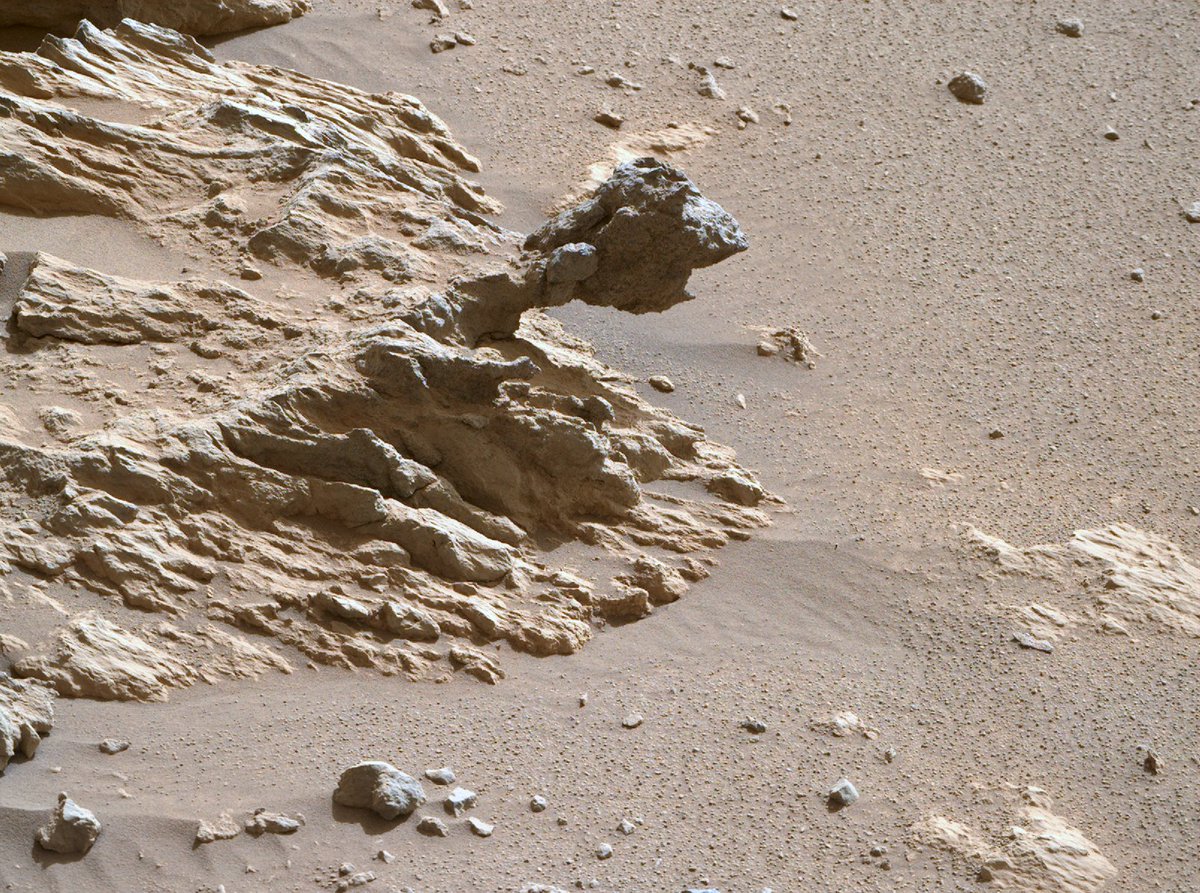
Rocky landscape in Jezero crater — Perseverance sol 1865
Panorama assembled from two Mastcam-Z images, color-balanced and contrast-enhanced to bring out subtle tonal differences in the rocks.
Credit: NASA/JPL-Caltech/ASU/MSSS/Thomas Thomopoulos
Strange south polar terrain on Mars.
This Mars Express HRSC crop shows frost-toned deposits, dark dust-rich material and irregular margins likely shaped by seasonal ice, dust and sublimation processes.
Credit: ESA/DLR/FU Berlin/Thomas Thomopoulos
A “sea ice” illusion near Mars’ south polar cap.
This is not floating ice, but bright polar deposits, layered terrain and darker dust-rich material seen by Mars Express HRSC.
Credit: ESA/DLR/FU Berlin/Thomas Thomopoulos
Mars seen by NASA’s Psyche spacecraft during its May 15, 2026 flyby.
IR/Green/Blue composite from public raw images acquired by Psyche’s Imager A, showing Mars’ south polar region and subtle surface details.
Credit: NASA/JPL-Caltech/ASU/Thomas Thomopoulos
Mars seen by NASA’s Psyche spacecraft during its May 15, 2026 Mars flyby.
False-color IR1/G/B composite from public raw images, showing wind-blown streaks over craters in the Syrtis Major region.
Credit: NASA/JPL-Caltech/ASU/Thomas Thomopoulos
South polar Mars, near Ultimi Scopuli, seen by Mars Express HRSC.
The dark raised-looking lineations near the crater margin may correspond to aeolian ridges or dune-like deposits shaped by local winds and seasonal polar processes.
Credit: ESA/DLR/FU Berlin/Thomas Thomopoulos
Two craters in Utopia Planitia, Mars — Mars Express
RGB crop from product HM150, acquired on 12 July 2021 during orbit 22150.
The framing creates a pareidolia-like “face” amid mantled, ice-related terrain in Mars’s northern plains.
Credit: ESA/DLR/FU Berlin/Thomas Thomopoulos
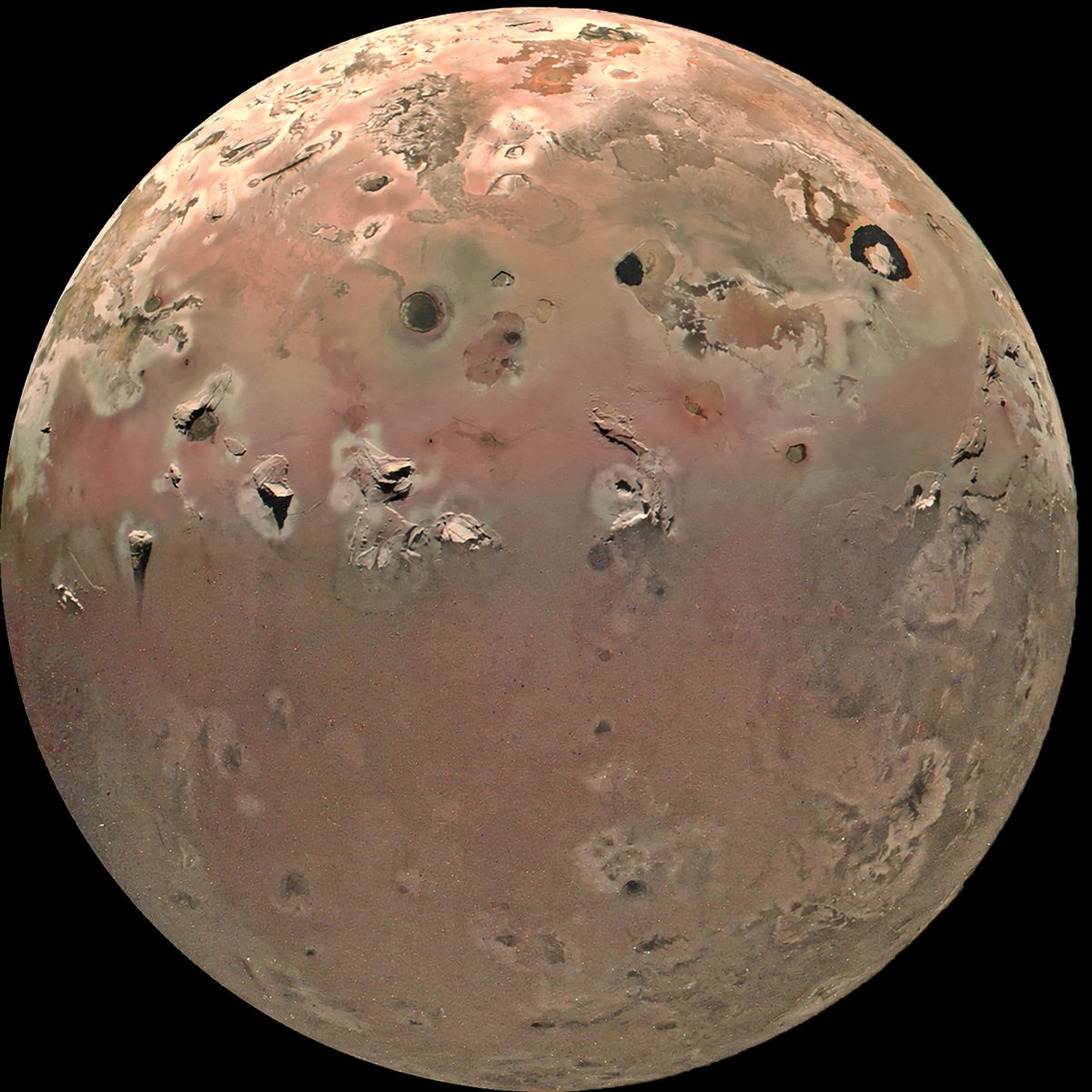
Io from JunoCam PJ57 data.
Illumination was harmonized and a terminator processing fringe reduced. Terrain near the transition should be treated with caution: this is a visual reconstruction with AI.
Credit : NASA/JPL-Caltech/SwRI/MSSS/Thomas Thomopoulos
Experimental 3D flyover of Io, based on a processed JunoCam image from NASA’s Juno mission.
Source image: NASA / JPL-Caltech / SwRI / MSSS / JunoCam
Image processing: Gerald Eichstädt / Thomas Thomopoulos
3D: Thomas Thomopoulos
Experimental 3D visualization of Io, created from a processed JunoCam image acquired by NASA’s Juno mission.
Source image: NASA / JPL-Caltech / SwRI / MSSS / JunoCam
Image processing: Gerald Eichstädt / Thomas Thomopoulos
3D visualization: Thomas Thomopoulos
Io seen from a virtual 3D perspective — annotated with several volcanic features visible in this region.
Created from a JunoCam image acquired during Juno’s Perijove 57 flyby.
Credit: NASA/JPL-Caltech/SwRI/MSSS/G. Eichstädt/T. Thomopoulos
Visible volcanic features include Loki Patera, Amaterasu Patera, Dazhbog Patera and Ātar Patera.
Created from a JunoCam image acquired during Juno’s Perijove 57 flyby.
Image credit: NASA/JPL-Caltech/SwRI/MSSS/Gerald Eichstädt / Thomas Thomopoulos