Neuroscientist interested in social interactions. Dad & immigrant. Group Leader of the Social Neurobiology Lab @DPZ_eu 🇲🇽. Now: @raymundobaez.bsky.social
We have an open position as a @AvHStiftung research fellow! The research topic is free and this fellowship is intended for you to conduct independent research within the remit of the lab’s interests. Deadline May 2025! DM for more info Pls RT!
🚨NEW EPISODE ALERT🚨
Neuroscience of Social Interactions: Friendship, Theory of Mind & the Amygdala | Dr. Raymundo Báez-Mendoza
In Episode 28 of Neuroscience and Beyond, we explore the neural basis of social behaviour with Dr. Raymundo Báez-Mendoza @thunderNeurosci, #neuroscientist and group leader at the German Primate Centre @DPZ_eu. From understanding trust and cooperation to decoding fear and social distance, Dr. Báez-Mendoza’s work reveals how the #brain makes sense of our most fundamental social experiences.
Bridging research in humans and non-human primates, his lab uses game theory, structured behavioural tasks, and neural recordings to investigate the #cognitive and emotional processes that shape how we interact with others.
In this episode, we cover:
- How scientists model real-life social decisions in the lab
- The role of the amygdala in both fear and friendship
How memory, reputation, and authority influence behaviour
- What are Social Agent Identity Cells, and why do they matter?
- Insights from neural recordings during brain surgery
and more!
🎧 Curious how the brain navigates trust, memory, and connection? Watch the full episode on YouTube to explore how neuroscience is helping us understand social interaction at its most fundamental level.
Subscribe to our YouTube channel for exclusive content and in-depth discussions on cutting-edge science!
🔗Link to our social media accounts: https://t.co/2SvtkEryic
🔗Link to the video: https://t.co/azTxodnshc
#SocialNeuroscience #GameTheory #Amygdala #PrimateResearch #Neuroeconomics #CognitiveNeuroscience #TheoryOfMind #NeurosciencePodcast #BehavouralNeuroscience
If you are involved in social neuroscience research, please consider submitting symposium proposals and/or individual abstracts to present your findings at the S4SN meeting in Lisbon!! @S4SNeuro. The deadline has been extended!
https://t.co/so34o2Z8jI
🏆 Early Career Award nominations open! 🏆
Until June 15, we are inviting applications recognizing new approaches within the field of social neuroscience, &/or the advancement of research that cuts across multiple fields of neuroscience to understand social cognition & behavior.
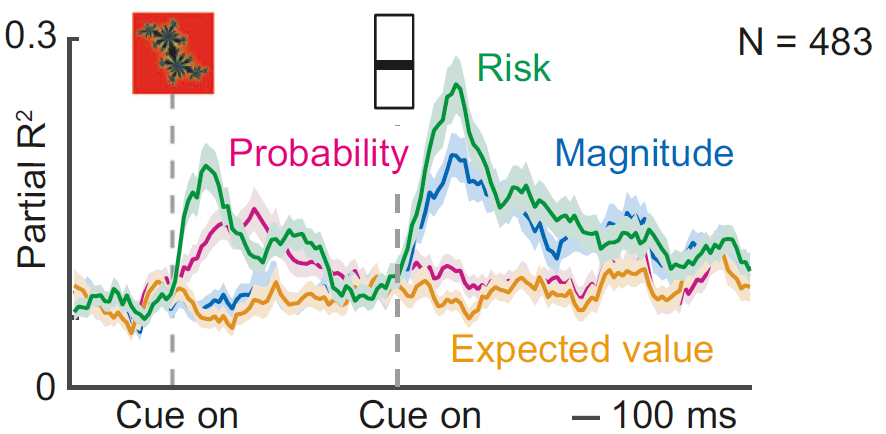
Finally, we also found that the population code was flexible (it did not care about the order of presentation) and transferable (due to cross-decoding for prob & mag). Thus, these signals dynamically integrate multiple attributes of reward value. 5/5
Rewards motivate us, but they have many dimensions. How does our brain combine different reward dimensions? In this study, now out in @naturecomms.bsky.social, we discovered that amygdala neurons flexibly encode reward probability, magnitude, and risk https://t.co/kL0o1dAtT0 1/5
Amygdala neurons also signaled reward magnitude. More interestingly, the population transitioned from signaling probability to risk when information about magnitude was shown. Here, riskier outcomes are those with higher magnitudes and the highest uncertainty. 4/5
We have a new PhD position available. Please spread the word and retweet. The project will combine retina recordings, computational modeling, and optogenetics to help further develop vision restoration therapy. See here for more information: https://t.co/FnP2JTsHay
I would be grateful for the retweets. Open PhD position in my group to look at using cognitive computational Neuro approaches to understand motivation.
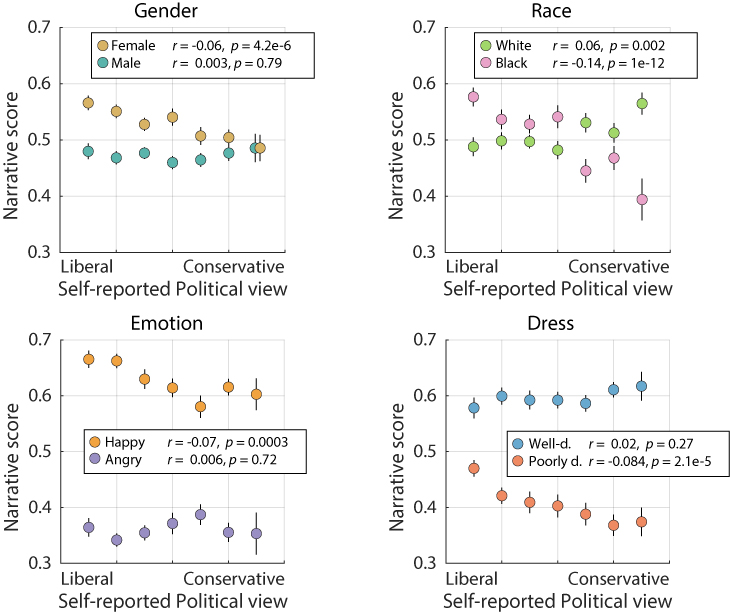
Based on the work of @RobertDPutnam, one of our hypotheses was that having weak ties decreased explicit biases. While we did not find evidence for this, we found a strong moderation in the respondents’ political leaning. 4/5
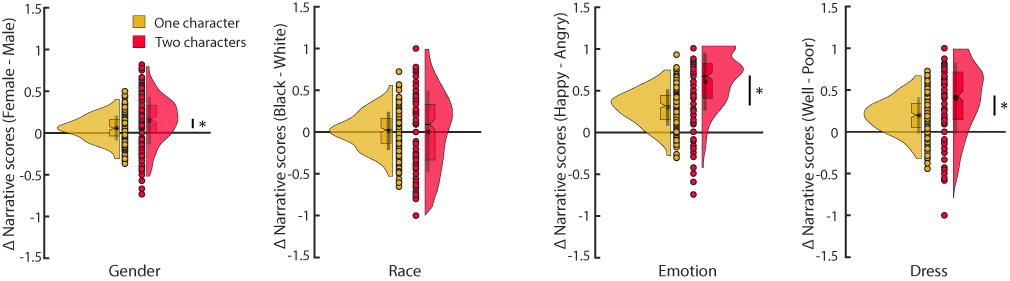
How do other’s characteristics modify our judgments? In a study published today in Frontiers in Psychology we show that judgments are affected by single characteristics, like gender or how others dress, and that these are moderated by political leaning https://t.co/8QlVdkar2j 1/5
For this study, we created a novel ‘Narrative Generative Survey’ in which we crafted unique brief narratives to assess at the population level distinct explicit attitudinal biases. Participants showed strong social contrast effects for several characteristics. 3/5
Are you a BCI researcher from a low- or middle-income country? Economic restrictions prevent you from attending the #BCI Meeting? If that sounds familiar to you, you should apply to be a speaker at the Global BCI Session. + info 👇
https://t.co/CudMy1Bxru
@BciSociety
🎉Exciting news! Our lab's first paper, "Vocal labeling of others by nonhuman primates," is now published in @Science! 🐒 Dive into our findings on how marmoset monkeys use vocal labels similar to human names and dialects. Check it out! 1/6
https://t.co/7iHBLByfRW