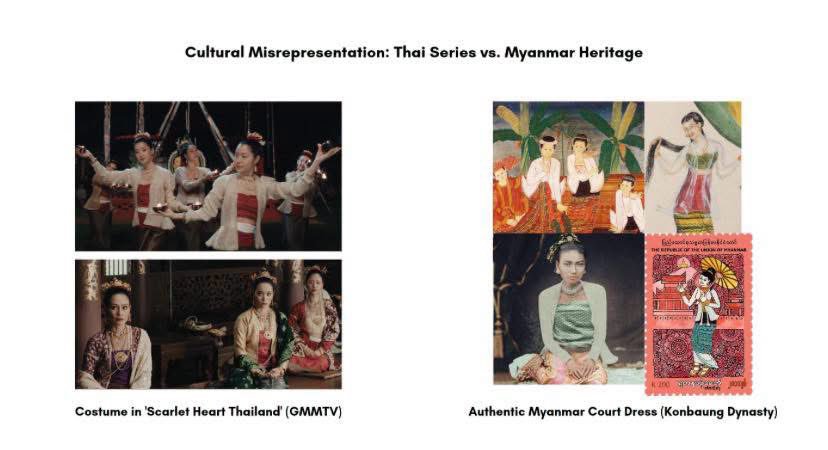
There is no record in Myanmar’s history of stealing or copying others cultures,traditions and costumes
မြန်မာ့သမိုင်းမာတခြားသူတွေရဲ့ ယဉ်ကျေးမှုဓလေ့ထုံးတမ်းနဲ့ဝတ်စုံတွေကိုခိုးယူကူးယူတာမျိုးမှတ်တမ်းတင်ထားတာမရှိဘူး
GMMTV ACCOUNTABILITY
#RespectMyanmarCulture#CreditOurHeritage
gmmtv cancela logo essa droga de série, ou se retrate e dê os créditos de figurino como inspirados na cultura birmanesa, oq vai ser extremamente vergonhoso pra uma serie que se passa na tailândia
GMMTV, Myanmar people are raising these concerns because cultural heritage is deeply meaningful to us. Would you be willing to listen to our feedback and provide an official clarification? @GMMTV@ScarletHeartTH
RESPECT MYANMAR
GMMTV ACCOUNTABILITY
#RespectMyanmarCulture
#CreditOurHeritage
#ScarletHeartTH
𝐇𝐭𝐚𝐢𝐧𝐠𝐦𝐚𝐭𝐡𝐞𝐢𝐧 (ထိုင်မသိမ်း) is not simply a name for a traditional Burmese outfit. It refers to a specific garment with its own history, construction, and cultural significance.
Myanmar's traditional clothing evolved across different dynasties, and the styles worn during the early Konbaung period, Amarapura era, and later Yadanabon period were not necessarily the same. Even the cut of a garment, its fastening, its decorative details, and the way it was worn could reflect a particular period and social rank.
Htaingmathein is traditionally understood as a woman's upper garment, worn with a byan htamein (ဗြန့်ထဘီ), rather than a term for the entire ensemble. These distinctions may seem minor to some, but when the terminology is repeatedly used incorrectly, an important part of cultural knowledge can gradually be lost.
This is precisely why historical research matters in period dramas. Traditional clothing is not merely an aesthetic choice; it carries information about the people, period, and culture it represents.
When costumes in #ScarletHeartThailand appear to draw on Myanmar court attire, it raises a legitimate question: were the garments researched according to their historical origins, construction, and period, or were different styles combined simply because they looked suitable for a historical setting?
Lanna and Myanmar share a long and complex history, but historical connections do not make their respective clothing traditions interchangeable. Similarities should be examined in context, and identifiable cultural influences deserve accurate recognition.
Historical fiction allows creative freedom, but creative freedom does not make historical research optional. When a production invests years in developing a period drama, understanding the origins of the clothing used to build its world should be part of that preparation. Otherwise, what is presented as historical atmosphere risks becoming a mixture of cultural references without sufficient historical grounding.
𝙊𝙪𝙧 𝙩𝙧𝙖𝙙𝙞𝙩𝙞𝙤𝙣𝙖𝙡 𝙜𝙖𝙧𝙢𝙚𝙣𝙩𝙨 𝙝𝙖𝙫𝙚 𝙣𝙖𝙢𝙚𝙨, 𝙝𝙞𝙨𝙩𝙤𝙧𝙞𝙚𝙨, 𝙖𝙣𝙙 𝙢𝙚𝙖𝙣𝙞𝙣𝙜𝙨. They deserve more than to be treated as interchangeable costumes.
We sincerely hope @GMMTV and the @ScarletHeartTH production team will provide appropriate acknowledgment of Myanmar's cultural heritage wherever it has been incorporated into the series. If these elements are retained, I hope their origins will be clearly credited in the episodes or accompanying production materials.
#ScarletHeartTH
#BurmeseHtaingmathein