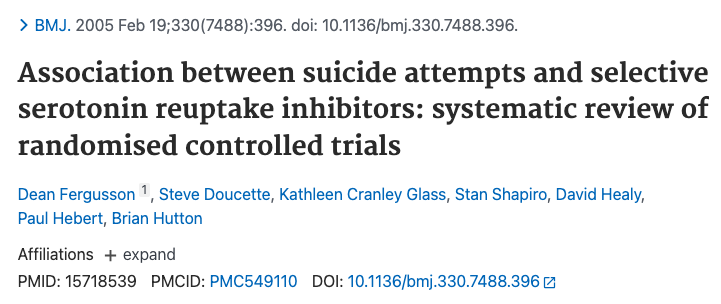
Despite 49 international drug regulatory warnings on psychiatric drugs citing effects of mania, hostility, violence and even homicidal ideation, and dozens of high profile shootings/killings tied to psychiatric drug use, there has yet to be a federal investigation on the link between psychiatric drugs and acts of senseless violence.
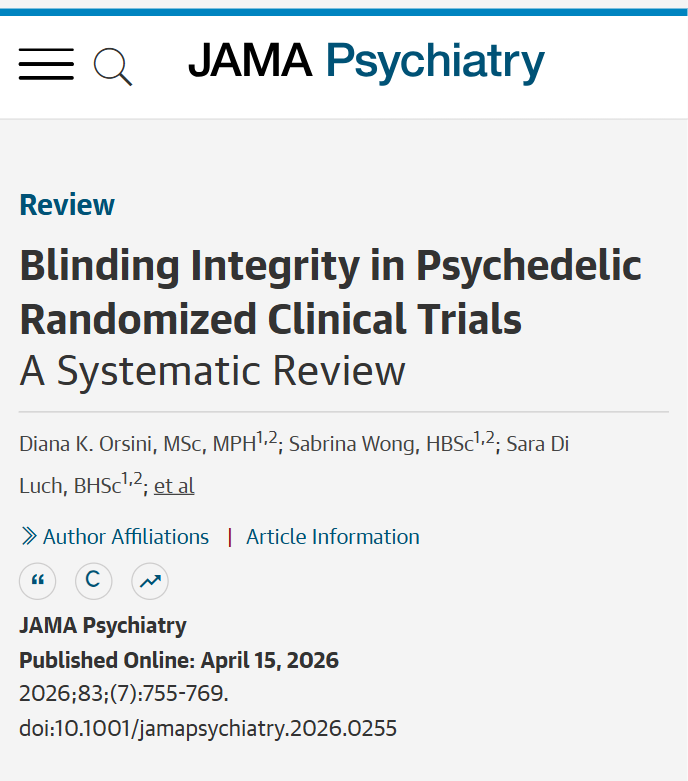
📄JAMA Psychiatry #Review: Functional unblinding was common in most #psychedelic randomized clinical trials for psychiatric disorders, with >70% correctly identifying treatment allocation, raising concerns for trial validity.
https://t.co/HXeSemFb8l
If anyone has had blood work done while in PSSD/Protracted withdrawal, could you share the results with with me in a direct message chat?
I'm looking for neurotransmitter and neurotransmitter metabolites plus hormones.
Examples
(Serotonin, Dopamine, nopinephrine, 5-H1AA, Prolactin, Luteinizing Hormone (LH), Quinolinic acid, Kynurenic acid).
Also if you happen to see a reading that is very high or very low for anything I didn't list. We can always look into that too.
I suspect some readings should be off in PSSD. I know there will be the naysayers but... the blood brain barrier... Well true, it's also pharmaceutical marketing to steer people away from looking.
This is because there is a lot of similarity in operations of neurotransmitter and neurons in the body like the brain. If the marker in one drops the other will typically drop too.
PSSD isn't just in the brain, it's also in the body. The Blood Brain Barrier argument is another pharmaceutical misdirection.
For example when you are actively taking a SSRI, the serotonin neurons in the brain and neurons in the body are mechanically almost exactly the same and the effect of the drug is the same to both. What's different is the down stream changes, not the neuron to drug interactions.
This is why you can read low blood serotonin while actively taking a SSRI and it's representative of changes in both the body and brain. The readings will differ, but not the fact that tissue levels have plummeted.
@KevinRo90321458 maybe some anesthetics could slow down the serotoninergic neurons firing? Something that is anti-convulsant? Isoflurane? Ketamine? Nitrous oxide?
I still have to inform prescribers that mania after an antidepressant is an adverse drug reaction.. not underlying bipolar. Repeat lies often enough it becomes truth? Its frightening medical decisions are made off marketing propaganda and not science. Millions impacted.
I took some few doses of Escitalopram, and lost most of my capacity to mentally imagine and feel romantic emotions.
Yes, as weird as that sounds, it happened.
And not only did it happened to me, it has happened to many many people.
Not necessarily with Escitalopram, but with many other medications also. This includes SSRIs, Finasteride, Accutane, even vaccines.
Some call it Post Exposure Syndrome.
The first RCT of the ketogenic diet as a treatment for schizophrenia and bipolar I disorder is now published!
Compared to diet as usual, keto participants were more likely to experience:
✅ Improved metabolic health (weight, HbA1c, and
insulin resistance)
✅ Improved psychiatric symptoms
✅ Improved cognitive performance
State of the Union summary of the effect of lithium on cognitive function congratulations to Rosalyn Deng and members of my research team bringing this information together… article free open access
https://t.co/A5uPXbzSJf
@Psiquiatripa Décadas de pesquisa não encontraram uma fisiopatológico consistente ou etiologia biológica clara para a depressão como entidade discreta. Discutir mecanismos hipotéticos não torna o diagnóstico mais ‘válido’ — ele continua sendo uma categoria subjetiva que mascara fatores. Relax
@CyberMoonSurfer@jameswebb_nasa Os dois episódios que fui no Lutz são os melhores. Com grande viés de seleção. Mas são mesmo. Só colocar no yt Lutz Tiago gil.