@ya35122968 hope that, these fixed‑price warrants are indeed extremely cheap, with a 10% premium and a price of just 4 yen. In reality, this is the price of a two‑week option, not a two‑year one—just compare it with MSTR. As for the underlying shares included, institutions can hedge
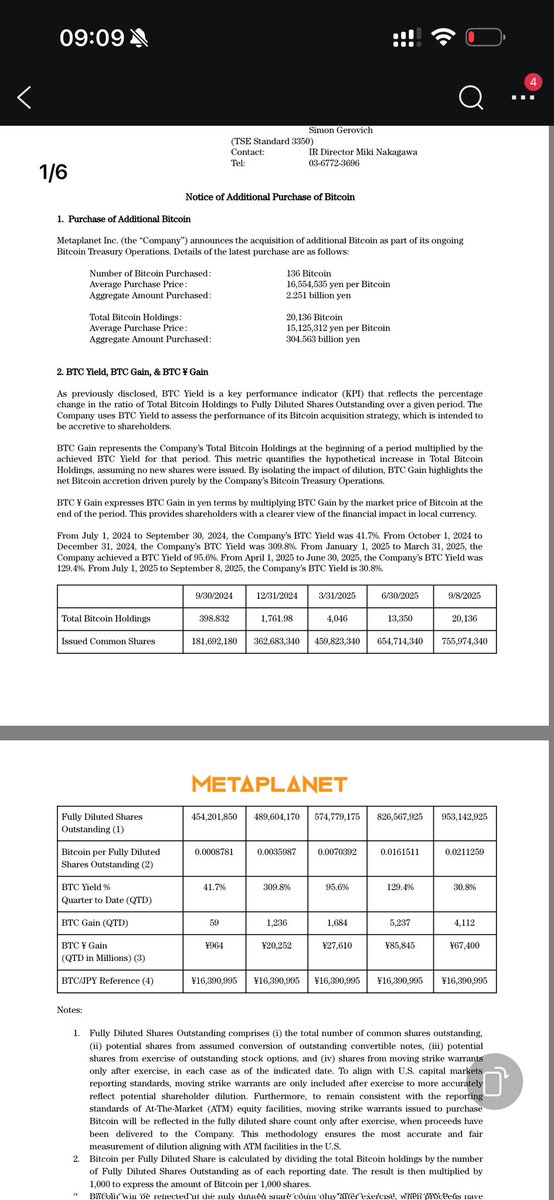
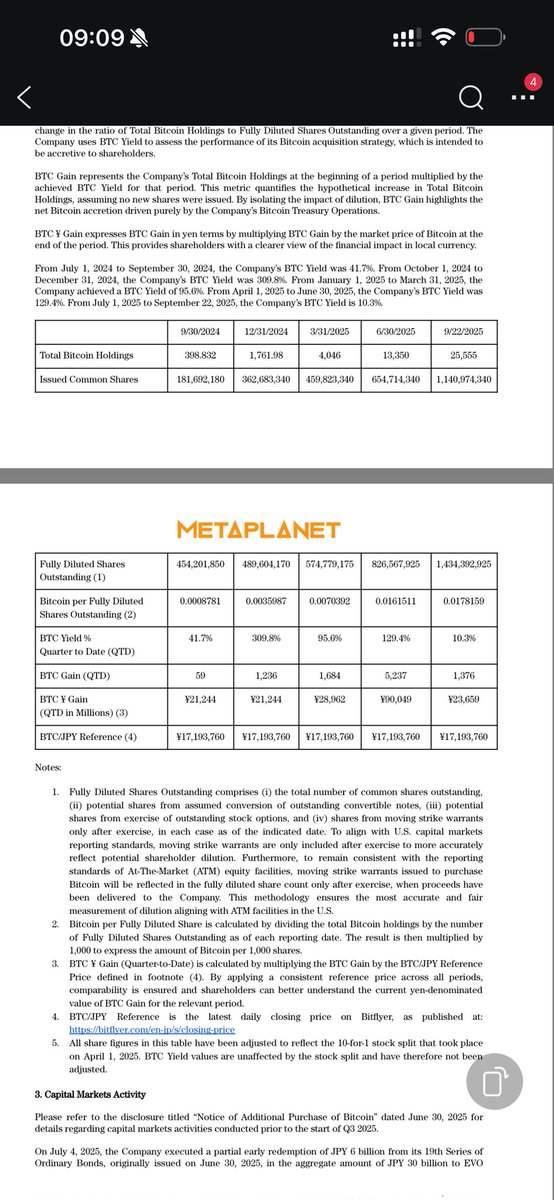
@ya35122968 been the same every time, so there’s some kind of incentive —likely to maintain management’s control. That’s how I understood it last year, and I can accept it. Of course, I’d much prefer if they would release similar tables again; we haven’t had one in a long time.
@ya35122968 I don’t think this kind of incentive is inherently problematic. But if it causes management to blindly issue new shares during bear markets just to increase the number of their own stock options, that creates a misalignment with our interests. I wonder if the terms changed.
@ya35122968 I asked about this last year but never got a response. So my understanding is that these are stock options exercised at a low price—meaning equity incentives. You can calculate multiple periods, and it’s the same every single time.
@RoaringRagnar You have considerable influence. I want to know if this is still the case. I believe management’s interests are not fully aligned with shareholders’ in this latest move.
@ya35122968 You can calculate the latest three periods as well, and the pattern is the same as before. Also, no similar reports have been released since that large round of financing.
@ya35122968 such as,every time the common outstanding shares increase by 100,000 shares, the fully diluted share count will increase by 125,000 shares.
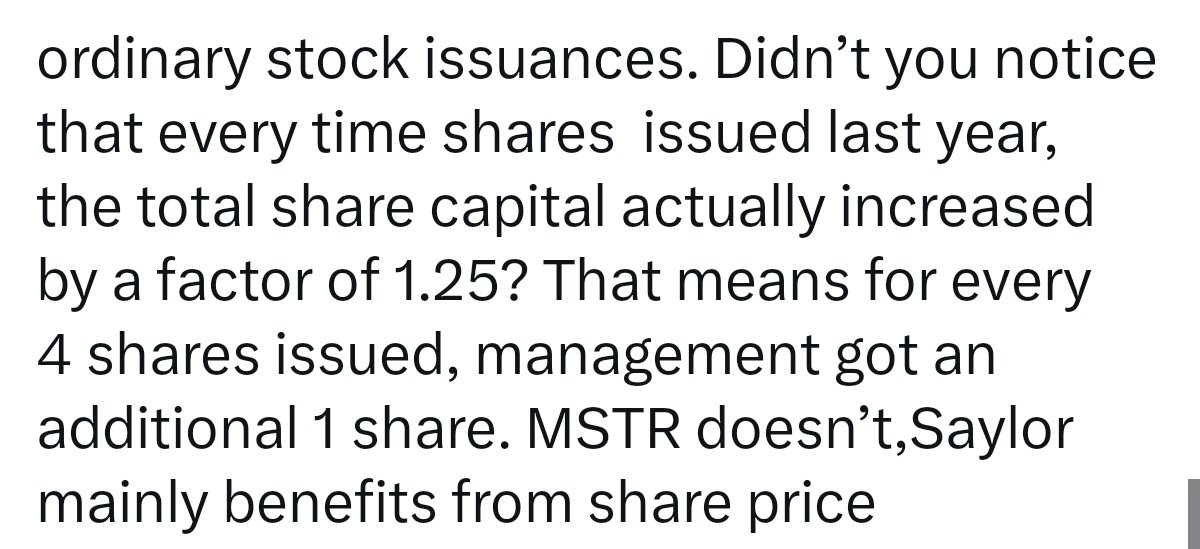
@ya35122968 ordinary stock issuances. Didn’t you notice that every time shares issued last year, the total share capital actually increased by a factor of 1.25? That means for every 4 shares issued, management got an additional 1 share. MSTR doesn’t,Saylor mainly benefits from share price
Here's something interesting: ABTC's market cap is close to $10 billion, and HUT owns nearly 80% of it. Even after accounting for dilution, it should still hold more than 60%. Yet HUT's own market cap is less than $3 billion.
@K2FsrthSRdvVPT4@ya35122968 yes,but it demand no exercise,or the shorter know evo will sell enough,They will not be afraid. We need to control the daily ratio, for example, not exceeding 15% of the day's trading volume.
@ya35122968 hope to limit the pace . Excessive exercise align with short sellers and gradually erode the confidence of holders, counterproductive to the long-term performance. we should strike a balance between BTC per share and investor confidence, and maintain an appropriate exercise pace.
@ya35122968 The market is good today. I hope to set an upper limit on the proportion of EVO exercise volume to the day's total trading volume— 15% or 20%. prevent excessive suppression. the proportion was too high before, making it seem as if EVO was shorting the company.