As trading migrates on-chain, cross-chain arbitrage is poised to become the next frontier of MEV⚡️
We study this mechanism with a profit-cost model to pinpoint when to hold vs bridge and a year-long measurement that reveals landscape, execution dynamics, and market structure🧵
That's because this dude doesn't know what education is.
He speaks of growing wheat, herding sheep, riding a horse, and so on, but in the era of these skills, this was the kind of education given to slaves.
Only a slave, a person who was owned as property, and used as a machine for a task, could be expected to do one task for his whole life.
A gentleman, or even a freeman of the lower classes, was not a machine for labor, but a person who could be expected to act in his own interests, and thus would need to do many different things throughout his life, depending on what served his goals at the time.
And he would need to be able to independently learn these tasks, rather than needing to be taught them in childhood.
Therefore if a boy was to formally educated, that might include some of gentleman's skills (riding, fighting with a sword, the management of finances), but his education was centered around what education really meant:
A fundamental grounding in how to live and thrive as an independent and free-willed person.
Thus, he was taught the seven liberal arts of classical antiquity:
- Arithmetic
- Geometry
- Music
- Astronomy
- Grammar
- Logic
- Rhetoric
These were not trade skills in the sense that they did not enable the performance of any particular trade or task, but that wasn't the point.
The point was that they taught the young gentleman how to think and learn.
By contrast, modern government schools were founded to train clerks and factory workers at public expense... a servant class with the specific skills necessary to be useful workers, but not the general education to be independent or question their betters?
Have you noticed which two of these arts are utterly absent from a modern government-school "education"?
That's right, logic and rhetoric. Logic is how to arrive at true conclusions from known facts. Rhetoric is how to persuade.
A servant educated in logic might notice that the things he is being told are false. A servant educated in rhetoric might notice the techniques that are being used to persuade him to act in the rulers' interests instead of his own.
If you conceive of your children's education as training in career skills, whether that be growing rice or programming a computer, you are preparing them to be slaves, not free men.
If you properly prepare them to be free men, what skills will be lucrative or useful twenty years from now is irrelevant, because they will be prepared to learn them.
In my opinion, the seven liberal arts of the modern world are:
- Logic: how to derive truth from known facts
- Statistics: how to understand the implications of data
- Rhetoric: how to persuade, and spot persuasion tactics
- Research: how to gather information on an unknown subject
- (Practical) Psychology: how to discern and understand the true motives of others
- Investment: how to manage and grow existing assets
- Agency: how to make decisions about what course to pursue, and proactively take action to pursue it.
Notice that you didn't learn any of these things in school, even if you went to a so-called "liberal arts" college. Instead, they taught you things about mitochondria and calculus and symbolism in Jon Steinbeck novels where a boy has a dog, and the dog dies.
That's because liberal arts, whether you define them as I have, or slightly differently, are the arts of the master, the arts that make one a master, and therefore not be taught in a school for slaves.
Worry less about which "career skills" AI will take over, and more about whether you are training to be, and training your kids to be, high-agency, perceptive, self-motivated people who can navigate an unknowable future with an adaptable mind.
Going to share an intense PVP Battle that i faced in my MEV Journey:
it isn't much but i think its worth sharing.
This was a few months ago, I had a liquidation bot running (barely profitable) and a uni v2 arb bot...
@nonsens3, @NathanWorsley_, and I spent the last couple years running one of the dominant MEV bots on @avalancheavax. We learned a bunch of lessons about graph algorithms, networking, the EVM, and more that I share in my blog post below.
https://t.co/Rlr9rSBcOc
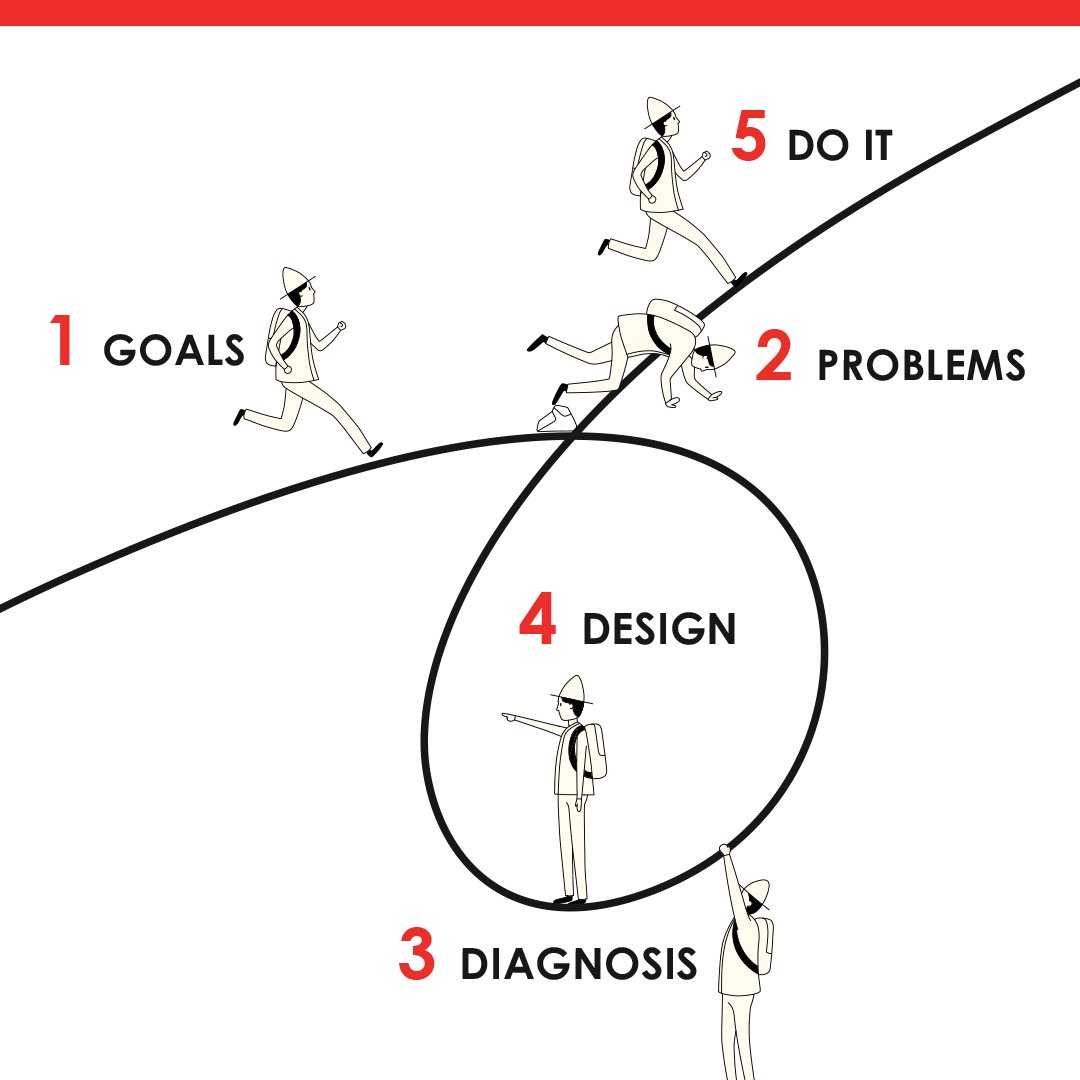
It seems to me that the personal evolutionary process takes place in five distinct steps. If you can do those five things well, you will almost certainly be successful. Together, these five steps make up a loop, like the one here. #principleoftheday
@zhaojun_sh@MultichainOrg That’s what I thought too. If my source trx is earlier, then bridging trx must be earlier. This is the case most of the time, but I notice a few exceptions, not sure if they are bugs or something else
@MultichainOrg@zhaojun_sh Do you have code/doc regarding the order of confirming bridge trx? I’m working on a cross chain bot, the order of bridging trx is very important to me, many thanks.
@ErinDana@Barn_Bridge@Barn_Bridge needs to go multichain, too expensive to use on eth, product needs to be cheaper to use first for ppl to experiment on
@conraddit@Milkomeda_com But you can already deploy any solidity contract to any evm compatible L1/L2, with plenty of liquidity too, so what’s advantage of using milkomeda?