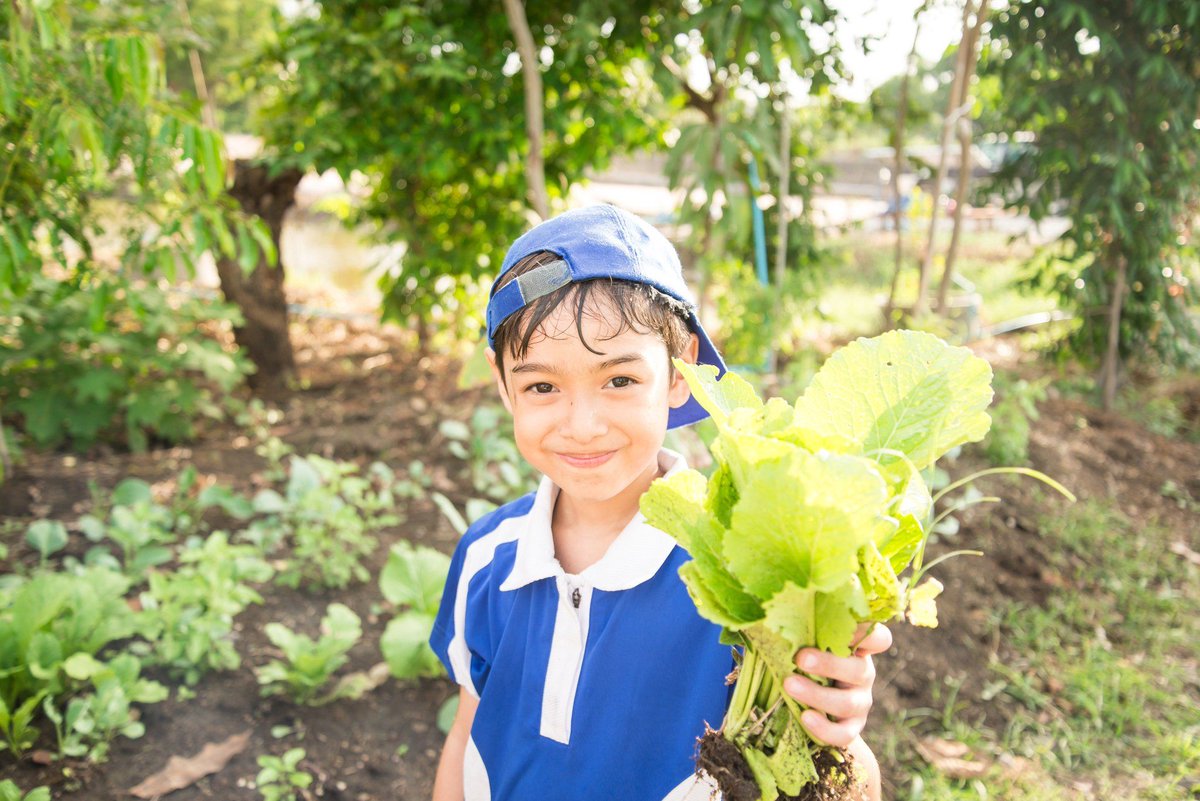
A great resource to show students the benefits of growing fresh, healthy food in a school community garden and donating through a food bank to so many families in need of quality food! How amazing! #UoNTeach https://t.co/SrkqTE6NSY
The Healthy Kids Association found that only 5.4% of Australian children eat enough vegetables! These findings are alarming however, teachers can use statistics like this to inform their educational programming to increase and extend student knowledge of healthy eating #UoNTeach https://t.co/Q64n8A7bKU
It is so important for students to consider the global impact that natural disasters can have on food security, nutrition and income. This learning allows students to build empathy, and understanding of food availability and families that can not access it. #UoNTeach https://t.co/pljtDnKaEF
Drought can have devastating impacts on pastoralists’ food security, nutrition and income.
Check out how @FAO assisted Ethiopian pastoralists to cope with recurrent drought: https://t.co/5G7rIMrzp3
#UNFAOresults
What a valuable resource to strengthen students numeracy skills and provide learning that is meaningful, relevant and hands on when using the community garden! 21st century learning allows students to engage in thinking & problem solving that relates to the real world #UoNTeach https://t.co/BqvOTDrDfm
What a fantastic idea that could be used to involve the community! Students could grow their fruit and vegetables and create meals the school and community could enjoy over morning or afternoon tea! #UoNTeach https://t.co/cheGxhK79M
Definitely! A school garden provides students with the opportunities to research how food is grown in Australia and in other parts of the world. They can also consider how climate can affect the growth of fruit and vegetables. #UoNTeach https://t.co/aPcyYb8y0f
Rosier (2011) discusses the different services and resources in local communities that could be used for families experiencing food insecurity. This would be great for students to brainstorm all the ways they could help their local community! #UoNTeach
The benefits to students who grow food in their school allows the reflection of global education principles through the modeling of sustainable futures and service to the community, environment and humanity (Wolsey & Lapp, 2014) #UoNTeach
School gardens provide students with opportunities to extend what they have learned about sustainable food sources. They allow students to develop care for the community, for each other at the school, and for the world in which they live (Wolsey & Lapp, 2014) #UoNTeach
Selmer, Valentine, Luna, Rummel and Rye (2016) discuss how a school garden can develop students understanding of two-dimensional arrays and interpret length and measurement. Garden-based learning can ultimately allow the integration of science and mathematics! #UoNTeach
How relevant, important and vital is sustainable education in Australia. We as educators need to help our students, school, community and global neighbours experiencing food insecurity. What better way then through education, fundraising and school garden programs #UoNTeach https://t.co/r0yx8YAex5
(2/2) Burns (2004) idea of quantity of food verse quality of food would be a fantastic discussion with students when learning about nutrition and living sustainably. It could also focus on diversity and concern for equality when looking at meals of students globally #UoNTeach
(1/2) Burns (2004) suggests that nutritional education is often poor among disadvantaged populations. He further discusses how households often have an adequate QUANTITY of food supplies however, the QUALITY of food may be poor and have no nutritional value #UoNTeach
This is a great video to show students the benefits of growing a garden and the positive effects it can have on the school, community and individually. Through meaningful discussions about sustainability students can discuss hunger, poverty and food insecurity #UoNTeach https://t.co/rw0v4A21x9
Laurie, Faber and Maduna (2017) study found that school food gardens improved nutrition among South African students. Therefore, training of educators and government support is vital to ensure sustainability education in South African schools. #UoNTeach
(2/2) Using a gardening journal allows students to highlight the numeracy and mathematical skills used when planning and building their community garden. Lyon and Bragg (2011) suggest this type of project gives students a desire to understand the mathematics involved #UoNTeach
(1/2) Lyon and Bragg (2011) suggest that the development of a kitchen garden can allow students to apply mathematical understandings to real-life situations. Integrating multiple Key Learning Areas provides students with meaningful and connected curriculum content. #UoNTeach
This school and community have participated in fundraising to fight hunger and malnutrition in Zimbabwe. What a great way to use real-world problem solving to #teach the global perspectives of sustainable futures and identity and cultural diversity @CAFODLiverpool#UoNTeach https://t.co/JXYrbkzzvx
There has been some amazing fundraising going in within the Archdiocese of Liverpool from schools!
Here is @GreatCrosby school, and @Y5SJS @StJosephsLeigh who have all been a part of helping to fight hunger and malnutrition in Zimbabwe this Lent!
Thank you - you are all stars.
@niallprentice89 What a fantastic resource! Such a global issue for all students, more needs to be included in our teaching programs to promote students resilience, empathy and awareness of how serious this problem is.
Magombeyi, Taigbenu and Barron (2016) explain that rural poverty is highest in Zimbabwe with 68.7% classified as poor, followed by Mozambique, South Africa and Botswana. In all four countries, food insecurity and poverty coincided with areas of low water availability #UoNTeach