Bees are tiny creatures with a huge impact on our planet.
Protecting pollinators means protecting our food, flowers, and future. Do you think every country should follow this step?
The latest Living Planet Report tracked nearly 35,000 populations across 5,495 vertebrate species and found an average decline of 73 percent in monitored wildlife population sizes in just 50 years. Not 73 percent of individual animals gone.
They had lost their homes, their belongings, everything. And even so, they didn’t forget about him.
They didn’t think twice: they climbed over the remains of the collapsed building, dug with their hands, and, with a patience that breaks your heart,
We talk about development, roads, houses, and furniture — but rarely talk about the silent lives destroyed behind them.
Before cutting a tree, remember:
someone may be living there.
For us, it was just one tree.
For them, it was their home.
A place to sleep.
A place to hide.
A place to raise their babies.
A place they trusted every single day.
And then one morning… it was gone.
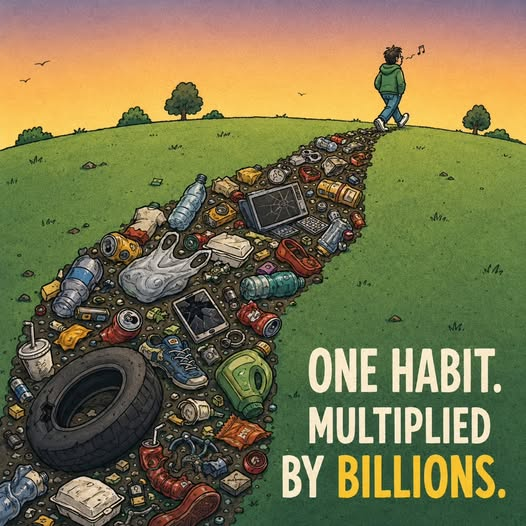
“One person throwing one bottle doesn’t matter…”
Now multiply that thought by 8 billions.
Every plastic bottle, every food wrapper, every broken gadget, every careless habit becomes a scar on the planet when we all do it together.
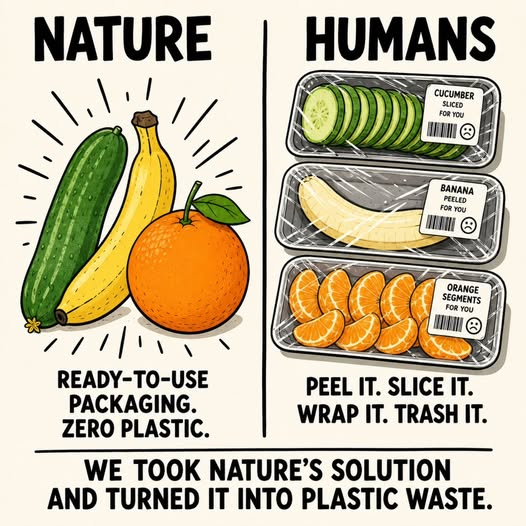
Nature: “Here, I made fruit with perfect biodegradable packaging.”
Humans: “Nice… but what if we peel it, slice it, put it in a plastic tray, wrap it in more plastic, add a barcode, and then call it convenience?”
We just added waste.
Nature already did the packaging for us
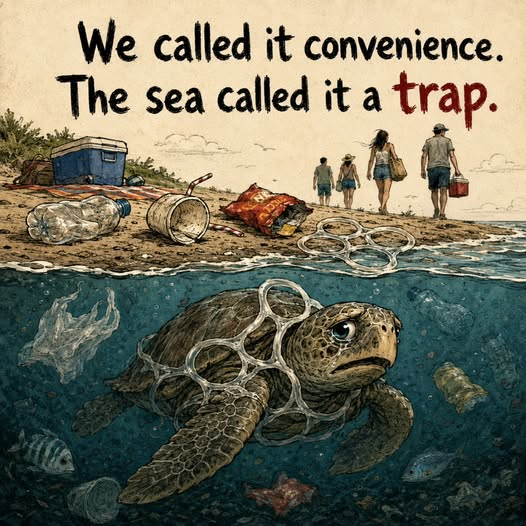
We called it convenience.
The ocean called it a trap.
A plastic bottle used for a few minutes…
A wrapper thrown without thinking…
A six-pack ring left behind…
For us, it was just waste.
For them, it became a cage.
We call it “human-wildlife conflict.”
But maybe the real question is — who entered whose home first?
We cut the forest.
We built roads, farms, resorts and villages inside their habitat.
Then when a tiger, leopard, elephant or any wild animal appears, we call it “dangerous.”