Announcing a strategic investment from @Amgen Ventures and existing investor Two Bear Capital to execute on our vision for the Enterprise AI Data Substrate: the governed layer that activates your data for AI, wherever it lives.
https://t.co/PJ7Ow9lnHx
TileDB is now https://t.co/2ltvWXMWBf.
Today, we are introducing the Enterprise AI Data Substrate: the governed layer that makes all your data AI-ready, wherever it lives.
Read the announcement 👇
https://t.co/bC40zEbvFG
Proof-of-concept and production are different problems.
Moving multimodal systems into production introduces new demands on reliability, monitoring, and maintenance — and the complexity of operationalizing them is often underestimated.
Read more 👇
https://t.co/a8ZBYFS3qt
Multimodal data requires expertise across multiple domains.
Yet organizations often struggle to find talent with the breadth needed to work across text analytics, image processing, time-series analysis, and other domain-specific methods.
Read more👇
https://t.co/l8FGc1CQiO
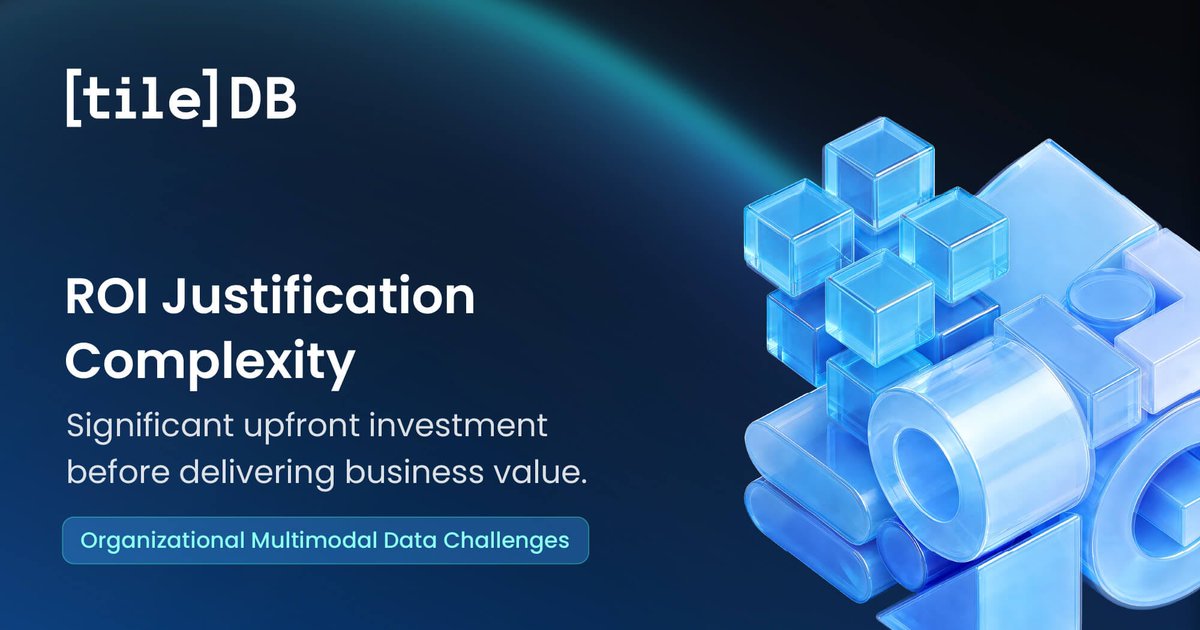
Multimodal data initiatives typically require significant upfront investment before delivering business value.
Executives often struggle to develop compelling business cases with traditional ROI frameworks.
Read more about multimodal data challenges 👇
https://t.co/32aGSfzvGh
Data quality varies significantly across modalities — different noise profiles, missing data patterns, reliability characteristics. Temporal and spatial alignment between modalities adds more.
Read more about multimodal data challenges 👇
https://t.co/AauqWpVlVG
High-resolution imagery, video, and scientific data demand enormous storage and computational resources.
Distributed storage. Tiered strategies. Parallel computing. Edge processing.
Read more about all multimodal data challenges 👇
https://t.co/Vgdciugoa8
Combining different data types presents substantial technical difficulties for HCLS organizations.
Integrating multimodal data requires custom ETL pipelines, specialized storage architectures, metadata frameworks & ontology mapping.
Read more about multimodal data challenges 👇
A patient isn't a row in a database; it's demographics, clinical notes, imaging, time-series vitals and genomic sequences combined.
Each modality demands different storage & query patterns. Multimodal data is a design problem before it's an analysis one.
https://t.co/Qc94EAXaET
Years of pharma research live in scattered documents that no AI agent can use.
That's the silo problem multimodal data platforms must solve, not work around.
📖 From 𝘔𝘶𝘭𝘵𝘪𝘮𝘰𝘥𝘢𝘭 𝘋𝘢𝘵𝘢 𝘗𝘭𝘢𝘵𝘧𝘰𝘳𝘮𝘴: 𝘈 2026 𝘉𝘶𝘺𝘦𝘳'𝘴 𝘎𝘶𝘪𝘥𝘦
https://t.co/n89BxesPiE
🎉 Couldn't imagine a better afternoon to top off #BioITWorld.
We brought R&D leaders to Boston's Seaport to make multimodal scientific data a substrate AI agents can find, access, and trust.
A heartfelt thanks to our co-hosts @TTECDigital and @Microsoft.
Until the next one!
In a competitive biopharma market, multimodal omics data powers innovation.
But the infrastructure and tools to work with it are usually built as separate stacks.
📖 From 𝘔𝘶𝘭𝘵𝘪𝘮𝘰𝘥𝘢𝘭 𝘋𝘢𝘵𝘢 𝘗𝘭𝘢𝘵𝘧𝘰𝘳𝘮𝘴: 𝘈 2026 𝘉𝘶𝘺𝘦𝘳'𝘴 𝘎𝘶𝘪𝘥𝘦
https://t.co/GHPMKY6xOs
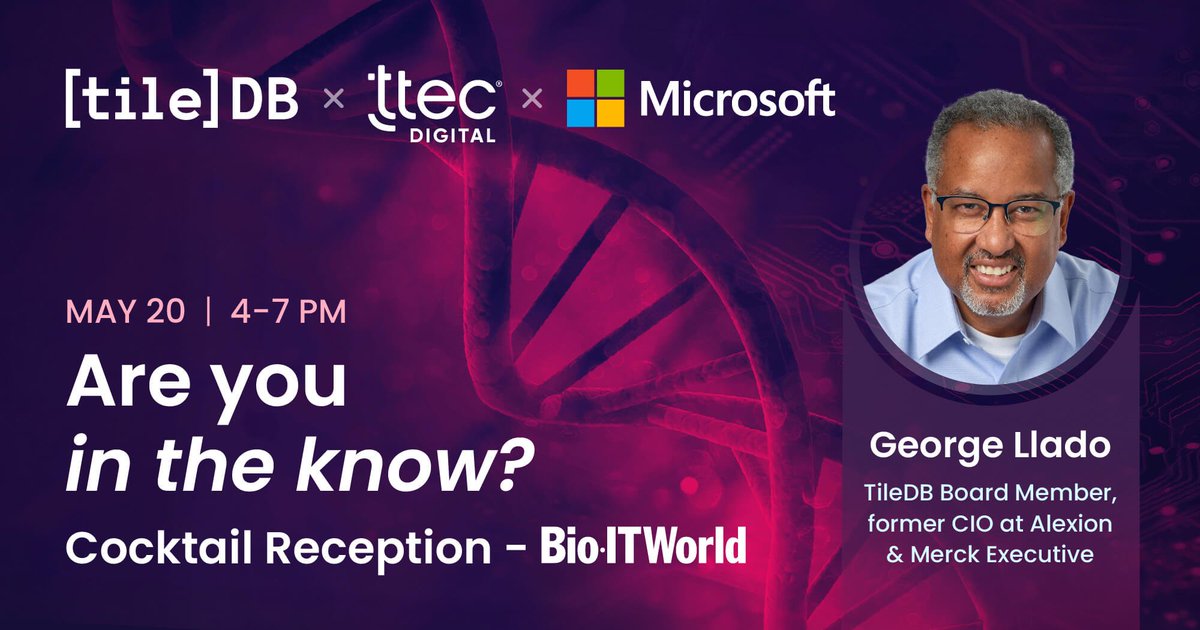
Gearing up for #BioITExpo in Boston next week. Wednesday, we're hosting a reception in the Seaport with @TTECDigital + @Microsoft.
George Llado, veteran pharma technologist & TileDB board member, will be joining us to discuss multimodal scientific data AI-readiness.
RSVP 👇
Petabytes of imaging, genomic, and clinical data — and every new modality forces a rebuild.
The question isn't whether you have enough data. It's whether your architecture can query it where it lives.
Read the complete guide 👇
https://t.co/KXGeDvBGJZ
Multiomics advances. Getting insights to the bedside in real time is a different problem. That gap isn't purely scientific. It's a data infrastructure one.
📖 Quote from 𝘔𝘶𝘭𝘵𝘪𝘮𝘰𝘥𝘢𝘭 𝘋𝘢𝘵𝘢 𝘗𝘭𝘢𝘵𝘧𝘰𝘳𝘮𝘴: 𝘈 2026 𝘉𝘶𝘺𝘦𝘳'𝘴 𝘎𝘶𝘪𝘥𝘦
https://t.co/hrtBxaUIUu
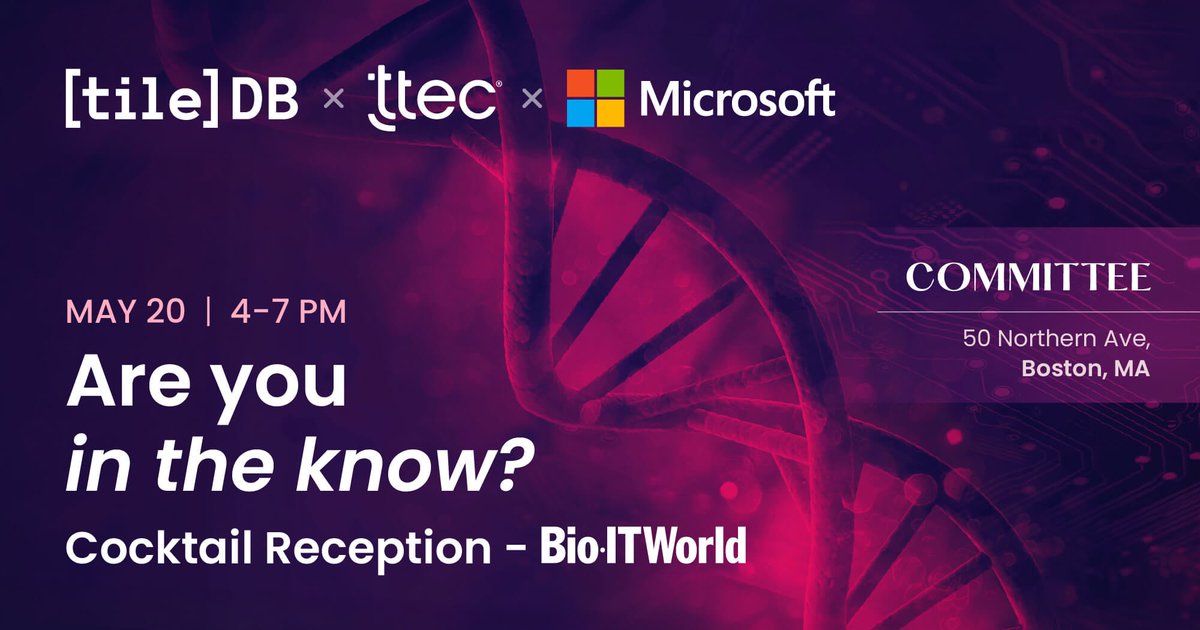
Are you 𝘪𝘯 𝘵𝘩𝘦 𝘬𝘯𝘰𝘸? We think you should be.
@TileDB, @TTECDigital and @Microsoft are bringing together biopharma leaders at #BioITExpo — drinks, real conversation, multimodal data AI-ready.
Your agent's not invited. Promise.
📅 May 20 | Boston
https://t.co/SLEGpkiRyn
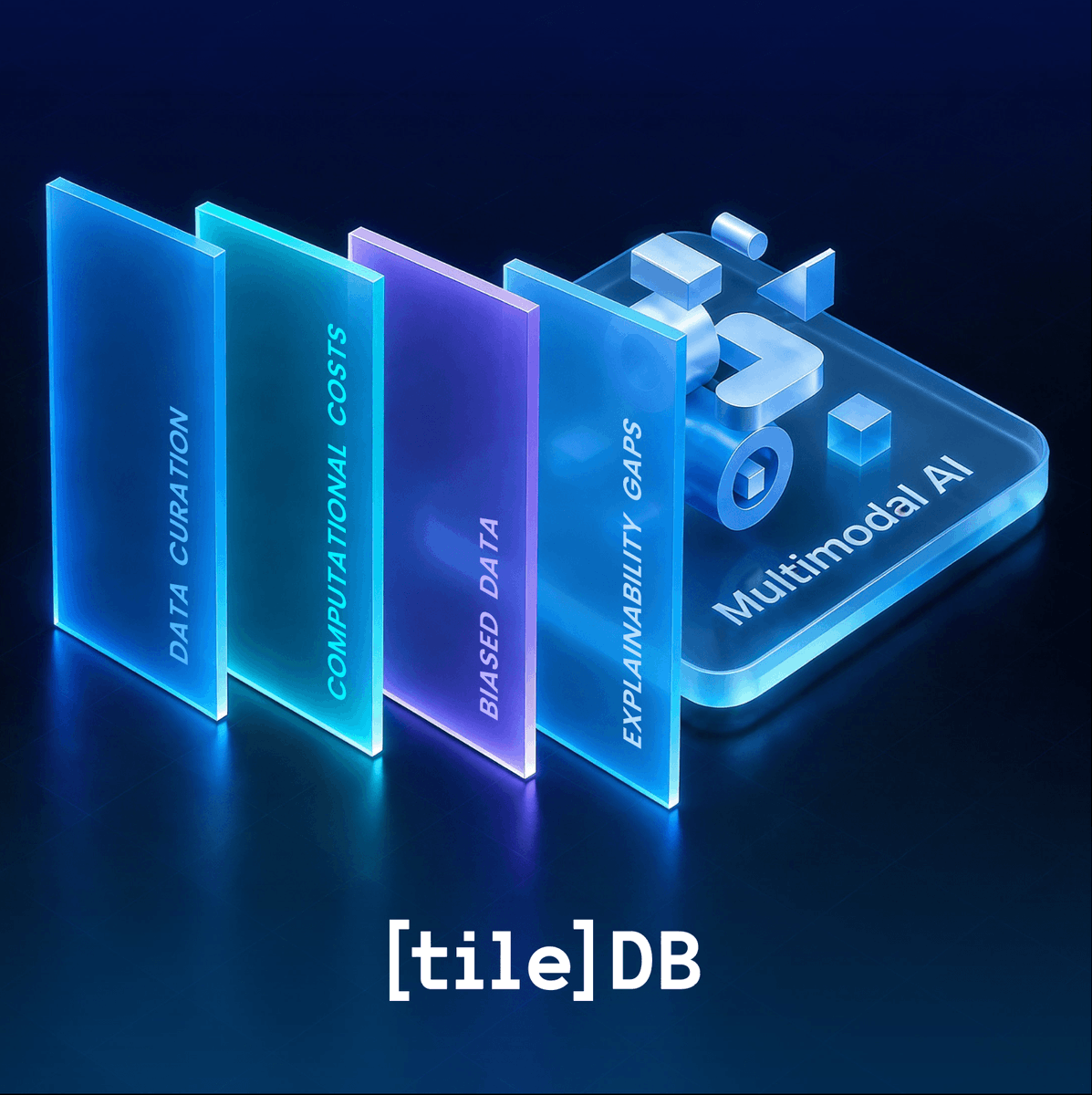
Multimodal AI has huge potential in healthcare — but scaling it faces real barriers: incompatible data formats, multiplying compute costs, modality bias, and explainability gaps that block regulatory approval.
Here's the full breakdown 👇
https://t.co/D8TfIIjZ4a
Multimodal AI, generative AI, and agentic AI increasingly overlap — but their core purposes differ.
One connects diverse data types. Another produces new outputs. A third acts autonomously. The distinctions shape your AI strategy.
Read more 👉 https://t.co/ill5f1ftGh