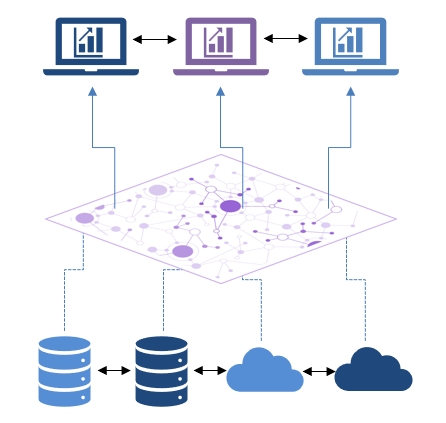
Timbr’s AI engine powers databases with ontological meaning, relationships and inference to accelerate engineering and delivery of data products and apps.
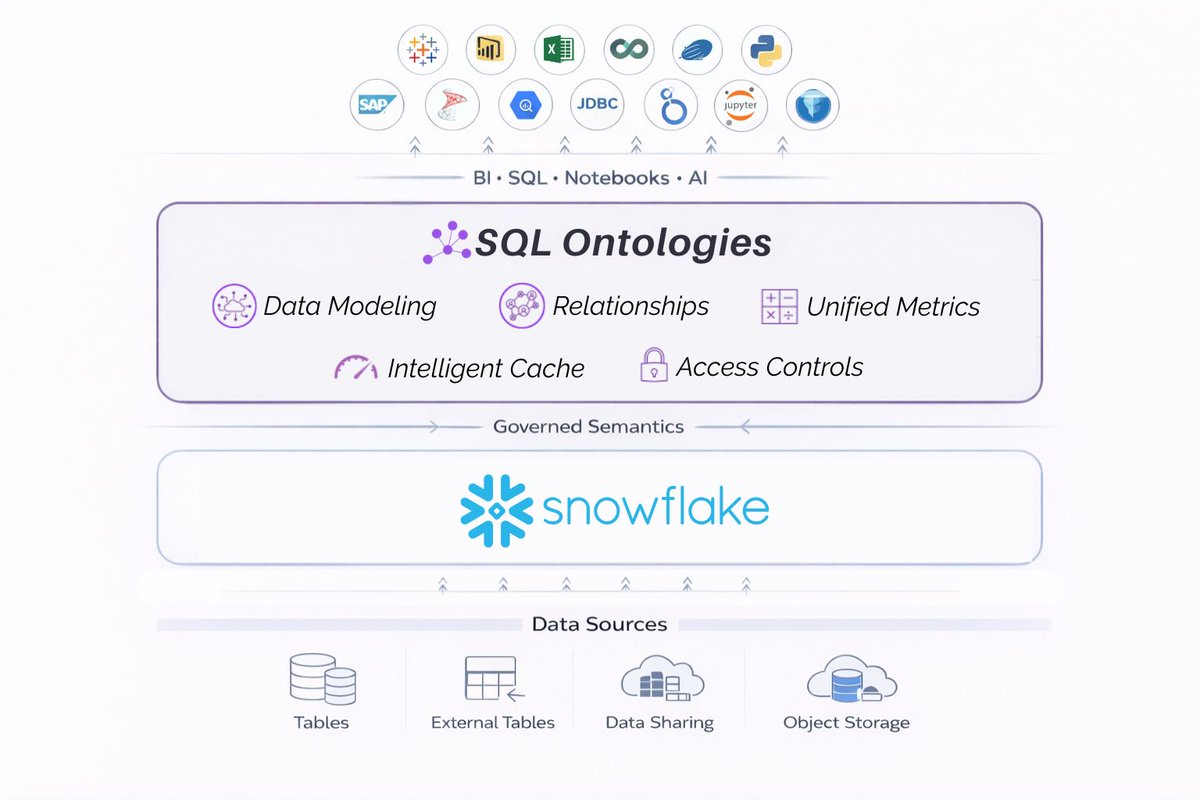
🎉We’re excited to announce Timbr’s native integration with Snowflake, enabling teams to query ontologies in SQL and power governed data agents across the Snowflake ecosystem.
Organizations are increasingly looking for ways to make semantic models, business context, and governed metrics accessible to both people and AI. With Timbr’s ontology-driven semantic layer and Snowflake’s data platform, that becomes significantly easier.
Key capabilities include:
✅ Native integration with Snowflake.
✅ Querying Timbr ontologies directly in SQL from Snowflake and Cortex.
✅ Building data agents directly from Snowflake's ecosystem, leveraging ontology-driven business context, relationships, OLAP and more.
✅ Support for Open Semantic Interoperability (OSI) and Snowflake Semantic Views.
✅ Bi-directional interoperability:
•Model in Timbr, push to Snowflake
• Model in Snowflake, load into Timbr
Timbr allows organizations to combine governed semantic models, ontology-based reasoning, and AI-ready data access while continuing to work within the Snowflake ecosystem.
Want to see a demo?
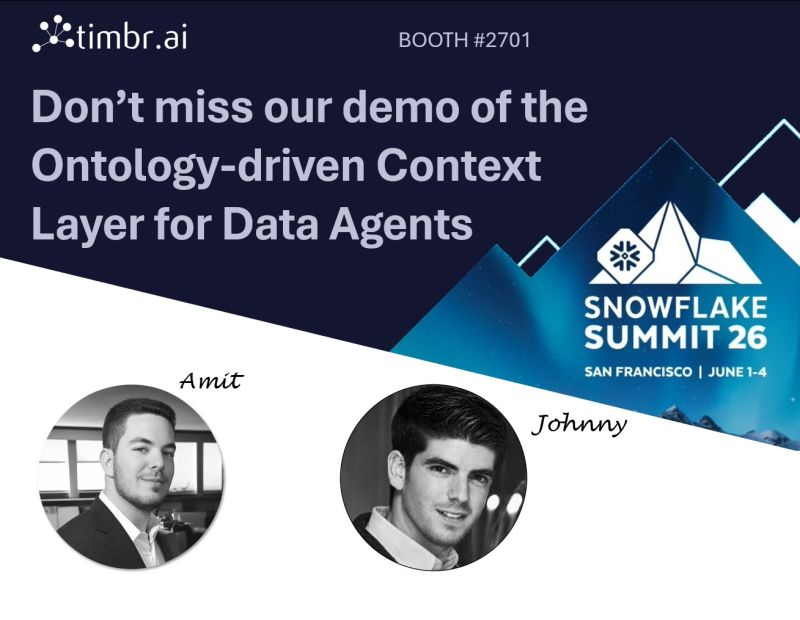
Visit us at the #SnowflakeSummit, booth #2701.
You can book a meeting here:
https://t.co/FNM0Thgzrl
You can always schedule a remote live demo here:
https://t.co/8MhI0FHFMB
#Snowflake #DataAI #SemanticLayer #Ontology #KnowledgeGraph #GraphRAG #DataAgents #GenAI #DataGovernance
If you are attending Snowflake's Summit 26 next week, don't miss the opportunity to meet our team and be amazed by the demo of https://t.co/IXWTX0tpCi's Ontology-driven Context Layer for Data Agents.
https://t.co/b9Kj7YYRCO
#SnowflakeSummit#DataAgents#AgenticAI #SemanticLayer #EnterpriseAI
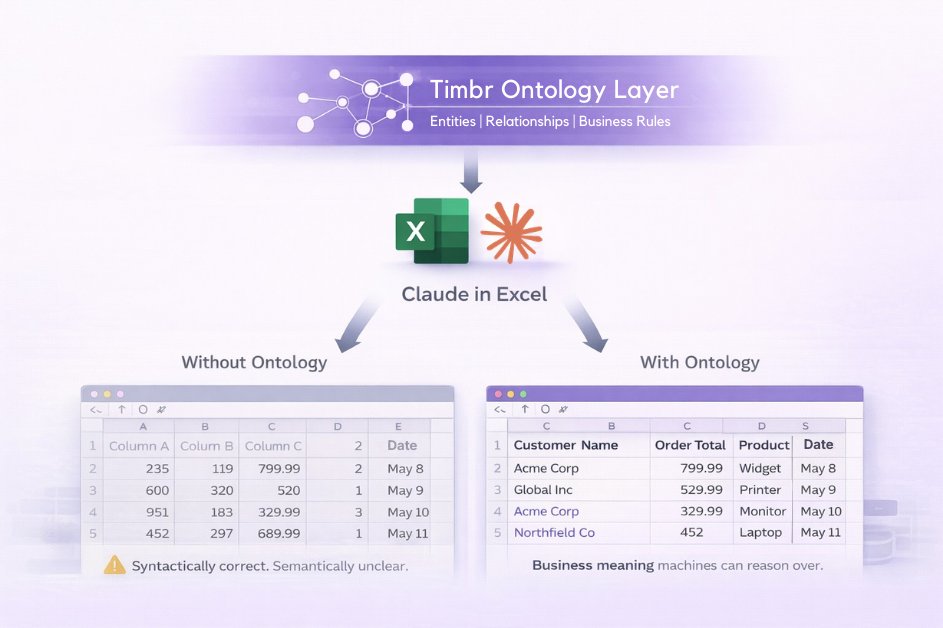
Most teams are asking "How do we make AI smarter in @msexcel?" 🤔
Wrong question.
When @claudeai opens your spreadsheet, it doesn't see your business. It sees rows and columns that already lost their relationships, definitions, and rules in transit from the data warehouse.
That's not an AI problem. It's a data foundation problem.
Gold Layer data was built for BI tools, not AI agents. It has no concept of what "customer," "revenue," or "churn risk" actually mean to your business. So even the smartest agent ends up reasoning over anonymous columns.
The teams moving fastest aren't chasing smarter agents. They're fixing the foundation first, with a semantic layer that gives AI data it can actually understand.
That's the Diamond Layer. That's what Timbr delivers.
🔗 https://t.co/QHhl8cPMYP
#EnterpriseAI #SemanticLayer #MicrosoftExcel #Ontology #DataStrategy #Claude
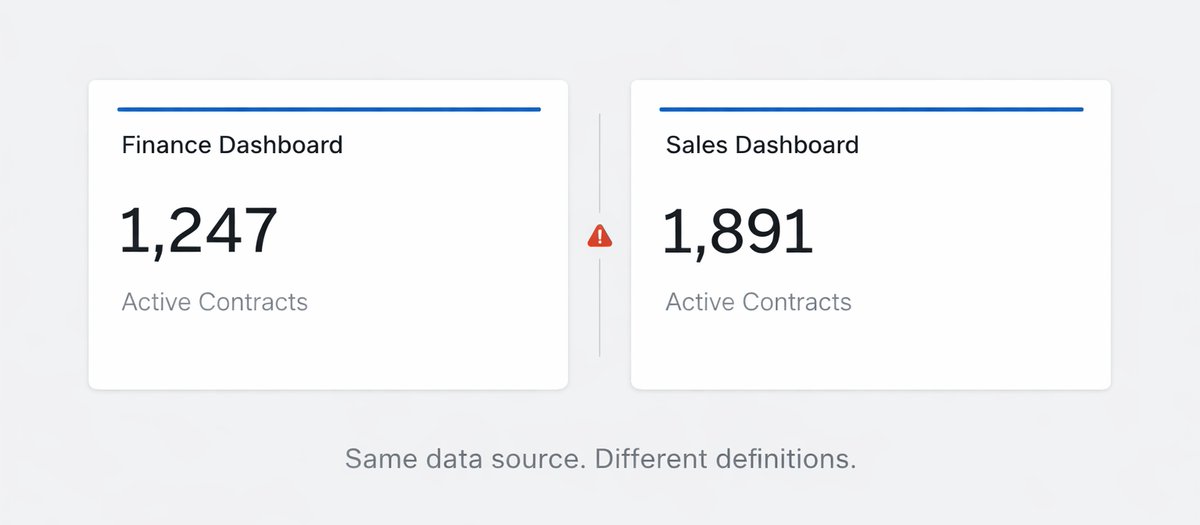
Finance and Sales show different numbers for the same metric.
Same platform. Same data. Different answers.
Nothing is broken.
The schema changed. DBT models updated. But the ontology, sitting in a separate triplestore, didn't.
Now, "Active Contract" means three different things.
This is semantic divergence. Not a modeling problem. An operational design problem.
SQL-based, co-located ontologies fix it by evolving with the same migrations and CI/CD as the warehouse.
Learn More: https://t.co/tfRFPkBnk7
#SemanticLayer #DataEngineering #KnowledgeGraphs #DataArchitecture #Ontology
Knowledge graphs didn’t fail in enterprises. They got isolated.
SPARQL-based platforms delivered strong semantics, but analysts didn’t query them, BI tools worked around them, and AI never learned to use them.
SQL won not because it’s perfect, but because it became the interface.
New piece on SQL vs SPARQL in the age of AI 👇
https://t.co/wJUWBeiwXC
#KnowledgeGraphs #SemanticLayer #SQL #EnterpriseData #AI
You open @Snowflake and see:
Hundreds of views. Dozens of dashboards. Three definitions of “monthly recurring revenue.”
Someone asks a GenAI copilot: “What’s our MRR trend by customer segment?”
The SQL runs. The number looks right. No one can prove it is.
The logic lives in scattered JOINs. Relationships were never modeled. “Active customer” means something different to every team.
This isn’t a Snowflake problem.
It’s not even an AI problem.
It’s a meaning problem.
We just published why ontology-based semantic layers are becoming critical when AI on Snowflake needs to be trustworthy, not just fast.
Read the full breakdown 👇
https://t.co/lcxv9qJ98G
#Snowflake #GenAI #SemanticLayer #DataArchitecture #Analytics
Ontology sounds academic. 🎓
Like something for philosophers, not data engineers.
But if you’ve ever aligned metric definitions, mapped tables across sources, or explained the same business concept for the 10th time…
Congrats, you’ve already been doing ontology work. You just didn’t call it that.
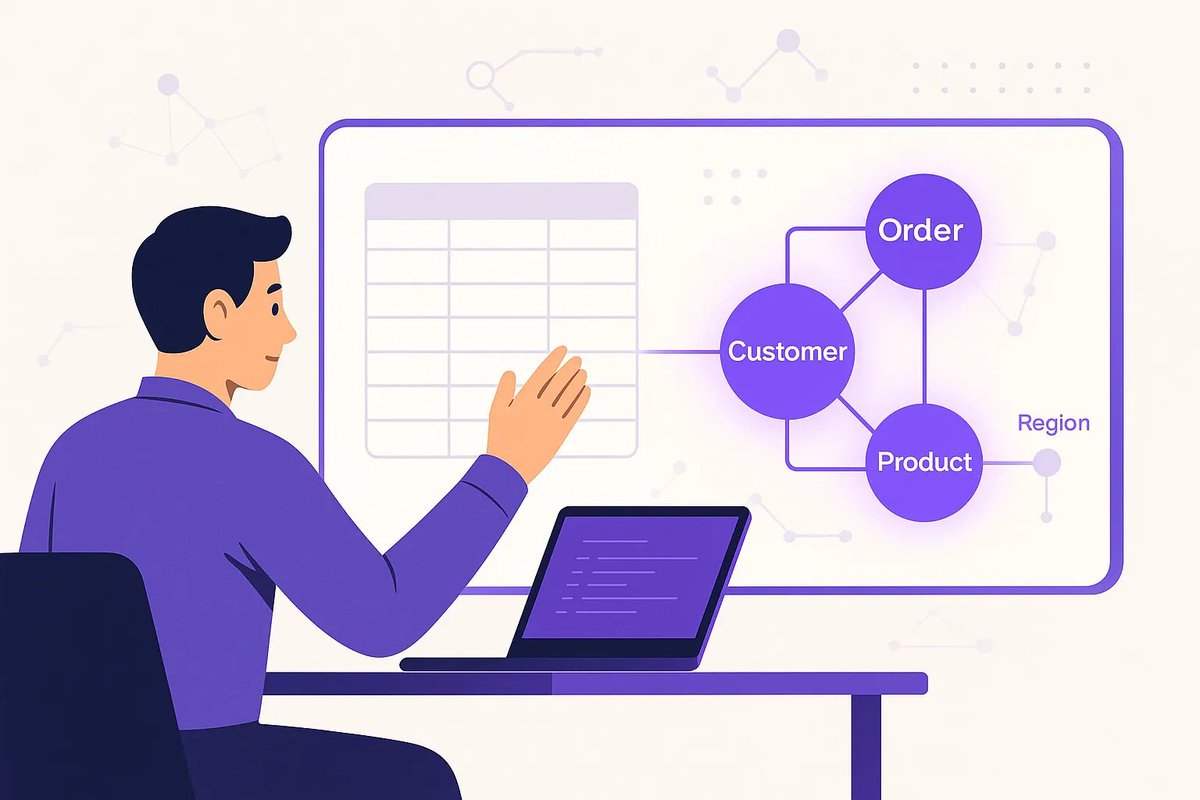
Ontology modeling makes all that implicit logic explicit.
A shared layer of meaning and relationships across your data. Defined once, reused everywhere.
And with Timbr, you don’t need OWL or a new query language. You build ontologies directly in SQL.
The payoff is real: shorter queries, consistent metrics, and teams finally speaking the same data language.
No hype. Just clarity where it matters.
With SQL-native ontologies, you can:
✅ Model once, reuse everywhere
✅ Cut down joins and manual fixes
✅ Deliver accurate, context-rich data for every use case
A simpler, smarter way to model data, without changing how you work.
🔗 Read the full story: https://t.co/Tgrp0bsgjq
#KnowledgeGraphs #DataModeling #SemanticLayer #DataTeams #EnterpriseAI #Ontologies
Delivering real personalization isn’t a luxury anymore - it’s a revenue driver.
The problem?
Most personalization engines stall because insights stay trapped in ML pipelines instead of reaching the teams who need them.
Data scientists can:
🔹 Detect patterns
🔹 Predict churn
🔹 Cluster segments
…but none of it matters if marketing or product can’t use it.
This is where graph intelligence + SQL accessibility flips the script. When behavioral patterns (similarity, clusters, communities) become queryable in SQL, teams can:
✅ Explore customer communities instantly
✅ Understand purchase behavior
✅ Act on insights across the org
The shift isn’t better models - it’s democratized intelligence. When personalization is accessible, it becomes actionable.
Full story: https://t.co/csJVpW81Wc
#Personalization #GraphIntelligence #AI #SQL #DataDemocratization
Most RAG systems don’t fail because of retrieval - they fail because of understanding.
🧠 They can find relevant documents in seconds.
📄 They can summarize text beautifully.
📊 But ask them to connect customer reviews with sales data, and they guess.
That’s because traditional RAG retrieves information, it doesn’t understand relationships between tables, metrics, or business concepts.
GraphRAG changes that.
By adding knowledge graphs to RAG, AI can:
✅ Query live databases for exact metrics (no hallucinations)
✅ Retrieve contextual documents simultaneously
✅ Deliver complete, explainable answers grounded in meaning
Across industries, teams are moving from retrieval to reasoning, combining structured and unstructured data through knowledge graphs to make AI truly understand their business.
💡 Read the full story: https://t.co/OOfuK3ixHo
#GraphRAG #KnowledgeGraphs #EnterpriseAI #DataIntegration #LLMs #SemanticLayer
Data teams struggle with data meaning, not quality.
Ontology-based modeling creates a shared source of truth:
📊 90% less query complexity
⚡️ Dashboards in hours - not days
🤖 Smarter LLM queries
🤝 Unified metrics that eliminate confusion
Stop collecting more data. Start connecting what you have.
Learn more👉 https://t.co/qheyWzNmuW
#Ontology #SemanticLayer #KnowledgeGraph #AI #DataTransformation #Analytics
Marks & Spencer has the tools - BEAM, Power BI, Alation, o9.
But the real challenge? Making them speak the same language.
SQL ontologies unify Customer, Product, Planning & Supply data into one semantic backbone, powering BI, ML & AI with shared truth. 🚀
👉 Read more: https://t.co/Nvl2Ha5wtT
#DigitalTransformation #SemanticLayer #Ontology #PowerBI #RetailInnovation #AIReady #DataStrategy #KnowledgeGraph
Most digital twin projects fail, not from lack of data, but from bad data modeling.
Traditional approaches rely on rigid schemas, ex-model measures, and endless JOINs. The result: long implementation times, high maintenance costs, and models that can’t keep up with changing business needs.
SQL ontologies change this:
✅ Unified semantics across diverse data sources
✅ Query across IoT streams, legacy systems, and cloud platforms without transformation
✅ Relationships as first-class citizens, not hidden in JOIN logic
✅ Efficient measures in SQL
✅ Reusable, modular models that scale
✅ A semantic layer that AI agents can reason over
With SQL ontologies, digital twins are faster to implement, easier to maintain, and AI-ready from day one.
👉 Read the full blog here: https://t.co/FVNhNn63dr
#DigitalTwins #AI #SQL #KnowledgeGraphs #SemanticLayer #Ontology
Why are enterprises suddenly asking for SQL ontologies? 🚀
For years, ontologies felt academic and disconnected from day-to-day data work. But now, large companies are asking: How can we model our data as SQL ontologies?
Here’s what changed:
⚡ LLM agents + workflows need structured, governed knowledge to avoid shallow answers + hallucinations.
⚡ SQL ontologies make this practical: model concepts, relationships, and rules directly in SQL - no special languages.
⚡ They plug into existing DBs, catalogs, BI tools & workflows → instantly consumable across the enterprise.
⚡ Open, not closed: no vendor lock-in, no rip-and-replace. Your data stays where it lives.
👉 Full blog: https://t.co/umBP1e1L21
#Ontology #SemanticLayer #KnowledgeGraph #EnterpriseAI #LLM #AIAgents #GraphRAG
🚀 Just launched: Timbr GraphRAG + SDK
Unlock real-time, structured + unstructured GenAI with governed accuracy.
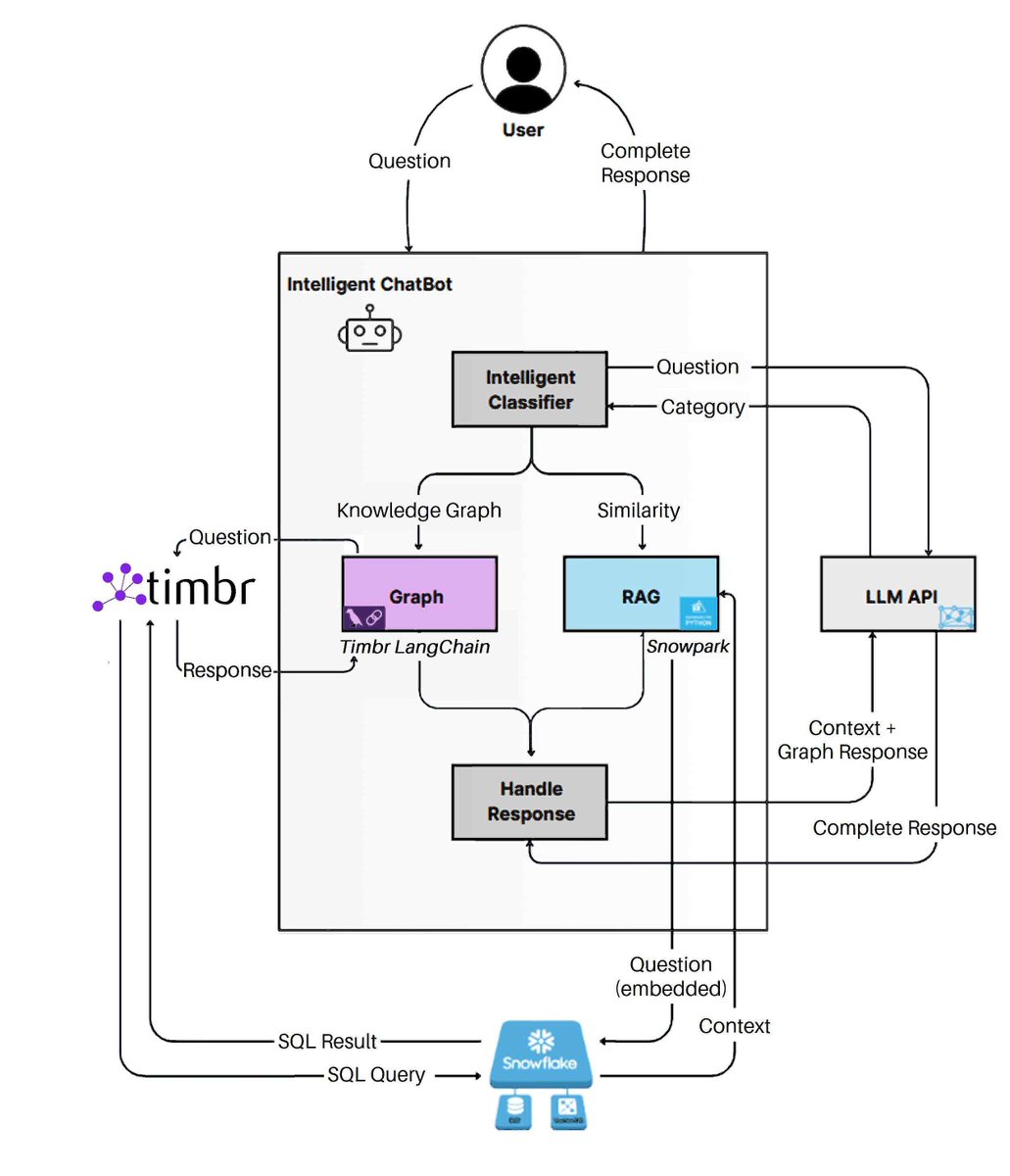
We've combined Timbr's semantic knowledge graph with RAG to create an enterprise-ready architecture that lets LLMs reason over live relational data and vector-based content in one flow.
Key benefits:
✅Structured + unstructured question answering
✅Real-time access to virtualized, governed data
✅Built-in hybrid query routing
✅Fast onboarding with reference app + demo
Whether you're solving for decision intelligence, AI copilots, or support automation, Timbr GraphRAG delivers smarter answers from your actual data.
👇Ready to see it in action?
📖 Blog: https://t.co/5kGRFa2oS3
🆓 Free trial: https://t.co/m7RG7o1JyZ
#GenAI #KnowledgeGraphs #GraphRAG #SemanticLayer #LLM #RAG #DataEngineering #Timbr
📉 ERDs weren't built for insight.
📈 SQL ontologies are.
Traditional data modeling stops at structure. SQL ontologies capture meaning, relationships, and inheritance across your data.
✅ Query across systems without joins
✅ Reuse relationships with direction and logic
✅ Model once, query many times
✅ All in SQL - no new language to learn
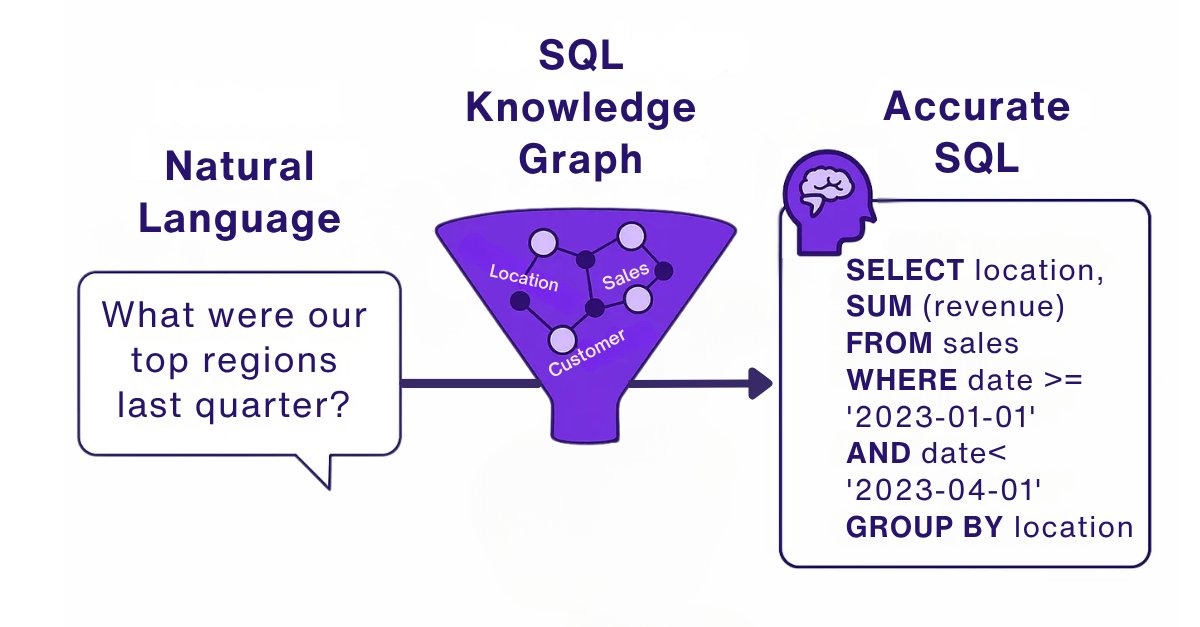
✅ LLM-ready for accurate, explainable SQL
Whether you're in Databricks, Synapse, or Snowflake - model smarter, faster, cleaner.
https://t.co/q1CAhggVBw
#DataModeling #KnowledgeGraph #SemanticSQL #Ontologies #DataArchitecture #SQL #Databricks #Synapse #SemanticLayer
🚀 Supercharge your BI tools with Timbr’s Semantic Layer!
Business teams don’t need more dashboards, they need faster answers and smarter models.
Here’s what Timbr adds to @PowerBI, @tableau, Looker & more:
✅ Query concepts, not tables
✅ Speak business, not SQL
✅ Reuse trusted metrics
✅ Virtual access - no data duplication
✅ Move faster with clarity
🔗 Get a Demo - https://t.co/aaPYcV3XcA
#BI #DataAnalytics #SemanticLayer #PowerBI #Tableau #LookerStudio #BusinessIntelligence
🔓 Unlock the Power of AI-Ready Data at #DataAISummit! Book your demo!
Curious how to transform your Databricks lakehouse into a powerhouse for accurate, enterprise-grade LLM SQL queries?
Join us at the Databricks Data + AI Summit and discover Timbr’s SQL ontology-based semantic layer – the secret to building a knowledge graph that makes your data AI-native!
Why meet with us?
💡 Turn complex data into precise, business-friendly NL2SQL queries.
💡 Unify messy data sources for seamless access.
💡 Auto-discover and govern metrics with ease.
💡Supercharge BI tools, notebooks, and APIs.
⏲️ Don’t miss this chance to see the future of AI-driven data in action!
Book a 1:1 demo with Timbr at the summit and let’s build the foundation for your AI success together.
📆 Use the following link to grab a slot that works for you!
https://t.co/WD7SHbdhkD
#KnowledgeGraph #LLM #Databricks
LLMs promise instant dashboards & answers—
But most teams are still debugging broken SQL.
Why? Because LLMs don’t understand your data.
They need structure.
They need meaning.
They need a semantic layer.
Read how SQL-native knowledge graphs fix this:
🔗https://t.co/wAYORO5Ipy
#LLMs #SQL #DataEngineering #SemanticLayer #KnowledgeGraph #DataAnalytics
Business teams struggle with metrics because the architecture is broken.
This blog shows how a knowledge graph-powered metric store simplifies it all.
📊 Read now: https://t.co/rG9WS7y1G2
#DataAnalytics#SQL#KnowledgeGraphs#BI#Metrics