Husband & father of 4. Catholic. 3 books + @unherd, @thefp, @compactmag, @nypost, @lithub. Founder @available2all. New book THE GRATEFUL BEAST is in the works.
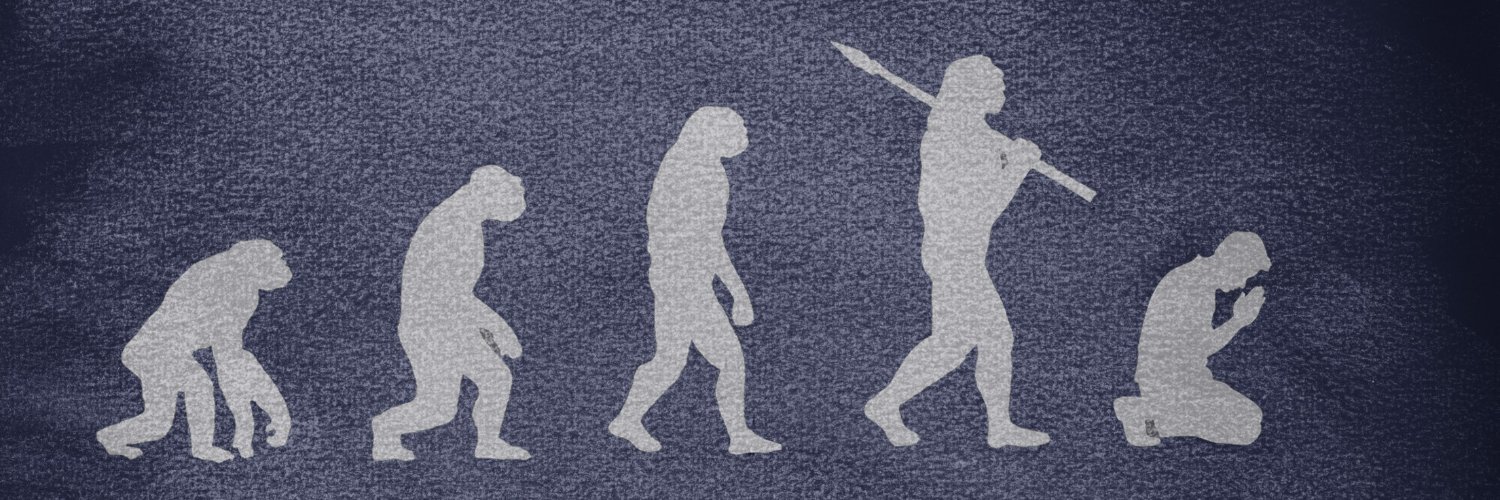
"Could there be an evolutionary explanation for this common human act of worship? Is it grounded in an animal instinct? I’ve come to believe that it is."
My latest for @unherd
https://t.co/EPukSayw4x
Because it's much more likely A.I. produces simulations of personhood that ppl naively mistake for the real thing than that we conjure real consciousness despite lacking any clear understanding of its origin or nature. https://t.co/s7L8sEmEDC
Here is a view, occasioned by the papal encyclical, that I'm throwing out as a rough thought because it could be wrong. The default of papal rhetoric is to speak about global issues in terms of structures and systems rather than specific leaders or nation-states. In the new encyclical's call to gentle and restrain A.I., e.g., the consistent idea is always that we need "clear criteria and effective oversight" by some kind of neutral transnational authority, details TBD.
There are reasons for this rhetorical mode beyond the Church's longstanding internationalist disposition: A rhetoric of structures and systems avoids a risky personalization of politics, where you seem to be "calling out" individual governments or actors. But it also comes with the risk of sounding utopian and irrelevant under 21st century conditions, where vis-a-vis Artificial Intelligence, in particular, a really narrow set of actors -- the governments of China and America, the leaders of the frontier companies -- are carrying almost all the decisionmaking weight.
It seems like in this environment we are a bit closer to a medieval model where the Church is arguably the only transnational organization of great moment (certainly Pope Leo has demonstrated that many people are *very* interested in what Rome has to say about A.I. whereas no one would care if the UN dropped a big document on the subject), and the Vatican is in the position of arguing with and cajoling a set of princes, corporate and dictatorial and democratically elected, whose personal choices are likely to decide the direction that this tech takes. (As in, for instance, the ongoing argument inside the Trump White House about its un-issued A.I. executive order.)
I wonder if papal rhetoric might usefully adapt to this reality -- not by calling out Trump or Xi or Sam Altman or Dario Amodei by name, or not necessarily, but by offering more explicit advice to today's leaders and their advisers about their unique power, the moral obligations that come with it, and the judgment of God that awaits if they get things badly wrong. You can draw some of that out of Vatican documents right now, but the balance always tilts toward hypothetical structural solutions. I think where we are, and where we might be going -- for instance, toward choices about A.I. made under conditions of greater acceleration and potential crisis -- there is a case for treating the actual deciders as the crucial actors rather than always imagining an entirely different world.
.@RossBarkan lifted prose from @compactmag and published it as his own in @NYMag. I assume the editors didn’t do this knowingly. But their writer @RossBarkan is defending the practice, and they haven’t replied to our request to address his plagiarism.
https://t.co/eG2lcomKUE
This is a good corrective to an overhyping of "masculinism" based on Joel Webbon's 100K followers, but one reason to pay attention to the influencers is that younger men/women are coming of age in a very different environment than @michaelbd and I did.
https://t.co/zpdtMc6EZ1
The disdain Tommy Lee Jones says "Dr." in Dr. Richard Kimble still kills me.
THE FUGITIVE is one of those movies where I couldn't possibly tell you how many times I've seen it.
I had the VHS, the DVD, the Blu-ray, and now the 4k.
I decided I wanted to write commercial screenplays in 1994. Released in '93, THE FUGITIVE was pretty much the gold standard for me.
The screenplay I first sold borrowed heavily from the structure.
FIRST HALF: Escape and evade.
SECOND HALF: Solve the mystery.
It FEELS plot-heavy, but it isn't. The throughlines are clear and simple. It has the not-so-secret sauce of all great movies:
Great characters in great scenes.
The adrenaline this monologue creates as it propels us into the rest of the film is perfection.
One of the best studio films of the 90s, THE FUGITIVE is a classic.
I love this movie.
"But utility is not the same as education, and AI magnifies an older weakness. It tempts us to mistake verbal fluency for understanding itself."
Alas, that I had understood this at an earlier age!
"But utility is not the same as education, and AI magnifies an older weakness. It tempts us to mistake verbal fluency for understanding itself."
Alas, that I had understood this at an earlier age!
Last night Ben Sasse confirmed my suspicion that Dr. Santiago Schnell, provost at Dartmouth, is quickly becoming the single most influential voice in higher education. If you haven’t already read his essay on AI that broke the internet you should.
“AI has not created new educational problems; it has made old ones impossible to ignore. The habit of rewarding performance over understanding, fluency over depth, and polish over genuine engagement was already present in our institutions before the first language model was trained. AI simply industrializes and accelerates those habits until their emptiness becomes undeniable…”
https://t.co/87WZLfcBtw
A story about following your dreams even if they’re stupid, and believing in yourself, even if you’re stupid (which would explain the quality of the dreams): https://t.co/lQzbox1JTF