Since we’re bragging:
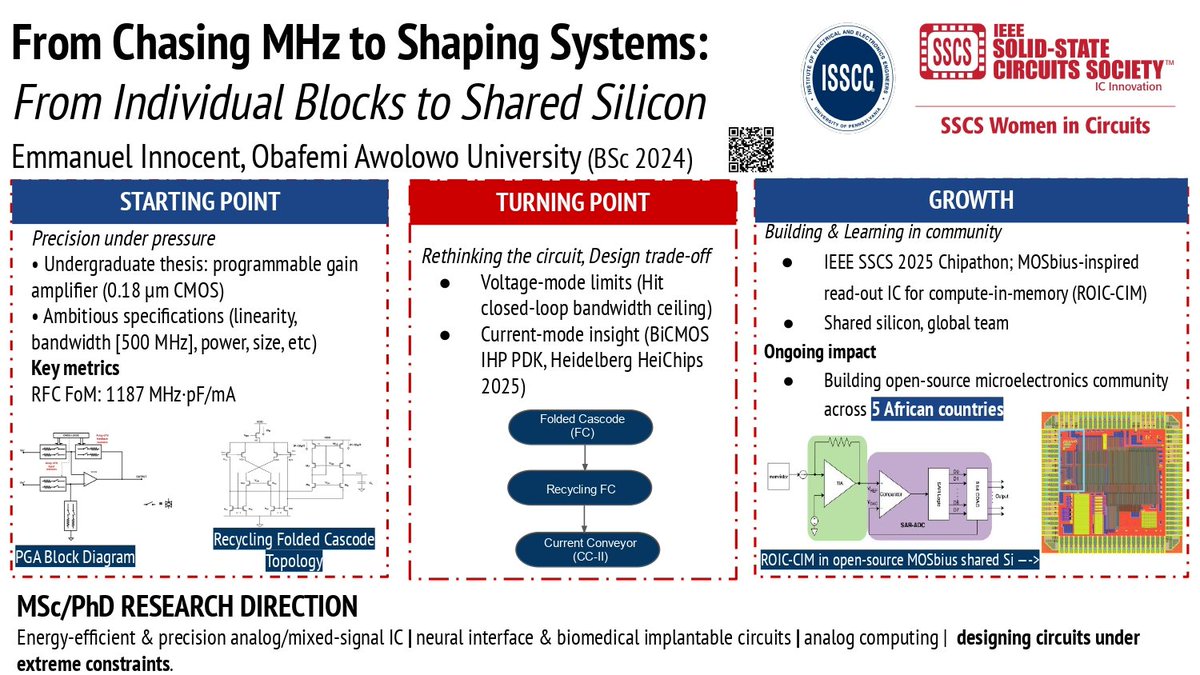
I graduated from Obafemi Awolowo University in 2024,but the global recognition for my work in Analog/Mixed-signal Microchip Design hasn't stopped 🏛️
Since my 4th year in Electronic and Electrical Engineering OAU,it has been a marathon to global stages:
1/5
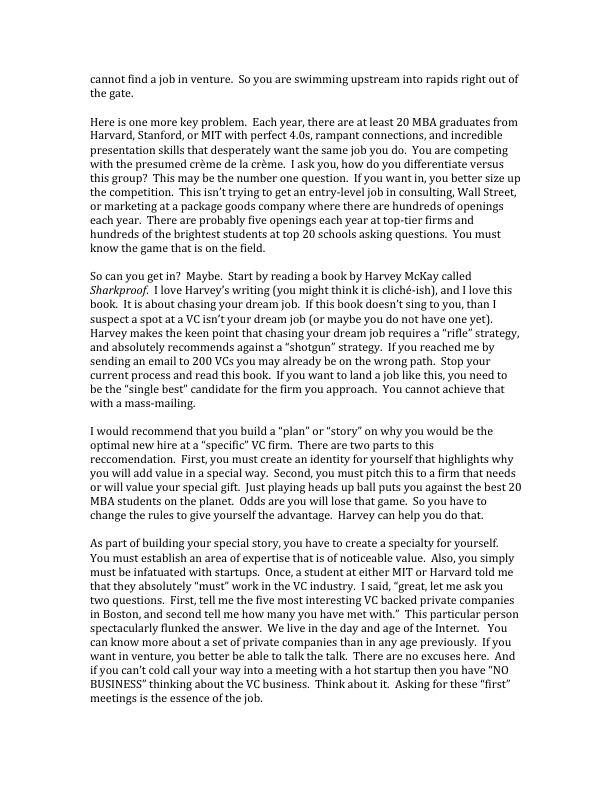
"So You Want to be a VC"
Im enjoying this week in Boston visiting students promoting my new book - Runnin Down a Dream. Not surprisingly, many ask me about trying to break into venture capital. I wrote a letter answering this question 15 years ago. I would send it out when people inquired. I'm making it public for the first time - with zero modifications.
1) I think it holds up well
2) make sure and read my new book also
3) I probably can't help with followups (as suggested in the letter)
Hope you find it useful. Good luck!
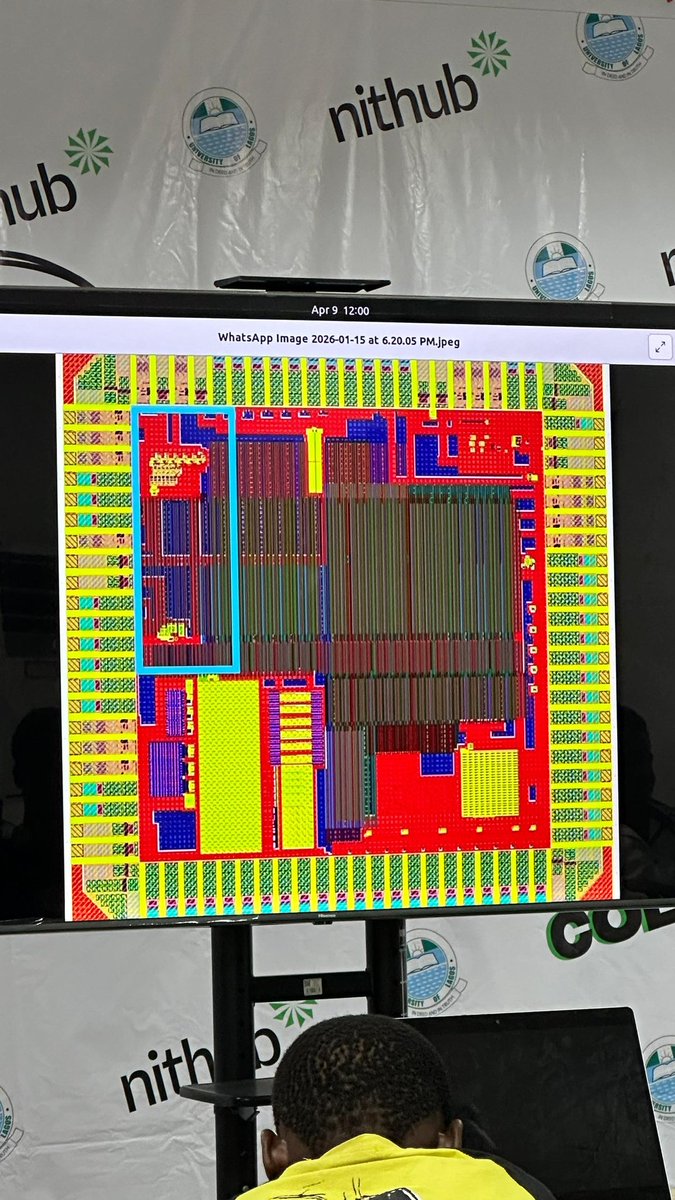
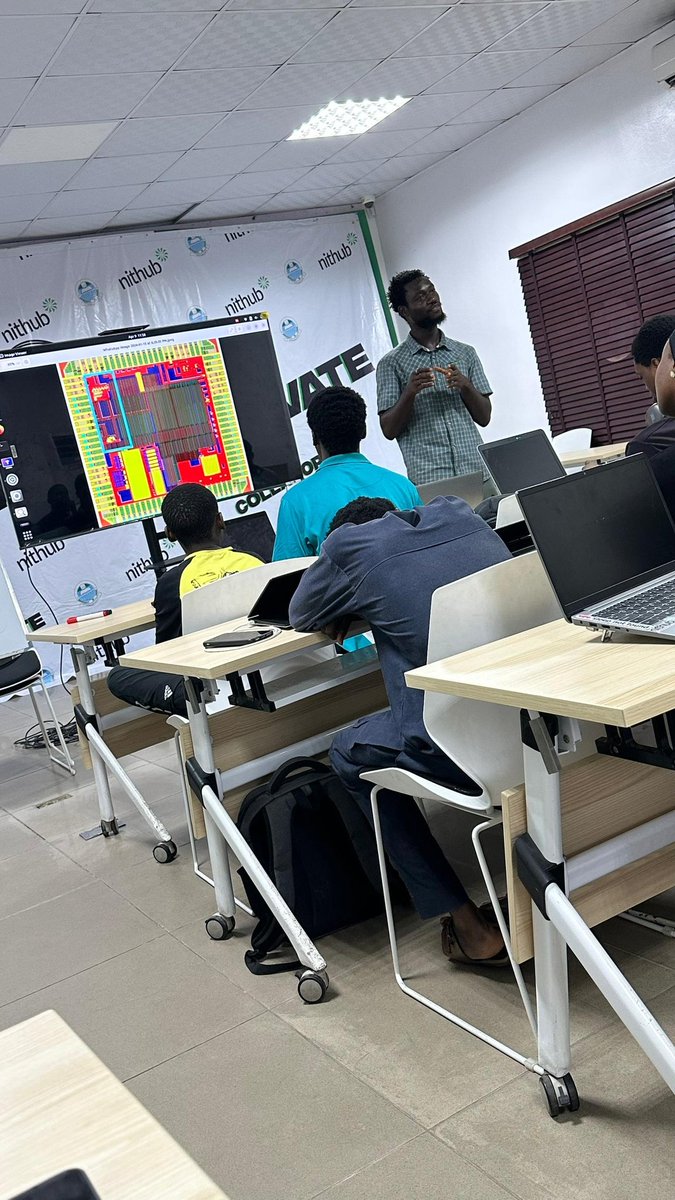
I'm taking chip design classes at @nithub_lag and all I can say is that chip design is crazy!😂
P.s: Chip design is the design of Integrated Circuits 😗
#girlengr#chipdesign
Vibe coding security mistakes
Three important things to look out for:
1. YOUR ENDPOINTS HAVE NO RATE LIMITING
AI will build your API and leave it completely open and someone can hit it thousands of times in a second and you won't know until your server crahses
To solve this make sure you have rate limiting middle ware and if you are using express it will take like 5 minutes to set up
2. ROW LEVEL SECURITY IS OFF BY DEFAULT IN SUPABASE
(This is if you create tables using SQL editor and not supabase directly)
Anyone can query your database and pull other people's data because RLS is not enabled.
So always turn it on for every table and write policies that scope data to the right user.
CPU vs GPU vs TPU vs NPU vs LPU, explained visually:
5 hardware architectures power AI today.
Each one makes a fundamentally different tradeoff between flexibility, parallelism, and memory access.
> CPU
It is built for general-purpose computing. A few powerful cores handle complex logic, branching, and system-level tasks.
It has deep cache hierarchies and off-chip main memory (DRAM). It's great for operating systems, databases, and decision-heavy code, but not that great for repetitive math like matrix multiplications.
> GPU
Instead of a few powerful cores, GPUs spread work across thousands of smaller cores that all execute the same instruction on different data.
This is why GPUs dominate AI training. The parallelism maps directly to the kind of math neural networks need.
> TPU
They go one step further with specialization.
The core compute unit is a grid of multiply-accumulate (MAC) units where data flows through in a wave pattern.
Weights enter from one side, activations from the other, and partial results propagate without going back to memory each time.
The entire execution is compiler-controlled, not hardware-scheduled. Google designed TPUs specifically for neural network workloads.
> NPU
This is an edge-optimized variant.
The architecture is built around a Neural Compute Engine packed with MAC arrays and on-chip SRAM, but instead of high-bandwidth memory (HBM), NPUs use low-power system memory.
The design goal is to run inference at single-digit watt power budgets, like smartphones, wearables, and IoT devices.
Apple Neural Engine and Intel's NPU follow this pattern.
> LPU (Language Processing Unit)
This is the newest entrant, by Groq.
The architecture removes off-chip memory from the critical path entirely. All weight storage lives in on-chip SRAM.
Execution is fully deterministic and compiler-scheduled, which means zero cache misses and zero runtime scheduling overhead.
The tradeoff is that it provides limited memory per chip, which means you need hundreds of chips linked together to serve a single large model. But the latency advantage is real.
AI compute has evolved from general-purpose flexibility (CPU) to extreme specialization (LPU). Each step trades some level of generality for efficiency.
The visual below maps the internal architecture of all five side by side, and it was inspired by ByteByteGo's post on CPU vs GPU vs TPU. I expanded it to include two more architectures that are becoming central to AI inference today.
👉 Over to you: Which of these 5 have you actually worked with or deployed on?
____
Find me → @_avichawla
Every day, I share tutorials and insights on DS, ML, LLMs, and RAGs.