Celebrating the history, heritage and traditions that shaped Britain | From castles and cathedrals to railways, high streets, countryside and timeless stories
London, mid-20th century. An old market trader resting among sacks of onions and peas, surrounded by carts and cobblestones.
This wasn’t glamour. It was graft. Hard work, cold mornings and long days keeping the capital fed.
Remember scenes like this when people claim Britain had no working-class heroes. Ordinary men, extraordinary strength. 🇬🇧
At 22, Grace Darling rowed into a gale to save nine strangers. In 1917, Henry Blogg came ashore after a rescue, heard another ship had been blown in half, and turned straight back into the storm.
I’m in awe of Grace’s nerve. Her father climbed onto the rocks while she kept their tiny coble from being smashed against the reef. A contemporary account said she “insisted on sharing her Father’s danger.” Nine survivors were brought to safety.
I admire Blogg just as much, but for a different reason. He and the Cromer crew launched four times in 14 hours during that 1917 storm. Across 53 years of lifeboat service, he helped save 873 lives.
My verdict: Grace deserves remembrance for choosing danger with no lifeboat role at all. Blogg deserves it for turning that same choice into a lifetime of service. Britain should remember both.
Which kind of courage do you admire more?
King George VI told Britain it was at war while battling a severe stammer of his own.
I noticed what this film from 3 September 1939 cannot show. Lionel Logue, his Australian speech therapist, was beside him at Buckingham Palace. Logue had marked the script with pauses and picked out difficult words.
The King spoke as though he could “cross your threshold and speak to you myself”. By the end of that month, Britain had more than nine million wireless licences.
It was not effortless speech. It was a man accepting that every hesitation would be heard, then speaking anyway.
NEEDED CHANGES:
GENERATED FOR OPERATOR VERIFICATION
In 1943, the Dorset village of Tyneham was given 28 days to disappear. More than 200 people were ordered to leave so the Army could expand its training ground for the coming invasion of Europe. The move was meant to be temporary.
Tyneham was not a collection of empty cottages. It had medieval roots and appears as Tigeham in the Domesday Book. Before the war it was a working village of roughly 225 people, with a church, a post office and a school. Farming and fishing supported many families. Some had lived in the valley for generations.
Then, in November 1943, the notice arrived. The residents had until December to clear their homes. Allied planners needed the surrounding land for live-fire training as preparations for Operation Overlord gathered pace. The people of Tyneham packed up in the middle of winter and left a place many of them had known all their lives.
On 19 December, the village held its final church service before the evacuation. A handwritten note was left at St Mary’s. Its most haunting line was simple: “We shall return one day and thank you for treating the village kindly.” They did not return.
After the war, the military still considered the training area necessary. What had begun as a wartime evacuation became permanent. Homes emptied for a few months were never homes again. Roofs fell in. Village lanes became part of a live military range. The church and school survived, while much of the rest became ruins.
That is what makes Tyneham so unusual. It was not slowly abandoned because work vanished or people drifted away. A whole community was deliberately paused for the war, on the understanding that the pause would end. It never did.
Since 1975, the public has been allowed back into Tyneham on days when the firing range is not in use. Visitors can enter the restored church and school and walk past the shells of the old cottages. The villagers who wrote “We shall return one day” never returned to live there. Instead, generations of strangers now step into their village only when the guns fall silent.
A set of chairs is why Glasgow’s Tenement House survived almost intact.
In 1975, Miss Agnes Toward died after spending the last ten years of her life in hospital. Her flat at 145 Buccleuch Street had stood empty since 1965, while her lawyer continued paying the rent. After her death, the landlords planned to clear it, modernise it and sell it.
Agnes had lived there since 1911, first with her mother, also Agnes, a dressmaker, and later alone. The flat was comfortable for its time, with running water, an indoor bathroom and gas lighting. Agnes became a shorthand typist and spent almost 50 years with the same shipping firm, finally retiring at 73. She kept the ordinary paper trail of a life: letters, bills, recipes and newspapers. Even a jar of plum jam she made in 1929 survived. She waited until 1960 to install electric light.
After her death, Agnes left a set of chairs to her church elder, Sam Davidson. He went to collect them with his niece Anna, who happened to be in Glasgow for a casting. Anna opened the door and found a home almost from another age, its furniture, box beds, kitchen range and cupboards still filled with the things one woman had used and kept.
Anna later remembered being “fascinated by what was there and how it had survived.” She discovered that the contents were about to be broken up. Instead of collecting the chairs and walking away, she persuaded the owners to sell her the flat and everything inside it. She lived there for seven years, cleaning and sorting through old boxes of chocolates, newspapers, Victorian clothes and family papers.
In 1982, Anna sold the house to the National Trust for Scotland. What survived was not a palace or the home of somebody famous, but the working life of an ordinary Glasgow woman. Agnes’s recipes show what she cooked. Her possessions show what she valued. Her gas lights and late move to electricity show how slowly new technology could enter an everyday home.
Thousands of people can now walk through those four rooms. The chairs were supposed to be among the few things taken out of the flat. Instead, their bequest helped save almost everything around them.
These Bradford women were asked to turn back and walk past the camera a second time.
A friend sent me this restored and colourised clip. The source is Mitchell & Kenyon’s black-and-white Electric Tram Rides from Forster Square, filmed on 2 April 1902 and preserved by the BFI National Archive.
The tram ran up Manningham Lane to Lister Park. In 1870, mill owner Samuel Cunliffe Lister sold the estate cheaply to Bradford Corporation on one condition: it must remain a public park. Even after wartime cultivation, that promise survived; Lister Park is now Grade II registered.
The wool boom transformed Manningham. One line in an 1870 sale kept its green destination public.
The little railway that saved itself began with a shock: in 1950, a tiny Welsh line closed after nearly 100 years of carrying slate workers and supplies through the valleys.
The Talyllyn Railway in Gwynedd looked finished. The steam engines stopped running, the track was falling quiet and the future of the line seemed to belong only to memory.
Then something unusual happened. A group of volunteers decided a railway did not have to disappear just because the official operators had left.
They formed a preservation group and began doing the work themselves. They repaired track, restored engines and learned the skills needed to keep a working railway alive. They were not railway owners or professional engineers. They were ordinary people who believed this small line mattered.
The first volunteers faced a huge challenge. A railway is not a museum object that can simply be placed behind glass. It needs constant care. Track needs checking, locomotives need maintaining and every journey depends on hundreds of small jobs being done correctly.
In 1951, the Talyllyn Railway became the world's first preserved railway operated by volunteers. What started as a desperate attempt to stop a local line from vanishing became a movement that changed how Britain remembered its industrial past.
The railway also inspired one of Britain's best-loved films. The 1953 Ealing comedy The Titfield Thunderbolt, about villagers fighting to save their branch line, drew inspiration from the real-life rescue of the Talyllyn.
More than 70 years later, trains still travel through the same landscape. Visitors can ride behind historic locomotives, while volunteers continue the same tradition started by those first railway rescuers.
The story of the Talyllyn is not only about steam engines. It is about a moment when a group of people looked at something everyone else thought was finished and decided it still had a future.
A forgotten railway became the beginning of the heritage railway movement, proving that sometimes the people who care most about the past are the ones who keep it moving.
The women who hid behind fake names helped save some of Britain’s most famous places.
In the 1920s, when historic landscapes and old buildings were being lost, a mysterious group appeared with a strange mission. They called themselves Ferguson’s Gang, and nobody knew who they really were.
Their members used names like Bill Stickers, Red Biddy and The Bludy Beershop instead of their own. They wore disguises at fundraising events and turned saving heritage into something people wanted to join.
Their first great cause was Stonehenge.
In the late 1920s, the land around the ancient stones was at risk from development. A public appeal was launched to protect the landscape, and Ferguson’s Gang helped bring attention, money and energy to the campaign.
By 1929, the land had been secured and placed into the care of the National Trust.
But the story did not end there.
The gang went on to support other threatened buildings and landscapes across England. They raised money for places that might otherwise have disappeared, all while keeping their identities hidden.
Their methods were unusual, but their idea was simple: Britain’s history belonged to everyone, not just experts or wealthy owners.
Today, Stonehenge is one of the country’s most recognised places. The stones were raised thousands of years ago, but the landscape around them survived partly because a small group of determined women decided it was worth protecting.
They were not famous politicians, architects or archaeologists.
They were ordinary people who dressed up, collected donations and quietly changed what survived.
Nearly a century later, the names Bill Stickers and Red Biddy are remembered not because anyone knew who they were, but because of what they saved.
Ronald Brignall was 16 years old when he climbed Cardiff City Hall during a wartime fire and carried sandbags in his teeth to save one of Wales’ grandest buildings.
The teenager was working as a messenger during the Second World War when German bombs started fires across Cardiff. At City Hall, flames threatened the roof of a building that had opened only a few decades earlier and had become a symbol of civic pride.
While others fought the blaze from below, Brignall found a way up. He carried a 12lb sandbag under his arm and another in his mouth, then climbed around 25 feet with a fire hose to reach the flames.
He was only 16. He was not a soldier, a firefighter or a famous public figure. He was a local boy who saw a place he knew was in danger and decided to help.
The fire was eventually brought under control, and City Hall survived. For decades, the story was almost forgotten. Brignall rarely spoke about what happened, and even his own family only discovered the full details many years later while looking through old photographs.
In 2024, as he approached his 100th birthday, his wartime act was finally recognised publicly. He smiled as people celebrated the teenager who had once climbed a burning landmark with a hose in his hands.
Cardiff City Hall was built in the early 1900s as a home for the city’s government and remains one of Wales’ best-known civic buildings. Its survival is remembered not only because of the stone and architecture, but because of the ordinary people who protected it when it was at risk.
More than 80 years later, the building still stands. So does the story of the young messenger who climbed towards the flames when everyone else was trying to escape them.
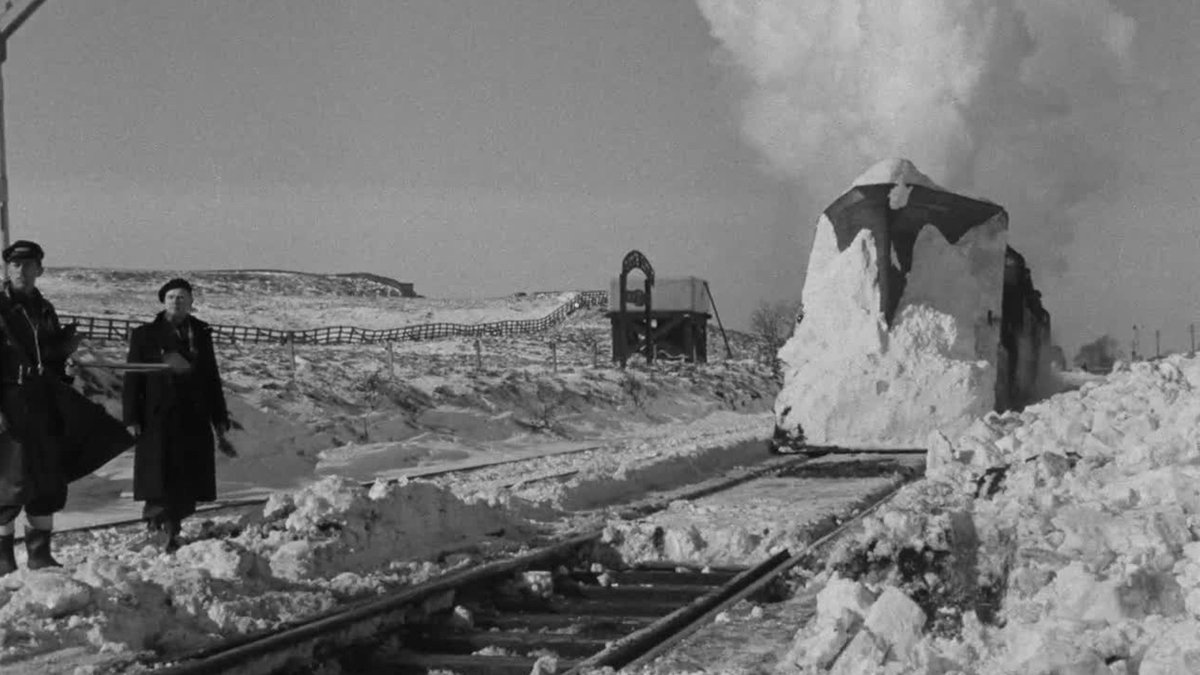
On a winter night in 1955, a freight train travelling between Kirkby Stephen and Barnard Castle became stuck in deep snow at Bleath Gill in the Westmorland hills.
The railway line crossed Stainmore Summit, one of the highest points on any railway in England. Wind, ice and huge snowdrifts stopped the train in its tracks, leaving the crew stranded as the weather closed in.
Then the rescue began.
Railway workers from the Motive Power, Operating and Engineering Departments battled through the conditions with snowploughs, tools and determination. They cleared the line, freed frozen equipment and slowly fought their way towards the trapped locomotive.
A British Transport Films crew followed the rescue effort and captured the struggle on film. The result was “Snowdrift at Bleath Gill”, a short documentary that turned an ordinary railway emergency into a remarkable record of teamwork in one of Britain’s harshest landscapes.
The men involved were not celebrities. They were railway workers doing a difficult job because a train, its crew and a vital route needed saving.
The film also preserves a lost world of British railways, when remote lines depended on the skill and courage of the people who maintained them through every season.
Today, the Stainmore route is closed, and the steam locomotives that once crossed these hills belong to another era. But the faces of the workers who cleared the snow remain, frozen in time, showing the quiet effort that kept Britain moving.
The biggest single rescue in RNLI history happened off Cornwall in 1907: four lifeboat crews saved 456 people from one ship, and nobody aboard died.
The White Star liner Suevic was coming home from Australia on the night of 17 March when dense fog closed around The Lizard. There were 524 people aboard. Captain Thomas Jones saw the lighthouse, but misjudged how close it was. Minutes later the 12,000-ton ship drove onto Maenheere Reef. Distress signals went up into a strong south-westerly wind and heavy sea.
The first local lifeboats came from The Lizard and Cadgwith. The rocks made the approach dangerous, and the ship’s own boats needed men who knew the channels. Rev Henry Vyvyan, honorary secretary of the Cadgwith lifeboat station, jumped from the lifeboat into one of Suevic’s boats and piloted it towards shore. He then tried to take that boat back out. It was thrown onto the rocks and wrecked. He waited for another lifeboat, went back to Suevic and carried on helping.
On the liner, seamen George Anderson and William Williams had another job. They carried children down rope ladders on the ship’s side. The lifeboats were rising and falling beneath them, so the children had to be passed into the rescuers’ arms at the right moment. A contemporary RNLI report recorded 160 women and children among the passengers, including 60 infants under three.
More boats arrived from Coverack and Porthleven. Between three and four in the morning the weather was at its worst, but the crossings continued. By noon, everyone was safe. The RNLI credited 227 lives to Cadgwith, 167 to The Lizard, 44 to Coverack and 18 to Porthleven. Another 68 people were taken in Suevic’s own boats to waiting tugs.
Then the story took one more extraordinary turn. Suevic was not simply abandoned. Salvagers used dynamite to cut away the damaged bow. The surviving two-thirds were taken to Southampton, while a new bow was built in Belfast and joined to the ship. By January 1908, Suevic was back at sea.
The ship itself would eventually disappear from British waters. The rescue did not. More than a century later, those 456 lives still stand as the RNLI record for a single operation: a number built by four Cornish lifeboat stations whose crews kept going back into the same fog until there was nobody left to bring off.
In 1960, a forgotten steam railway in Sussex was brought back to life by volunteers who refused to let the age of steam disappear quietly.
The Bluebell Railway had once been part of the London, Brighton and South Coast Railway network, but after closure the line lay abandoned. Tracks were overgrown, stations were silent and the future looked finished.
Then a group of railway enthusiasts made an unlikely decision. Instead of simply preserving old engines in museums, they wanted to run a real working railway again.
They formed the Bluebell Railway Society and began the slow work of clearing vegetation, repairing track and restoring what remained. Many were not professional railway workers. They were ordinary people giving their evenings and weekends to save something they believed mattered.
One small locomotive became a symbol of the effort. Stepney, a Brighton Terrier tank engine built in 1875, was bought for the new railway along with two coaches for £750. Volunteers restored the line and on 17 May 1960 the first passenger train ran again.
A short film made that year captured the moment. It showed not a grand national project, but people with brushes, tools and determination turning an abandoned railway back into a living piece of Britain’s transport history.
The idea was once unusual. Heritage railways are now a familiar part of British life, but the Bluebell helped prove that communities could rescue working history before it vanished.
More than sixty years later, trains still run through the Sussex countryside on a railway saved by people who believed an old line could have a new future.
The first volunteers were not preserving a memory of Britain. They were rebuilding one.
Edward Cornes was 19 and two days into his first term at UCL when he died in a King’s Cross hotel in October 2021. ITV News
His case came up at dinner. A friend asked what Edward had hoped to do. He was studying history; his mum remembers “the funniest, sweetest human being”. I find it heartbreaking that his family spent nearly five years fighting to feel heard (their persistence is extraordinary).
Two men were arrested on suspicion of murder, then released without charge. Police concluded the death was non-suspicious. The Met has since apologised, admitted parts of its inquiry were mishandled and put specialist officers on a fresh review.
This photograph carries the family’s appeal for witnesses. In July 2026, the IOPC confirmed it is investigating their allegations of homophobic assumptions, failures to secure or disclose evidence, and misleading inquest evidence. Those are allegations, not findings. I am furious that this scrutiny came so late.
The Stephen Port murders had already shown the cost of failing to investigate properly when young gay men and GHB were involved; inspectors called the Met’s response “wholly unacceptable”. Edward’s death has not been ruled murder—but he deserved the same professional curiosity as anyone else. If you know anything, please use the appeal details in this image.
Some Cornish hedges still mark field lines first laid out in the Bronze Age.
In BBC Cornwall’s 29 June post, what struck me was the part the camera cannot show. A true Cornish hedge has two stone faces holding a packed earth core. Local stone gives each district its own pattern, while the bank shelters wildlife, slows soil and water run-off and can stand for a century when well built.
Cornwall has more than 30,000 miles of these living boundaries, yet Heritage Crafts lists the skill as endangered. It estimates that only 11–20 professionals earn their main income from it.
The hope lies with the trainees. By 2025, about 185 people had taken CREST training places and 23 had reached the intermediate stage. Their hands are keeping Cornwall’s ancient field map standing.
This 1964 MG 1100 turns its polite owner into a “road hog”, but the insult is older than the motor car.
A friend sent me this British Pathé film and asked whether the little saloon was an Austin. It was the sportier MG version of BMC’s ADO16, charging through Hammersmith and central London.
“Road hog” appears in American cycling writing by 1886–87. It meant a horse-and-carriage driver who acted as though he owned the highway and refused cyclists their half of it.
By 1964 Britain had 8.4 million vehicles in the private tax class. The previous year, Colin Buchanan’s Traffic in Towns warned that cars were already choking movement and threatening urban life.
The film calls this bad manners. Today, its zebra-crossing overtake and pavement parking breach clear Highway Code rules. The vehicle changed; the old road hog did not.
Welsh tapestry blankets are still being made more than 250 years after a surviving pattern book recorded their reversible double-cloth weave.
That makes Dinefwr’s upstairs studio in Llandeilo feel especially precious.
These blankets became wedding gifts and part of a bride’s “bottom drawer”, then travelled with Welsh families seeking industrial work. (A piece of home had to earn its keep.)
By the 1890s, west Wales had over 250 woollen factories. Most are silent now, but Dinefwr still designs in Wales and finishes its blankets in Llandeilo—old patterns made ready for another generation.
Southall’s Havelock Road gurdwara opened in 1967 inside a disused dairy.
A friend sent me this 1976 BBC film and asked what became of it. The community bought the dairy for £26,000. Volunteers transformed it in just three weeks. That was before the Moon landing, Decimal Day and Concorde’s first passenger flight from Heathrow.
The congregation outgrew the dairy and moved out
in 1997 so the present temple could be built on the same site. It opened in 2003, paid for by community donations.
Its free kitchen still serves anyone, seven days a week. These families did not only remake a high street. They built a home that kept its door open.
The Forth Bridge was built from 1882 and opened in 1890 — the same era when Sherlock Holmes first appeared, the electric light was spreading through Britain, and Queen Victoria was still on the throne.
I love that this giant steel bridge was not just an engineering triumph. It was the work of thousands of men who built above one of Scotland’s most dangerous stretches of water.
After the Tay Bridge disaster of 1879, engineers designed the Forth Bridge with wind and strength in mind. Around 4,000 workers helped create a structure that became a symbol of Victorian ambition.
The final rivet was driven by the Prince of Wales in 1890. More than 130 years later, trains still cross the same bridge.
Bartholomew Fair turned 24 August into one of London’s busiest trading days for more than 700 years.
I noticed the detail the old fair images hide: this was not just entertainment, it was a place where traders, stallholders and craftspeople earned their living.
The fair began with a royal charter in 1133 for St Bartholomew’s Day. Its name came from the saint’s feast day, and people gathered in Smithfield to buy cloth, goods and food alongside the performers and attractions (a very different London marketplace).
By the 1800s the fair had changed, and it was eventually closed in 1855, but the surviving images preserve the workers and visitors who made this forgotten annual event part of city life.
At 13, Winston Churchill had to choose between staying silent or risking his future by speaking up against injustice.
I had no idea how early Churchill learned that a difficult decision could cost him personally. As a young army officer in India, he saw the suffering caused by the British Empire’s policies and began questioning the world around him.
Years later, he made another defining choice: to stand against Nazi Germany when many believed compromise was still possible.
He wrote in 1940: “We shall never surrender.”
I find that moment remarkable because Churchill’s reputation was built on choices made under pressure, not just famous speeches.
But another British leader faced a similar test: entity["politician","Neville Chamberlain","British prime minister 1937-1940"] chose negotiation at Munich, believing he was preventing another devastating war.
Churchill chose resistance. Chamberlain chose compromise. Both acted with Britain’s future in mind, but history judged their decisions very differently.
Two leaders. One impossible question: when peace and principle collide, what should a leader choose?
Who else deserves to be remembered?
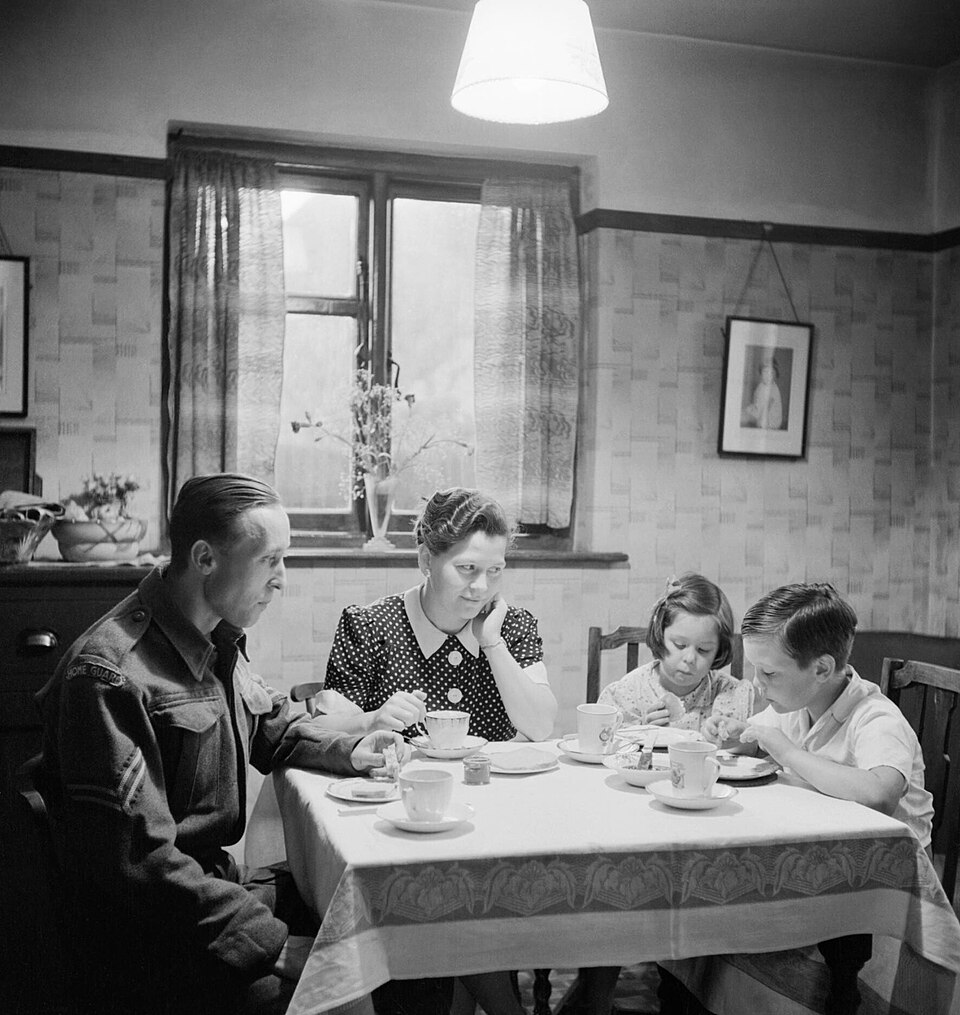
his wife and children Elaine, 6, and David, 7, before Home Guard duty (his day still wasn’t finished).
The same photo series shows Richard at the factory helping solve a worker’s tool problem. For many working families, tea was the hearty meal waiting after the working day — not the fashionable afternoon tea of drawing rooms.
The old class line has blurred. Today the word is much more regional: “tea” remains strongest across northern England, while “dinner” dominates the South. The wartime duty faded; that family word survived.




![timelessbritain's tweet photo. At 13, Winston Churchill had to choose between staying silent or risking his future by speaking up against injustice.
I had no idea how early Churchill learned that a difficult decision could cost him personally. As a young army officer in India, he saw the suffering caused by the British Empire’s policies and began questioning the world around him.
Years later, he made another defining choice: to stand against Nazi Germany when many believed compromise was still possible.
He wrote in 1940: “We shall never surrender.”
I find that moment remarkable because Churchill’s reputation was built on choices made under pressure, not just famous speeches.
But another British leader faced a similar test: entity["politician","Neville Chamberlain","British prime minister 1937-1940"] chose negotiation at Munich, believing he was preventing another devastating war.
Churchill chose resistance. Chamberlain chose compromise. Both acted with Britain’s future in mind, but history judged their decisions very differently.
Two leaders. One impossible question: when peace and principle collide, what should a leader choose?
Who else deserves to be remembered?](https://pbs.twimg.com/media/HQvddmTWQAAZY-k.jpg)