However, while common practice encourages early and frequent feedback, the study suggests that providing feedback later in the process may be more effective in maximizing the number of high performers and overall participation.
How should innovation seekers provide performance feedback to solvers in innovation contests? The following study's findings confirm the widely held belief in the value of providing feedback.
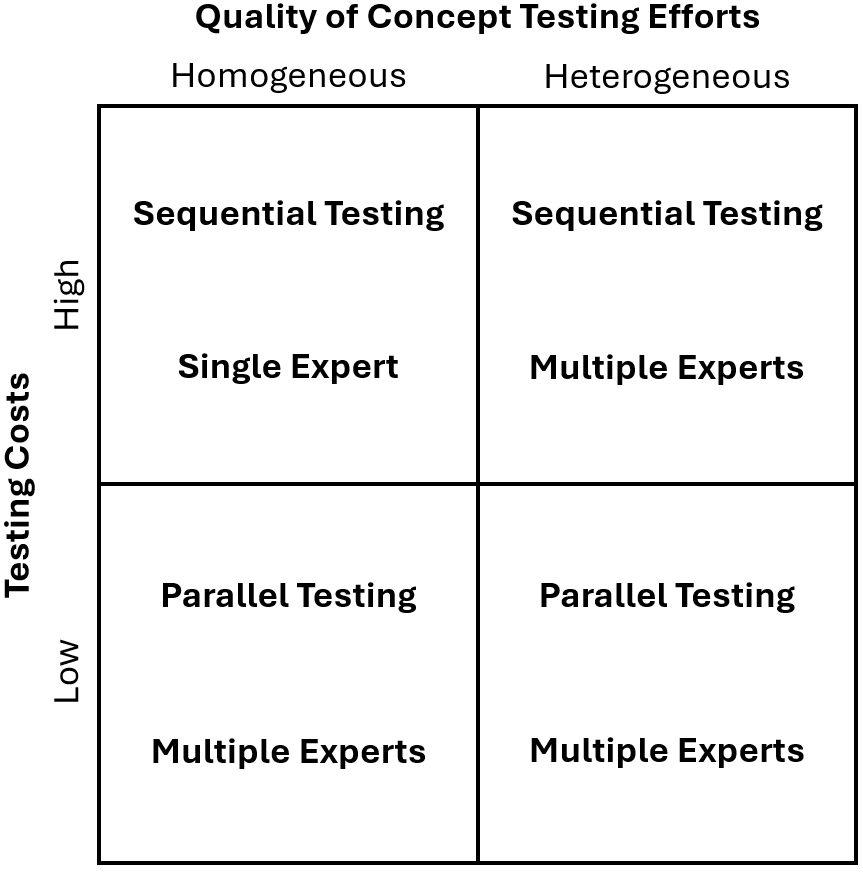
Read the full paper (summarized in a 2x2 below):
Jochen Schlapp, Gerrit Schumacher (2022) Delegated Concept Testing in New Product Development. Operations Research70(5):2732-2748. https://t.co/DaSVncggLe
Pre-print (openly accessible): https://t.co/naLtBUe1zT
#TIMESpaperOfTheMonth: In new product development, managers oftentimes underestimate the (adverse) implications of delegating their concept testing efforts to testing experts, which leads to inefficient designs and outcomes of testing processes. (1/3)
Accounting for these implications, however, allows managers to construct delegated concept testing processes that have a positive impact on their chances of successful product development compared to testing processes that they rigidly control. (2/3)
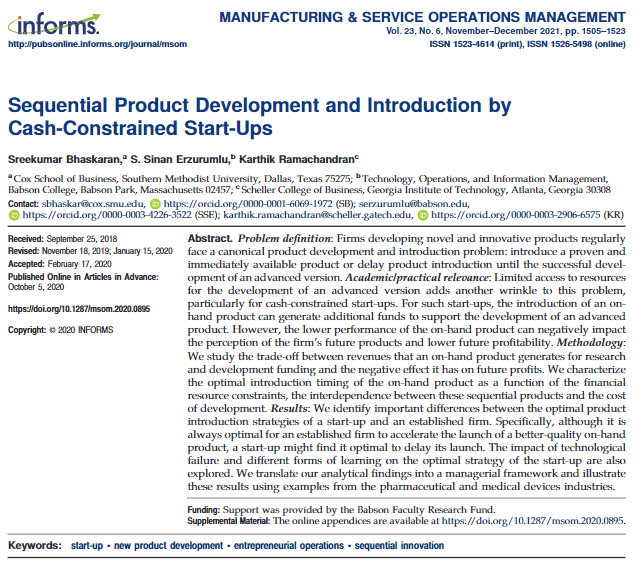
Read the full paper: Sreekumar Bhaskaran, S. Sinan Erzurumlu, Karthik Ramachandran (2020) Sequential Product Development and Introduction by Cash-Constrained Start-Ups. Manufacturing & Service Operations Management 23(6):1505-1523. https://t.co/TkO3BWGMvz
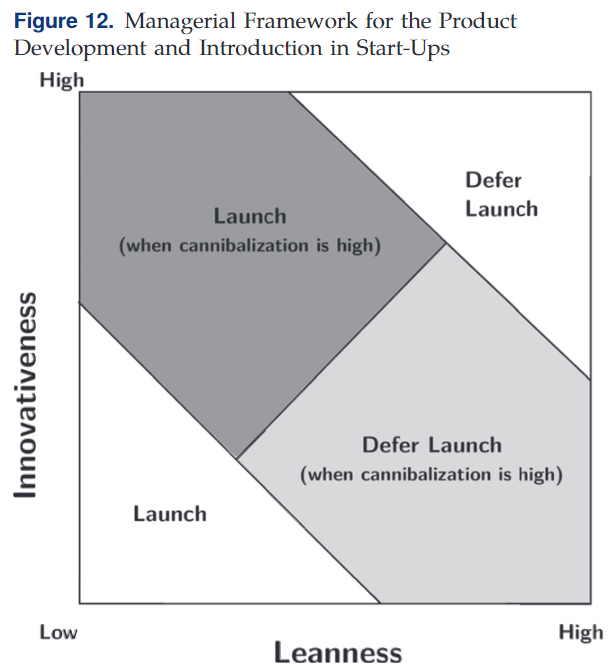
3. Monetize your existing assets: While entrepreneurs are expected to raise cash, there are ways they could generate cash from their internal assets and know-how. Developing creative profit formulas with existing assets could enable survival today and successful scaling tomorrow.
2. Right Pivot at the Right Time:A lean, cost-efficient startup may benefit from taking a patient – rather than necessarily a quick – path to market entry. A pivot that may be necessary for survival, even if it appears to hurt long-term profits.
1. Control your burn rate: By operating with an efficient product development model for early stages, the entrepreneur could keep their cash burn relatively in check, earning much needed time without raising further cash.
In a Manufacturing & Service Operations Management paper, Sreekumar Bhaskaran, Sinan Erzurumlu, Karthik Ramachandran studied the survival strategies of several successful and failed startups, and developed a model that startups can use to optimize their product launch plan.
So, how should entrepreneurs balance the trade-off between short-term survival and long-term profitability while developing and introducing new products?
Most startups fail. Why? One of the main reasons is that they burn through their cash before shipping a product that people want. This creates a dilemma: move slow to survive today or move fast to thrive tomorrow.
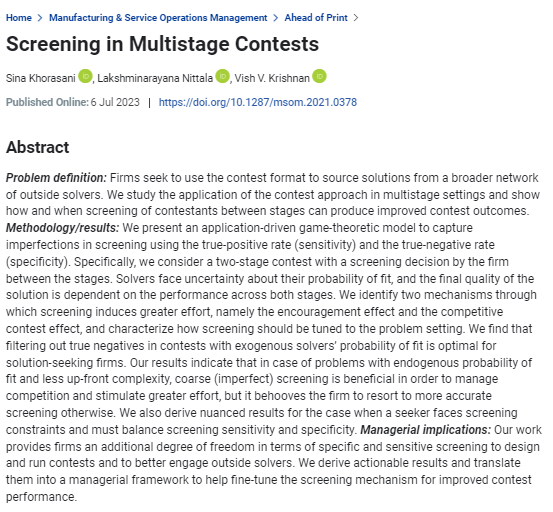
Read the full paper: Sina Khorasani, Lakshminarayana Nittala, Vish V. Krishnan (2023) Screening in Multistage Contests. Manufacturing & Service Operations Management. https://t.co/8yDP0bwls7
Pre-print (openly accessible): https://t.co/LBPEDH16sl
#TIMESpaperOfTheMonth: LSM is an experimentation method lurking with false positives and false negatives signals. Learn how you should design an MVP to achieve product-market fit!