When I decided to “lock in” 😂 and I needed a way to keep track of my tasks & time. I tried several task apps but none had everything I needed — some were too complex, others hid key features behind paywalls.
So I built my own.
Meet TaskMan 🚀 — my custom task manager.
Someone reached out to me yesterday that an educational body needed a system that scans physical registers and exports them into a spreadsheet.
But I didn’t want to build just a basic OCR scanner.
So, I designed it with an AI review using Azure Document Intelligence and Python.
Instead of exporting raw OCR results immediately, the system:
- scans the register
- extracts the table properly
- writes everything into an editable interface
- flags possible OCR mistakes
- lets users correct errors before export
So they don’t end up exporting wrong data into spreadsheets.
I built the entire thing in less than a day 😭😭😭
Still polishing it tho, but I genuinely enjoyed this one.
I might just share the link soon.
P.s: @davidokocha086 thanks for the gig😗
Y'all, bring more deals!
I'm activeeee🤩
To the Nigerian hardware engineering community: The days of waiting weeks for foreign PCB prototypes are officially over.
We’re manufacturing multi-layer boards from scratch at Omeife Robotics. Local execution = faster innovation.
What are you building next? Come talk to us!
Facts I got to understand about HELP:
1. You can't help everyone; If you try helping everyone, you'll end up needing help.
2. Some people need help but don't appreciate their help coming from YOU.
3. There are some people you can't help no matter how much you try.
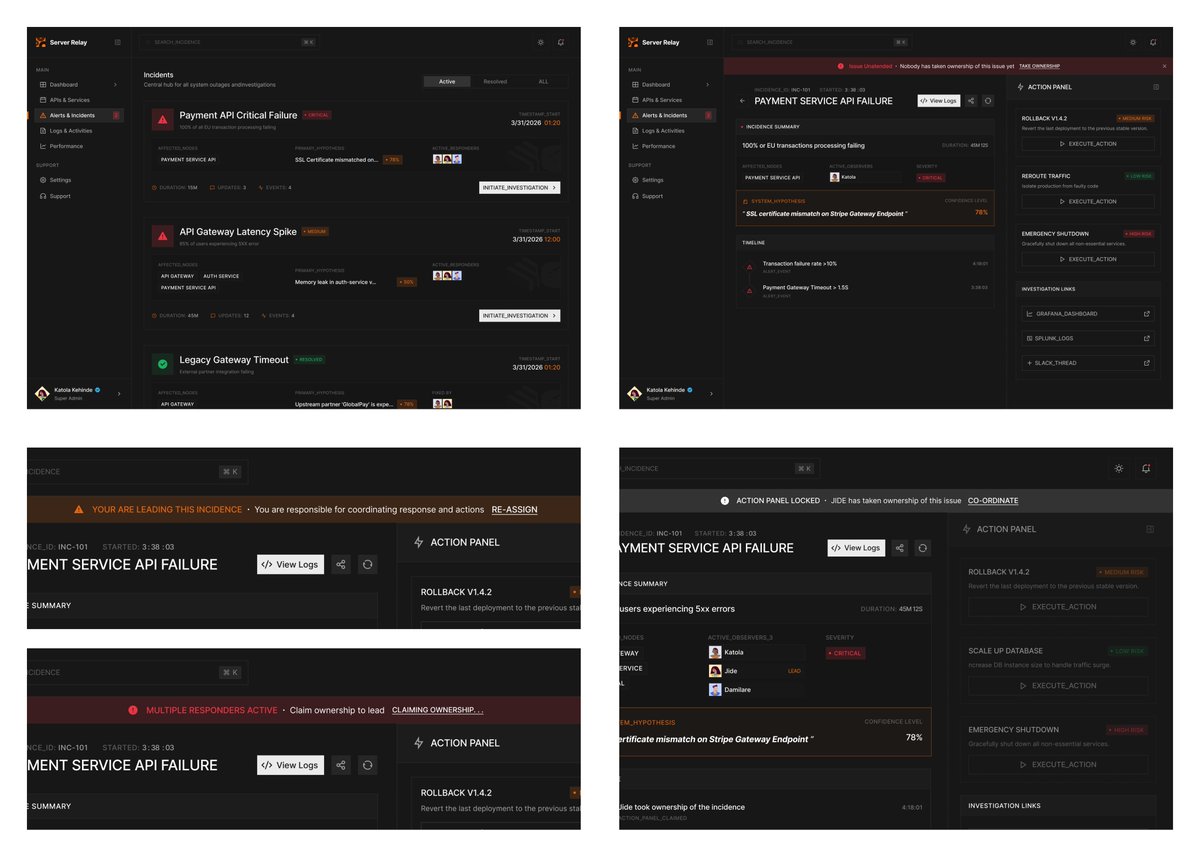
Triage & Ownership flow for the DevOps Incident Management & Response Portal.
This flow focuses on how incidents move from detection to active coordination. It shows how ownership is assigned, how responders join ongoing incidents, and how the system keeps everyone aware of who is leading the response at any given moment.
The goal was to make responsibility and coordination clear during critical incidents so teams can collaborate without confusion.
Techies… you need to see this 👀
I spent 3yrs building this project 🥲 but I’m giving it out for free 💜 (Open Source)
A Jumia alternative 🫠… but better.
This project actually forced me to learn coding the hard way 😭 It taught me both the technical side and the business side of how platforms like Jumia & Amazon really work 😅
A brand even offered me ₦1M for this project… but I turned it down 🤧
Because this isn’t just a product to me… it’s legacy code 💜
Something that helped me grow and can help other developers grow too.
So you don’t have to stress yourself figuring everything out 😭
From:
• Admin dashboard
• Sellers system
• Customer flow
• Logistics integration
• Payments
• Authentication
• Order management
…everything has already been implemented 🔥
You’ll find the project repo here pls drop a star 💜🫶 — https://t.co/tBdNUWBRwm
The fastest way to learn coding:
Build the same project 5 times.
I'm serious.
Don't build 5 different projects.
Build the SAME project 5 times.
Here's why:
First time: You follow a tutorial. You copy everything. You barely understand.
Second time: You try from memory. You get stuck. You check the tutorial. You continue.
Third time: You build it without the tutorial. Takes you 3 hours. You Google a lot.
Fourth time: You build it in 1 hour. You only Google twice.
Fifth time: You build it in 30 minutes. No tutorial. No Google. Just you.
Now you ACTUALLY know how to build it.
Most people build 5 different projects and understand none of them.
Instead, build 1 project 5 times and master it.
Then move to the next project.
First month of coding:
Build a todo list 5 times
Build a calculator 5 times
Build a portfolio page 5 times
That's 15 projects, but really it's 3 projects mastered.
Better than 15 projects you copied once and forgot.
Repetition is how you actually learn.
Not variety. Repetition.
Codex is not like claude code.
if you know the limit is going to end, like last 10 to 8%, give an very long run task, and even after the limit got ever, it will continue to do the task until the task was completed.
Shout out to @OpenAI team.
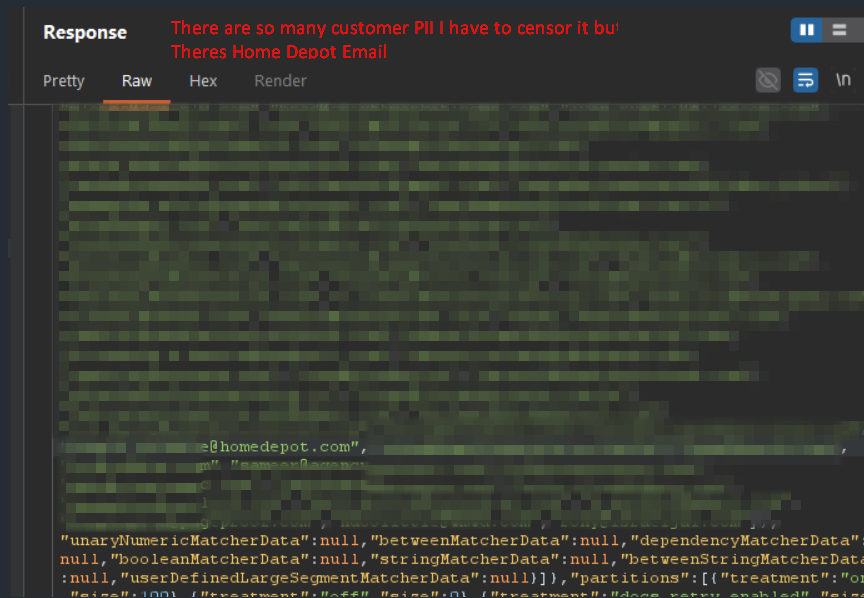
i went to https://t.co/0yaHjrptb3. opened the page source. found a hardcoded API key in the javascript. copied it. sent one GET request.
got back 959 email addresses and 3,165 internal feature flags.
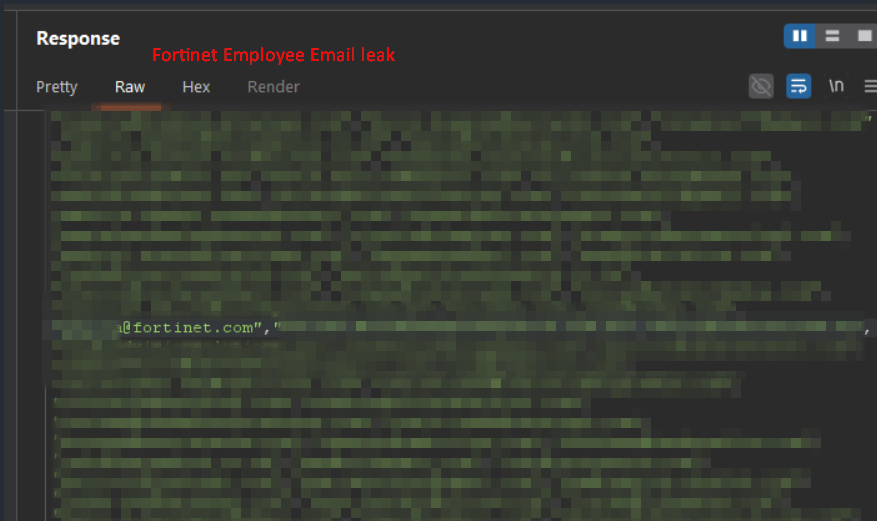
employees from Home Depot. Fortinet. Autodesk. Tenable. Rakuten. Mayo Clinic. Permira. Akin Gump. government workers from Wyoming, Arkansas, North Carolina, Montana, Queensland Australia, and New Zealand. a Microsoft contractor. 71 clickup employees.
fortinet sells enterprise firewalls. tenable makes Nessus, the vulnerability scanner half the industry runs. their employees emails are exposed because clickup hardcoded a third party API key in a javascript file that loads before you even log in.
this was first reported to clickup through hackerone on January 17, 2025. its now April 2026. the key has not been rotated. i just pulled the response five minutes ago. every email is still there.
clickup raised $535 million at a $4 billion valuation. claims 85% of the Fortune 500 use their platform. looks like the proof is in the page source.
Around 2012, I was struggling to find my place in tech.
Then Facebook posted a photo of its engineering team and I saw a Black engineer who looked like me.
I later learned he was Nigerian. His name was Ola.
That moment made the dream feel possible.
I kept that photo as my screensaver for 3+ years. Every time I felt like quitting, I reminded myself: “If he can do it, why not me?”
Today, @ola works at OpenAI.
And after 14 years, I finally get to meet him.
You never know who’s watching you… Or whose life you’re changing just by showing up.
If you feel lost, build something.
A business. Your body. A skill set. Anything that gives you a reason to learn and focus.
Don't worry about choosing the right thing. Don't think about how difficult it will be.
Just start moving forward and you'll find a path that feels right
Lmao, this is too stressful.
Simply ask codex the following:
You are continuing a session from Claude Code.
Context:
- The previous session is stored locally in the `.claude/` directory.
- Locate the most recent session transcript (or the session titled "<session name>").
- Read the full transcript before taking any action.
Tasks:
1. Context Reconstruction
- Summarize the goal of the session.
- Identify what has already been completed.
- Identify the exact stopping point.
2. Task Tracking
- Extract any TODO list, checklist, or implicit tasks.
- Classify each item:
- DONE
- PARTIALLY DONE (explain what’s missing)
- NOT DONE
3. Continuation
- Resume work from the last unfinished step.
- Do NOT repeat completed work.
- Follow the same approach, style, and decisions already established.
4. Execution Rules
- Prefer continuing edits rather than restarting solutions.
- If context is missing or ambiguous, inspect related files in the workspace.
- Only ask questions if progress is blocked.
Output:
- Brief context summary
- Task status breakdown
- Clear next action
- Continue execution immediately
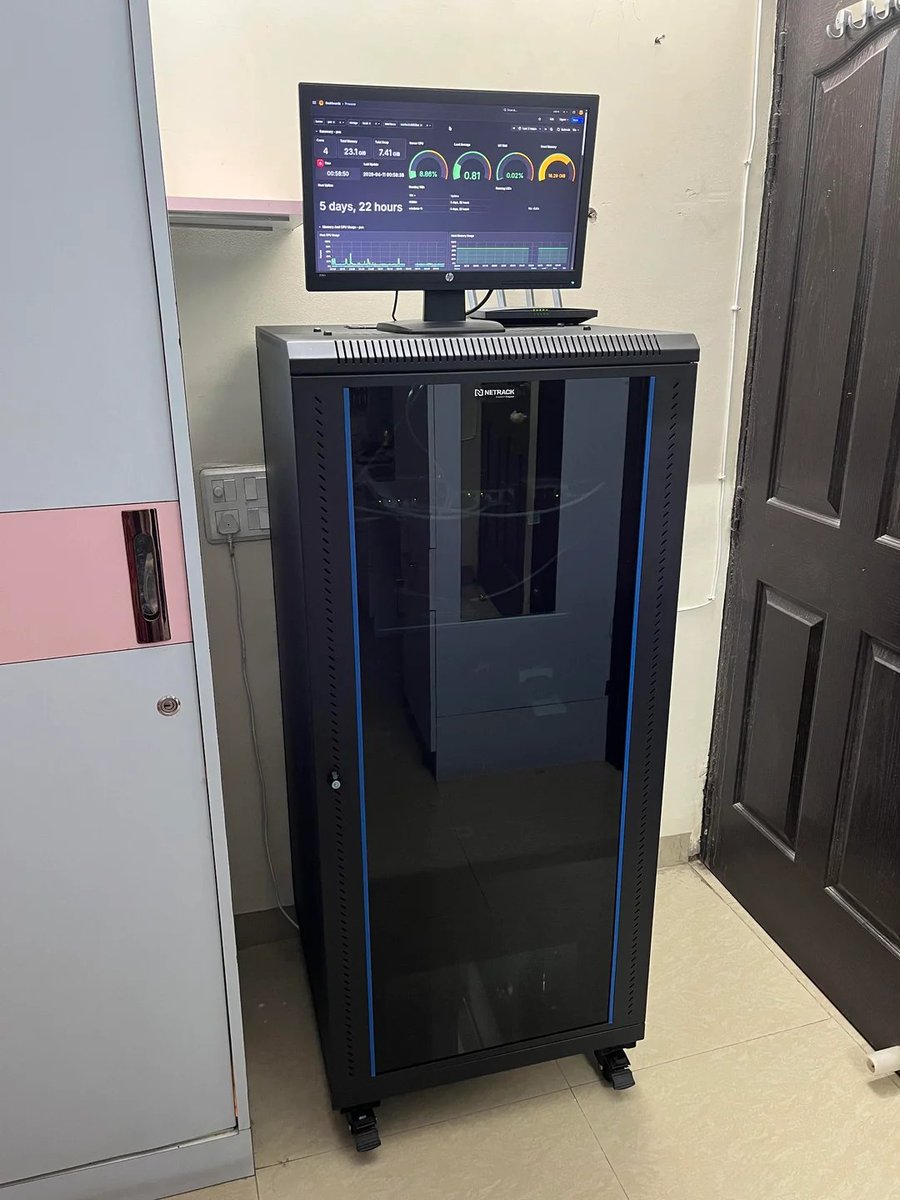
THIS GUY REPLACED EVERY SUBSCRIPTION FOR OVER 30 SERVICES WITH A HOMELAB HE BUILT USING CLAUDE CODE
he built his own self hosted version of basically every service you pay for online and runs it all from a 27U server rack in his house
the goal was simple:
stop renting access to your own data, stop paying monthly subscriptions for things you can run yourself, and have one private dashboard that controls everything in your digital life
he opens one homepage on his browser and from there he can:
> stream his entire movie and TV collection through plex or jellyfin
> request a new movie through overseerr and watch it appear in his library automatically once it's downloaded and tagged
> back up every photo he takes through immich (his own google photos)
> store all his files through nextcloud (his own google drive)
> manage his audiobooks, ebooks, music, RSS feeds, recipes, and bookmarks from one place
> block ads across his entire network with adguard home
> see live grafana stats for every machine running in his house at any moment
and a lot more
the homepage dashboard even shows the current weather, his calendar, system stats, download queues, library counts, and shortcuts to every service he uses
the hardware list:
> netgate 1100 router running pfsense+ for firewall, DHCP, DNS, and VLANs
> tp-link 8 port managed switch
> tp-link archer C6 access point
> raspberry pi 4 dedicated to a full screen grafana dashboard
> HP laptop with i3 11th gen and 24GB RAM running proxmox VE as the main hypervisor
> compaq laptop with a core 2 duo and 4GB RAM running proxmox backup server
> tower PC with a core 2 duo running unraid for the NAS
the proxmox VE box runs every self hosted service inside a debian VM with docker compose. backups run on a schedule with chunk based deduplication. unraid handles all the storage with mixed drive sizes and a single parity drive
every device is on a tailscale tailnet so he can hit anything from anywhere in the world without poking holes in his firewall
then he built his own private streaming empire on top of it:
> plex and jellyfin pointing at the same library
> overseerr to request movies and shows
> radarr, sonarr, lidarr, readarr managing different media types
> prowlarr indexing everything
> sabnzbd and qbittorrent handling the downloads
> bazarr pulling subtitles automatically
> tautulli for plex stats
> trailarr for trailers
then the rest of the stack:
> nextcloud replaces google drive
> immich replaces google photos
> paperless-ngx for OCR document management
> adguard home blocks ads across the entire network
> miniflux for RSS, karakeep for bookmarks
> mealie for recipes, navidrome for music, audiobookshelf for audiobooks
> calibre for ebooks, code server for VS code in the browser
> stirling PDF, IT tools, microbin, searxng, pairdrop
every service surfaces through homepage, a self hosted dashboard he built tooling around to auto generate the YAML config (made with claude code)
this guy is paying $0 a month for what most people pay $200+ in subscriptions for and had an initial setup cost of ~1000 to 1500 USD
the homelab community is quietly the most overpowered and cracked group of builders on the internet
A while back, I built the backend APIs for this mobile app.
Yesterday, they reached out for a “small gig” just to integrate those APIs. Sounded quick…
Opened the codebase and… yeah 😭
Hardcoded values everywhere, Ai generated logic clashing, no proper state management, and the app running like it’s on 2G…
Jumped on a call and asked them,
“So you guys really thought you could ship a full app with just AI?”
We all laughed 😂
Now I’m in there cleaning things up properly using @expo to optimize performance, restructure the app, and actually make it scalable…
of course… new invoice sent to them.
fixing AI chaos is a whole different project…
AI can speed things up...
But building it right (and fixing it when it breaks)? That’s where I come in… ❤️🦅