One of Africa's most exciting fintech companies, OPay, suddenly terminated a listing on the New York Stock Exchange (NYSE). This is after founder Zhou Yahui had rung the NYSE bell. Rather curious affair so I tried to dig for info.
1. OPay is a behemoth but its underbelly is a bit more fragile than I thought.
2. Turns out the payment app is almost a side show. It is mainly a consumer lender funded by retail savings. (BTW, it retains about 0.0385% of the gargantuan transaction volumes, which is not uncommon in the payments space.)
3. The IPO was meant to address three issues:
A/ about $1bn of preferred shares can be cashed in by investors if there is no listing worth at least $5bn by end of 2027
B/ the IPO cash proceeds were to form a cushion under its loan book, which has tripled in a year &
C/ there is a need for a New York perch before tough new Nigerian central bank (CBN) rules on consumer lending arrive.
4. About 61% of H1 2026 revenue came from loan & investment interest in naira
5. The lending business is funded by customer savings of $978.9m but $847.5m can be withdrawn at any time.
6. Cost of capital for that gig is high: for e.g. in August and September, OPay ran a campaign offering savers 27 per cent per annum (policy rate in Nigeria: 23.00%.)
7. Which makes OPay's loans expensive: anything from 36.5% to as high as 360%.
8. Credit-loss expense = $118.4m, more than the $90.9m net profit. Write-offs = $113.2m in six months, against $70m for all of 2025. 27.4% of the $415.3m loan book was past due.
9. As things get tough in Nigeria, a high-cost lender will feel the squeeze.
10. Liquidity coverage: Cash ($385.8m) plus short-term investments ($532.9m) cover about 94% of customer savings, before counting ordinary wallet balances.
11. With the IPO terminated, the $1bn preference share obligation stays and grows by about $60m a year.
12. Luckily, though, some key preference creditors are insiders, like founder Zhou.
(13. It is curious that JP Morgan that had been mentioned as the Lead Bank in March and repeated in May left by August.)
14. Of the adverse regulatory trends, the most critical are:
A/ Nigeria's central bank (CBN) decreed in June 2026 that any financial group with more than 25% of card issuing may hold no more than 15% of merchant acquiring (payment terminals), and vice versa. Compliance is due by 31 December 2026. OPay has 27% of payment terminals and 50m wallet users. Keeping card issuing under 15% would be a stretch.
B/ CBN also requires Nigerian payment data to stay in Nigeria from 1 January 2027, treats remote access from abroad as cross-border, and requires ultimate owners to be disclosed.
C/ In April 2024, 43 of the 105 fintech accounts frozen by court order in an FX and money-laundering probe were OPay's.
15. Meanwhile the wider group also needs cash in light of challenges in members like Kunlun, which lost $217m in the first 9 months of this year.
16. OPay says it terminated the IPO due to regulatory issues in a market that is immaterial to its business. Markets where it is regulatorily exposed but doesn't have much business are Egypt, Pakistan, Indonesia, and South Africa (Nigeria = ~90% of revenue).
17. Analysts noted that the shares were priced at $19 at the IPO but the ADS (American depositary shares) were being indicatively priced at $16.25 and $16.75 ahead of opening. The market was already pointing to a first-day loss.
18. The pause to address the regulatory notice would have thus led to the book being emptied, and the underwriters left holding shares at $19.
19. A polite agreement to terminate made sense on all sides. But it also means that Standard Bank’s separate investment of <$200 million can't happen either, as it was contingent on the IPO closing.
20. That, in fact, is Zhou and OPay's biggest headache. So much was hinged on the NYSE debut.
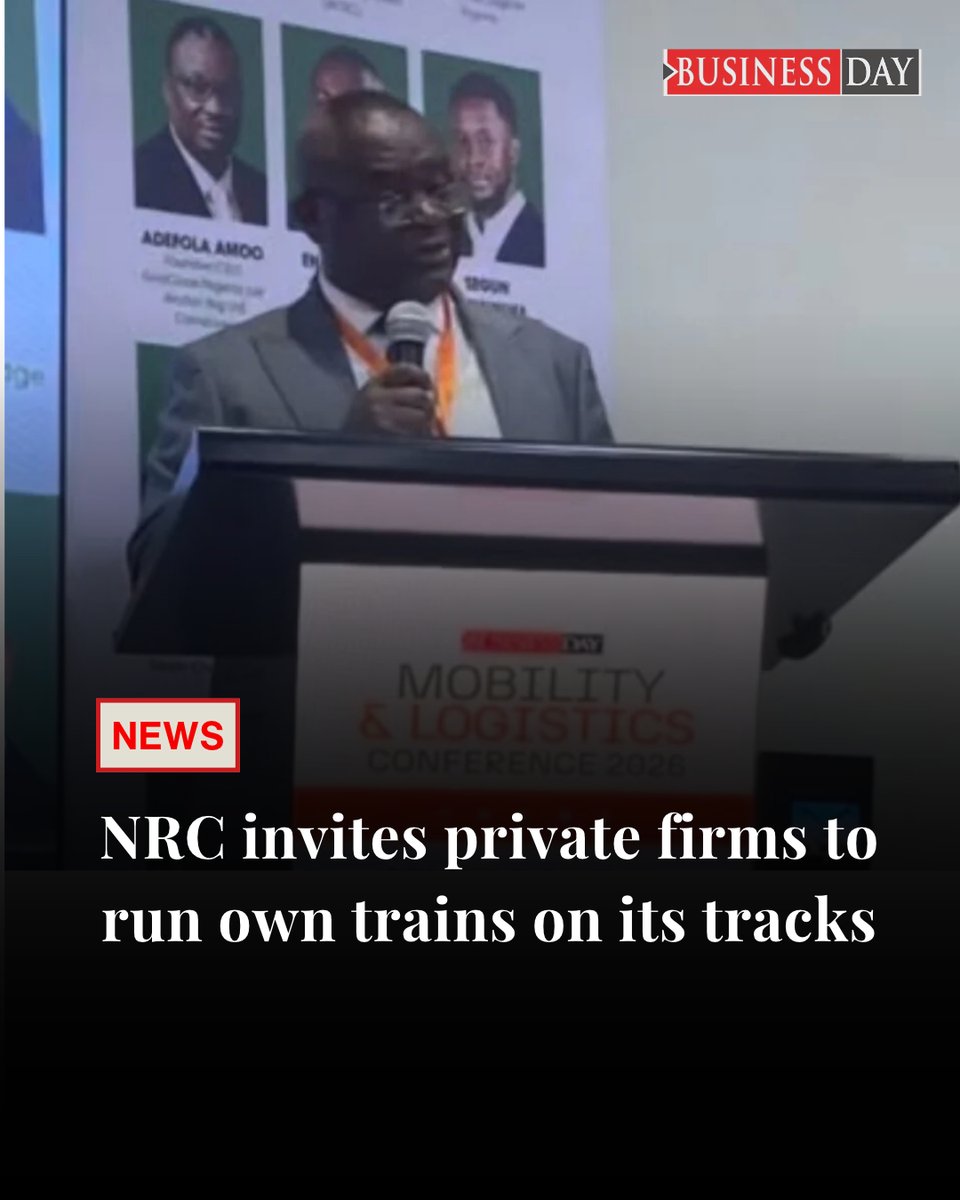
The Nigerian Railway Corporation (NRC), established for sole control of railways, is offering private operators access to its approximately 4,000 km rail network for a fee, provided they supply their own locomotives and rolling stock...
https://t.co/0sIGy2yoEr
Did I just hear that Nigeria’s net foreign exchange reserves were just $3bn in 2023? And are now 15 times higher.
Gross reserves were then cited as around $30bn.
This does explain why the naira was allowed to float, and needed to depreciate
#FTAfrica
I don’t mean to be dismissive but a lot of (young) babes want to be sex workers without calling themselves sex workers.
Someone more intelligent (and interested) than I am will explain this better within 3 business days I’m sure.
Lol. The original fuel subsidy was introduced as a temporary "price stabilisation" meant to last only 6 months to shield Nigerian consumers from the oil price shock from the 1973 Arab Israeli war by Gowon in the early 70s.
History repeats itself, as a farce.
The Seplat story
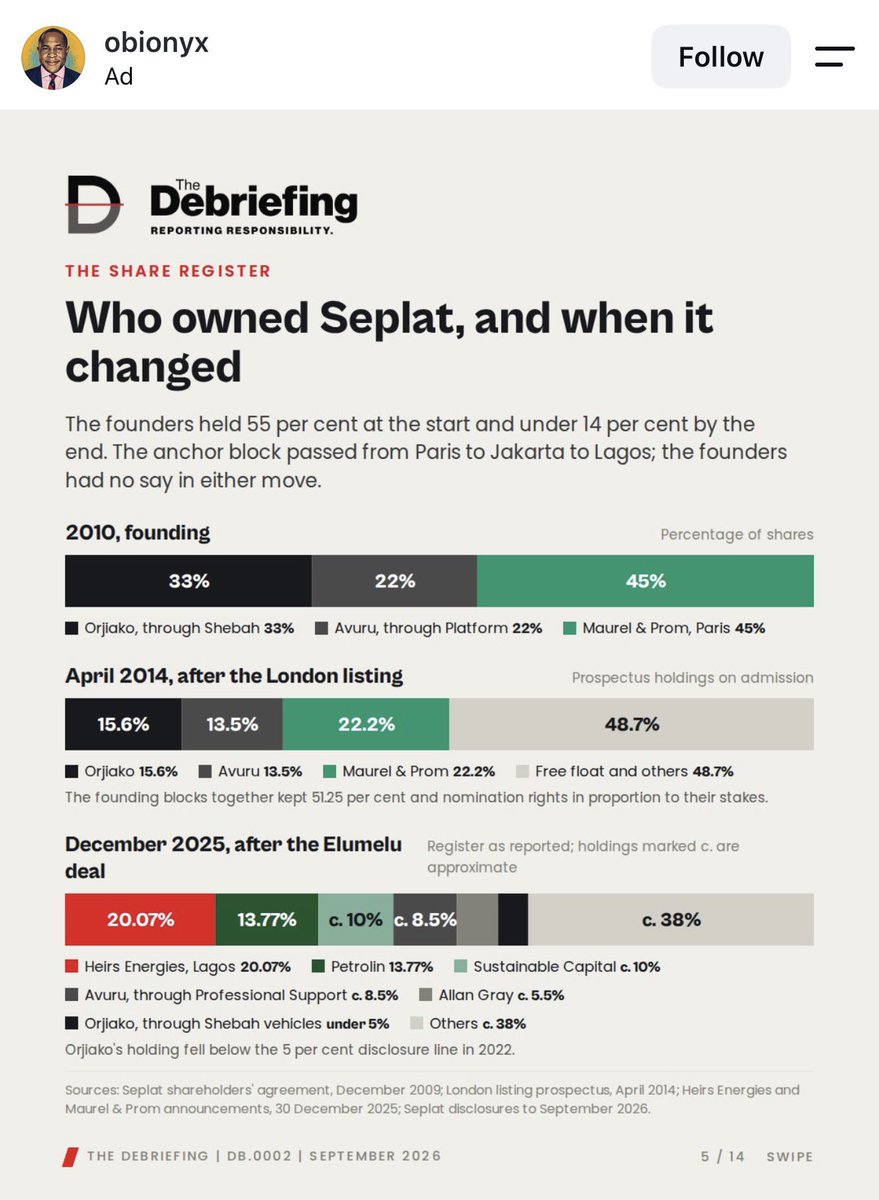
In 2009, two men with two small oil companies, Dr ABC Orjiako (Shebah), a medical doctor and Mr Austin Avuru, an NNPC-trained geologist (Platform), came together to form a new oil company.
Shebah + Platform = Seplat.
Orjiako owned 33% while Avuru owned 22%. They got an Africa-focused French oil company Maurel & Prom to contribute the remaining 45%.
But they still retained the rule that the chairman will not necessarily come from the majority shareholder.
So Orjiako and Avuru retained chairman and CEO positions respectively.
When they listed in the London Stock Exchange in 2014, their shareholding reduced to 15.6% and 13.5% respectively.
Some other investors came in along the way and Elumelu in 2025.
Now, the two founders own less than 14% combined and the rule that founder must be chairman no longer applies as Tony Elumelu, current largest single shareholder will become the chairman in 2027.
Graphic credit: Obionyx on Instagram
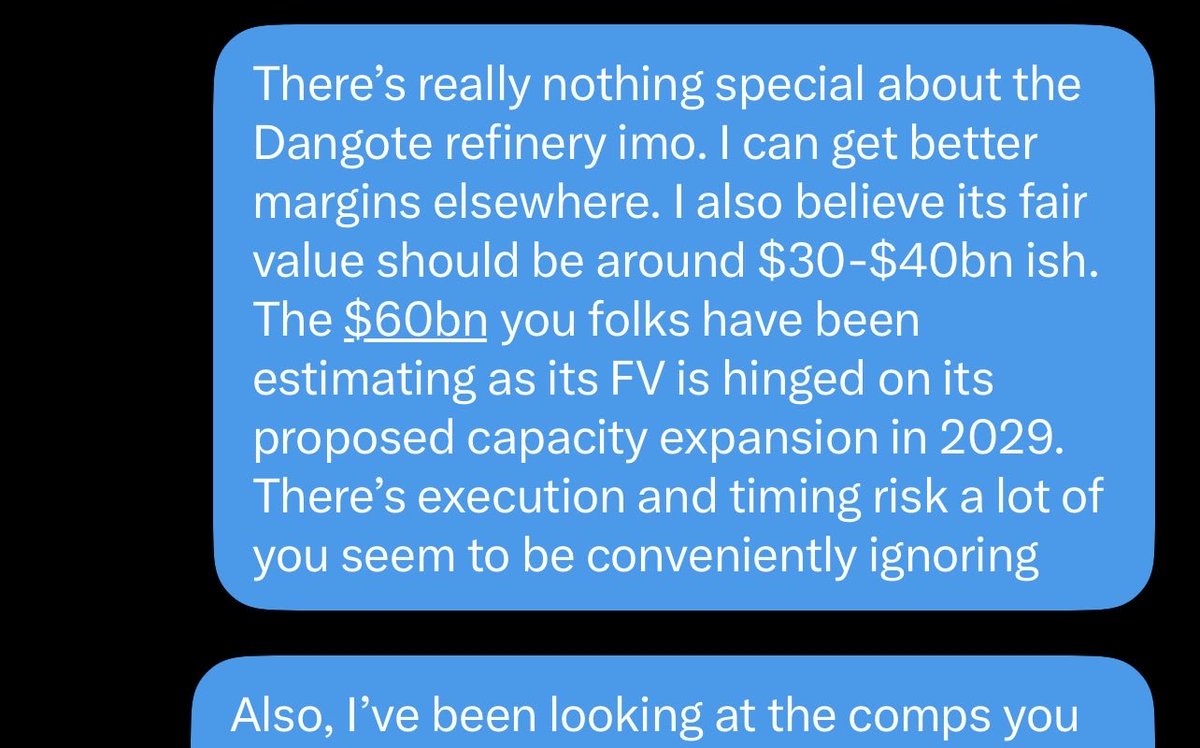
I was making this point to an industry egbon the other day: if the refinery’s capacity expansion isn’t operational by 2028/29, its annualized total return could well lag the S&P 500 over the same period. At $50bn valuation, buying the stock is largely a bet that the expansion comes on stream by 2029 latest and delivers the earnings needed to justify its fair value.