Final Part
Understanding Public Frustration While Recognizing the Wrong Target: Pastor E.A. Adeboye Is Not Our Problem
No, Pastor Adeboye is not our problem. He speaks.
He spoke in the 1990s.
He spoke in the early 2000s.
He spoke in 2010.
He spoke in 2020.
He spoke in 2025.
He has spoken across administrations, regardless of who governed or governs as President. The real question is:
How many of us were listening?
Did I hear you ask, “What did he say, and when?”
I will share two of the most relevant examples- not only because they are factual, but because they embody the pathway forward for our beleaguered country, if we are finally ready to listen, act, and compel our government to lead the reforms Pastor Adeboye has long advocated.
1. November 2025 - A Direct Public Message to President Tinubu
Contrary to the misinformation circulating online, Pastor Adeboye’s strong message was delivered in November 2025, during the Holy Ghost Service- not this week.
He said:
“You can only advise the Commander‑in‑Chief; you cannot command him. But I’ve tried. God is my witness.”
“Tell our security chiefs to get rid of these terrorists within 90 days or resign.”
He added:
“They must eliminate the terrorists and their sponsors, no matter how influential.”
These are not the words of a passive observer.
These are the words of a citizen - an influential leader - demanding results, accountability, and consequences for failure.
This is the same Pastor Adeboye some are attacking today.
He issued one of the strongest public demands for accountability ever made by a Nigerian religious leader. But how many of us were listening? What did the President do with that message? And what did we do with it?
2. October 1, 2020 - A Public Call for Structural Reform
At a national governance forum co‑organised by the Redeemed Christian Church of God (RCCG) and the Nehemiah Leadership Institute to mark Nigeria’s 60th Independence Anniversary, Pastor Adeboye critiqued our dysfunctional governance structure:
“It is ridiculous that a traditional ruler must inform a local government chairman before he travels.”
He went further:
“We all know that we must restructure. It is either we restructure or we break. You don’t have to be a prophet to know that. Now, we don’t want to break up - God forbid.”
He proposed a “United States of Nigeria” - a governance model with a President and a Prime Minister, rooted in institutional effectiveness.
These are not the words of a man indifferent to Nigeria’s future.
Nigeria is structurally dysfunctional. As presently constituted, cycles of elections without correcting the underlying structure will only degrade - but God forbid- collapse this country.
Now that we know - from just two of his many significant public statements that Pastor Adeboye has long been speaking truth to power on the hydra-headed crises that cripple our nation‑building process, the real question becomes:
What are we all now going to do about it?
“Shall these bones live?”
Like Ezekiel in the valley of dry bones, we stand in a moment of national reckoning.
The bones can live - but only if we act.
It is time for Nigerians to let the image of our 2‑year‑old baby held captive by our common enemies galvanize us to collectively rescue that child and through her rescue our nation.
The answer, my compatriots, is in our own hands.
Obiageli “Oby” Ezekwesili
A Mother
June 4, 2026
✍🏾✍🏾✍🏾
22 years ago, in Enfield, London, I met this Nigerian guy whose job was to wash celebrities' cars at a very high-end car wash. Everything he made, he sent back to Nigeria to invest in property. He was not well educated and didn't know of any other assets to preserve wealth.
At the time I met him, he was saving a lot and regularly sending home millions of Naira. His clients and patrons were very generous, and he was very hardworking.
The first thing I asked him was why he didn't take all the knowledge he had gained to set up a similar business back home. His answer was - "They will rob me blind if I am not there."
He wasn't ready to leave his cash cow in England, and he also knew that setting up a business at home was a risky endeavor. I see this pattern repeated with many successful Nigerians outside Nigeria. Trust is rare, and many have been burned.
The surprising thing is that when Nigerians do the reverse and try to set up businesses abroad from Nigeria, they would most likely choose other Nigerians to run them. I have seen this with banks and churches. Some are successful, and others are not, but they keep doing it anyway.
What happens to Nigerian trust locally, and why is it different when things are abroad? The simple answer is systems. A Nigerian doing business with another Nigerian abroad is protected by the rule of law and the systems in place there. There is also something deeper that I stumbled upon.
Nigerians typically choose other Nigerians to run things, even though their products are originally Nigerian products or products largely meant for Nigerians in the Diaspora. When it is a universal product, they would choose others, but would still likely choose Nigerians first. It is a paradox.
There are many times when choosing a Nigerian to run a Nigerian business outside Nigeria is a very bad idea, especially in those places with xenophobia, and where Nigerians are despised, but the reason Nigerians choose other Nigerians is that Nigerians abroad work hard. They know what they are running away from and put everything into it so they don't go back.
I always joke that I have more relatives in Atlanta, Georgia, USA, than in Benin City, and it is likely true, as a family reunion there once had 200 people. One thing I noticed was that the family members almost always employed other family members in their businesses, and those businesses thrived.
One of them even ran a car wash, employing his brothers, who later set up their own car washes. These were informal arrangements without any contracts, but everyone behaved and played their part. The interesting thing was that they never tried to do the same thing back home in Benin City. The answer seemed simple: maybe desperation and greed led to bad choices by those at home, but why?
I have always wondered why the same family bonds abroad that bring people together and help them do well disintegrate when they get back home. The only people I have seen who have kept these family bonds in business, tight at home and away, were the Igbo people. The interesting thing was that the car guy in London was also an Igbo man, but he couldn't leave a business with his people back home to run.
I later asked why, and he told me it was a high-end, personalized service that took years of apprenticeship to perfect. He was cleaning and detailing Ferraris, Lamborghinis, and other high-end cars for footballers and bankers. If he tried to train people to do that, they may end up taking the business away from him. I finally got my answer.
Trust is multifaceted. You have to first trust yourself before you can trust others. I have a barber in Lagos called Chika who has absolutely no fear that I would choose others over him, as we have had a relationship for decades. I have the same relationship with Chika as I had with my late co-founder, because we were always truthful with each other. It was something that grew over time.
I have followed Chika from Ikoyi Hotel to Victoria Island, to a shed when his shop was demolished, and finally to his current place, where he has operated for the last decade. I have even begged him to come to Accra, as I still don't have a regular barber here after 17 years. Many others in Lagos have the same relationship with him, and there are more of them there than in Accra. Chika is that good.
He has also been unable to transfer that skill to others, making his business less scalable. It will always remain a niche luxury service. The type of business we try to do matters. High-trust businesses with a personal touch require the founder to micromanage everything.
In Ghana, I once lost a $ 330k-a-year deal because someone (a Ghanaian) was too laid-back to respond to an email on time. Another Nigerian took the deal. Nigerians are more aggressive in doing business than others. So, I understand why people hire Nigerians abroad, especially in other African countries. They have more hunger. Nigerians choose Nigerians because they are easier to micromanage.
Hunger at home can easily turn into greed. A Nigerian guy I recruited in Lagos for a project at MTN Group in the early days had tried to circumvent me with my South African partner. I was lucky to have seen the email he wrote to that effect when he left his screen open in the office. I became more cautious about who I worked with. It repeated itself much later, when I saw that our internal company emails were being read in the Ericsson office before they poached a lot of our people.
Could these things have happened outside Africa? Maybe the probability would have been much less. The hunger is the same, but the greed is less, as many of the needs are usually already met. This is the same for Nigerians working in other parts of Africa. You don't need to worry about diesel for your generator, fuel scarcity, or security. When those basic needs are met, Nigerians become very different people.
This is why I keep telling people recruiting from the diaspora not to bring them to Nigeria, but to allow them to settle in other African countries for now. Trust is enhanced when people worry less about basic things.
This is a simple and pedestrian explanation, but trust me, it works all the time. There are people I know who would love to work for Nigerian companies but would never want to live in Nigeria. Hire them, but don't let them come back home unless you are ready to treat them as expats.
Nigeria is the problem with a lot of people; it is not because they are Nigerians but because they are in Nigeria.
There’s a silent disaster happening in Nigeria that nobody wants to confront honestly.
We keep shouting about unemployment, bad leadership, low productivity, corruption, poor healthcare, failed institutions and why our country is not working. But many people are avoiding the root cause.
Our education system has been deeply compromised.
A student enters secondary school or university full of dreams, intelligence and potential. Then the system teaches them something dangerous:
“You do not need competence to succeed.”
WAEC malpractice. NECO malpractice. GCE runs. Sorting. Sex for grades. Extortion. Intimidation. Victimization. Handout rackets. “See me after class.” “Talk to your lecturer.” “Settle this course.”
And after 4 or 5 years of surviving that environment, we expect excellence to magically appear.
It won’t.
A country cannot repeatedly reward dishonesty in classrooms and expect integrity in government offices, hospitals, engineering sites, courtrooms and businesses.
This is where many of our unemployable graduates are coming from.
Not because Nigerians are not intelligent.
Not because our youths are lazy.
But because too many people were trained inside a system where merit was murdered.
The painful part is this:
UNN, UNILAG, FUTO, ABU, UI, IMSU, ABSU and many others are using largely the same NUC-regulated curriculum.
The difference is standards.
The universities that still command respect are usually the ones with stronger resistance against sorting, extortion and academic fraud.
The ones collapsing in reputation are often the ones where corruption became normalized.
Once a student realizes they can buy an “A” with ₦20,000, or sleep their way through a course, or manipulate results through connections, the motivation to truly learn starts dying slowly.
And when millions of such graduates enter the labor market, the entire country pays the price.
That weak engineer may eventually supervise a bridge.
That poorly trained nurse may handle a patient.
That compromised accountant may manage public funds.
That fake first-class graduate may become a lecturer and reproduce the same cycle again.
This is no longer just an education problem.
It is a national security problem.
Countries become great because they protect competence fiercely.
Singapore did it.
China did it.
Germany did it.
South Korea did it.
You cannot build a first-world country with a third-world attitude towards education integrity.
Nigeria does not have a shortage of talent.
Nigeria has a shortage of systems that protect excellence.
And until we become ruthless about fighting academic corruption, exam malpractice, sorting, sex-for-grades and institutional intimidation, we will continue producing certificates instead of competence.
This fight is bigger than schools.
It is about the future survival of Nigeria itself.
It is an absolute shame that the Christian church in Nigeria has become a platform for thieves, criminals and heartless wicked politicians.
This message here is long long overdue.
I wish every Nigerian will see this video
Dear Nigerians 🇳🇬,
I refuse to be fed up or tired of speaking! I don’t have another country!
I told us that pharaohs don’t know how to let go!! They will rather die there! But God delivers and takes power away from the powerful that uses power to oppress the powerless!
👉Can you see how they are fighting hard to making sure that the 2027 election does not count with the fraud in the new electoral act???
Hmm… Nigerians we are a junction away from ENOUGH IS ENOUGH BUS STOP!!!
With GOD and with our voices raised in one accord and all of us in agreement refusing to be bought, we will be FREE!!
A junction away from ENOUGH IS ENOUGH BUS 🚌 STOP!!
In the last election, Peter Obi got more than 6 million votes.
Sowore got 14,606.
I am highlighting this not to shade anyone, but to call all of us to a moment of reflection.
I don’t want us, as Nigerians, to devolve into the kind of mindless politics we see in the US, where the goal becomes supporting a candidate rather than serving the nation.
If your goal is to see Nigeria free from its current state, then Sowore should not be part of your consideration.
Why?
The reality on the ground. He amassed approximately 15,000 votes.
I made a tweet last Sunday that had more likes than that.
So it means your candidate, no matter how good his intentions or character may be, does not have a realistic chance.
If your goal is Nigeria, then you support a political leader who can at least challenge Tinubu.
In my estimation, two of those are Peter Obi or Atiku Abubakar.
Again, if your goal is to stop a Nigeria where bandits flaunt ransom money confidently on TikTok, and where 700 Boko Haram terrorists are reintegrated into society, then one of these would be your pragmatic choice.
Now, either of these two is going against Bola Ahmed Tinubu.
I detest Tinubu. I think he is godforsaken, completely morally depraved, and dark.
But he is powerful, and he is no small politician. He is a behemoth.
A leviathan.
A titan.
I use all these weighty and apocalyptic terms because that is what he represents in Nigerian politics.
He recently admitted that he practically installed Muhammadu Buhari as president.
He has been doing this for decades, and he eventually became president with little substance.
Now, he has governors who threaten their citizens with punishment if they do not vote for him.
Now, he has wealthy socialites forming a ground army for him.
Now, business leaders are cozying up to him, people like Tony Elumelu and others.
I have not even talked about money. 41% of the 81 trillion naira federal revenue is unaccounted for.
That is enough to fund at least five presidential elections.
That kind of war chest will buy 100 Supreme Court justices.
Then we have the violence. This is a political party that can get away with sheer violence while security agencies look the other way.
This government has budgeted huge sums for legal battles.
I am telling you that Tinubu is not a politician you can confront with just fine ideals and smooth philosophies on Twitter.
He is dangerous. He is a superstructure.
And it will take equally formidable forces to challenge him. Even then, one person alone cannot face him.
Rauf Aregbesola is formidable, but not a behemoth.
Nasir El-Rufai is formidable, but not a behemoth.
Rabiu Kwankwaso is formidable, but not a behemoth.
Atiku Abubakar is formidable, and a behemoth.
But their combined weight forms a super Behemoth that can truly challenge the leviathan that Tinubu is.
And that is why the government did everything it could to prevent the African Democratic Congress from securing a venue for its convention.
That is a sign of fear.
And that kind of structure, one that can strike fear in someone like Tinubu, is the only thing that can get Peter Gregory Obi into Aso Rock.
This is the pragmatism driving some of us at this moment.
Yes, some of those people are deeply flawed and evil. But Peter Obi is widely verified as a principled moral hardliner.
And it is that uncompromising nature that we are relying on.
Peter can be trusted. That is why this alliance does not trouble us. And should not you.
Let us get Peter in first, please.
For the sake of Nigeria.
Amen.
Before I left home for church yesterday afternoon, my son came to me with a problem he needed to solve. He wanted to connect a controller to his Mac to test the game he was building. We finally figured it out with a Nimbus SteelSeries I had bought for the Apple TV Arcade games.
He “conned” me with that maneuver into getting him an Apple developer account for $99 a year. I was laughing as I left home.
I had taken our cleaner who I discovered recently was the Cathechist of a local Catholic church to his own church in a neighborhood I had never been to in Togo. It was an eye-opening experience. I saw people living as we used to live in Nigeria some decades ago. This was another part of Africa we don't show online in the suburbs of a city. The boundary between rural and urban life.
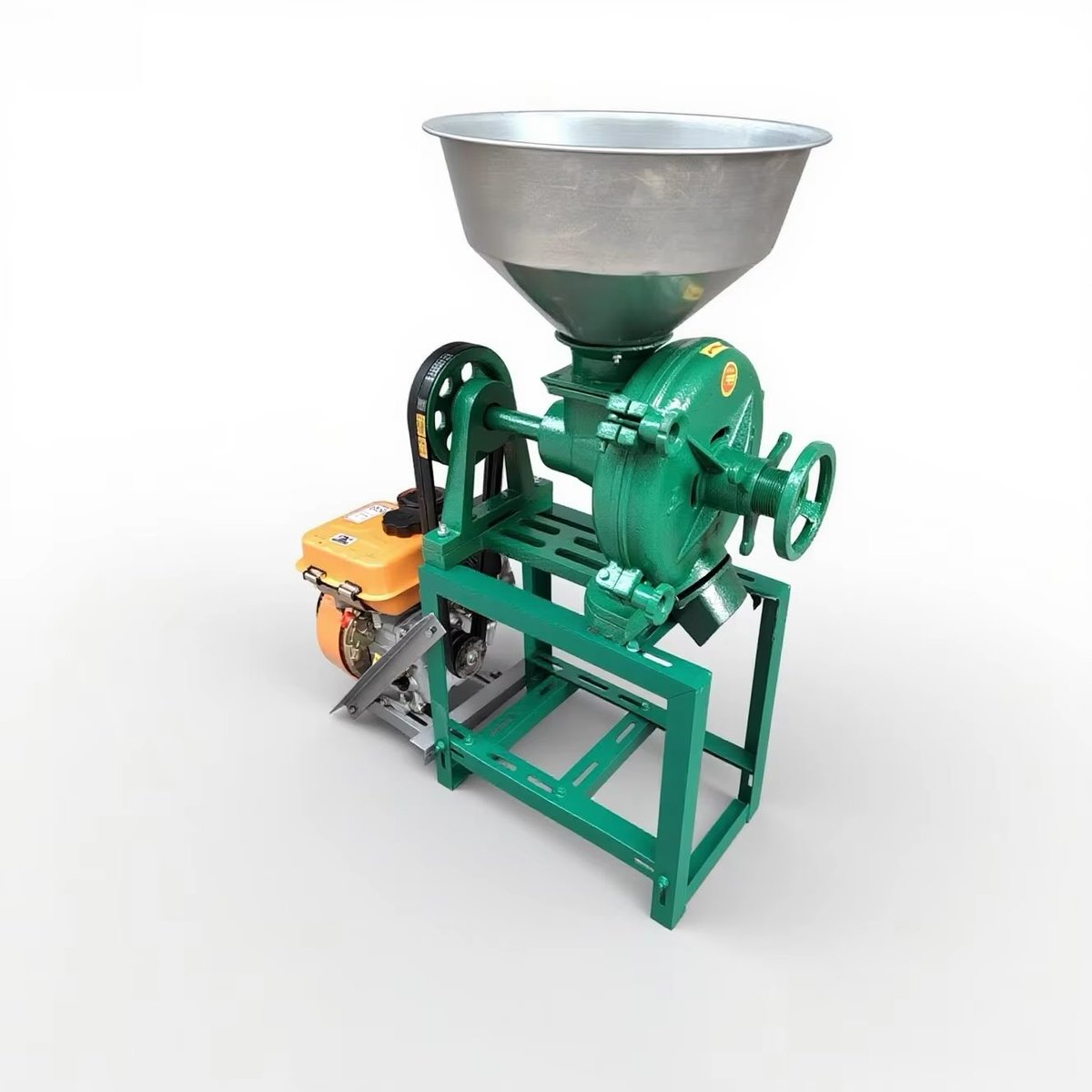
The thing that took my memory back to my early days in Nigeria was a shop selling granite and concrete grinding stones outside. I had not used one of those things since the 1980s. I was shocked that they were still being sold in a city with constant electricity.
My first thought was, these are stone-age cooking implements still being used likely by another child at home in an Africa where my son was also able to build online games for the world. Then I remembered that I still had a small manual stone grinding mortar at home that I used for some meals like Afang. It was more traditional than stone age.
It still bothered me though. The people who likely bought and used these things didn't so so out of choice but necessity. As I moved further, I saw bigger grinding mills that were engine-driven being sold. They were still crude and a far cry from my electric Ninja blender at home. The good thing was that they were locally engineered and manufactured. We at least moved forward a bit.
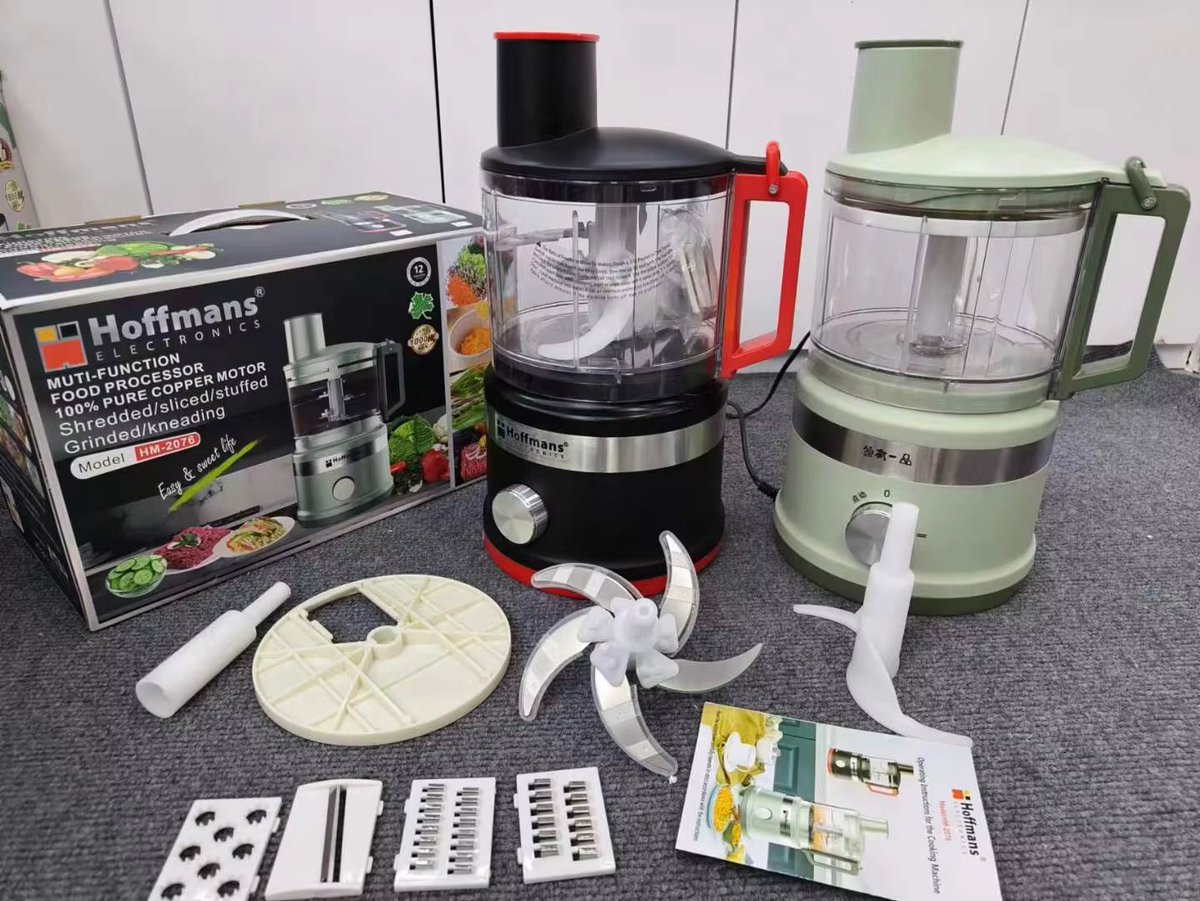
The crazy thing is that while the electric blender is now very cheap at China Mall in Lome, these crude local grinding and food processing machines are more widely used because of the sheer demand for food and their durability. It took me into another rabbit hole again on what we need to build for the market.
While my son was using an app called Blender at home to make animations and games, another kid who didn't have access to a blender would be using a grinding stone and both are still living in the same city. I started wondering how both could share experiences and context? Then it occurred to me that I was the bridge. I had experienced both worlds.
I have used the grinding stone to cook and I helped build tech companies that have raised millions of dollars. I can help my son and also help the boy whose parents can only afford a grinding stone. I think I am now changing churches again and will be going with my kids to the my cleaner/cathechist’s church.
I also need my kids to experience what life is like in most of Africa and not get lost into a virtual existence while being unaware of the reality all around them.
Africa will grow and move forward but it will not do so until then grinding stone becomes largely replaced by the electric blender and then every kid has the opportunity to be able to build online with software tools like Blender.
I stepped outside and challenged myself to stare at the sun. Honestly, I couldn’t do it, it was too bright. I couldn’t even keep my eyes fully open. It was just too bright!
Then a thought hit my heart:
“If the sun is this bright, and it’s millions of miles away, how bright is the One who created it?”
At that point I just humbled myself immediately. Because clearly, if I can’t handle the sun, how do I want to handle God? No wonder the Bible says in 1 Timothy 6:16 that God dwells in unapproachable light, whom no man has seen or can see. It makes perfect sense now!
And then you remember Moses, after just a partial encounter with God’s glory, his face shone so brightly for days. The Israelites were like, “Sir… please cover that thing.” 😭 He literally had to wear a veil because the brightness was too much for them.
So imagine the full glory of God… ah! No human being can stand that. Not even for one second.
That’s why it’s so deep that God chose to come in a way we could handle. He didn’t show up in full blazing glory; instead, He came in human form through Jesus, so we could actually look at Him, talk to Him, and relate with Him without fainting on the spot.
Jesus is the visible image of the invisible God, the version of God our eyes can handle without going blind.
Honestly… what a marvelous, wise, and loving God. 🙌
Dear Wives.
You see that moment when there is a small "accident" on the road? Maybe, us, we your husbands was trying to overtake another vehicle and mistakenly brushed a shiny SUV. Listen, the rule of the game is simple: Guilt is a luxury we cannot afford.
Even if we are the guilty party, the moment we step out of that car, we must look like a man whose ancestors were kings.
We will squeeze our faces like we just drank undiluted lime. If we look sorry, we are paying. If we look angry, we are "negotiating."
The drama before uttering "DO YOU KNOW WHO I AM?!" (Even if you only know yourself, it doesn’t matter. We will ask.) It must come from our chest and great cinema acting.
One hand on the waist, the other pointing at a non-existent scratch on the other person’s car.
Wives, your role is clearly stated on that faithful wedding day. Our partner-in-crime. A lifelong commitment.
This is where you come in. My sister, if you are in the passenger seat, your job description has changed instantly from "Darling" to "Chief Peace Officer/Professional Beggar."
While we, your husbands are out there vibrating like a generator without engine oil, you must jump out and start the "Performance of Mercy."
"Oga, abeg! Mummy, please! You know how these men are. My husband is just stressed. Junior has not paid school fees. Help us beg him, he’s a good man but his head is hot!"
Why is this format mandatory:
To save face.
A Nigerian man cannot just say "I'm sorry" in the middle of Ikorodu road. It’s against the constitution of street negotiating
To Save Money.
If we are too humble, the bill is double and we are denied a negotiating platform. But if we are "vexing," the other person might just say "Abeg carry your wahala go!"
When you, dear wives hold our shirt and say "Daddy Junior, let it go for my sake," we will still struggle a little. We won't just stop. The performance must be top-notch. Then right on cue, we sigh heavily like we’re doing the whole world a favour by not "showing" the other driver.
So, to all our wives, please, understand the assignment. When we are huffing and puffing, don't come and say "But honey, it was your fault." No, mummy. That one is for the bedroom o alakoba somebody.
On the road, hold our trousers and beg for your life and by extension both our lives.
It was in May 2025, JAMB had released results and candidates from Lagos and South East states performed poorly.
Despite public outcry, a key person in the ministry of education defended the outcome as a reflection of their true capacities under strict examination conditions.
It was during this tense period that @winexviv, founder and CEO of Educare, publicly raised concerns about the UTME results, citing data and reports from schools whose students scored far below expectations despite strong past performance.
He argued there was a technical glitch in JAMB’s system rather than genuine academic failure.
Rather than use kinetic means to resolve perceived injustice, Onyia used subtle diplomacy. He petitioned governors and education officials in the South‑East and Lagos, urging an audit and transparent review before the rescheduled exam concluded.
Consequently, JAMB invited him to join a review panel examining the 2025 UTME process, indicating that his involvement was significant in pushing for scrutiny of how the results were generated.
JAMB eventually acknowledged technical errors in the examination system that affected scores at many centres in Lagos and the South‑East and ordered a resit for affected candidates (about 379,997 candidates) starting mid-May 2025 for affected candidates.
Significant improvements were recorded for many candidates in terms of scores above the 200 benchmark.
I was a direct beneficiary of the non kinetic activism of Alex Onyia. My daughter who had previously scored 179, later scored 299 which gave her straight admission for her chosen course of study.
Can you imagine the level of education apathy this would have generated if it had gone unchallenged?
A 19-year-old candidate, Faith (Timilehin) Opesusi, in Ikorodu, Lagos, reportedly took poison after seeing her 2025 UTME score, which she believed was much lower than expected.
She had scored about 190 and was deeply disappointed because she had done better the previous year.
Very sadly, reports say that a provisional admission notification arrived about 30 minutes after her death.
Alex Onyia went ahead to organize the well publicized and successful South East Maths Olympiad where three students Egejurum Onyedikachi, Onwubiko Chimdiebube and Don-Anele Munachimso emerged as champions. They won cash prizes in millions together with their teachers. Many corporate organizations were partners.
The students have been invited to compete on a global stage at the International STEM Olympiad Grand Finale happening in Rome from July 2nd - 8th.
He is currently organizing a South-East Educators Conference to happen in May in Enugu.
What we need in Nigeria right now are many Alex Onyia who can use non-kinetic means to achieve regional, national and global excellence.
A working, prosperous and egalitarian Nigeria is possible, just a step at a time.
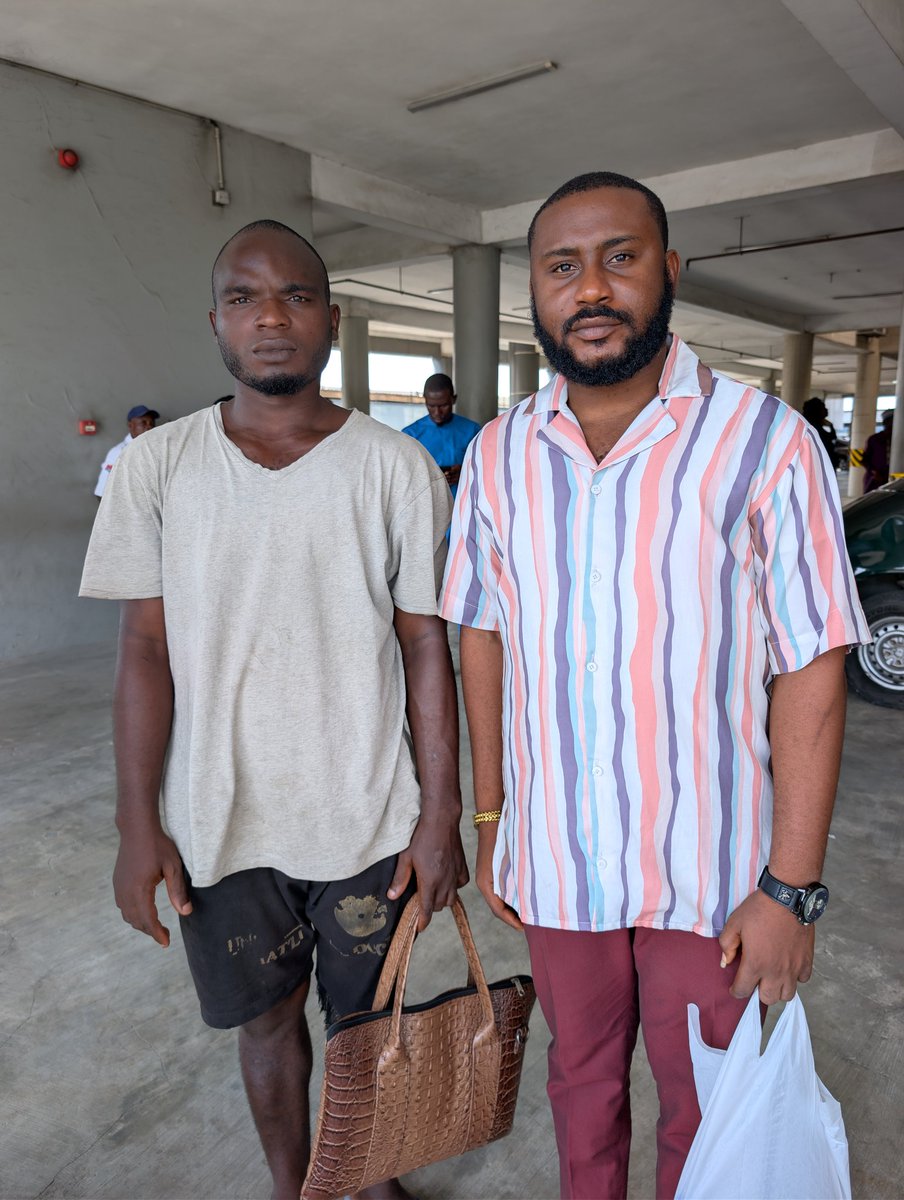
This is my childhood friend, Pastor Segun, though a graduate, he “volunteered to be poor” as a Missionary so the villagers can hear the saving gospel.
His wife is currently in Nursing school with two kids, why, so she can learn basic medical skills that will be useful to the villagers as part of the recurring outreaches.
I was with him last year April, he is ever rejoicing and joyfully carrying his cross, trusting God for monthly provision of his needs and that of his ministry; for more than 15yrs, he is constantly grateful for being found worthy by God to be entrusted with such responsibility!
Have you noticed that the people at the very top of every industry in this world knew each other from way back?
That’s because they all had a single unfair advantage that most people ignore.
Think about this:
In 2023, the founder of Altschool said that he noticed that 80% of the people dominating the tech space in Nigeria at the time were people hanging around CChub circa 2011-2013.
In 2023 as well, tech cabal released an article called the paystack mafia. It was an article outlining several tech founders doing incredible things, raising funds and building. They were all at the company around the same time.
If you read up the PayPal mafia, you see the exact same pattern. How that the founders of YouTube, LinkedIn, Tesla, Palantir, Space X were all together at some point.
Let’s leave tech.
Coscharis. Ifeanyi Ubah. Ibeto. Inosson.
All billionaires in Nigeria. They all come from the same community. Nnewi.
They all started the same - trading spare parts.
The money used to settle coscharis from his apprenticeship was given to him by Okeiyi ( Chisco ) who was serving at the same time.
I promise you:
An unfair advantage that will remain the differentiating factor for the top 1% forever is something called community.
I don’t know how to explain it but something magical happens when people of like minds and similar vision come together in a confined space. No matter how small they start.
It’s like energy is coming together and something has to emerge as a result. It can’t be result-less.
The reason you’re already thinking “how do I get into communities that will help me grow?” Is because you’re not sincere with your desires.
You’re looking for already-made groups. They won’t accept you into their circle.
I won’t as well. I don’t trust you.
Start where you are. One. Two. Three friends that are simply hungry pursuing diverse dreams bound by a genuine desire to change their lives…you will shock yourself in a few years.
Rooting for you. Like mad.
❤️⏰
I was talking recently with someone who is at the apex of his field globally, and he told me Psalm 37:4 carried him through a season of chaos and disappointment. I went back and studied not just the verse but the two that follow, and I haven’t been the same since.
“Delight yourself in the Lord, and He will give you the desires of your heart.”
It says DELIGHT. Not obey, not tolerate, not fear. Basically enjoy.
That word changes everything. God isn’t after robotic compliance. He wants to be the center of gravity in your inner world. Not a side interest. Not a Sunday ritual. The thing your mind returns to when everything goes quiet.
But here’s the tension: how do you actually enjoy God?
We enjoy the things we enjoy cos we understand them. You can’t enjoy football if you don’t understand the point of the game. You can’t love someone deeply if you don’t know who they actually are or what moves them. The same applies to God. You start by understanding who He is and why He exists.
God didn’t create us out of loneliness or need. He existed in perfect, self-sufficient love before time began. Creation was overflow, not deficit. Which means His desire for you is based on communion. His purpose is to unite the world to Himself because in Him is the only source of actual life.
When God becomes what delights you, something both subtle and seismic happens: your desires change. Whatever delights you shapes what you love and what you chase. Anyone who’s ever been in love knows this instinctively.
So when the Psalm says He will give you the desires of your heart, it’s not promising to grant your current cravings. It’s saying He rewrites your appetite entirely. He plants His own longings inside you, for truth, depth, holiness, courage, love and then fulfills what He Himself planted. God never fails to accomplish His own desires.
That’s why verse 5 feels so dangerous:
“Commit your way to the Lord; trust in Him, and He will bring it to pass.”
We recoil from that line cos we think surrender means erasure, as if God wants to override who we are. But why would a God who was already complete need to dominate us?
Everything about His nature points the opposite direction; toward overwhelming, self-giving love. He is more sufficient in Himself than a father without children, yet He sustains us more faithfully than any earthly father ever could.
Our desires are often small and short-sighted, like a child demanding candy instead of dreaming of a future. We insist we know what we want. We’re adults with full agency. But God is infinitely greater, infinitely wiser, not just as a father compared to a child, but as the eternal architect of reality compared to one of His creations. He knows what will actually make us whole.
Now look how the passage ends:
“He will bring forth your righteousness like the dawn, and your justice like the noonday sun.”
It doesn’t say His righteousness. It says yours. He will vindicate you, reveal the truth about who you are, and set things right.
The sequence is crisp and beautiful. God captures your heart, redirects your path, then restores your name. And He does it emphatically; like the noonday sun. You can’t miss it. You can’t ignore it. You can’t pretend it’s not there.
Four months ago, I received a call:
“Pastor, one of your boys has been arrested. He’s at the police cell.”
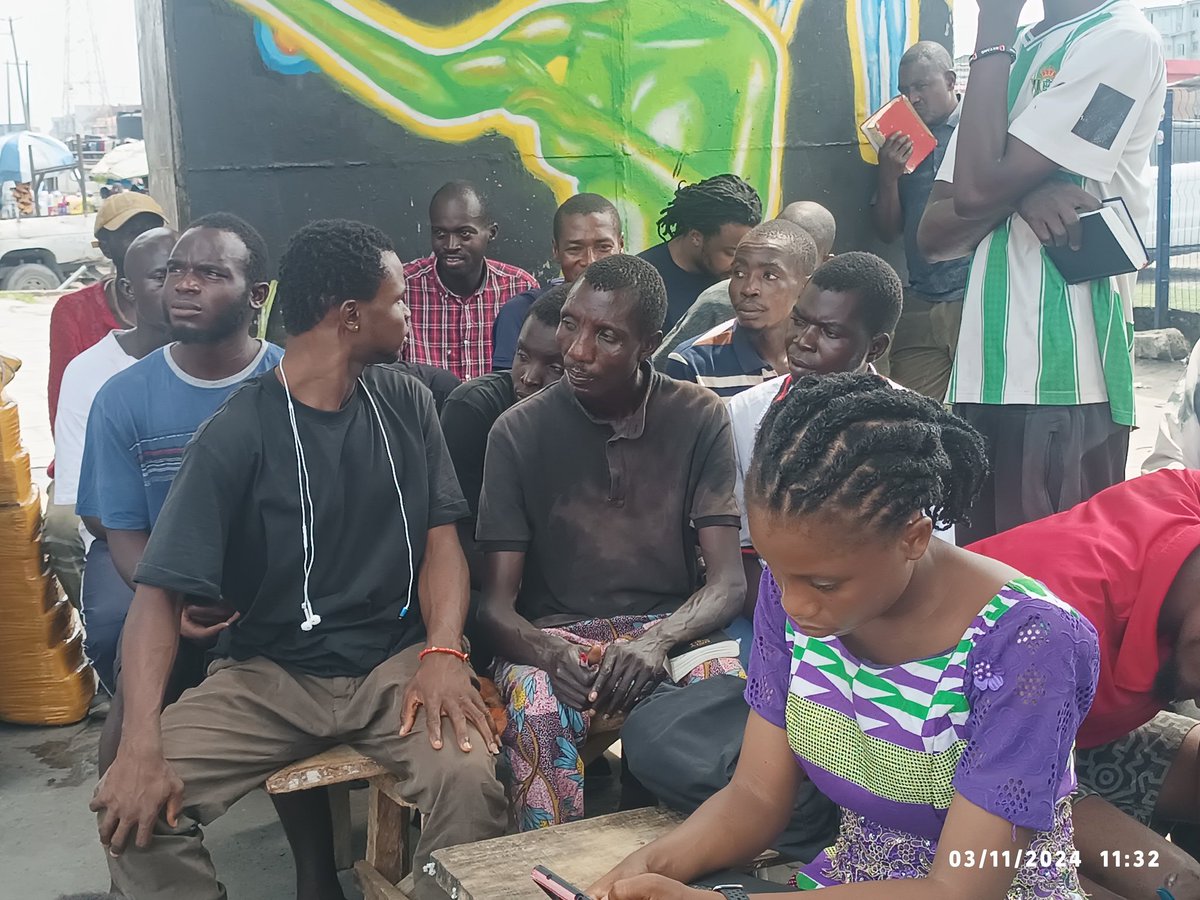
After asking around, I discovered it was LK, popularly called Amacula, a brilliant young man in his late twenties. He left home as a teenager and had survived on the streets ever since, doing whatever his hands found to do. One Sunday, he wandered into our church under the bridge and became part of our community.
God had begun a slow work in him, reshaping, tempering, softening a man hardened by life. Some biblical teachings confronted him deeply, and he struggled with them, yet he kept coming back to learn. “A bruised reed He will not break” (Isaiah 42:3).
One Sunday while I was teaching, I noticed he was distracted. When our eyes met, he gestured, asking to step out briefly. He said, “Pastor, e jo, mo’n bo…”. I told the person beside me, “He’s going to fight.” And he did—beat someone up—and then returned to church, sat down quietly, and said, “Pastor, e jo, e ma binu.”
I was torn. How does a man fight and then return to sit under the Word so calmly?
Yet that was him, still raw, still unrefined, but already being worked on by God.
He had a strong sense of justice. He defended the defenseless, fought for the oppressed, and stood firmly for what he believed was right, though his methods were still being redeemed. “The zeal of your house has consumed me” (Psalm 69:9), though not yet according to knowledge.
When I heard of his arrest, I went to see him. No one else could, many of the brethren had past issues with the police in that area. By the time I arrived, he had been moved from the station to court, then to another court. I finally found him moments before his trial.
He pleaded not guilty, and his journey into prison began.
For four months, he was there, no father, no mother, no relatives. Only the church.
We prayed. We visited. We stood by him. “Remember those who are in prison, as though in prison with them” (Hebrews 13:3).
And now, to the glory of God, he has been released.
Many of these men are hardened on the outside, but inwardly they are simply lost.
A simple message, “Jesus loves you”, can break even the toughest heart. “The Word of God is living and powerful” (Hebrews 4:12).
Go and tell everyone that Jesus saves. You may only be planting a seed, but God gives the increase (1 Corinthians 3:6).
Last year, the Lord did mighty works on the streets among souls battered by life.
This year, we go even harder for Jesus.
“The Son of Man came to seek and to save the lost” (Luke 19:10).
It is with heavy hearts that we announce the death of Damilola Balogun on the 1st of January 2026 😢
Damilola was a loving wife, a devoted mother, and the main applicant for her family on skilled worker visa.
Just five months ago, she welcomed her beautiful baby into the world. What should have been a time of joy soon turned into a painful and tragic journey no family should endure.
It all started when Damilola began complaining of severe migraines. She visited Walsall Manor Hospital, where she was treated and discharged. Three days later, she returned with the same symptoms, but no cause was found and she was sent home again. Two weeks later, the headaches persisted, and this time she was admitted. Doctors administered antibiotics and carried out an MRI scan and a lumbar puncture.
The results revealed water on her brain, and Damilola was urgently referred to Queen Elizabeth Hospital, Birmingham, for surgery. The surgery was initially successful, and there was hope.
Tragically, three days later, Damilola went into a coma and was placed on life support. Despite all medical efforts and prayers, it was confirmed that she could not recover. On the morning of 1st January 2026, the life support machine was switched off.
While others were welcoming the first day of a new year in celebration, this family was plunged into unbearable grief.
Damilola leaves behind three children aged 11 years, 10 years, and a 5month old baby, her husband, her mother and grandmother.
Since this ordeal began, her husband has been unable to work, staying by her side throughout hospital admissions and recovery attempts. Their savings have been completely exhausted, and the family is now facing funeral costs and the immense responsibility of raising three children without their mother.
We are humbly asking for your support; no amount is too small. Your donation will help:
•Cover funeral and burial expenses
•Provide immediate support for her children
•Ease the financial burden on the grieving family
Please consider donating and sharing this page. Let us come together to show this family that they are not alone during their darkest moment.
Thank you for your kindness, prayers, and generosity. 🙏
https://t.co/obIlMtk1YR