Medical doctor. Specialist in health policy, planning, health financing. Health Economics. Science geek. Deep interest in cosmology and theoretical physics.
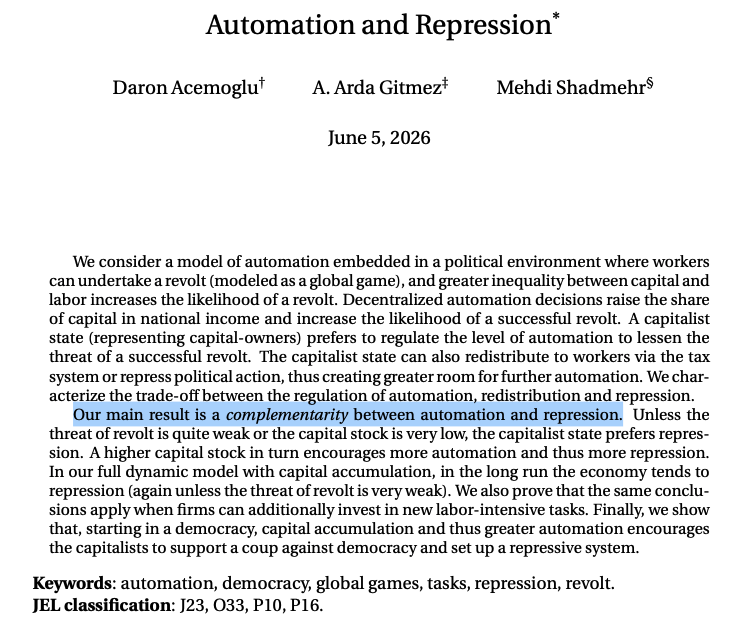
New paper by Acemoglu et al. on how automation may ultimately undermine democracy. As automation (think AI) shifts income from workers to capital, containing the risk of revolt requires ever more redistribution, making repression more attractive to the capitalist state.
In 2002, Daniel Kahneman received the prize in economic sciences – not as an economist, but as a psychologist.
His groundbreaking work brought psychological insight into economics, challenging the idea that humans are purely rational decision-makers.
In his bestselling book 'Thinking, Fast and Slow', Kahneman breaks down how we think using two systems:
System 1 – fast, intuitive, emotional
System 2 – slow, deliberate, logical
He revealed how systematic cognitive biases – not just emotions – shape our everyday decisions. From money and risk to leadership and policy, his research changed how we understand human behaviour.
This book didn’t just explain the mind – it reshaped economics, finance, healthcare, and public policy.
Read more: https://t.co/6TiHHCbhBD
In 2006 a Stanford PhD student published a mathematics textbook that nobody outside academia read.
Google used it to build PageRank. Renaissance Technologies used it to manage $130 billion. Every jet engine flying today solves the same type of problem 50 times per second.
His name is Stephen Boyd. He teaches EE364A at Stanford. His students start at $400K at Citadel, $350K at Two Sigma, and $300K at Google DeepMind. He has been cited over 140,000 times. This is lecture 1.
He opens with one claim.
Everything is an optimization problem.
Choose variables. Define an objective - what you want to minimize or maximize. Add constraints - things that must be satisfied or the answer is completely unacceptable, no matter how close. Find the point with the best objective value that satisfies every constraint.
That is all of engineering, all of statistics, and all of finance in four sentences.
Then portfolio optimization. You have 5,000 assets. You need to choose how much of each to hold. Constraints: budget, maximum concentration per name, minimum expected return. Objective: minimize risk. Boyd says he is not aware of a single quantitative hedge fund that does not solve this exact problem with convex optimization. Not one.
Then the counterintuitive thing that the entire course is built around.
Two problems can look nearly identical. One is easy. One is impossible. It is not obvious which is which until you know what he is about to teach you.
Example: do not hold more than half your portfolio in any collection of 100 names. Convex. Solvable instantly. Do not hold more than 100 names total. Not convex. Genuinely hard. Same portfolio. Same constraint in spirit. Completely different mathematics.
Then the job offer nobody gives you but everybody should.
He tells the room that when they go to an internship, nobody will say this might be a convex problem. They will hand you 400 pages of domain complexity and tell you it is impossible. Your job is to come back the next day and say it is done. One of his students did exactly this. Finished in a week. Was the best intern the firm had seen.
A quant I know rewatched this before their first week at a systematic macro fund. Said it was the first time optimization felt like a skill rather than a topic.
Stanford EE364A. Free on YouTube. The textbook is free online.
bookmark this and watch later - after this lecture every hard problem someone hands you will feel like a question about whether it curves upward or downward
In 1987 America refused to sell India a supercomputer.
It then offered a weaker model instead, with conditions. Civilian use only. No technology transfer. No re-export. And an American official would be posted in India to monitor how the machine was used.
India said no, and handed the job to a man who had never seen a supercomputer in his life.
His name is Vijay Bhatkar.
He was born on 11th October 1946 in Muramba, a village in Akola district in Maharashtra. He started school directly in class 4. He took his engineering degree at Nagpur, a master's at Baroda and a doctorate at IIT Delhi.
India had wanted the machine for a very ordinary reason. Weather forecasting, which for a country of farmers is not a luxury. The Indian Institute of Science wanted one for research.
The Americans classed supercomputers as dual use technology, meaning it could also help a nuclear or missile programme. So the export was blocked.
In March 1988 the government set up the Centre for Development of Advanced Computing in Pune, and made Bhatkar its founder and executive director.
Before that, the Prime Minister asked him 3 questions.
Can we do it. Bhatkar said he had never seen a supercomputer, only a photograph of the Cray, and that yes, they could.
How long will it take. He said less time than it would take to keep trying to import one.
How much will it cost. He said the entire effort, including building the institution, would cost less than buying the Cray.
He was given about 30 crore rupees and 3 years.
The start was not glamorous. He has said that for the first 6 months he could not recruit a single person, including his own secretary, because of bureaucratic delays.
His team took a different route from the Americans. Instead of building 1 enormous processor, they linked many ordinary processors together to work in parallel, using parts that could be bought off the shelf.
The prototype was ready in 1990. They called it Param, which in Sanskrit means supreme.
Then came the part he did not expect. Nobody believed it was a supercomputer. It did not look like a Cray. He has said even his own computer science professors doubted it.
So he took it abroad, to a major international supercomputing conference, and had it demonstrated and benchmarked in public. It was formally recognised there as a supercomputer.
In 1991 they completed PARAM 8000.
An American newspaper carried the story under a headline that has stayed famous in India. Denied supercomputer, angry India does it.
Versions of the machine were later exported to Germany, the United Kingdom and Russia. India went from being refused the technology to selling it.
He has one line he repeats.
Great nations are not built on borrowed technology.
Daron Acemoglu blasts The Economist over their bizarre critique of him: “Your central verdict that I am 'oddly unconvincing' rests on unnamed economists revealing their true opinion of me over a few drinks. No persons who have been offered drinks to get to this truth are named. Would you publish a letter asserting that, over a few drinks, most people tell me that your newspaper is no longer worth subscribing to? The only person quoted with such views is a blogger, Noah Smith, a thin basis for judging a lifetime of academic work [...] If this is the best you can do with a body of work spanning 33 years, then it is your critique that is 'oddly unconvincing.'”
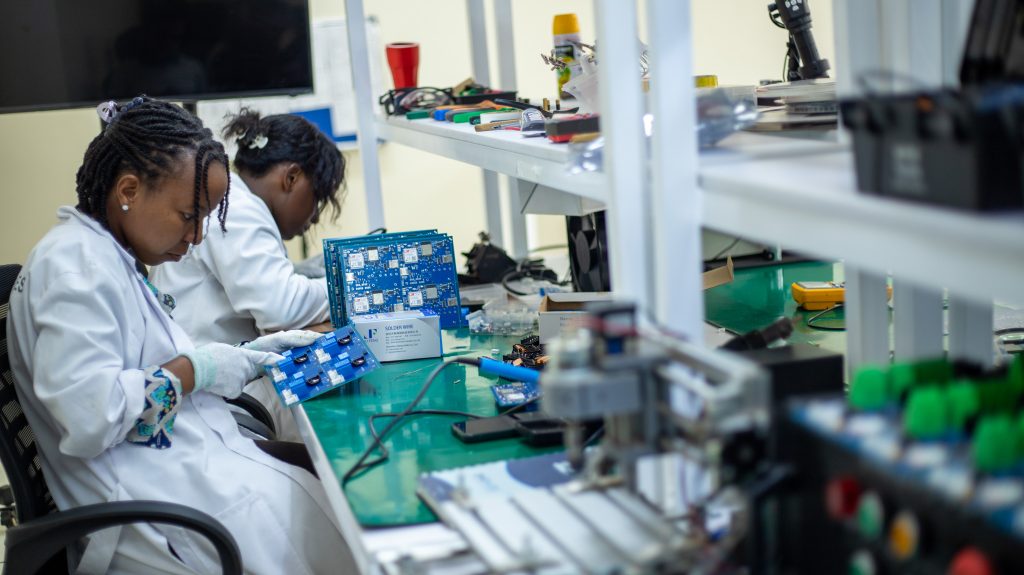
UGANDA'S RESEARCH ENDS ON LIBRARY SHELVES. IT SHOULD END ON FACTORY FLOORS.
By Joel Aita
Every year, Uganda's universities and research institutions produce thousands of dissertations, journal papers, technical reports and prototypes, but only a small fraction of that output becomes a product, an adopted solution or an enterprise. I have been in the academic leadership for the past 4 years; I have observed this.
Consider one statistic. In a recent baseline period, Uganda logged about 250 patent applications and only 2 registrations. Two. Meanwhile we spend just 0.31% of GDP on research and development, against Kenya's 0.8% and the African Union's 1% target. Business R&D is a mere 0.01% of GDP.
But the deeper problem is not how little we spend. It is where the spending stops.
Our research funding today carries an idea from proposal, through data collection, to a dissertation, a journal paper, perhaps a prototype and then it stops. The stages that actually create economic value; testing and certification, IP protection, commercial production, market entry, and scale-up receive no systematic national financing. Innovators call this the "valley of death," and in Uganda almost nothing crosses it.
I see the consequences in my own industry. We import materials, technologies and systems that Ugandan researchers have prototyped in our universities but could never certify, produce or sell. Every imported product government buys is a market signal sent abroad instead of home.
That is why Uganda needs a National Research, Innovation and Commercialisation Fund. A competitive, professionally managed and accountable financing mechanism that funds the entire innovation journey, from national problem to market-ready solution. Three design principles matter most.
First, fund the entire journey. The Fund should operate six windows running from strategic research grants through proof-of-concept, prototyping, certification, market entry and growth capital. It must finance the valley of death, not just the comfortable early stages.
Second, put government on the demand side.
Government is one of Uganda's largest purchasers of goods, services and technology. A procurement window for tested local innovations, pilots in ministries and local governments, public institutions as demonstration sites. This is how Korea, Israel, Singapore, India and South Africa built industries from research. None of them relied on academic publication alone. An innovation cannot become a national solution if government refuses to become its first credible customer.
Third, design it to replenish itself. Successful projects should return a share of royalties, equity gains or license income to the Fund, so early wins finance the next generation of innovations. This is not a subsidy. It is an investment vehicle.
To my colleagues in academia: this vision asks something of you too. Promotion criteria and researcher pay should recognise patents, products and enterprises, not publications alone. A researcher who solves a national problem and builds a business around it has served Uganda at least as well as one who publishes in a foreign journal.
To the private sector: major research grants should require meaningful industry participation, so that a market is committed before the research begins. We must stop being spectators to Ugandan research and become its first partners and first customers.
Research has limited national value when it remains unpublished, untested, unprotected, uncommercialized or unused. The true test of research is whether it creates solutions, industries, businesses, jobs and national prosperity.
Uganda does not lack ideas. It lacks a structured system to take ideas to market. A National Research, Innovation and Commercialisation Fund is that system. Parliament should establish it in law.
Joel Aita
Chairman Muni University
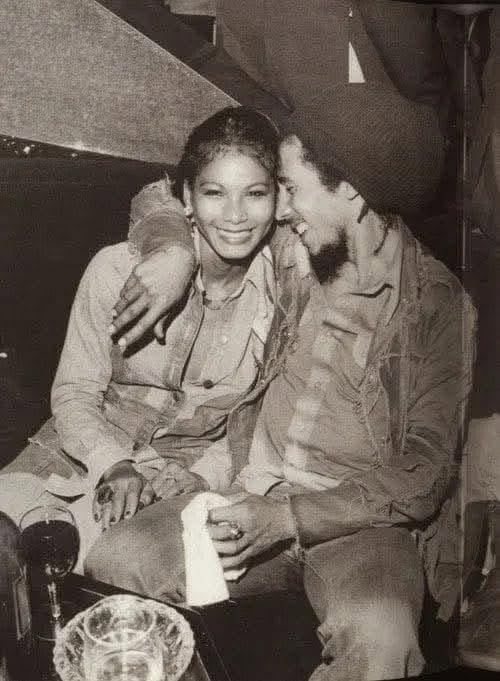
Bob Marley avait raison lorsqu’il disait :
Tu ne seras peut-être pas son premier amour, ni son dernier, ni même son unique.
Elle a aimé avant toi, et elle aimera peut-être après.
Mais si elle t’aime maintenant, là, dans cet instant présent,
Qu’importe tout le reste ?
Elle n’est pas parfaite, tout comme toi.
Ensemble, vous ne serez jamais un idéal immaculé.
Mais si elle parvient à te faire rire, même une seule fois,
Si elle te fait douter, réfléchir, t’émerveiller,
Si elle avoue ses failles, ses maladresses humaines,
Alors, ne la laisse pas s’échapper.
Offre-lui le meilleur de toi-même.
Elle ne t’écrira pas des vers,
Elle ne pensera pas à toi à chaque souffle, chaque battement,
Mais elle te donnera une part d’elle-même, fragile et précieuse,
Une part qu’elle sait que tu pourrais briser.
Alors, sois doux avec elle. Ne cherche pas à la changer,
Ne demande pas plus qu’elle ne peut offrir.
Ne perds pas ton temps à tout analyser,
Mais savoure la simplicité des émotions.
Souris lorsque ton cœur s’illumine,
Crie si la colère te traverse,
Et ressens son absence comme une empreinte irremplaçable.
Aime-la de tout ton être,
Pour l’amour qu’elle choisit de te donner.
Il n’existe pas de femmes parfaites,
Mais il y aura toujours une femme parfaite pour toi.
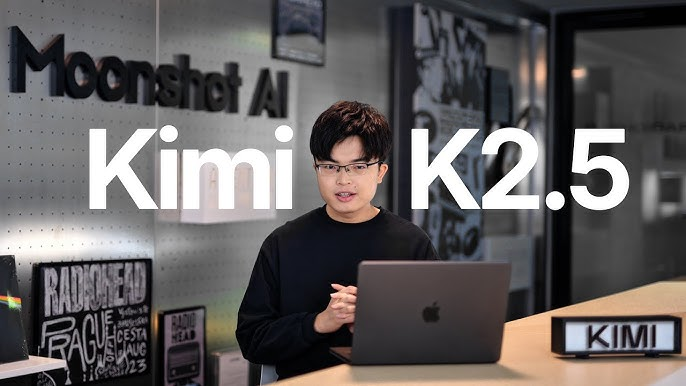
A kid from Shantou with no programming background got into Tsinghua University's computer science department by winning a high school informatics olympiad, then quit a job offer from Google Brain to start an AI company in Beijing with two of his college bandmates. Four years later that company released a 1 trillion parameter open-source AI model that outperformed every American closed model on coding benchmarks and became the fastest Chinese tech company in history to hit a $10 billion valuation.
His name is Yang Zhilin. The company is called Moonshot AI. The model is called Kimi K2.
Here is the story.
Yang was born in 1992 in Shantou, a small city in Guangdong province. In high school he had never written a line of code. He got selected for an informatics olympiad training program anyway. He won first prize at the Guangdong provincial level, which got him guaranteed admission to Tsinghua University.
He scored 667 on the gaokao, far above the Tsinghua cutoff. But the system placed him in Thermal Energy Engineering. He transferred to Computer Science in his sophomore year. He graduated in 2015 ranked first in his department class. During undergrad he was advised by Tang Jie, a Tsinghua professor who would later co-found another Chinese AI giant called Zhipu.
He went to Carnegie Mellon for his PhD under Ruslan Salakhutdinov and William Cohen. He finished in under four years. During that time he co-authored two of the most influential papers in modern AI, Transformer-XL and XLNet, which together shaped the long-context capabilities every modern LLM relies on. He worked at Facebook AI Research and Google Brain. He contributed to the original Google Gemini and Bard projects.
Then in November 2022 ChatGPT launched.
Yang flew back to the United States, looked at what OpenAI had done, and made up his mind. He told an interviewer later that he sensed two things were about to move at once, capital and talent, and when those two move together it is the rare moment when you can build a company from zero to one whose only purpose is AGI.
In March 2023 he founded Moonshot AI in Beijing with two Tsinghua classmates, Zhou Xinyu and Wu Yuxin. The three of them had been bandmates in a college rock group called Splay. The company name is a tribute to Pink Floyd's Dark Side of the Moon, Yang's favorite album. The company launched on the album's 50th anniversary.
He raised $60 million and built a 40-person team in three months. By 2024 he had raised over a billion dollars. The investors included Alibaba, Tencent, and Sequoia China. Moonshot AI became the fastest Chinese startup in history to reach a $10 billion valuation. ByteDance took four years. Pinduoduo took three. Moonshot did it in two.
In October 2023 they launched Kimi, a consumer chatbot with a 200,000 character context window, the longest in the world at the time. By 2024 it was running on Chinese hardware and had tens of millions of users.
Then on July 11, 2025 they released Kimi K2.
K2 is a 1 trillion parameter Mixture of Experts model that activates 32 billion parameters per inference. It is open weights. It beat GPT-4 and Claude on coding benchmarks. It outperformed DeepSeek V3 on agent tasks and tool use. Former OpenAI researcher Andrew Carr publicly said K2 communicates differently than other models, refusing to be sycophantic and pushing back on bad ideas the way few models do.
By early 2026 Moonshot had crossed $240 million in revenue. The Kimi K2.5 release exceeded the entire 2025 revenue total in under 20 days. K2.6 dropped in April 2026 with a SWE-Bench Pro score of 58.6, ahead of the leading closed-weight coding models at the time.
A kid from Shantou who had never coded a line in high school just released the open-source model that competes head-on with everything OpenAI, Google, and Anthropic have shipped.
He named it after the dark side of the moon.
Latest crazy story from the frontiers of math and AI -- a neurosurgery resident, with no training in advanced math, uses ChatGPT 5.6 to solve a major open problem in numerical linear algebra. https://t.co/xckiv4TCFc
Russian mathematician Grigori Perelman solved the Poincaré Conjecture, one of the most famous unsolved problems in mathematics. The problem had remained open for nearly a century.
His proof earned him the $1 million Millennium Prize, but he declined the money. He also refused the Fields Medal, one of the highest honors in mathematics.
Perelman lives a private life and has said that he is not interested in fame, money, or public recognition.
“The link between lack of sleep and cancer is now so strong that the World Health Organization has classified any form of nighttime shift work as a probable carcinogen."
Kenya🇰🇪: Stop Measuring Development in Concrete - Murang'a Governor Irungu Kangata @HonKangata
There is a serious intellectual problem with defining "development' as what can be photographed, depreciated and entered in an asset register, while treating it as recurrent consumption.
The Parliamentary Budget Office (PBO) performs an important oversight role, but its framework risks teaching counties the wrong lesson: build more concrete, spend less on people, and rank better. That would be an unfortunate triumph of accounting over economics.
A road is an asset, but it wears out. A hospital needs maintenance. A vehicle depreciates. Even a new school begins ageing when children enter it. Education behaves differently. A child who learns to read does not become less literate with time. A nurse car become more valuable with experience.
A teacher who masters mathematics can teach successive generations. Engineers, doctors, entrepreneurs and artisans accumulate knowledge, judgement and networks. Human capital compounds. There is an economic irony here: almost everything government calls "capital" depreciates, while its most important capital can appreciate.
A newly recruited doctor cannot economically be equated with one who has 20 years' experience. The latter has accumulated knowledge and institutional memory. Treating the first doctor's training as recurrent while celebrating the hospital in which both work is like celebrating the chicken coop while forgetting the chicken.




![haugejostein's tweet photo. Daron Acemoglu blasts The Economist over their bizarre critique of him: “Your central verdict that I am 'oddly unconvincing' rests on unnamed economists revealing their true opinion of me over a few drinks. No persons who have been offered drinks to get to this truth are named. Would you publish a letter asserting that, over a few drinks, most people tell me that your newspaper is no longer worth subscribing to? The only person quoted with such views is a blogger, Noah Smith, a thin basis for judging a lifetime of academic work [...] If this is the best you can do with a body of work spanning 33 years, then it is your critique that is 'oddly unconvincing.'”](https://pbs.twimg.com/media/HQPaKC7W8AAzZjm.jpg)