Excellent thread on the horrible homogeneous term #SouthAsian when we should rightly be known from our heritage countries. I hate the term. Who calls a Brit a European? And we don't call the Japanese "Far Eastern"
Equally cringe is BAME in the UK.Own your heritage and accept it!
Don’t know about Rang De Basanti, but let me tell you what some of us millennials actually grew up watching.
I was in primary school during the 1993 Mumbai bombings -- too young to even understand what terrorism meant. But I distinctly remember my mom repeatedly warning me not to pick up anything lying around while playing outside because, you know, it could be a bomb.
That was childhood.
Then came the seemingly endless procession of attacks: the 1993 Mumbai blasts, Red Fort in 2000, Parliament in 2001, the Mumbai bus bombings and Akshardham in 2002, three separate blasts within eight months in Mumbai in 2003, the 2005 Delhi blasts, the 2007 Hyderabad bombings, and the 2008 Bangalore and Ahmedabad blasts.
In July 2006, I was supposed to be on one of the trains that was bombed near Mahim. I stayed back at the office because of a meeting. A completely mundane change of plans is probably the reason I’m alive to type this instead of being a name on a list of the dead.
I remember that evening far better than I remember any stupid movie. Our office went into lockdown. Phones were jammed. People were crying and frantically trying to reach their families. Nobody knew what was happening, whether there were more bombs, or whether someone they loved was lying dead inside a mangled train compartment.
Two years later came 26/11.
I had the misfortune of watching uncensored footage of the aftermath. One clip showed bodies being piled and stacked inside a makeshift room at CST while someone wheeled in another load on a bloodied wheelbarrow, with blood dripping onto the floor. The sanitised footage shown on television didn't come remotely close to what actually happened inside that station.
So yes, us millennials lived through an era where we went to work knowing that the crime of simply boarding the wrong train, getting on the wrong bus, eating at the wrong restaurant, or standing on the wrong street at the wrong fucking moment could get you blown to pieces or riddled with bullets.
Some of us literally went to work wondering, somewhere at the back of our minds, whether this would be the commute we wouldn't come home from.
So please, spare us millennials this sanctimonious horseshit about Rang De Basanti and what some Bollywood movie supposedly should have taught us about how to vote.
"Revolution is merely a dramatic device used by the ambitious to get the people to do the heavy lifting, so the ambitious can take the credit and the corner office."
Don’t get played.
Another one, ironically, the sister of the current Chancellor, didn’t have enough of a spine to challenge Andy Burnham in a leadership contest and is now actually like a sycophant.
It’s cringe.
Be more ashamed of yourselves.
I worked in Punjab as a journalist during the peak of militancy. Later in my career, I headed the Punjab Cell in the CBI, which had, in its past, investigated cases of fake encounters as well as the assassination of Sardar Beant Singh.
Those experiences gave me a rare opportunity to see both sides of that tragic period. They taught me that any honest account of those years must acknowledge both sides of the story.
And that is exactly my concern with Satluj: not what it shows, but what it leaves out. It tells only half the truth; the other half is left unsaid, deliberately, and with a purpose.
The film decontextualizes Jaswant Singh Khalra and the human rights debate from the Pakistan-backed, brutal Khalistani insurgency. This omission is neither an innocent creative choice nor an inadvertent one. And, in my view, the intent behind such a selective portrayal should matter to every Indian.
@ThePujaTeli Happy to charge 1000s of dollars for people to come over, then repeat the same for dependants. Indian immigrants bring in millions in visa and uni fees, plus all other costs. Happy to extend Visas and take taxes when they work and earn.
But don't like their visibility!
On the debate sparked by ‘Satluj’, I see many people here asking “why Hindus have never managed to align themselves politically in Punjab?!”.
As a Punjabi Hindu I feel this is because we have never managed to see Sikhs as separate from us. We have never really understood why we have been targeted and killed by Khalistanis.
Disputes over state boundaries, river water sharing, language…were these kind of petty reasons enough to tear the blood bond that Punjabi Hindus and Sikhs shared for centuries and start a lame separatist movement?! Was it not obvious that the country’s only martial community was being weaponised against itself by vested interests?!
Is it fair to blame all Hindus for the heinous crimes of 1984 for which only one political party was responsible?!
Is it fair to bury the thousands of stories of violence and rape by Khalistanis before 1984?!
To me, the widening rift between Hindus and Sikhs is a source of personal anguish.
A Sikh brother once said to me, “Hindus and Sikhs are like a finger and its nail: They are inseparable.”
Praying that all Punjabis can see past their anger, something which they are prone to, to find love and brotherhood again, which they are known for.
🙏🏽🤍
‘last great expansionist emperor’ - the BBC’s euphemism for the most bloodthirsty, bigoted and tyrannical of Mughal Emperors - Aurangzeb.
He was responsible for massacres of Hindus, destroyed Hindu temples and beheaded the 9th Sikh Guru, Tegh Bahadur (in 1675), who stood up for Hindu priests (pandits) in Kashmir, when they were given an ultimatum to convert to Islam or perish. He also persecuted and discriminated against specific Shia Muslim communities.
But the BBC have form when it comes to Mughal history. In 2019, they attempted to censor Lord Singh of Wimbledon, on BBC Radio 4’s Thought for the Day, for just referring to the martyrdom of Guru Tegh Bahadur in his script, for fear it ‘might offend Muslims’.
I wrote about the BBC’s paranoid thought police for the @spectator at the time:
https://t.co/RMOBKpEVoI
@ThePujaTeli@KemiBadenoch Funny how no-one wants to be accountable - they were voted in for a reason, so if you can't do they job, people will criticise.
When teachers like me are on the front line dealing with shit EVERY DAY due there stupid policies, I'm not going to be kind.
The Tories have had 4 women leaders.
3 of whom have been PM.
And we have a phenomenal Leader of the Opposition right now.
Labour have been all identity politics yet the girls still have to stand behind the man.
And it’ll annoy them all.
Because they are supposed to be the party of smashing glass ceilings.
There’s a lesson in merit there too.
More so if you then want to look at race as well.
Because again, when merit pushes itself, the Conservatives managed it better.
@KingBobzzy@ThePujaTeli Funny that you expect ministers in India to resign for a paper leak, but when exam boards in the UK mark papers incorrectly and students lose unnecessary marks (affecting their uni places) no one calls for MPs to resign, only exam board execs to be accountable. Make it make sense
In the grand theatre of Indian public discourse, where metaphors have long served as both scalpel and hammer, the recent elevation of the cockroach from an insect to a political mascot signals a profound rupture. Beginning as a dismissive judicial remark, equating frustrated, unemployed youth with “cockroaches” it made the despised become the celebrated.
When a figure of institutional authority deploys the cockroach as a slur implying something filthy, resilient yet worthless, teeming in the dark corners of a shining nation, the insulted class does not merely reject the comparison.
They weaponize its very abjection and In doing so, they expose the fragility of narratives that seek to pathologize structural social failure as individual failure
Philosophically, this move resonates with the grotesque body of the underclass inverting the hierarchy of the beautiful.
The butterfly fragile, aestheticized, symbolic of grace has long been the preferred metaphor of aspiration with its delicate wings fluttering toward “Viksit Bharat.” and the cockroach, by contrast, is Nietzsche’s Übermensch.
It survives apocalypse. It thrives in decay. It resists extermination through its sheer, ugly persistence. Where the butterfly dies in the first frost of economic contraction or institutional betrayal, the cockroach endures NEET leaks, jobless growth, credential inflation, and more than anything else , the slow erosion of dignity.
Spiritually and culturally, India has always held ambivalent space for the lowly. The Dalit assertion in Ambedkarite thought, the Bhakti tradition’s elevation of the marginal, and even Tantric traditions that find divinity in the impure all prefigure this moment. To my declaration, the cockroach as the new butterfly is to perform a profound counter attitude.. Politically, the Cockroach Janta Party phenomenon reveals the exhaustion of managed democracy. When satire becomes the most potent form of participation for the millions of so called Gen Z Indians,
it signals a legitimacy crisis far deeper than any single judgment or policy failure. The cockroach does not petition for beauty.. it just demands recognition of its right to exist in the kitchen of power. Its resilience mocks the fragility of those who would fumigate dissent rather than address the rotting food, unemployment, educational scams, that sustain the infestation.
Yet there is danger in romanticizing the ugly. The cockroach’s strength is also its tragedy: survival is not victory.
A nation that forces its youngsters into cockroach like endurance rather than a butterfly like flight has failed its political promise.
The true task is not to celebrate the metaphor but to render it obsolete.. to build systems where resilience is no longer a requirement for basic dignity.
In the end, “Cockroach is the new butterfly” is not just a witty reversal but It is a mirror held up to power, reflecting back the ugly truths that power prefers to squash underfoot.
In embracing the insect, this is a generation declaration that “We will not disappear. We will not prettify ourselves for your gaze. We will just multiply in the dark, and some day, we will make the lights come on to illuminate the banquet we were never invited to share.
We the cockroaches do not dream of becoming a butterfly but only ask “Why was the garden built only for butterflies?”
Will Sabeer Bhatia advise the Jews to "appreciate" the Holocaust chapter of their history?
As a matter of fact, only because the Jews remember the history and said "Never again", have they been able to build Israel and all its technological prowess and they have also revived the Hebrew language.
Bharat will do all of it - we will rebuild our great civilization, we will remember our history (Never again!) and honor the memory of our ancestors, and we will also revive our great languages.
Actor @ananyapandayy recent dance clip touted as #Bharatanatyam
In Hindustan Times, HT City today
#ananyapandey#filmactress@
Watching Ananya Pandey attempt “Bharatanatyam” felt like she was mutilating tradition and reducing it into a superficial aesthetic prop.
Bharatanatyam is not a trend to be worn for a few rehearsed moments before the camera; it is a 3000-year-old spiritual and artistic discipline shaped by generations of gurus, relentless sadhana, emotional depth, and cultural reverence.
Every mudra, expression, posture, and rhythmic movement carries centuries of meaning and devotion.
When performed without adequate training, understanding, or respect for its grammar, the dance loses its soul and becomes mere imitation.
Classical arts deserve far more than glamorous appropriation -they deserve humility, rigour, and deep respect for the legacy they carry.
#prathibhaprahlad
#performer
#HT
#htcity
@htTweets@htcity
A joyous moment for every Indian!
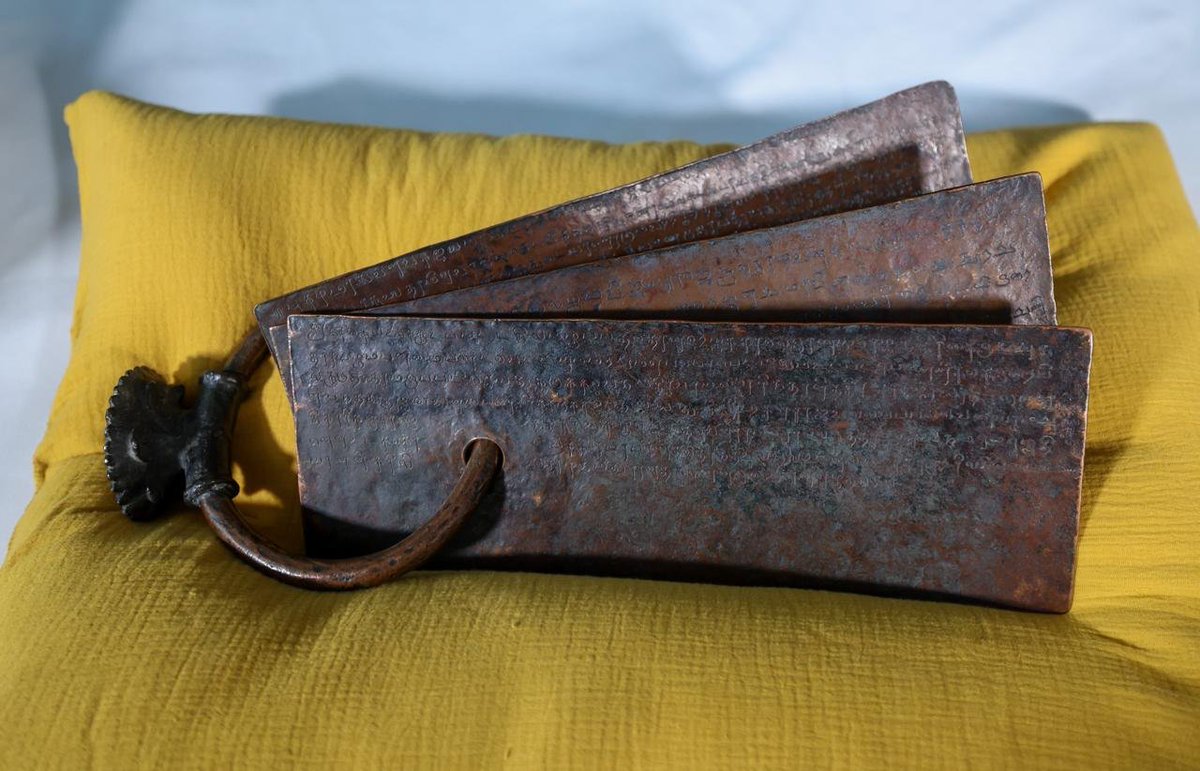
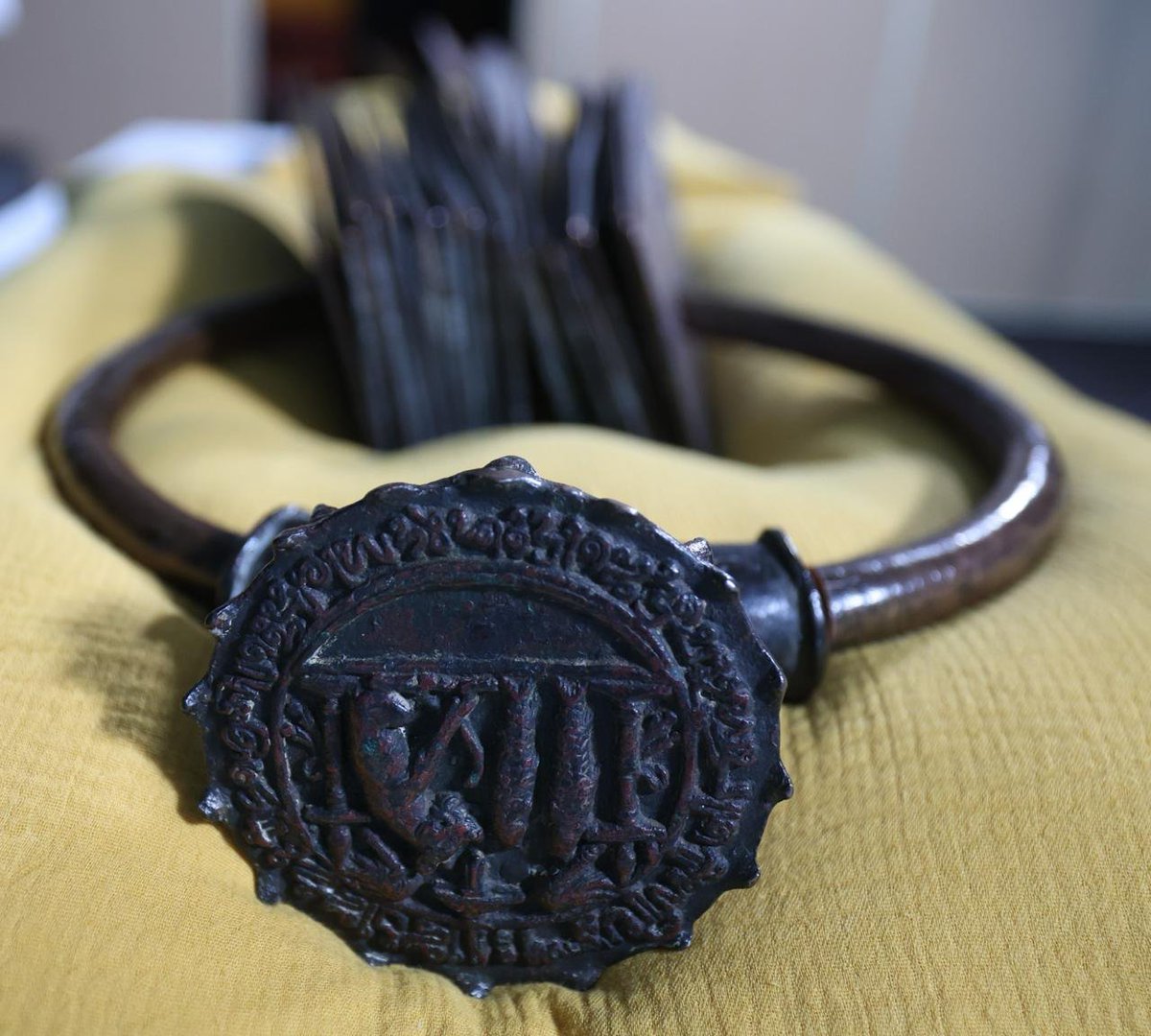
Chola Copper Plates dating back to the 11th Century will be repatriated to India from the Netherlands. Took part in the ceremony for the same in the presence of Prime Minister Rob Jetten.
The Chola Copper Plates are a set of 21 large plates and 3 small plates and largely contain texts in Tamil, one of the most beautiful languages of the world. They relate to the great Rajendra Chola I formalising an oral commitment made by his father, King Rajaraja I. They also showcase the greatness of the Cholas. We in India are immensely proud of the Cholas, their culture and their maritime prowess.
I thank the Government of the Netherlands and Leiden University in particular, where the Copper Plates were kept since the mid-19th century.
@MinPres
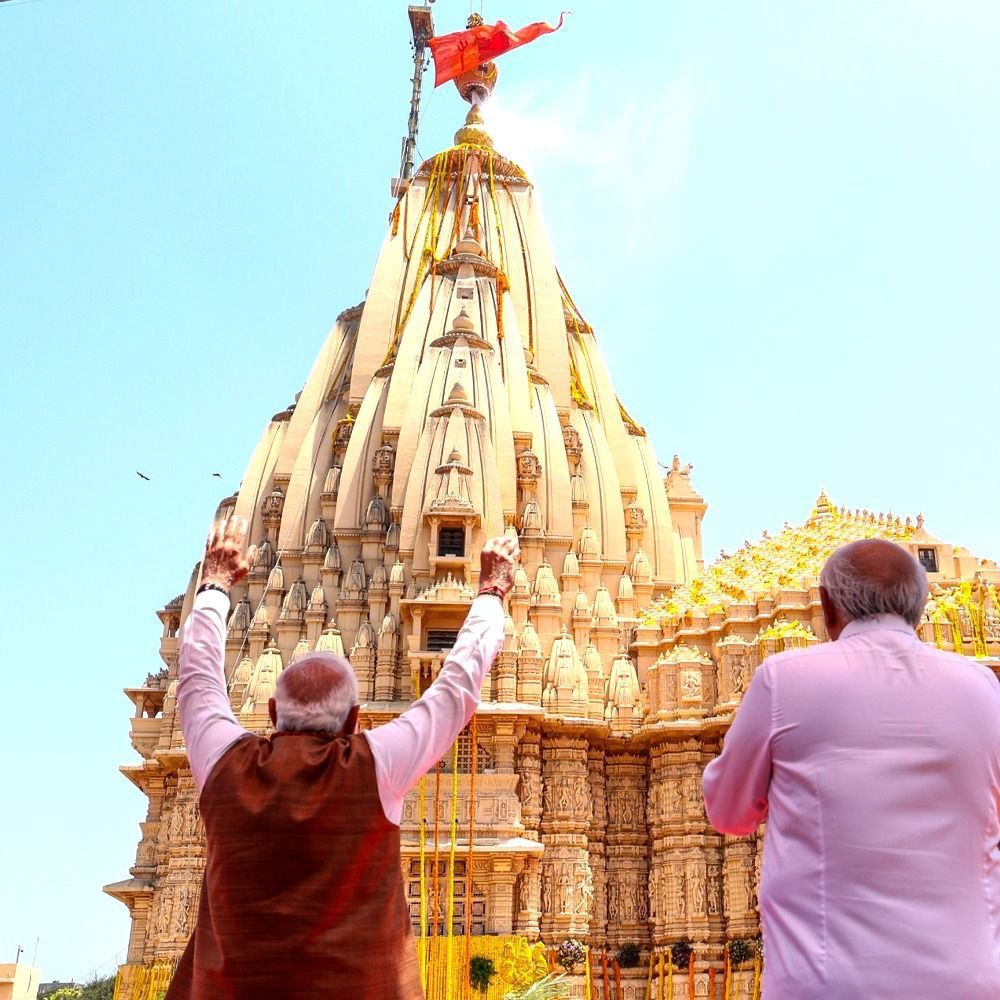
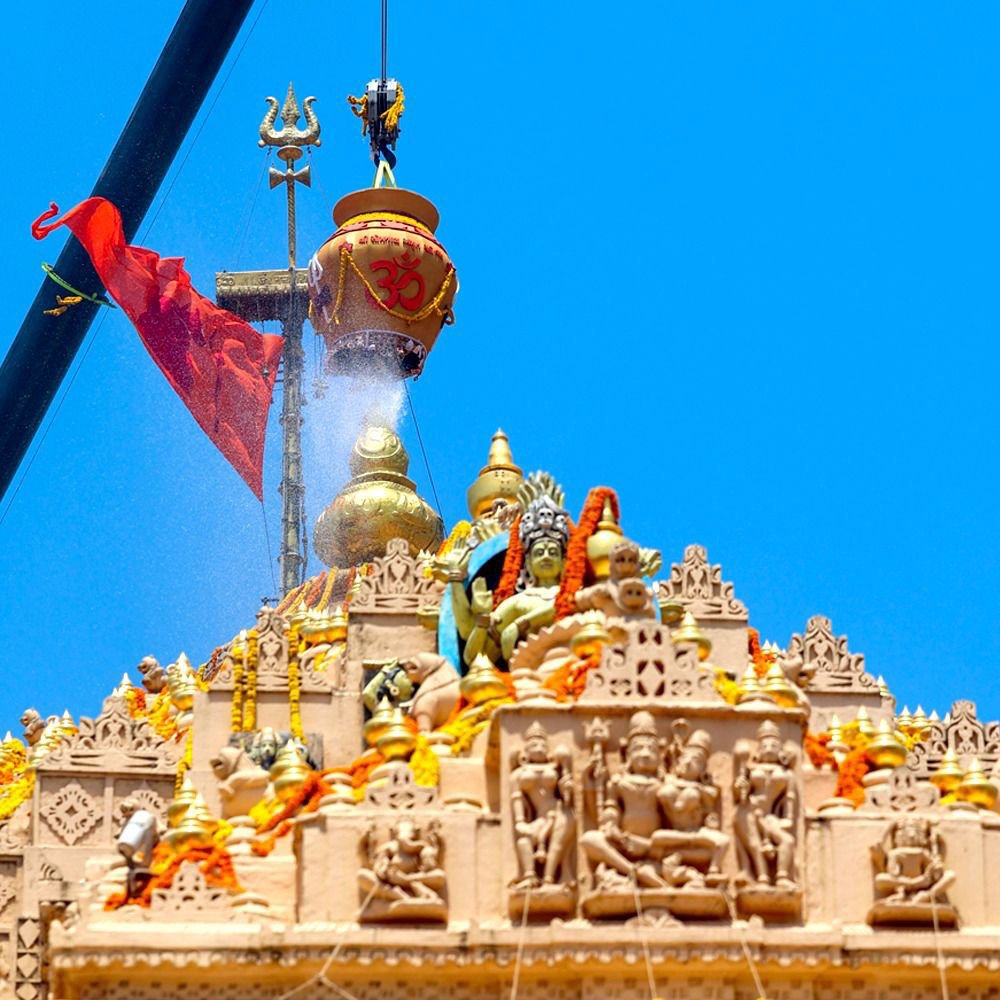
A thousand years ago, the first of many attacks on Somnath took place. Those who kept engaging in such attacks believed they could shatter the ethos of our land. But, they were wrong. Thanks to fiercely courageous children of Bharat Mata, Somnath kept getting rebuilt.
Seventy-five years ago on this day, the doors of the newly rebuilt Somnath Temple opened in the presence of the then President Dr. Rajendra Prasad, proclaiming to the world that while the attackers have faded into the dust of history, the soul of Bharat endures.
Somnath stands tall and eternal. It showcases our civilisational courage and our unbroken devotion. May the blessings of Mahadev always remain upon us all.