🚨 Carlo Ancelotti on Cristiano Ronaldo’s situation with Portugal:
“I remember Luka Modric once asking me, ‘Mister, why didn’t you ask me to warm up?’
I said, ‘Because I wasn’t sure I would put you on.’
He smiled. ‘So now I’m too old to warm up?’
I said, ‘No. You’re too important to me to be used for theatre.’
We laughed, but I was serious.
Luka knew he wasn’t going to play forever. I knew it too.
His importance might be changing.
His dignity shouldn’t.
That is what I think about when I look at Cristiano and Portugal.
Cristiano has worn Portugal’s shirt for more than twenty years.
Some players in that dressing room grew up watching him. They copied his celebration, wore number seven, watched him cry when Portugal lost and when Portugal won.
Then one day they walked into the dressing room and the person from their television was sitting beside them.
And those players are watching this ending too.
When I protected Luka from things I felt were unnecessary, Luka wasn’t the only one who noticed.
Vini noticed. Rodrygo noticed. Camavinga noticed. Bellingham noticed.
Young players watch how you treat the old ones.
A young player once asked me why everybody still became quiet when Luka spoke even though he wasn’t starting every match.
I told him, ‘Before you ask people to respect what you might become, learn to respect what somebody else already became.’
So what does a young Portuguese player learn if Cristiano reaches the end and suddenly everything becomes about whether he is still useful?
‘Give Portugal twenty years. Give them your goals. Play injured, play tired, carry the expectation, keep coming back.’
‘Then when you get old, we’ll remember your age before everything that came before it.’
I would never want my young players learning that lesson.
That is why I would understand Cristiano if he decided not to return.
Dignity also means knowing when you have given enough.
Sometimes walking back through the door is strength.
Sometimes closing it quietly behind you is strength too.
If Cristiano called me tomorrow and asked, ‘Mister, what would you do?’
I would ask him one question.
‘Are you going back because your heart still wants to represent Portugal, or because you need to prove something?’
if he said, ‘I need to show them they were wrong,’ I’d tell him, ‘You don’t.’
What is left to prove?
The shirt knows what you gave it.
The country knows.
Football knows.
One day, whether now or later, Portugal will enter a dressing room without Cristiano Ronaldo.
Somebody will look towards the place where he used to sit.
Maybe a young player who once asked him for a photograph as a child.
And it will feel strange.
No Cristiano tying his boots.
No number seven hanging there.
No voice they’ve heard for half their life.
Just an empty place.
That is when people understand what an era actually means.
I never respected Luka because he was bigger than Real Madrid. He wasn’t.
But Real Madrid never became smaller by respecting Luka Modric.
Portugal will not become smaller by respecting Cristiano Ronaldo.
It becomes stronger, because every young player watching learns that if one day he gives Portugal everything he has, Portugal will remember what he gave when he has nothing left to give.
Maybe Cristiano doesn’t return.
Maybe he simply wishes them well and watches the next Portugal match somewhere far away from the dressing room he called home for twenty years.
I would respect that.
Cristiano Ronaldo does not need one more call-up to prove he loved Portugal.
More than twenty years already answered that question.
The responsibility isn’t only Cristiano’s to decide whether he walks back through that door.
Portugal should think about what the younger men standing behind it are learning from the way they treat the man walking out.
Because every one of them will eventually become the old player.
And when that day comes, they will remember how Portugal said goodbye to the greatest one.”
@Broda_chris199x@rioferdy5 Just call out this Legend of ours @rioferdy5 as it is they always support average and want us to believe hahahaha wake up, your team mate won’t take us anywhere
On Winky D’s song, 2 Law there’s a line which caught my attention where says “no more Willie Lynch………”. I curiously went on to find out that the book was written during slave trade era for the white slave masters on how to control black slaves.
Some of the methods in this book are still defining how we live as black people today which is entirely about turning against each other, light skinned against dark skinned, tall against short, old against young, men against women.
Divided & conquered.
This Gaffa album carries a deep message which Africa should be really consider paying attention to.
Ruben Amorim was the greatest thing to ever happen to us in the last ten years but the media, the board, the players and the fans turned on him for trying to restore what we are still begging for.
We will NEVER come back from that one move💔
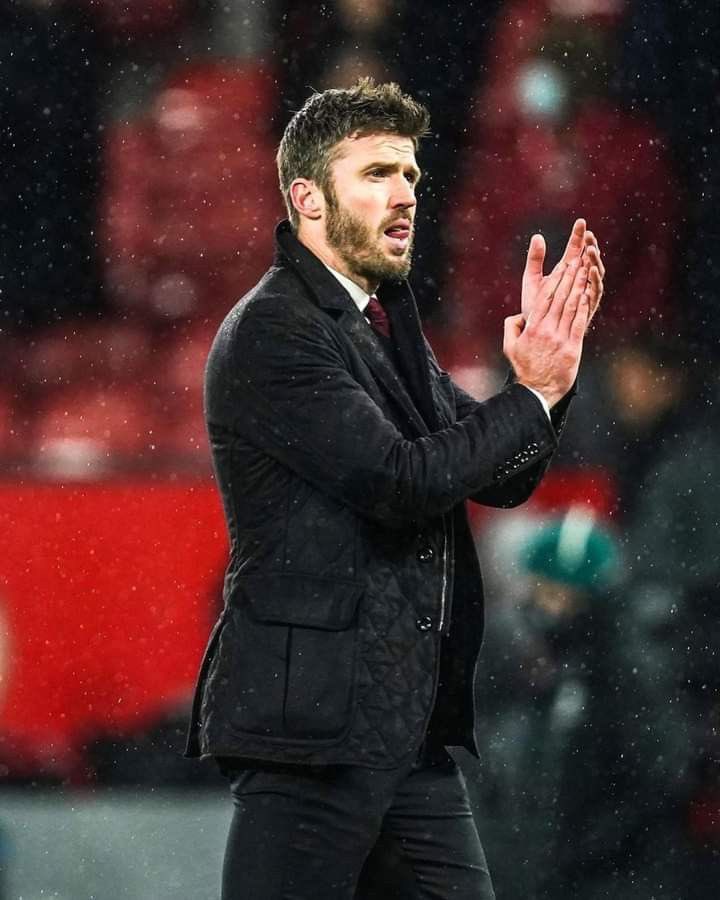
Carrick – 48% win rate
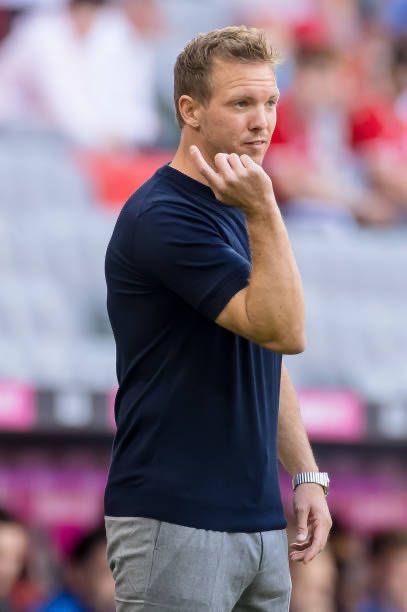
Nagelsmann – 64% win rate
Carrick – 189 games managed
Nagelsmann – 400+ games
Carrick – 44 years
Nagelsmann – 38 years
Carrick – no trophies
Nagelsmann – Bundesliga, DFL Super Cup
Carrick – managed Middlesbrough
Nagelsmann – Hoffenheim, Leipzig, Bayern, Germany
These are the basics.
So before picking a manager, at least be informed about who you’re comparing.
Because it doesn’t add up…
If Amorim was getting cooked for a 31% win rate, how does 48% suddenly become better than 64%?
Unless we’re just being hypocritical.
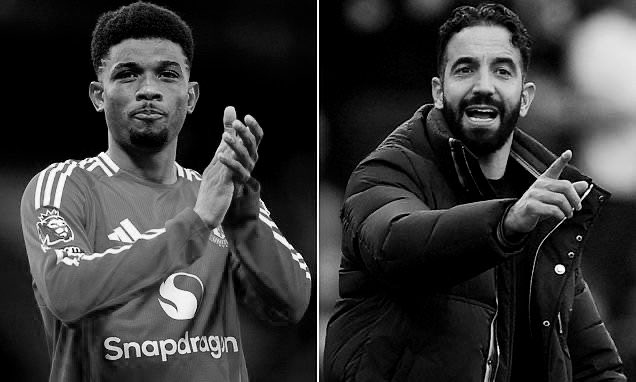
What Happened to Mbeumo and Amad?
The short answer is simple. The system changed.
Under Amorim’s 3-4-3, United played structured football. Every movement was coached, every phase was clear, and every player knew where the next option would be.
That clarity is what made Mbeumo and Amad so effective.
On the right side, their roles were defined and synchronized. Their movements complemented each other, creating repeatable patterns that consistently led to chances, goals, and assists.
They were not guessing. They were executing.
That is what system football does. It elevates players who understand space, timing, and structure. It gives them a framework to maximize their strengths.
When Carrick came in, the team shifted back to a 4-3-3 with less emphasis on patterns and more reliance on individual quality.
The structure disappeared.
Now, instead of operating within clear roles, players are making decisions in isolation. Movements are less coordinated, and connections between players are weaker.
For players like Mbeumo and Amad, that change is significant.
They are system players. They perform best when there is clarity, when movements are predictable, and when teammates are exactly where they are expected to be.
Take that away, and their impact drops.
This does not mean they have become worse players. It means the environment around them no longer supports their strengths.
Meanwhile, players who thrive in chaos can still produce moments, which is why the team may still get results in certain games.
But the bigger picture remains.
Mbeumo and Amad have not declined.
The system that made them effective is no longer there.