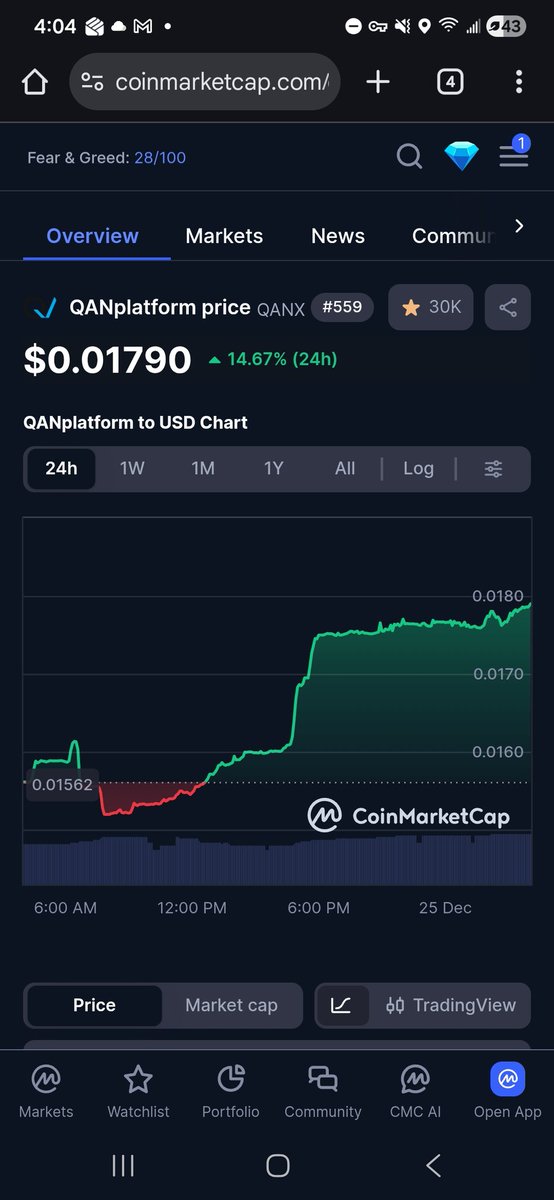
$QANX probably an ideal time for returning buyers.
The holders following closely know that there's been tremendous progress.
Market has misread it as delay, but the evidence points to a product shaped to meet the most demanding requirements.
Almost there!
You believe that your crypto is safe because you keep good habits. It is not. It's as safe as the wallet architecture of the exchange you keep it on. And you didn't pick that.
Glassnode data suggests that Binance and Bitfinex labeled Bitcoin balances show a comparatively high share of quantum-vulnerable addresses under their methodology (85% and 100%), while Coinbase labeled balances were mainly non-exposed. Same blockchain, very different exposures.
Exposed public keys are not a problem today. They become a problem the day a quantum computer can derive the private keys from them. You didn't choose with this in mind.
You chose the exchange based on fees, or their app or on a friend's recommendation. The wallet hygiene came packed, just like their terms of service.
Quantum computing is forcing a rethink of how Web3 systems are secured.
We audited @QANplatform’s QAN XLINK, a protocol enabling Ethereum wallets to migrate to post-quantum security without breaking compatibility.
31 findings.
0 critical / 0 high.
29 resolved.
The QAN XLINK desktop app is entering its first round of community testing! 🎉
Due to the overwhelming interest, we've decided to open the beta to everyone, no invite needed!
Head over to our website for instructions on how to get started. We can't wait to hear your feedback! 🙌
https://t.co/7PcK1ppC4Y
Bad actors don’t need to break encryption today but consider it already broken.
In January, Citi published a full quantum threat report. Gartner called post-quantum cryptography a top 2026 action item. Not awareness. Action.
The numbers from Citi are hard to ignore:
→ 19-34% Probability of widespread breaking of quantum computer-led public-key encryption by 2034, increasing to 60-82% by 2044
→ $2.0-$3.3 trillion estimated indirect impact (GDP-at-risk) from a single-day quantum attack on one top-five U.S. bank’s access to Fedwire, i.e. 10-17% of GDP.
→ 25% is the percentage of bitcoins (about 4.5-6.7 million coins worth $500-600 billion today) that are potentially “quantum-exposed”.
"Harvest now, decrypt later": adversaries are collecting your encrypted data today and sitting on it. The breach happens in the future. The theft is now.
Gartner's verdict, published February 2026: asymmetric cryptography will be unsafe by 2030.
NIST finalized post-quantum cryptography standards in 2024. The antidote exists.
What most organizations are still missing is a migration plan and both Citi and Gartner are making the same argument: build that plan now, not the day Q-day makes headlines.
Most people still think quantum security is a future conversation.
NTT DATA’s new report disagrees. Quantum risk isn’t emerging anymore, it’s being scheduled. 🧵
Excited to join this conversation. We'll talk through QANplatform's quantum-safe tech stack and why post-quantum cryptography is shifting from narrative to necessity in 2026. See you there!
January Milestone: QAN TestNet with audited QVM and QAN XLINK Launched
We delivered critical infrastructure upgrades, advanced TestNet capabilities, and moved closer to launching the QAN XLINK desktop app. Hacken-audited modules are integrated and we've been defining audit scopes and advancing business development into concrete integration paths that will deliver real-world utility to the network.
Read the full recap on our blog: https://t.co/OOC1gMPzWc
We are thrilled to announce that the supercharged QAN TestNet is live!⚡️ This upgraded network now features the fully integrated versions of both the
🔵 QVM: QAN Virtual Machine enabling developers to write smart contracts in any programming language, and the
🔵 QAN XLINK: our cross-signer protocol that makes QANplatform quantum-safe
key components, recently audited by Hacken, marking a pivotal moment in our development roadmap.
Ready to dive in?
Find the full guide at: https://t.co/5bLqUBgU5L
An 825% jump in one year doesn’t happen by accident. This is an inflection point for cybersecurity. 🧵
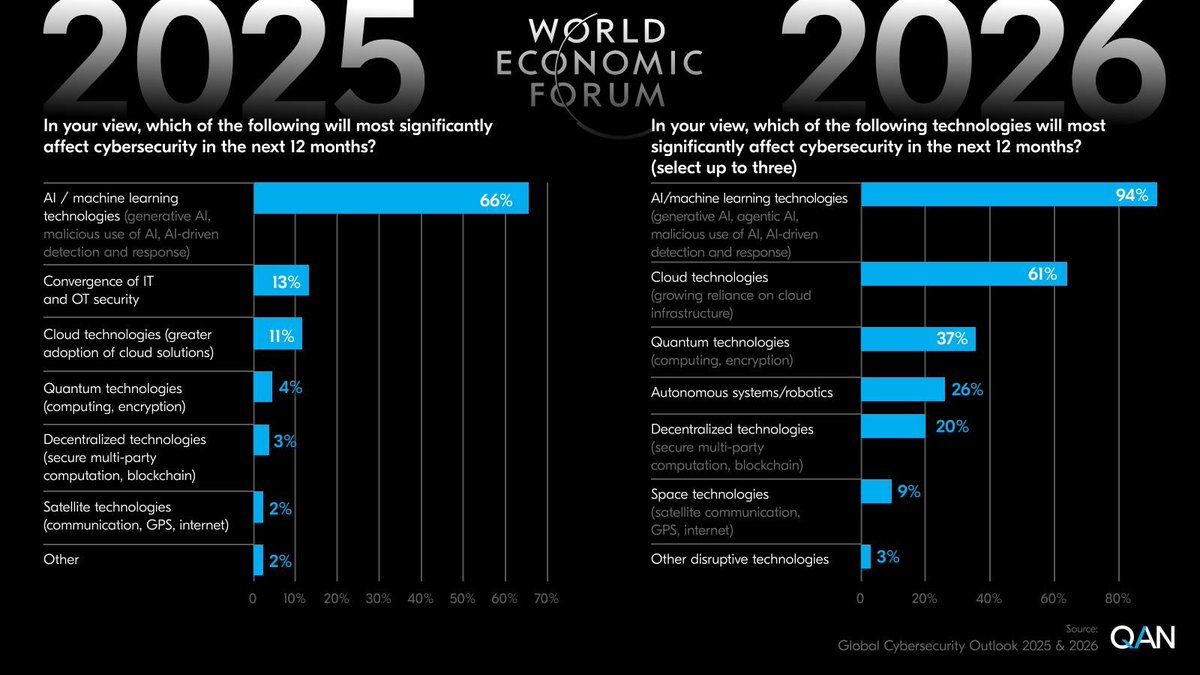
Last week’s WEF Global Cybersecurity Outlook 2026 dropped a wild stat:
37% of cybersecurity leaders say quantum computing will significantly impact cybersecurity in the next 12 months.
Last year? 4%.
That’s an ~825% jump in a single year.
@LLuciano_BTC "If 2021 was about attention, 2026 will be about conviction."
Good line. 💥
@QANplatform for me.
Already tapping into the market for digital signatures as part of its strategy to launch with immediate enterprise demand.
🚨JUST IN : OTP BANK TO INVEST $30M IN UENO BANK
The recent $30M investment by OTP Bank into ueno bank is a meaningful signal, well beyond a simple geographic expansion.
OTP Bank is known for its long-term strategy in emerging and frontier markets, where banking penetration, digital adoption, and economic formalization are still accelerating. Paraguay fits this profile: improving macro indicators, stronger credit ratings, and a rapidly modernizing financial sector.
By entering ueno’s capital, OTP is reinforcing a digital-first bank that has already achieved strong local traction in terms of users, cards, and transaction volumes. The investment strengthens ueno’s balance sheet, supports regulatory and governance robustness, and gives OTP exposure to a fast-scaling banking platform in Latin America — without starting from scratch.
This kind of move is typical of large banking groups: targeted capital allocation into institutions that already combine growth, compliance, and technology readiness. It reflects infrastructure-level thinking rather than short-term financial positioning.
What makes the picture even more interesting is the existing technology layer. ueno bank already has a partnership with QANplatform, a quantum-resistant blockchain founded by a Hungarian team — the same country as OTP Bank.
Seen together, this creates a quiet but coherent alignment between traditional banking capital, a digital-native bank, and forward-looking security infrastructure — exactly the kind of groundwork institutions tend to lay well before such technologies become mainstream requirements.
Source :
https://t.co/1IplEGLLEn
Cycle ideas from the past are being broken. Many alts moved without the btc, eth, blue chips, small cap flow.
It's going to take innovation and adoption before narratives and hype have meaning.
And that's how it should be.
QANX
RWA IBM Web3 Signquantum Linux PQCA AVAX FET TMX SUI SOL BNB QRL LINK ADA ICP XLM QNT KAS IONQ ASTER ZEC XMR
2025 was QANplatform's year of quantum-safe breakthroughs!
✅ QVM passed Hacken's 2,800-test audit
✅ QAN XLINK passed Hacken quantum security audit
✅ Protecting Ueno Bank's 2.2M customers with SignQuantum
✅ Latin America expansion via SignQuantum & ITTI
✅ Blockchain for Europe membership + CTO panel with Europol
Full 2025 recap live now 👇
https://t.co/fVcCDzNxMs
$QANX innovation goes back over 4 years
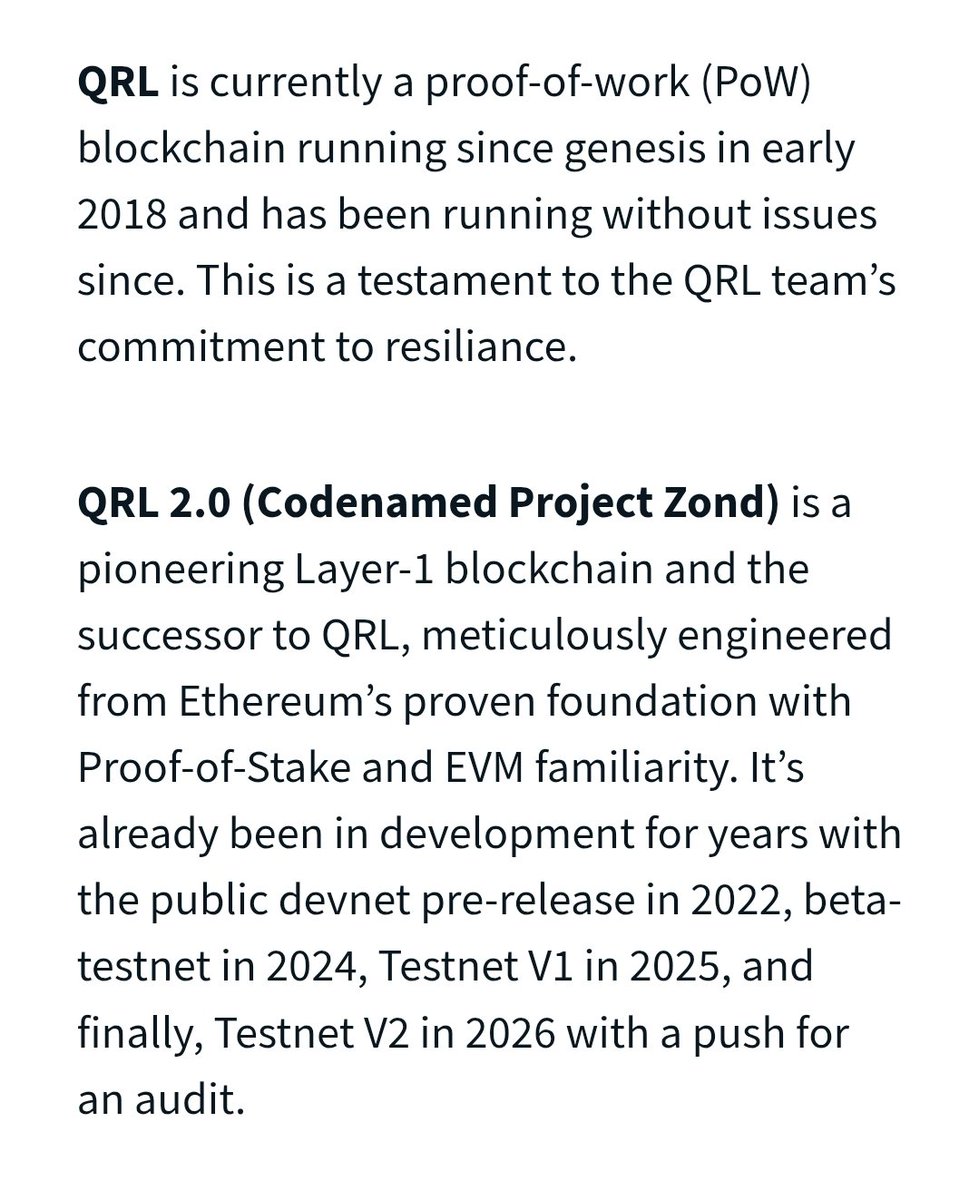
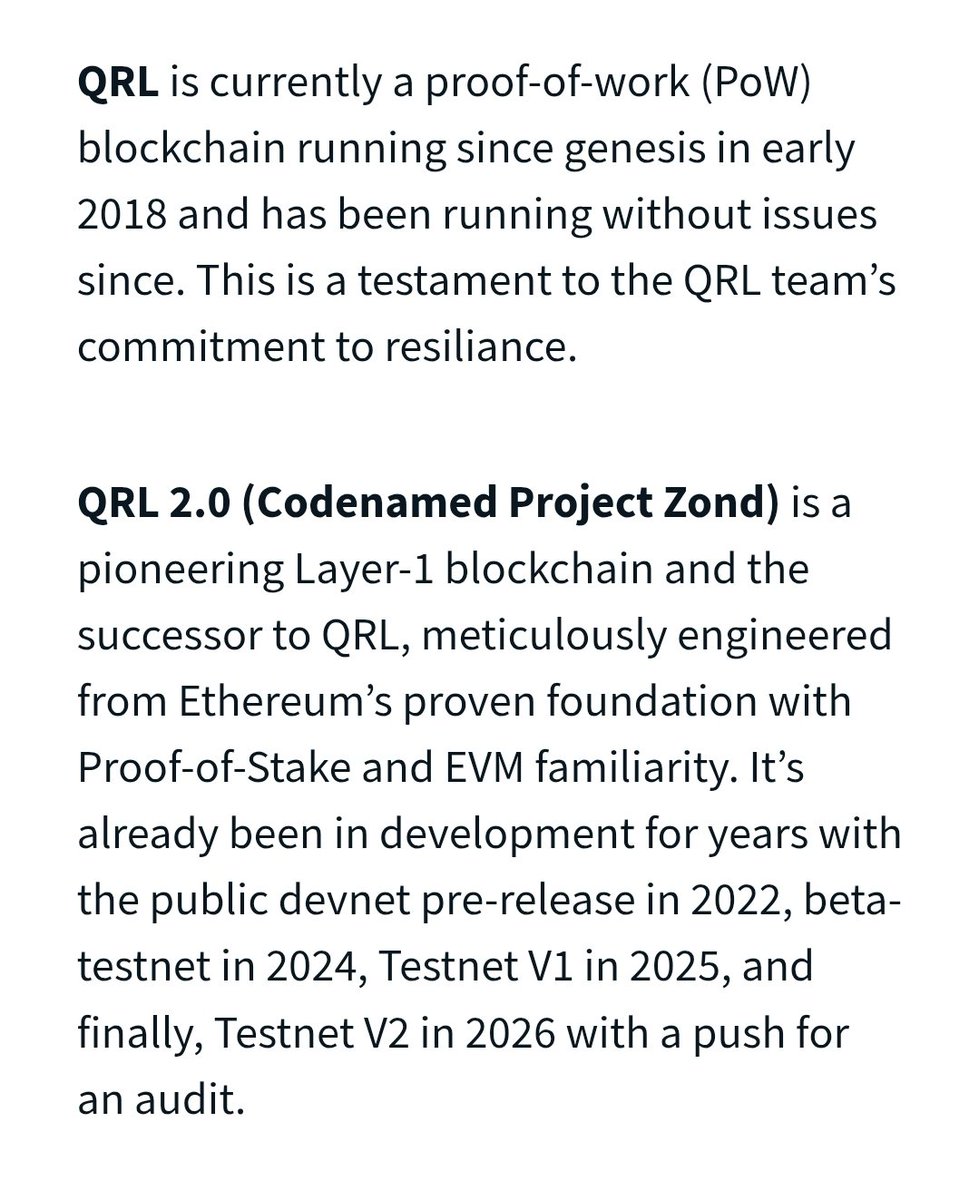
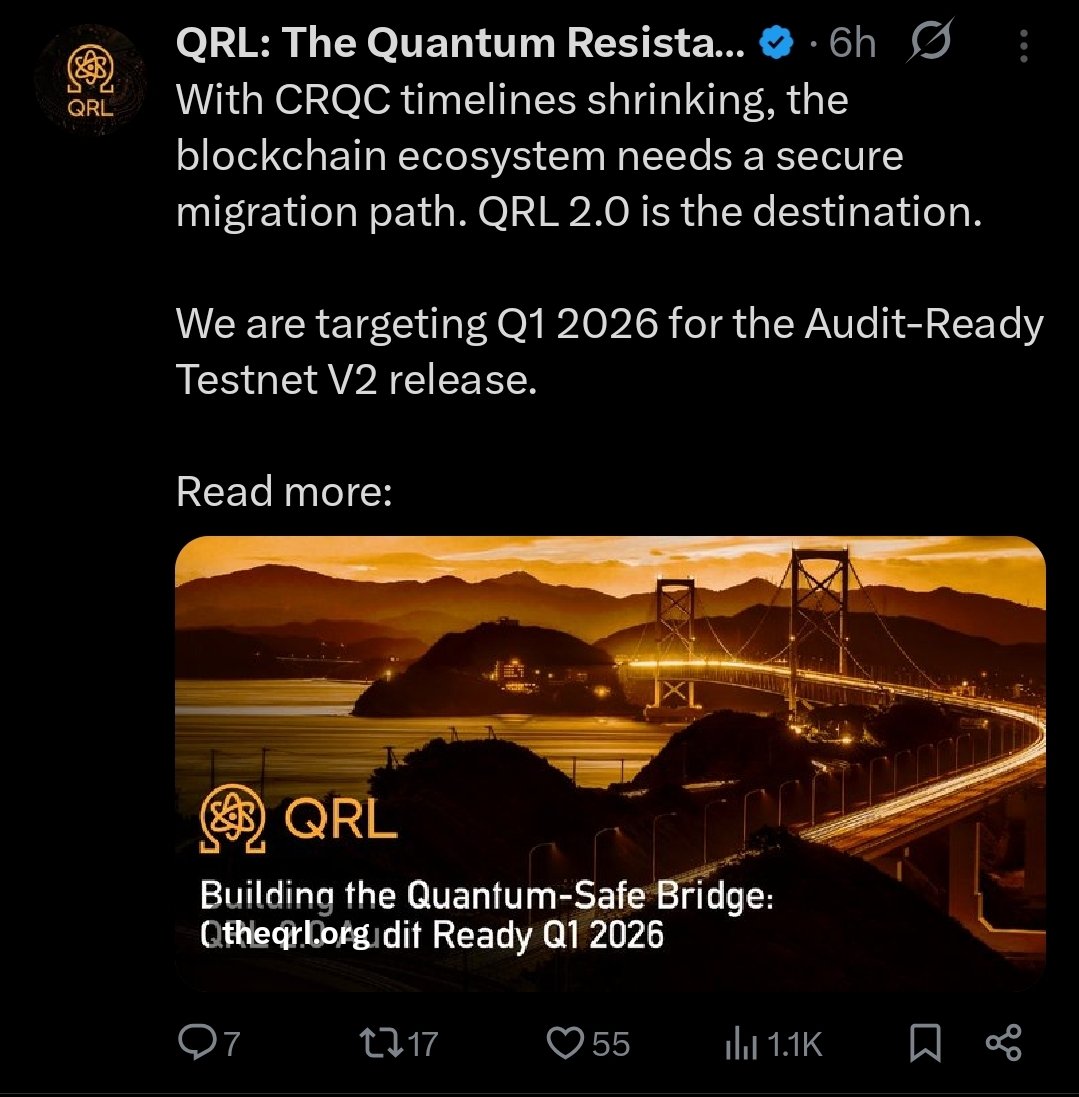
$QRL 2.0 nearly as long, intending a major shift
Neither will prevent the other from potential success long term
Short term, though, did some QANX marketshare flow to QRL?
Let's take a look and consider the dynamics.
Read on
Hmmm, after it became clear that $QANX QR, hybrid, multilanguage EVM mainnet is fast approaching...
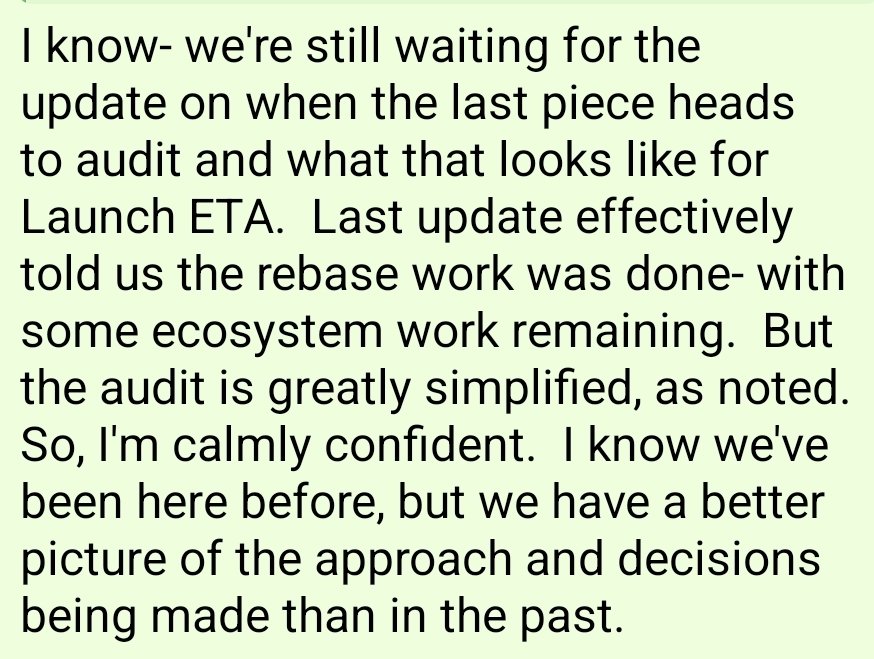
$QRL suddenly is showing urgency to complete a 4 year effort at upgrading to EVM. 🤷♂️
Neither project should worry about the other, adoption will decide.
Getting through audit is no small feat. Qanplatform will have taken over a year, but that's because their VM required developing test methods to execute 2800 test cases. I'd imagine the Qrl audit in Q2 will go faster.
But it's not a race. Crypto is no longer "build it and they will come"
Teams and community will need to create the ecosystem. Qanx team put a strong focus on enterprise adoption.
And that is evident with Ueno bank adoption of Signquantum powered by Qanplatform.
Looking forward to see the adoption unfold.
$QANX was holding around top 500.
It fell because investors truly didn't understand the approach 🧐
(including me)
They realized there's no need to rush Mainnet without real demand.
Well guess what, Mainnet is coming
With enterprise demand 💥
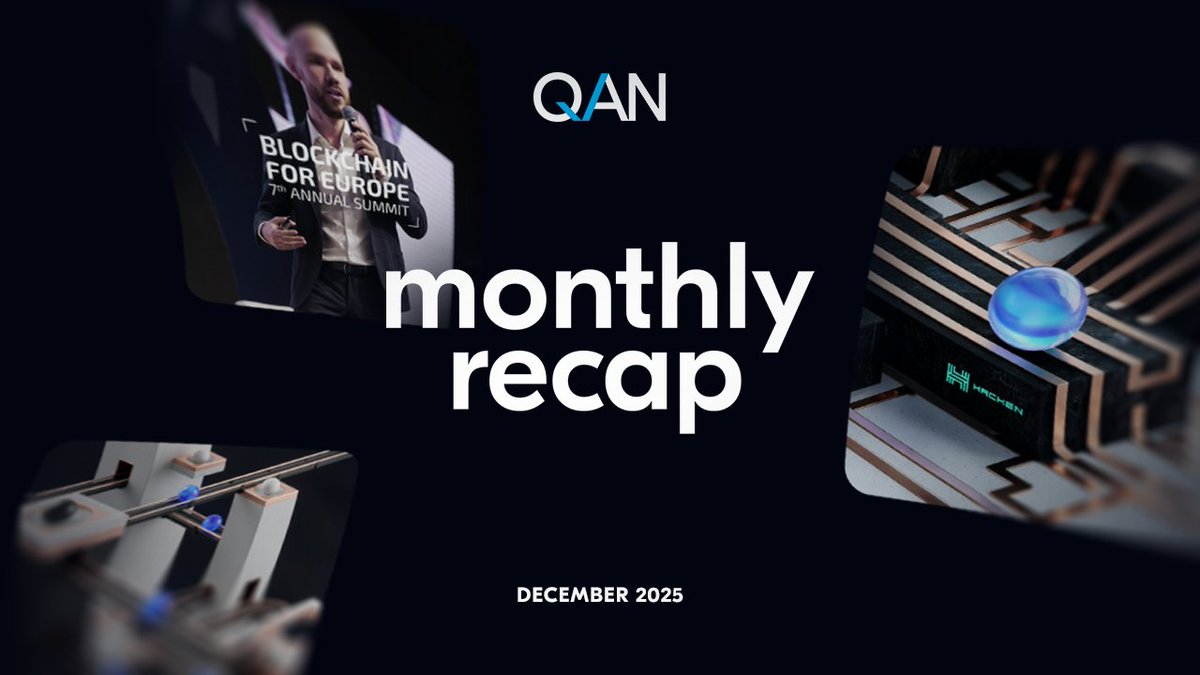
December Recap: Advancing EU Cybersecurity Dialogue and Continued Technical Progress
We integrated audited QVM and QAN XLINK modules into QAN TestNet, started migrating infrastructure to Kubernetes, refined the QAN XLINK app, started the preparation on the final audit, and contributed to EU quantum-safe blockchain discussions.
Read the full recap on our blog:
https://t.co/5lXTkX7A6G