Cross-provider note: gpt-6-sol rejects temperature with HTTP 400, so a router that always sends it kills that arm. Probe parameters per model, not per provider.
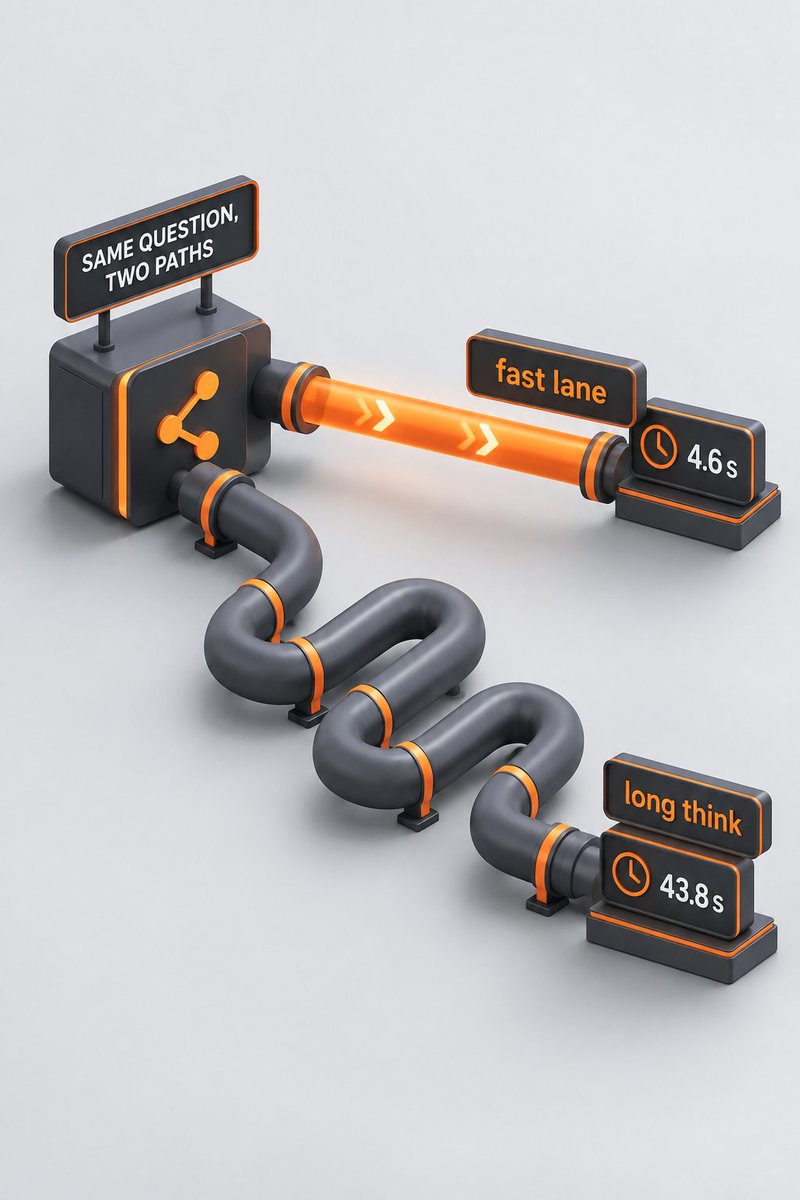
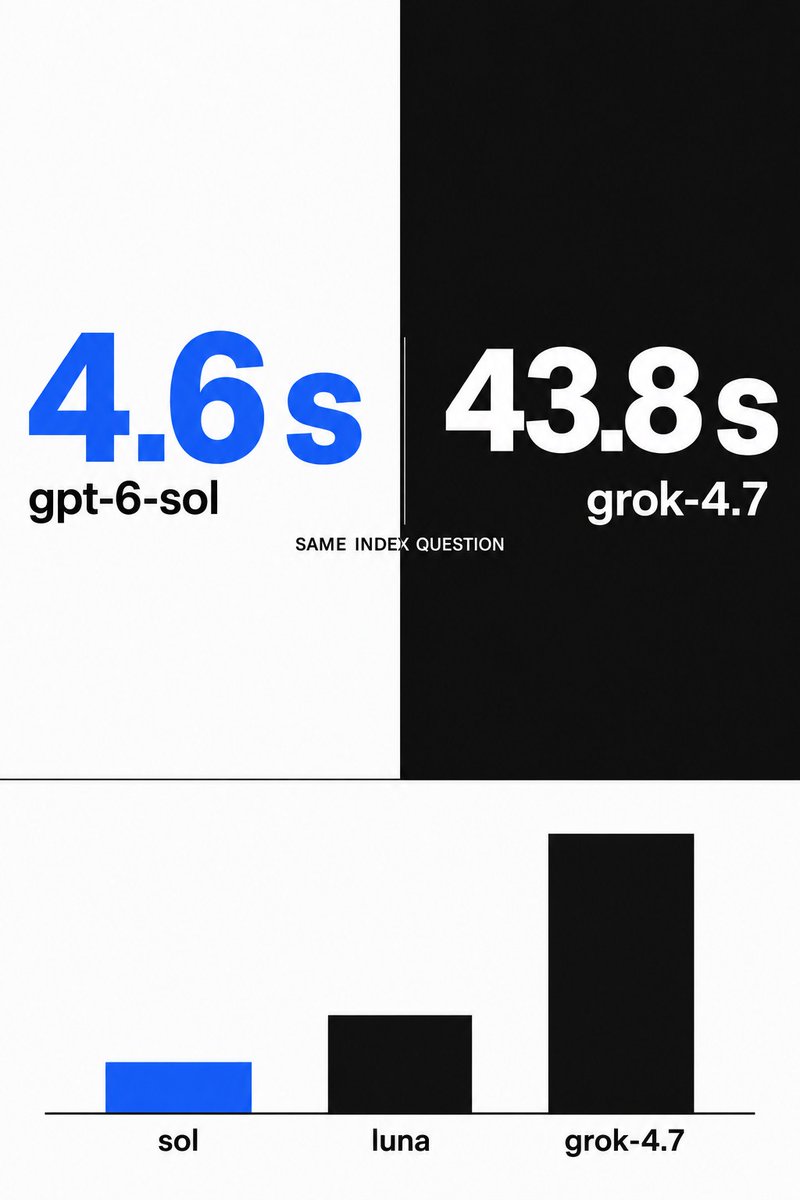
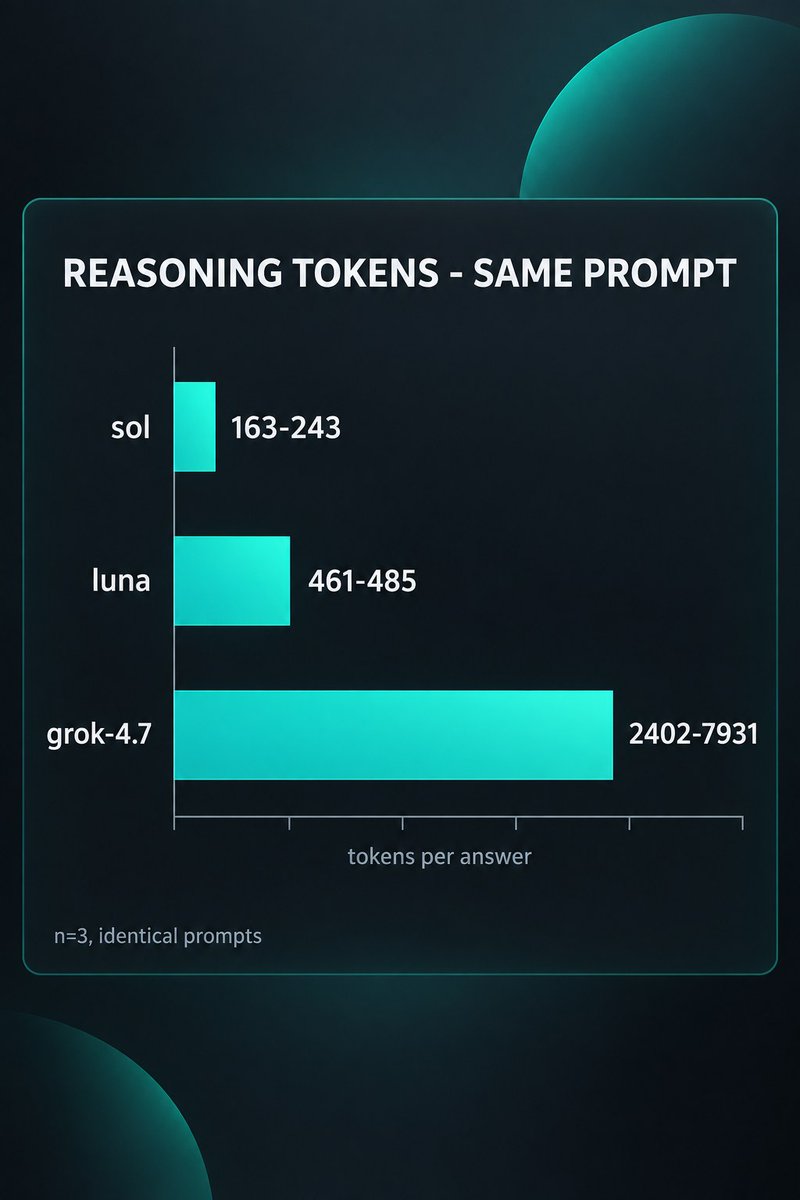
Same index question, three models: 4.6s on 238 reasoning tokens, or 43.8s on 7,931.
n=3, identical prompts:
sol 4.6s / 163-243 thinking tok
luna 6.5s / 461-485
grok-4.7 43.8s / 2402-7931
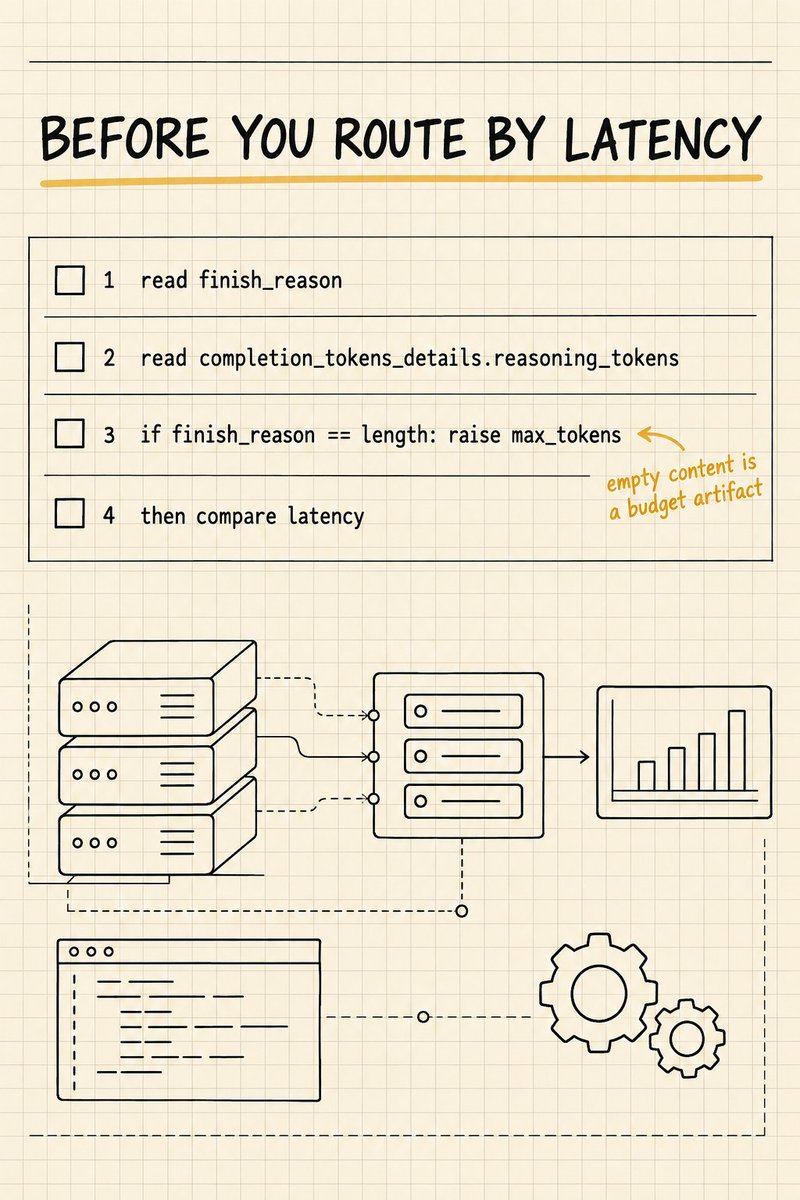
Check completion_tokens_details before routing by latency.
#AIAgents#LLM#Coding
@askalphaxiv Pin the escalation threshold on the accepted set's error rate, not the judge's confidence. Re-score a fixed labeled slice per prompt change, or drift hides.
@fastinoAI Gate on the decision score, not the label: a mislabeled request fails downstream, where the label still looks correct. Sample the low-margin band.
4 AI stories worth knowing today:
1. Meta Muse voice gains real-time avatars
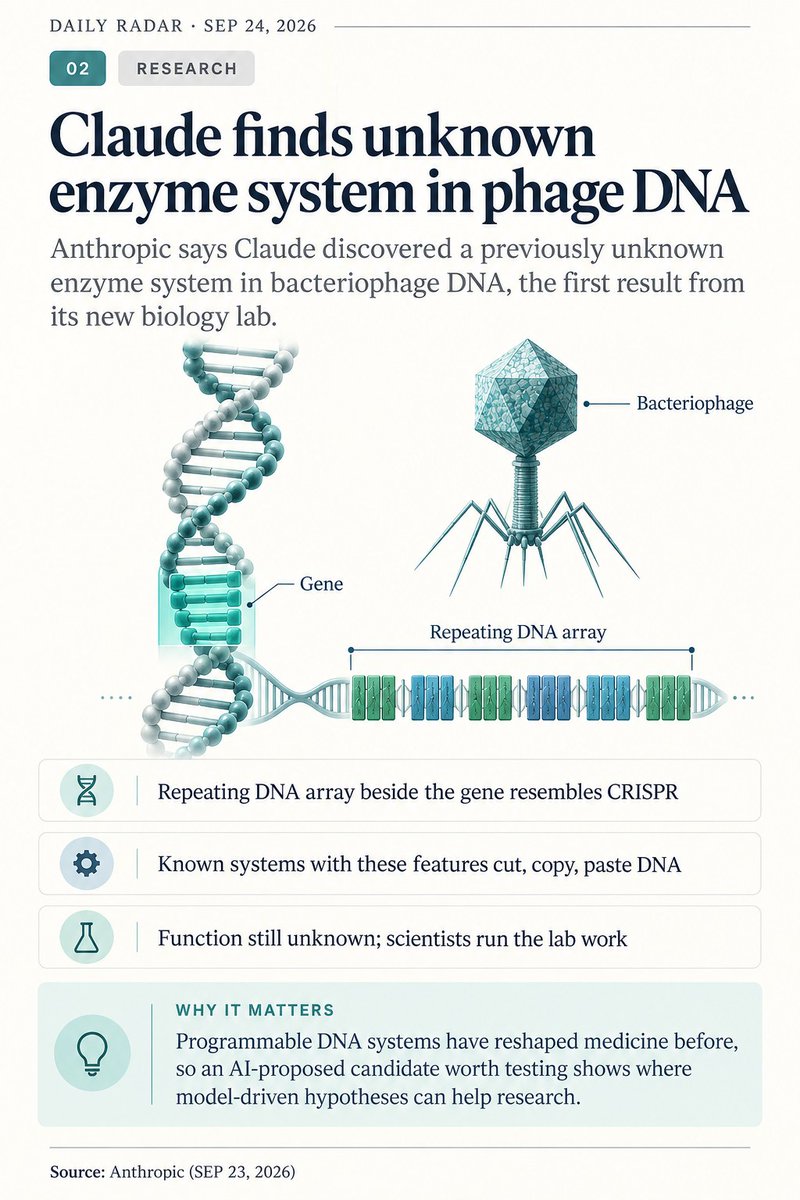
2. Claude finds an unknown enzyme system
3. Cursor Rollouts verify deploys as they ship
4. Open viral protein structures now released
Details in the cards ↓
#AI#AIAgents#LLM#Coding
@emmanuel_2m A skill catalog needs pinned per-skill I/O contracts: without them every handoff reports success while the artifact silently loses fields.
@George_ONair@omarsar0 Cheap deterministic gate first: exit code, schema, diff size. It can fail a run with zero judge tokens, so the judge only sees runs that already passed.
MiMo V2.6 Pro vs Flash, same strict-JSON triage, real calls, n=3: both 3/3.
Flash 3.3s median, Pro 4.5s (19.2s cold). Both list 1M context + caching.
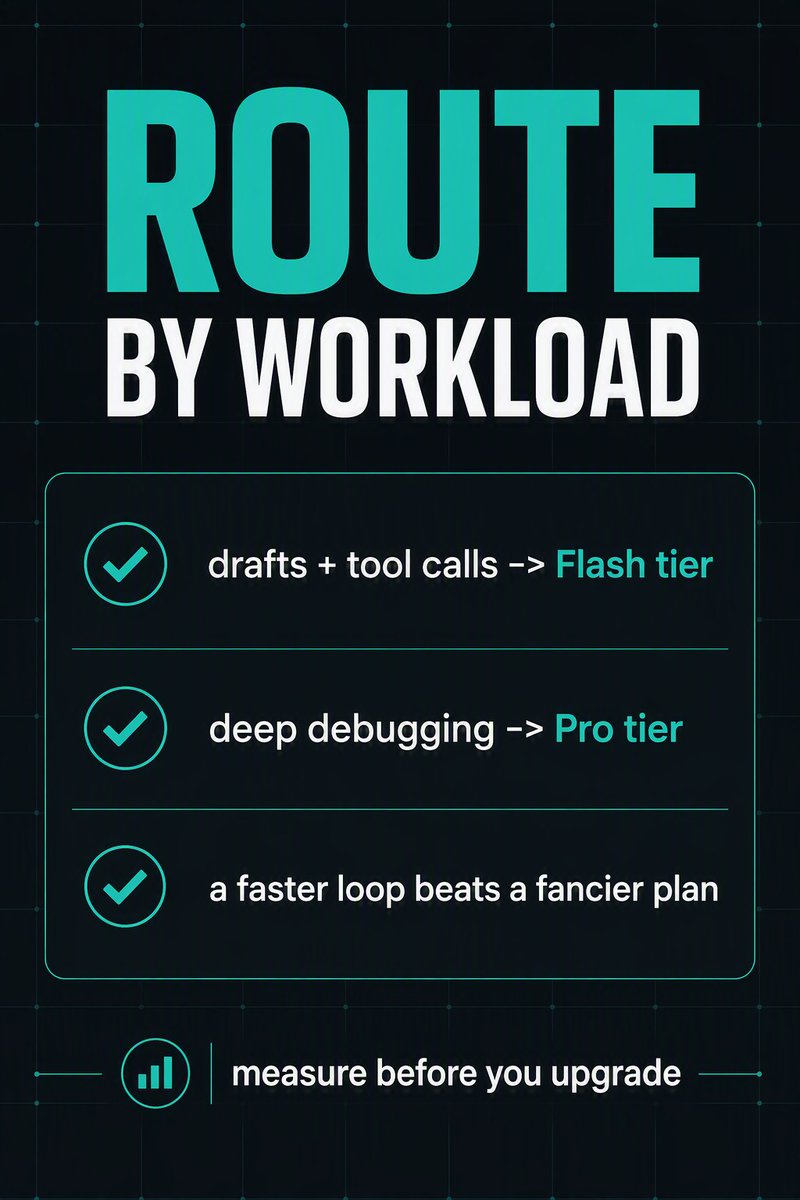
Route by shape: triage to Flash, long-horizon to Pro.
#MiMo#Xiaomi#AIAgents
Empty output is not bad JSON. It is a budget.
One tool call, 2K log, n=3:
deepseek-v4.1-flash: 3/3 valid, 2.8s
kimi-k2.7-code-highspeed: 1/3 at 2048 (2 runs: 2047 tokens thinking, content ""), 3/3 at 8192, 6.4s
Check finish_reason first.
#AIAgents#AIcoding#LLM
@George_ONair@vercel_dev Agreed on freezing the negatives. I'd add: pin the boundary case's expected verdict per version - a trigger can move its boundary while the suite still passes.
Not another chat model — a decision model.
Jev by TypeSafe: state + typed questions in, choice/score/probability out. No prose to parse.
Real call → choice=billing (p=0.71), score 0.8. POST /v1/systemone, 32K, output free.
#Jev#TypeSafe#DecisionModels
@George_ONair@vercel_dev Agreed. Then pin the dormant side as a test: 2-3 prompts it must NOT fire on, replayed after each trigger edit. That catches a body loading everywhere.
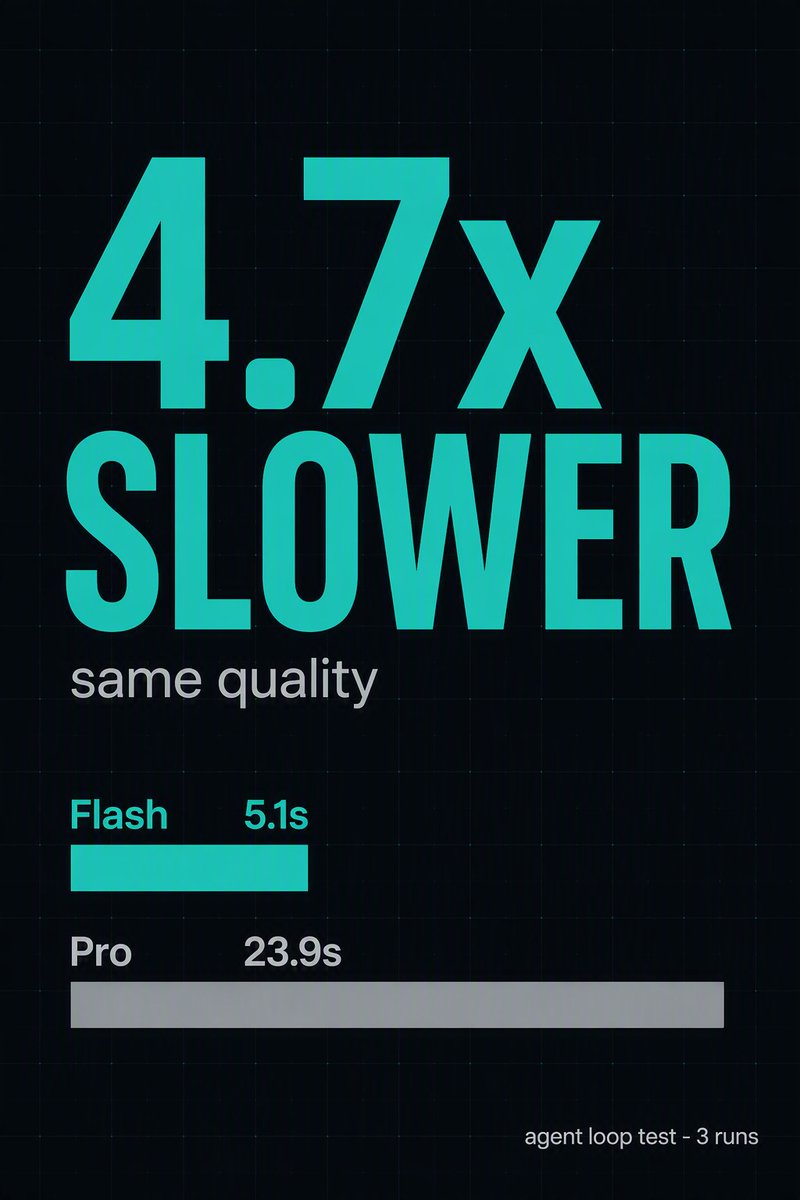
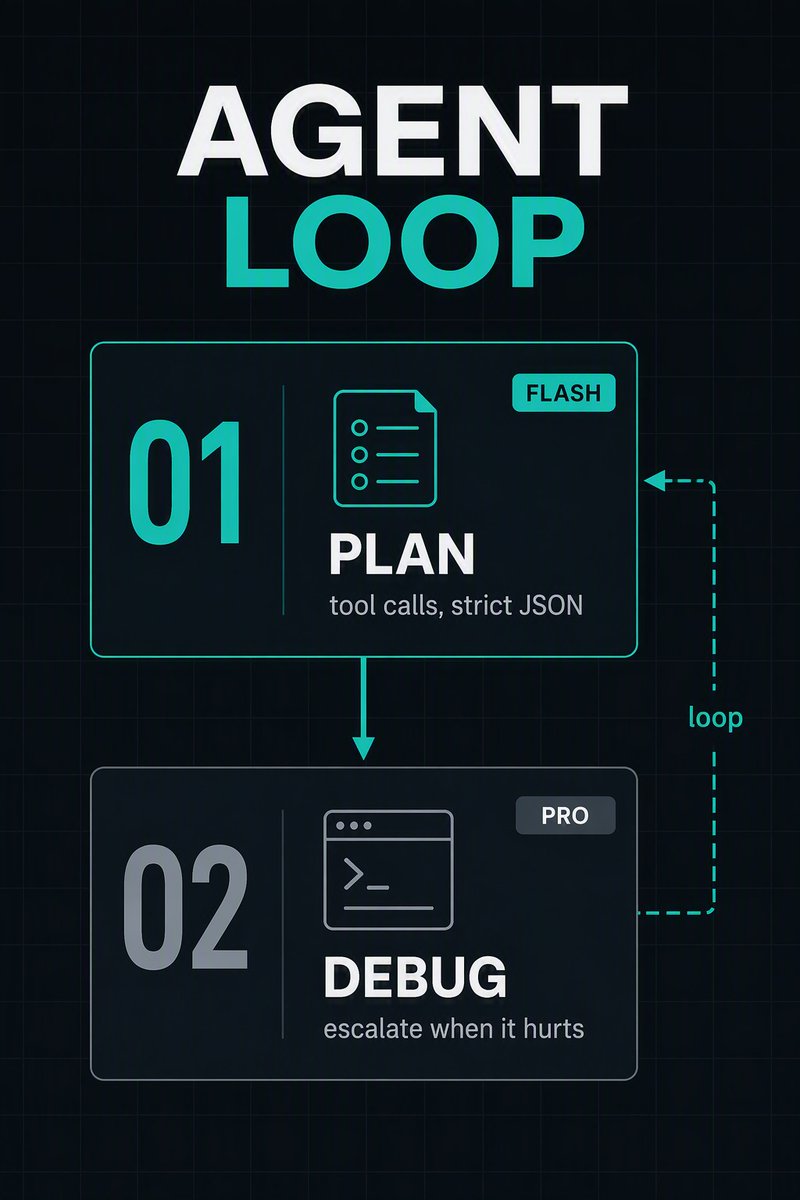
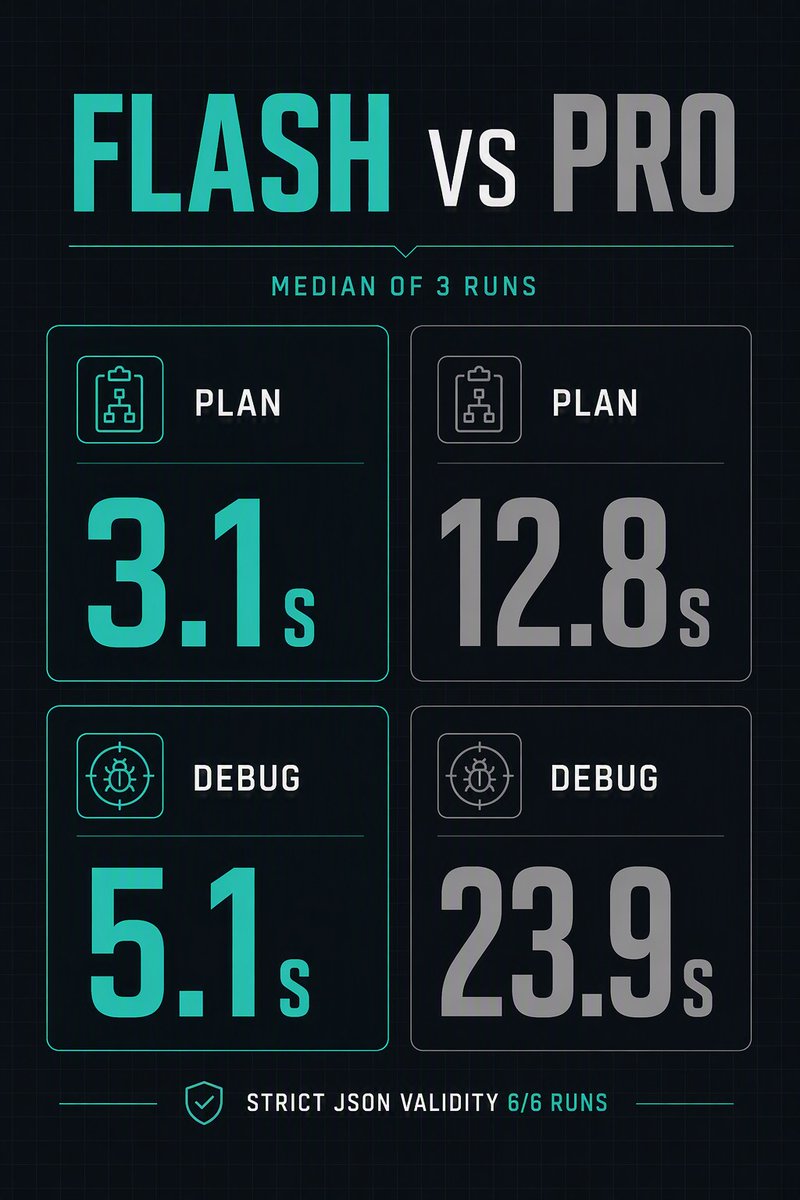
Same agent loop, the 'smarter' model was 4.7x slower, no more correct.
Flash vs Pro, 3 runs each:
Plan (strict JSON): 3.1s vs 12.8s, 6/6 valid
Debug (cache stampede): 5.1s vs 23.9s, both nailed it
Upgrade bought latency, not quality.
#AIAgents#LLM#AIcoding
@GoogleAIStudio Two tiers only pays off if routing is per turn, not per session: cheap live model for spoken turns, extended thinking only when a turn needs a plan.
@sairahul1 Cheap executors fail quiet: plausible-but-wrong diffs, not exceptions. The split holds only if you validate worker output; retry-on-throw catches nothing.
Agents used to budget context like oxygen.
GPT-6-Astra rewrote the math:
• 1.05M-token context, loops keep the thread
• Native function calling + structured output
• Deep reasoning + caching built in
• One id: gpt-6-astra-by-openai
#OpenAI#GPT6#AI#AIAgents
@undefinedKi The detail tier can take lossy logs; the loop that plans and edits should run on the strongest model with verbatim context. Routing mirrors the same split.
@undefinedKi One level up: those files only grow. Stale lessons pile up until the agent obeys dead rules. Date-stamp entries, keep what recurs, prune the rest.
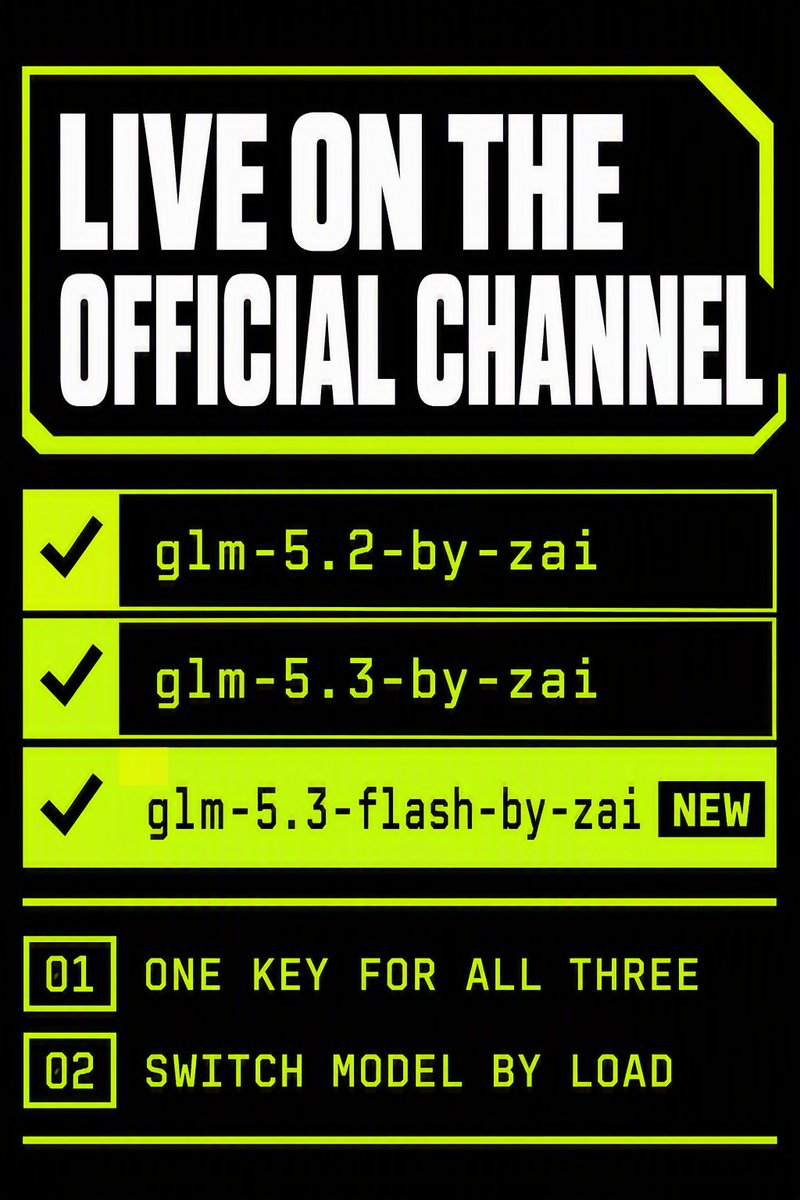
Anyone can list a GLM model id. Few can show you where it comes from.
GLM 5.3 Flash now routes through official https://t.co/o6w3Uy2jIl:
• glm-5.3-flash-by-zai
• glm-5.3-by-zai
• glm-5.2-by-zai
Same key, same endpoint. Switch by load.
#GLM#Zai#AI#AIAgents