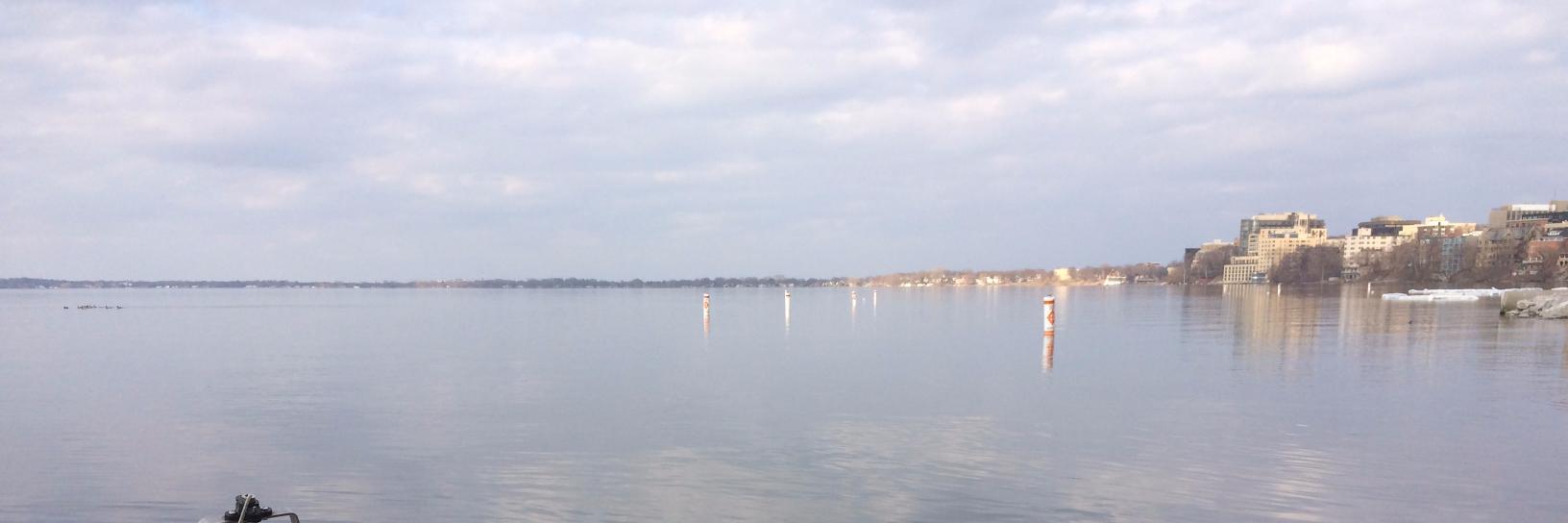
TY to everyone who joined us for today's #CleanLakes101. We heard from Ben Martin (@TinyTheSpiny) of @WiscLimnology as he discussed L. Mendota’s large shifts in its food web, invasive species, and water quality.
View: https://t.co/26AK2wZo6V
TY @MaxTsaparis, our emcee!
Just a fantastic presentation by @TinyTheSpiny Ben Martin of @WiscLimnology this morning on the food web of Lake Mendota @cleanlakes event. Great turnout and terrific questions on the fish and the invasive spiny water flea.
40+ years of monitoring reveals veritable "lake opera" beneath the surface of Trout Lake. A drama of food webs & regime shifts told in 3 Acts. Study by @BassBen11 in @aslo_org@USLTER
https://t.co/ixGdrLbpYs
The Spiny waterflea was introduced into Madison’s Lake Mendota and lurked undetected for years. Today, the Introduced podcast takes a new look at a well-studied lake to figure out how an introduced species can float below science’s radar for so long. 🤔🌊https://t.co/VIrOzevmq1
🎣🛑 The Minnesota fishing opener is this coming Saturday. If you are planning to fish on a spiny water flea infested lake, after you catch that lunker, be sure to wipe down fishing lines, reels, bait buckets, and livewells in addition to draining all water from your gear & boat!
For years, an invasive species known as the spiny water flea went quietly undetected in Lake Mendota.
Suddenly- BOOM. A huge population increase. Why?
Our colleagues @wortscience get into it with @spearmike, former researcher @WiscLimnology.
https://t.co/VZNVZDl9nu
#UWxCalWater students present: “The Costly Impacts of Spiny Water Fleas”📍Lake Mendota is home to Daphnia, an herbivorous zooplankton that keeps the lake clear by filtering algae out of the water. The Spiny water flea is a voracious zooplankton predator that preys on Daphnia.