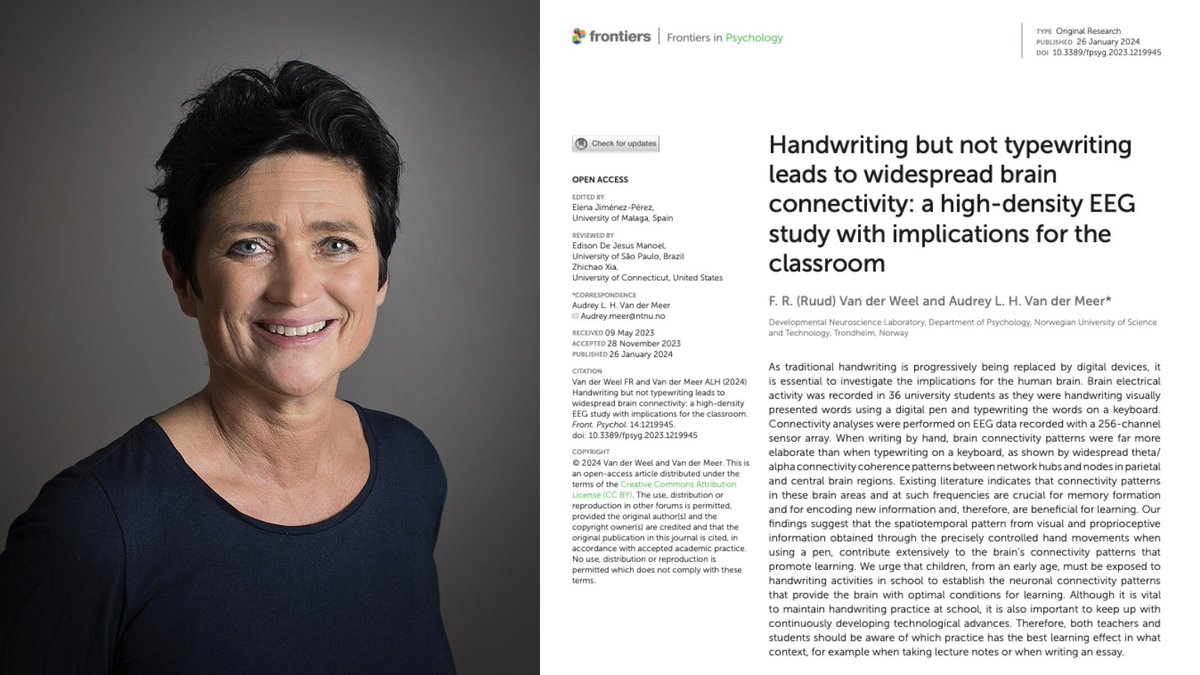
A Norwegian neuroscientist spent 20 years proving that the act of writing by hand changes the human brain in ways typing physically cannot, and almost nobody outside her field has read the paper.
Her name is Audrey van der Meer.
She runs a brain research lab in Trondheim, and the paper that closed the argument was published in 2024 in a journal called Frontiers in Psychology. The finding is brutal enough that it should have changed every classroom on Earth.
The experiment was simple. She recruited 36 university students and put each one in a cap with 256 sensors pressed against their scalp to record brain activity. Words flashed on a screen one at a time.
Sometimes the students wrote the word by hand on a touchscreen using a digital pen, and sometimes they typed the same word on a keyboard. Every neural response was recorded for the full five seconds the word stayed on screen.
Then her team looked at the part of the data most researchers had ignored for years, which is how different parts of the brain were communicating with each other during the task.
When the students wrote by hand, the brain lit up everywhere at once.
The regions responsible for memory, sensory integration, and the encoding of new information were all firing together in a coordinated pattern that spread across the entire cortex. The whole network was awake and connected.
When the same students typed the same word, that pattern collapsed almost completely.
Most of the brain went quiet, and the connections between regions that had been alive seconds earlier were nowhere to be found on the EEG.
Same word, same brain, same person, and two completely different neurological events.
The reason turned out to be something nobody had really paid attention to before her work. Writing by hand is not one motion but a sequence of thousands of tiny micro-movements coordinated with your eyes in real time, where each letter is a different shape that requires the brain to solve a slightly different spatial problem.
Your fingers, wrist, vision, and the parts of your brain that track position in space are all working together to produce one letter, then the next, then the next.
Typing throws all of that away. Every key on a keyboard requires the exact same finger motion regardless of which letter you are pressing, which means the brain has almost nothing to integrate and almost no problem to solve.
Van der Meer said it plainly in her interviews.
Pressing the same key with the same finger over and over does not stimulate the brain in any meaningful way, and she pointed out something that should scare every parent who handed their kid an iPad.
Children who learn to read and write on tablets often cannot tell letters like b and d apart, because they have never physically felt with their bodies what it takes to actually produce those letters on a page.
A decade before her, two researchers at Princeton ran the same fight using a completely different method and ended up at the same answer. Pam Mueller and Daniel Oppenheimer tested 327 students across three experiments, where half took notes on laptops with the internet disabled and half took notes by hand, before testing everyone on what they actually understood from the lectures they had watched.
The handwriting group won by a wide margin on every question that required real understanding rather than surface recall.
The reason was hiding in the transcripts of what the two groups had actually written down.
The laptop students typed almost word for word, capturing more total content but processing almost none of it as they went, while the handwriting students physically could not write fast enough to transcribe a lecture in real time, which forced them to listen carefully, decide what actually mattered, and put it in their own words on the page.
That single act of choosing what to keep was the learning itself, and the keyboard had quietly skipped the choosing and skipped the learning along with it.
Two studies. Two countries. Same answer.
Handwriting makes the brain work. Typing lets it coast.
Every note you have ever typed instead of written went into your brain through a thinner pipe. Every meeting, every book highlight, every idea you captured on your phone instead of on paper was processed at half depth.
You did not forget those things because your memory is bad. You forgot them because typing never woke the part of the brain that would have made them stick.
The fix is the thing your grandmother already knew.
Pick up a pen. Write the thing down. The slower road is the faster one.
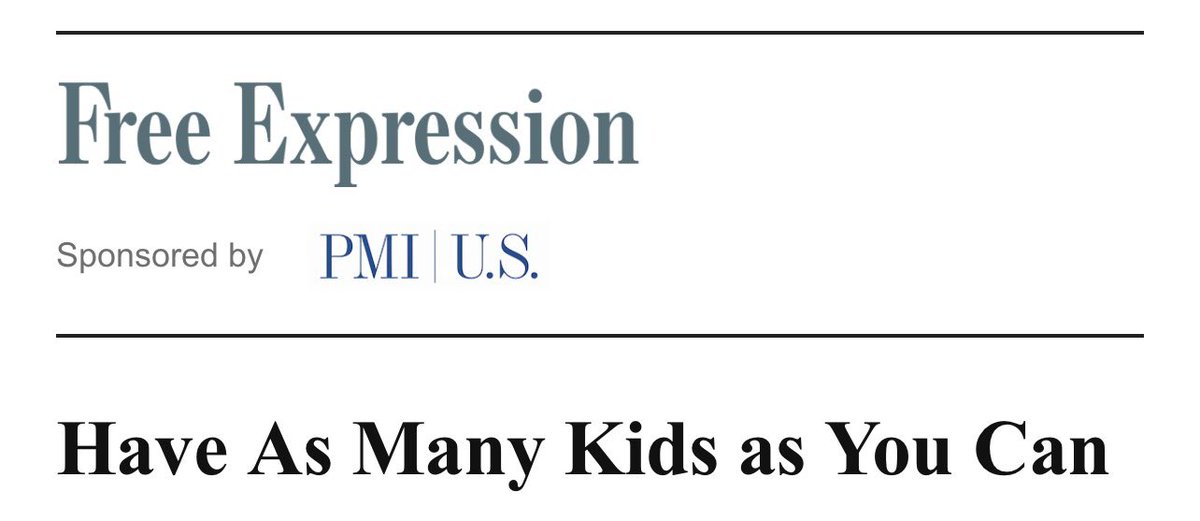
this advice from @MattHennessey in @WSJFreeEx mirrors the advice I receive from my older patients.
I routinely ask my older patients for life advice and repeatedly they tell me “have as many children as you can”
"You can hardly open a periodical without coming across the statement that what our civilization needs is more 'drive', or dynamism, or self-sacrifice, or 'creativity'. In a sort of ghastly simplicity we remove the organ and demand the function. We make men without chests and expect of them virtue and enterprise. We laugh at honour and are shocked to find traitors in our midst. We castrate and bid the geldings be fruitful."
— C.S. Lewis
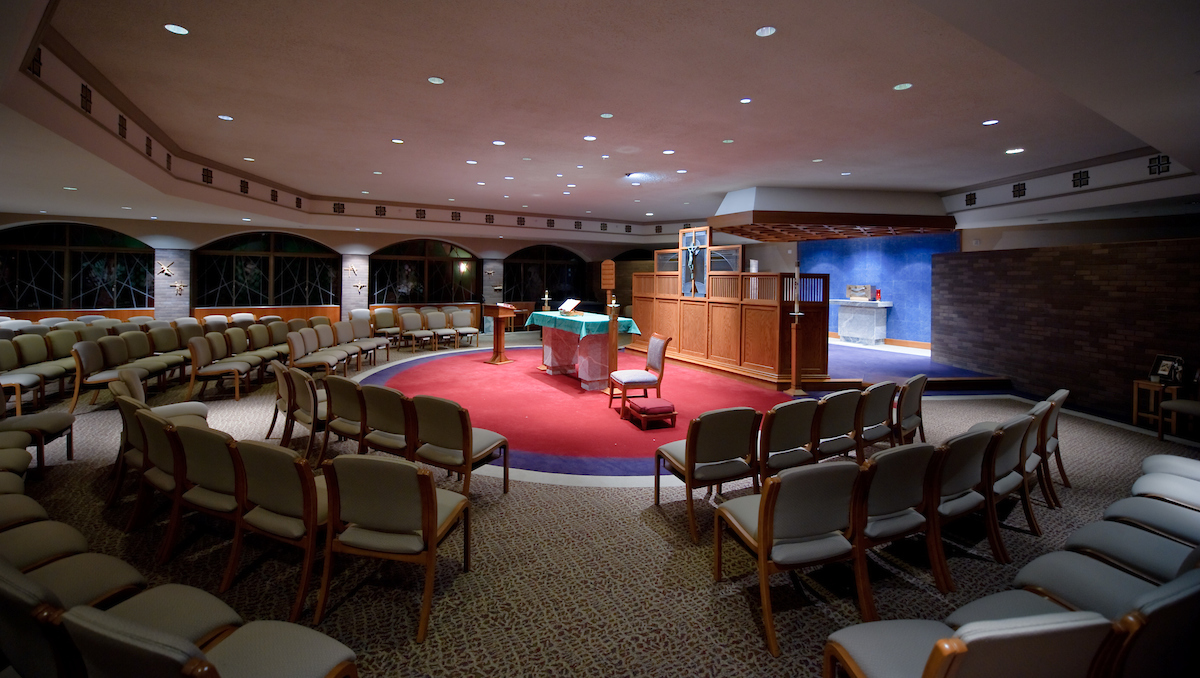
Did you know each Notre Dame residence hall has its own chapel?
These are spaces for residents, guests and friends and not open to the public, but we invite you to spend time in them virtually this Good Friday: https://t.co/RyKVt6PZPK
“So it may be said that the chief purpose of life, for any one of us, is to increase according to our capacity our knowledge of God by all the means we have, and to be moved by it to praise and thanks.”
- J.R.R. Tolkien, Letter 310
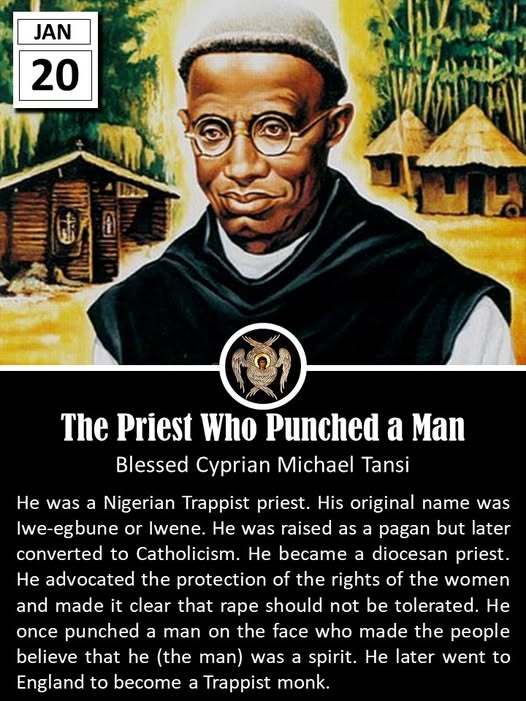
Blessed Cyprian Michael Tansi, born Iwene Tansi in September 1903 in the village of Igboezunu near Aguleri in southeastern Nigeria, grew up in a non-Christian family during the colonial era. At around age seven or nine, he was sent to live with a Christian uncle who ensured he received an education from Irish Catholic missionaries. He was baptized in 1912 or 1913 at about age ten, receiving the name Michael.
From an early age, Tansi showed deep piety and maturity beyond his years. He served as an altar boy and catechist, then worked as a teacher and later as headmaster of St. Joseph's school in Aguleri. Despite the economic security this position offered in that time, he felt called to the priesthood. Against family opposition, he entered St. Paul's Seminary in Igbariam in 1925 at age twenty-two. After completing his studies in philosophy and theology, he was ordained a priest for the Archdiocese of Onitsha on December 19, 1937, by Bishop Charles Heerey.
As a diocesan priest, Father Tansi served in several parishes, including Nnewi, Dunukofia, Akpu/Ajalli, and Aguleri. He was known for his intense zeal in evangelization, profound prayer life, and strict personal asceticism. He spent long hours before the Blessed Sacrament, preached with fervor, and lived simply, often challenging others to take their faith seriously. He once remarked that if one was going to be a Christian at all, one might as well live entirely for God.
In 1950, seeking even greater union with God through contemplative life, Father Tansi joined the Trappist (Cistercian) monks at Mount Saint Bernard Abbey in Leicestershire, England. He took the religious name Cyprian and spent the remaining fourteen years of his life there in the community, working in the refectory and bookbindery while adapting to the rigors of monastic discipline and the cultural shift from Africa to Europe. His iron will and complete trust in divine providence sustained him through difficulties.
Father Cyprian died on January 20, 1964, at age sixty in a Leicester hospital. Reports of favors received through his intercession led to his cause for beatification. The process advanced under the guidance of figures like Cardinal Francis Arinze, who as a child had been baptized by him. On March 22, 1998, Pope John Paul II beatified him during a visit to Onitsha, Nigeria, declaring him Blessed and presenting him as a model of priestly zeal, prayer, and total dedication to God. His feast day is celebrated on January 20.
@TimeIsAfterUs I think her inability to come up with another solution - or even invite other ideas - for the other 50% of survivors to participate in the conversation reinforces Carol’s lack of community which predates the beginning of the apocalypse.
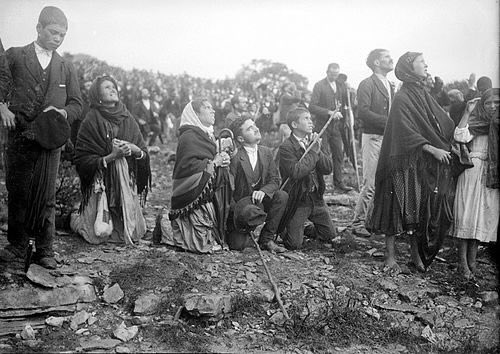
Today, as we remember the miracle of Fatima, let us continue to heed Our Lady’s call to pray the rosary every day for our families and for peace in the world.
Our Lady of Fatima, pray for us.