Aconteceu comigo glr, era inevitável, peguei um Uber que falou que rico não devia pagar mais imposto porque é o rico que gera riqueza e emprega as pessoas
The New York Times just published an editorial admitting something remarkable: Lula da Silva is the most important political leader in the Americas in the 21st century.
For a media outlet that traditionally champions the Western establishment, this is a profound shift. Why is the institutional voice of the liberal world suddenly praising a former factory worker from the Global South?
They aren't doing it out of charity. They are doing it because they are witnessing the undeniable force of the Brazilian working class.
When the algorithms and the polls said he would lose, millions of ordinary people—from the favelas of Rio to the small towns in the Northeast—took to the streets. They didn't just vote for a politician; they mobilized for their own dignity. They voted for public hospitals that actually work, for wages that cover the cost of living, and for a country that belongs to its people.
Lula represents a vision of the world that the old powers are struggling to accept.
He represents a Latin America that is not a backyard, but a sovereign partner. A vision where a nation's wealth—its oil, its rare earth minerals—is used to build local infrastructure and fund social programs, rather than being quietly extracted to feed foreign supply chains. A vision where a country can advocate for peace, stand in solidarity with Palestine, and help build a multipolar world.
The Western establishment is realizing they can no longer dictate Brazil's future through economic pressure, digital censorship, or proxy politicians. They are forced to respect Lula because the people who elected him refuse to be marginalized.
But the true measure of Lula’s importance isn't found in the praise of foreign newspapers.
It is found in the missing finger from a metalworking press. It is found in the millions who organized digitally to bypass censorship. It is found in a working class that looked at impossible odds and decided to build a better world.
When the world's most powerful institutions have to acknowledge a metalworker, you know the old order is changing.
And it is the people who are leading the way.
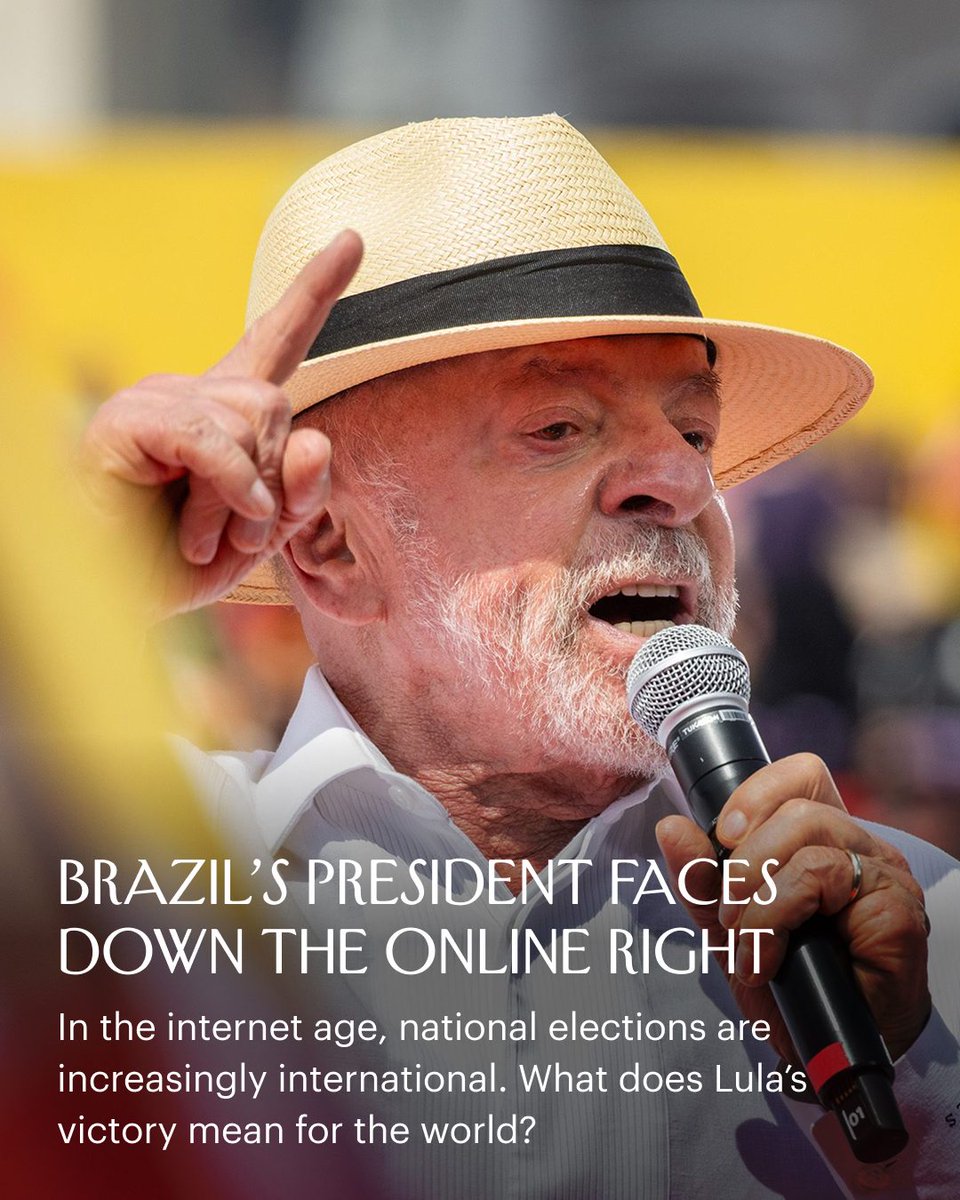
There has been a sense of hope among those on the left that President Luiz Inácio Lula da Silva’s victory in the Brazilian Presidential election could begin to reverse a far-right surge in the country and around the world. Brazilian elections generally have two rounds of voting. In the first one, in early October, the far-right candidate Flávio Bolsonaro came out ahead. But, in an unprecedented three-week social-media campaign, a tech-savvy politician named André Janones enlisted millions of Brazilians to serve in “Lula’s Army.” By synchronizing their messaging, he gained an algorithmic advantage over the right-wing trolls that dominated Brazil’s social media for years. Janones’s services have been requested by the left-leaning Spanish Prime Minister, Pedro Sánchez, who faces a tight race in late November. In France, “Janonisme” is being emulated by activists working to counter the influence of the far-right Presidential candidate Marine Le Pen. Jon Lee Anderson considers the interconnectedness of political movements across the world, and how the left is using social media to counter the messaging of right-wing trolls: https://t.co/viW2YNqgHj
O algoritmo do Nikolas traiu ele, e eu explico o porquê.
Deixa eu falar um negócio para vocês: o Nikolas Ferreira tem hoje uma força de mobilização muito maior que o bolsonarismo, especialmente que Flávio Bolsonaro.
Se os números dele de visualizações fossem substanciais, reais, Flávio teria levado no primeiro turno de lavada e não ido para o segundo turno com a menor distância de votos de todas as eleições.
Parem de brigar com esses números do Nikolas, pois eles serão temas para depois das eleições. O mundo inteiro já está comentando o blogueiro de maior sucesso da terra kkkkkkkkkkkk
A meta exagerou e agradeçam, pois anotem: o caso Nikolas será o estopim para a classe política regulamentar as redes, pelo menos, ao nível político. Não é algo que a esquerda vai tocar; nos bastidores, o próprio centrão já se mobiliza para frear esse, evidente, favorecimento.
O caso já está ganhando proporções inimagináveis, com políticos e analistas de redes do mundo inteiro olhando para o Brasil, rindo da nossa diva pop e fazendo chacota desses números.
O TSE inevitavelmente fará uma amarra, pois foi tapeado e desmoralizado por uma big tech. Nem esquentem a cabeça com isso, o caldo vai entornar.
Um dia de cada vez. Lembram quando começou a “vaza jato” e eles riram falando que não daria em nada? Não sejam ansiosos com a política.