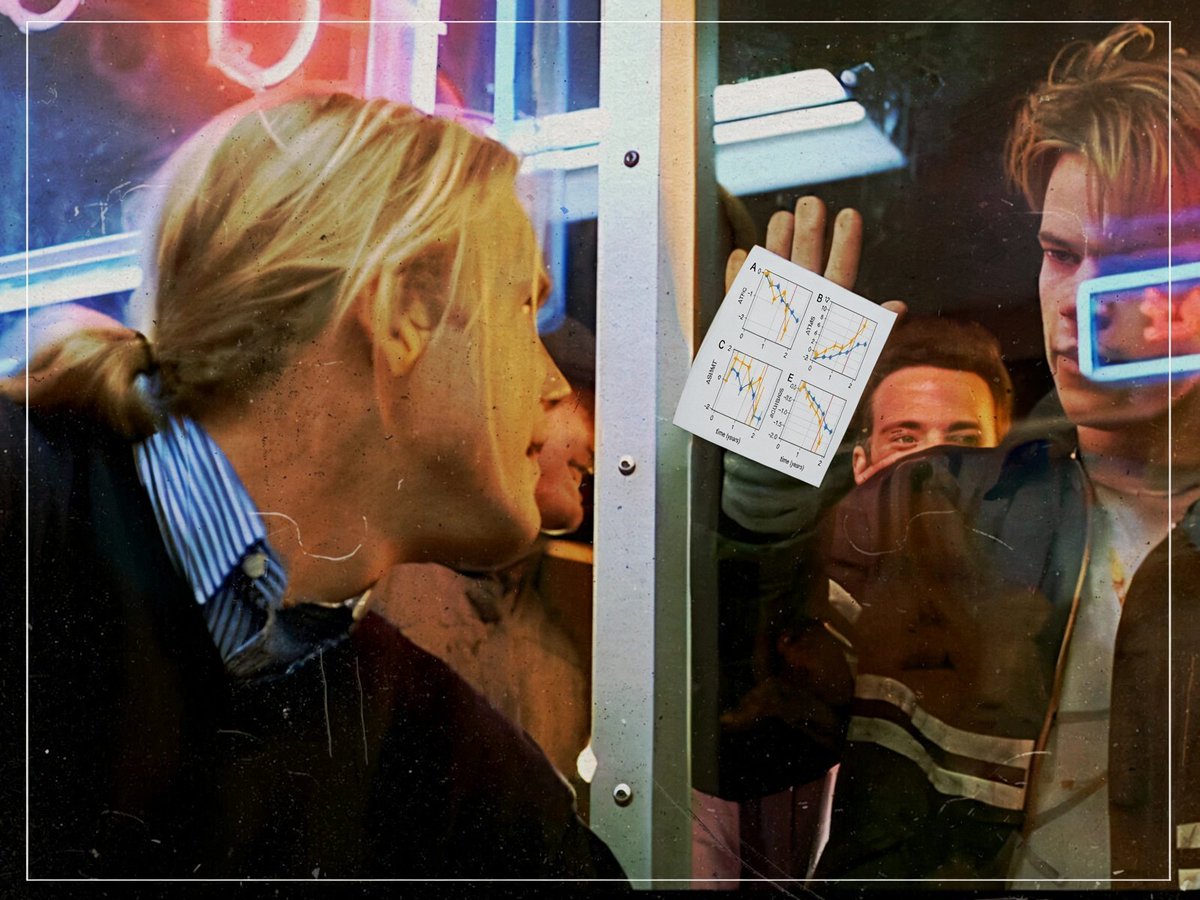
For the 95% of rare disease patients still without an approved treatment, FDA is working for you.
Acting Commissioner Kyle Diamantas shares how FDA is transforming rare disease drug development through the new Rare Disease Framework Initiative. Because every family deserves answers, action, and hope. https://t.co/HgMjUNqF0a
We are thrilled to announce that the FDA has accepted for review the BLA for ifezuntirgene inilparvovec (AMT-130), an investigational #genetherapy for #HuntingtonsDisease. The application has been granted Priority Review with a PDUFA date of May 1, 2027. https://t.co/DQMYULhuR4
$qure $clpt
Clearpoint call
Analyst’s need to get their shit together, completely useless questions, put me in coach. Jumping between calls, get out of here with this crap. Didn’t even ask about the 25 sites..
“We are going to learn quite a bit in the next couple months what guide for 2027 looks like.”
We take our confidential information very carefully on what we disclose from partners
Code word- “ we are partners with Neurogene”
Go figure it out
Clearpoint management were laughing a lot during this call, they were chilling. They know what they got around the corner here.
Got a raise off with about 22 million dollars on the atm before quarter end.
Bci partners at the Cal
ClearPoint is an industry partner in a five-year, $2.98 million competitively awarded NCI R01, led by Dartmouth Health to advance MR-guided laser therapy for spinal metastases. May have first mover advantage.
Cal requires front loaded costs
Irraflow 5 new products in 2027
Multiple phase 3 trials now or about to start.
“We never want to be the bottleneck.”
Our robot is very unique, very different than anything else out there, strictly for gene and cell therapies.
Guide 48-50 million, lowered top range.
46.2 million cash.
In terms of the operational burn, like also Joe mentioned earlier, we are targeting now to continue on the path of operating leverage where we see that the revenue outstrips the growth of the OpEx, so that we can continue to gradually reduce the burn in the coming quarter over quarter in the coming four to six quarters.
Certain Parkinson’s trials are fighting for patients at certain sites so expect new sites to start up due to competition from same sites.
The Cal has grown 3 quarters in a row, Q 4 will be bigger at the Cal.
This call was good, clearpoint is in a very good spot, recommend checking out the call. Good times ahead.
$qure $clpt
Awesome job @laurencurehd you did the HD community proud.
“For me, disease progression is no longer something I fear for my future. It's something I'm experiencing in my present.”
“I'm not asking the FDA to abandon scientific rigor. I'm asking you to recognize that uncertainty exists on both sides of the equation.”
“For progressive diseases like HD, the absence of treatment is not the absence of harm.”
“Perfection cannot become the enemy of progress.”
@mahesh_shenai, Although we have never met, I addressed Dr. Mallika Mundkur at the @FDA's CNPV public meeting, whom I understand is your wife.
After reading nearly 20 of your posts concerning Huntington’s disease (HD) and AMT-130, I have to ask: Are you evaluating the totality of the evidence, or predominantly searching for reasons to discount it?
You repeatedly express hope that you will someday treat Huntington’s disease patients. But how much direct experience have you had with our community? Have you spent meaningful time with symptomatic patients across disease stages, witnessed their progressive neurological decline, or spoken with families about their risk tolerance?
I ask because I have.
HD has devastated three generations of my family. My grandmother died after years of suffering. Her chorea was so severe that she wore padded mittens for nearly four years to prevent her involuntary movements from dislodging her feeding tube.
I was nearly my daughter’s age when my grandmother developed symptoms. Now both my daughter and son are watching their grandfather and aunt experience the same disease. My father is in the middle stages of Huntington’s disease, while my aunt is further along in its devastating progression. As a mother, I live with the painful reality that my children may one day witness this same deterioration in me—or, even more heartbreaking, experience it themselves.
What I witnessed as a little girl, my children are witnessing today. Different generations, the same devastating cycle we are desperately trying to break.
The psychological consequences are equally profound. A fellow Michigander and HD advocate recently lost her father to suicide. Another Michigan chapter board member nearly lost her niece, and several HD friends have lost loved ones to suicide. Suicide risk among people with Huntington’s disease is substantially higher than in the general population.
Why? Imagine caring for someone you love while witnessing years of relentless neurological deterioration, all while knowing you could face the same fate. And even if you escape inheriting the mutation, you may carry the lifelong burden of survivor’s guilt as those you love continue to suffer. This is the profound, multigenerational trauma of Huntington’s disease.
More than 40,000 Americans live with HD, and over 200,000 are at risk. Those figures do not include the countless caregivers and relatives whose lives are also affected.
Your anecdote about a surgeon with another movement disorder reinventing his professional life was particularly revealing. When I read it, I immediately questioned your firsthand understanding of HD.
HD does not afford patients the luxury of simply reinventing their lives. It progressively damages the brain circuits responsible for cognition, judgment, behavior, movement, and independence. Symptoms can worsen over 10–25 years, gradually taking away the ability to work, communicate, maintain relationships, swallow, walk, talk, and care for oneself.
The ability to reinvent one's life requires precisely the neurological capacities HD progressively destroys. HD takes away the ability to meaningfully participate in life altogether.
The 2024 HD Symptoms and Treatment Impact Survey found that nearly three-quarters of respondents would accept treatment risks for five years without progression, while approximately 35% would accept risks for even three years.
Three more years raising children. Five more years working, communicating, remembering, and living independently. More birthdays, graduations, and time with family.
Then consider the economic consequences of inaction. Over 10–25 years, HD families will face neurologists, psychiatrists, hospitalizations, expensive chorea and psychiatric medications, physical and occupational therapy, speech and swallowing therapy, mobility equipment, home modifications, specialized residential care, and eventually around-the-clock assistance.
HD removes two people from the workforce: the patient and the family member who becomes their caregiver. Families lose wages, insurance benefits, retirement savings, and years of financial security. Many conventional care facilities lack the specialized neurological and behavioral resources required for HD, leaving families with limited options.
These costs accumulate across households, employers, Medicare, Medicaid, disability programs, and society.
When evaluating the risks and costs of treatment, why is the cost of inaction so often treated as though it were zero?
If AMT-130 meaningfully preserves independence, the potential economic and societal benefits deserve consideration.
You have described yourself as one of approximately 80 U.S. neurosurgeons with expertise relevant to this procedure. If AMT-130 does not meet your personal threshold for clinical adoption, that is your judgment. But your threshold is not the FDA's regulatory standard, nor should it determine the choices available to every informed patient and qualified physician.
Other neurosurgeons may recognize the broader significance of this investigational gene therapy. If its clinical benefits are confirmed, AMT-130 could help transform how we approach inherited neurodegenerative disorders beyond HD.
Regarding surgical risk, stereotactic neurosurgery has been performed in humans since 1947. Trial experience suggests the procedure has generally been tolerated.
But the question is not whether neurosurgery carries risk. It does. The question is whether those risks are acceptable relative to the potential benefit for patients facing a progressive, fatal disease without an approved disease-modifying treatment.
Your professional risks and our personal risks may look entirely different.
For you, this is a discussion of procedural complications, evidence, and professional responsibility. For us, it is progressive neurological deterioration, dependency, and premature death.
The reported AMT-130 findings, including favorable Total Functional Capacity trajectories compared with external controls, deserve serious consideration. TFC measures employment, financial management, domestic responsibilities, daily living, and care requirements. It measures the independence HD progressively takes away.
Scientific skepticism is essential, but it must be applied symmetrically.
Our community has also been wounded by regulatory rhetoric. @VPrasadMDMPH, your wife’s former boss, recently compared patients pursuing unproven treatments to a drowning person reaching for a blade. Regardless of the intended scientific warning, such language risks reducing informed, deeply personal benefit-risk decisions to acts of desperation, overlooking the devastating consequences patients and families face without treatment.
Our willingness to accept uncertainty is not desperation. It reflects a rational understanding of what HD will otherwise take from us.
Imagine watching someone you love progressively lose the ability to think, communicate, walk, swallow, or even recognize the people they love most. Now imagine living with the knowledge that the same devastating disease could one day affect you, your children, your siblings, or generations of your extended family. This is the reality of Huntington’s disease.
What would a few additional years together mean? What would you do to break the cycle?
I am not asking you to abandon scientific standards. I am asking you to recognize that the consequences of waiting are as real as the risks of treatment.
The absence of treatment is not the absence of risk. It is continued disease progression, escalating dependency, enormous psychological and economic suffering, and irreversible neurological loss.
You may see an investigational neurosurgical procedure that has not met your preferred evidentiary threshold. We see a potential opportunity to preserve the ability to think, communicate, work, love, and remain present in our families' lives.
We are asking for scientific judgment that accounts for the full reality of Huntington’s disease.
P.S. Go Blue! 〽️💙💛
#HuntingtonsDisease
#RareDisease
$qure $clpt
Uniqure management today at Guggenheim
MRI was included in bla
The 3 have not been added to the bla unless the FDA asks for it.
FDA has not made any requests or stipulations at this time regarding the 4 year data.
Confirm trial would be the same as phase 1/2 with inclusion.
The agency likes tfc
1 patient had extremely wild swings on tms, tfc start at 13, right now tfc is still 13. Possible rater has been different 4 times. Tfc hasn’t moved. Not sure why this patient has wild swings.
Tms can have wild swings.
If they excluded the noisy patient on tms, 57 percent cUHDRS
You cannot play that game
Doesn’t believe the 4 year data changes anything regarding the bla. Believes the regulators will see the same thing.
Became aware of the 4 year database issue around late June. They were a bit surprised how chudrs didn’t move in year 3 to 4.
Chdi is working with them to figure out the missingness issue. Possible was Covid issue,
Enroll hd is definitely bias, it underestimates, it works against them which is good. Walid says it definitely underestimates.
They feel low dose is a good control group.
Regarding 5 year data, looking for ways to compare going forward.
Too early to comment on label.
It’s not a durability issue regarding insurance.
Would use HDSA for referrals to procedure sites.
Barrow has 12 neurosurgeons and 12 mri sites, some have 1 to 1. Some sites say they can do 2 a week, some say 1 a month.
For patients, even 1 year saved is important to them. Patients think how many more moments can I maintain in my life. Patients will climb up to get treatment. Across the board, patients are enthusiastic, they understand the missingness. They have real life examples on why people stop showing up. This isn’t numbers to them, this is real life to them.
2 1/2 to 4 million would be expected price, in gene therapy range.
@laurencurehd@Christina4HD
$qure $clpt may 12th 2026 Tabrizi new presentation on amt 130, definitely some new comments, this was before US reversal. Must watch.
“2 people have gone back to work out of the 12, I have been a physician/scientist for the last 30 years, I have never seen anyone give up work and than improve to go back to their original job.”
So you have Wild saying he has never seen such a thing in 20 years and Tabrizi 30.
“Lots of people have asked me, is the spaghetti plot driven by an outlier? No, they really are quite uniform.”
Tabrizi has been talking to the MHRA. 3 of the clinical assessors came to UCL to learn about the drug and actually spoke with patients in the trial. “ They met with a number of her patients.” They met with them for 3 hours. She has never had a regulator do that before.
“We will have 48 month data in August.”
Obviously doesn’t mean they will release in August.
“ I had a recent meeting with the MHRA and they said they have had no drugs that have used intraparenchymal deep structural delivery.”
Tabrizi calls out Clearpoint’s SmartFlow cannula.
“Once the catheter’s are in, the neurosurgeons tell me this is a very boring procedure.”
“ I have worked in the field for 30 years and I was beginning to give up hope, but I saw this data in the beginning of September and I thought wow, I think this drug is doing something.”
She is working on a drug for pre-symptomatic.
Tabrizi had a lot of discussions with Peter Marks and Nicole Verdun before what happened to them. They gave them lots of ideas.
https://t.co/00gBSv6Ecg
@peter_mantas@DesertDweller93@Tim_Corr@Prof_Dollar@biggercapital
$qure $clpt
Amt 130 holy fucking shit
5 years ago!
Rush university
She says he got it 5 years ago and is back to work!!! He was no longer able to work. Not only stabilized but he has improved!! He is working full time.
Omg
https://t.co/MjVuwG8jEF
$qure $clpt
Hell yeah SUNG, he just said this drug works
The patients Sung treated, all in the early stages of Huntington disease, have now been followed for more than 4 years.
“All of my patients who were working full-time are still working full-time,” he said. “Generally, everyone is stable. That is not what we expect to see over this length of time in untreated Huntington disease.”
Victor Sung, MD, director of the Huntington’s Disease Clinic at the University of Alabama at Birmingham and a principal investigator in the trial, treated seven participants: Six received the high-dose infusion, and one initially had the sham procedure and later received AMT-130.
Sung said the FDA’s decision adds a significant hurdle, but the results he observed continue to reinforce his confidence in the treatment signal
“Families, researchers, and doctors have been waiting generations for a breakthrough,” said Sung, who serves on the steering committee for uniQure’s clinical program evaluating AMT-130. “This multiyear delay of a highly promising, progression-slowing treatment is a massive blow to patients who do not have time to wait.”
Sung described the treated group’s course as striking even without focusing on the 75% figure or the external comparator. The progression over 3 years, he said, was “closer to zero than it is to one point of progression.”
“We provided MHRA with the 3-year follow-up results,” Kapusta said. “They encouraged us to include those results as part of an application for a license.”
Sung said the possibility of approval outside the US raises difficult questions for patients and families, including whether some might travel for treatment if AMT-130 becomes available elsewhere first. Because the therapy requires specialized neurosurgical delivery and intraoperative MRI, broad access would take time even if it were approved.
“This is not going to go like wildfire,” Sung said. “It will go very slow because of the invasiveness of the procedure.”
Even with those constraints, Sung said, the patient community’s response to the FDA decision has been clear. “If I could summarize their stance, it has been ‘let us be the arbiter of our own risk tolerance,’” he said.
“I was literally riding a roller coaster when I found out that the trial data had been rejected,” he said. “There is something symbolic in that.”
@peter_mantas@Tim_Corr@biggercapital@Prof_Dollar@DesertDweller93@laurencurehd@Christina4HD
https://t.co/miGPLIy9Wf
Yesterday, we spoke to the @FDA about why Huntington’s disease should be considered a national priority under the CNPV Pilot Program.
Now the FDA is asking for public comments, and our community has an opportunity to be heard.
Please take a few minutes to submit a comment asking the FDA to prioritize fatal, progressive neurodegenerative diseases like Huntington’s when promising therapies are ready for review.
Comment here:
https://t.co/24u6kb42wV
Comments close June 29 at 11:59 PM ET.
#HuntingtonsDisease #HDCommunity #RareDisease
$qure $clpt
Thought I would update this as we get closer to 4 years, this is what we do know with recent information.
Jack May Davis as of 2 months ago is still skiing and running ultra marathons. Recently ran a 5k in 20 minutes. Seems to be doing okay -)
January 26 Gareth- How He Feels Now: Gareth describes feeling stable. In the context of Huntington’s—a disease characterized by a steady, inevitable decline—"staying the same" is a massive success. He mentioned that he is able to enjoy his garden and daily life without the rapid loss of function he saw in his father.
The guy on Reddit was likely the first guy that was medically retired and returned to work, that was 3 years ago. If that is the same guy according to Reddit he is doing extremely well.
Sarah Tabrizi recently said 2 people have now went from medically retired back to work. Decent chance that the Reddit guy was the first one and the 2nd person likely went back to work recently.
That is highly likely 4 of the people are doing extremely well at 4 years. I doubt Sarah Tabrizi is going to say that if they aren’t still working. She said, that is now 2 people that have went back to work from medically retired.
You also have Sarah Tabrizi’s recent quote
The high dose numbers aren’t from one or two outliers according to Sarah Tabrizi, saying the spaghetti plot looks very good.
Interesting times ahead
I’m sure @laurencurehd and @JRenz0418 know some others that are right at that 4 year mark also. This is either the greatest placebo of all time or this drug actually works. I’m sticking with the neurologists that actually see these patients unlike that guy known as @anish_koka . It’s going to be quite funny when he has to delete all his posts, maybe even delete his Twitter account again like he did in 2020 because of the embarrassing comments that he made. We might have to send him some tips on his Venmo account because after this situation he is going to have no clients left because his reputation will be destroyed even more.
Katy, I appreciate your loyalty to Dr. Makary and I truly believe he wanted to reform a broken system. But as someone from the Huntington’s disease community, I need people to understand why so many families were deeply hurt by how we were characterized.
We were not “Big Pharma.” We were not paid lobbyists. We were families drowning in generational trauma because our loved ones are dying from one of the cruelest neurodegenerative diseases on earth.
And the hardest part? While many Huntington’s families, caregivers, and at-risk individuals were literally on Capitol Hill during Rare Disease Week meeting with lawmakers after paying our own way there, Dr. Makary was simultaneously speaking to reporters about “moneyed interests” and outside pressure surrounding AMT-130.
There were no corporate-funded advocacy campaigns behind us. Just families carrying decades of trauma, grief, and fear into congressional offices because we are terrified of running out of time. Nearly 50,000 signatures were gathered from HD families, grassroots advocates, caregivers, and supporters demanding urgency for AMT-130, and those petitions were hand-delivered directly to the FDA by members of the Huntington’s community themselves. Over 10,000 emails were also sent to FDA and members of Congress. Nobody paid us to do that. Fear did. Love did. Desperation did.
At the 2024 EL-PFDD meeting in Maryland, FDA sat across from more than 100 HD families and listened as we described watching parents, grandparents, siblings, and children slowly lose movement, speech, cognition, personality, and independence. People in those rooms cried with us. We were told urgency mattered.
Soon after we learned FDA aligned with uniQure on an accelerated pathway, many of us finally felt hope for the first time in our lives.
So yes, families became loud. Because this disease does not wait.
What also deeply damaged trust was watching Dr. Vinay Prasad speak anonymously to reporters about an active therapy. If someone cannot publicly face the people they serve during moments of crisis and scrutiny, they should not be leading CBER.
Leadership requires courage, transparency, and accountability. This is especially true in rare disease communities where every delay carries irreversible consequences.
Many of us respected Dr. Prasad intellectually. We respected his focus on scientific rigor. But from the patient/family side, much of what we experienced felt dismissive, detached, and at times unnecessarily combative toward a dying community simply asking to be heard.
And Dr. Makary protected that approach far too long.
The Huntington’s community is not asking for reckless science. FDA itself asked our community what level of risk we would accept, and nearly three-quarters of respondents said they would accept treatment risks for even a chance at 5 years without progression.
Because this disease does not wait for “perfect data.”
For families living with Huntington’s, every year means more neurons lost, more memories erased, more independence gone, and more people disappearing in front of us. AMT-130 showed the possibility of dramatically slowing that decline over three years. That is time with children. That is dignity. That is life itself.
We are not a lobbying machine. We are human beings trying to stop generations of suffering from continuing.
💙💜
#Huntingtonsdisease
I’ve spent my entire career working on some of the most complex areas in medicine: cell & gene therapy, rare diseases, cancer, stem cells, nano-robotics, and more common conditions like macular degeneration & myopia.
Over the decades, I’ve watched something striking happen again & again: regulatory agencies all over the world try to copy what the FDA does. Whether it’s in Europe, Asia, or the Middle East, the gold standard they all chase is still the U.S. FDA. That didn’t happen by accident.
As we approach America’s 250th anniversary, I keep asking myself a bigger question: What should the FDA do now so that 250 years from now, it’s still the global leader in protecting patients while advancing medicine?
We are about to enter a completely different era. Gene editing, artificial intelligence, nanotechnology, and stem cell science are moving so fast that we will soon have therapies and medical devices that most of us can’t even imagine today. That’s exciting — but it also means we’re going to face scientific, clinical, and ethical challenges we’ve never dealt with before.
How do we evaluate therapies that introduce non-human genes — or entirely new genes — into human beings?
What happens when scientists perfect the ability to create eggs and sperm from skin cells?
How do we regulate highly individualized therapies that could fix multiple genetic defects in one patient at the same time?
These aren’t science fiction scenarios. They’re coming. And we need a regulatory system that is smart enough, flexible enough, and courageous enough to handle them — without defaulting to “no” just because something feels new or uncomfortable.
I’ve seen too many promising treatments for desperate patients get slowed down or blocked by rigid, outdated thinking. That approach doesn’t protect patients in the long run. It harms them. And if America gets this wrong, we won’t just lose patients — we’ll lose our edge in medical innovation to places like China that are moving aggressively.
The FDA has an incredible legacy. But legacy alone won’t carry us through the next 250 years. We need to modernize how we think about risk, benefit, and progress — while never losing sight of our core mission: protecting American patients with rigorous science and clear information.
This is the moment to get it right. Not by being reckless, and not by being afraid — but by being thoughtful, forward-looking, and unapologetically focused on what’s best for the American people.
The FDA Commissioner role is open. This is a pivotal moment for American medicine — & for American patients.
Here’s what I believe the next Commissioner should stand for. Not as a wish list. As a baseline.
🔬 1. BRING BACK THE ADCOMS — AND MAKE THEM COUNT.
Advisory Committee meetings are one of the FDA’s most powerful tools for transparency. They should return in full force. Open. Public. And real.
Patients, doctors, scientists, advocates, & skeptics should all be able to speak. But if you want to speak, you fill out a financial conflict-of-interest form under penalty of perjury — & you read it out loud at the podium before you say another word. Every single person.
And if the issues are complex and the science requires more than one day, then take the time. Don’t cut people off because the schedule says so. The public deserves to see exactly how these decisions are made. Real transparency builds real trust.
⚖️ 2. STOP ASKING ONLY “IS IT SAFE ENOUGH TO APPROVE?” — START ASKING “WHAT HAPPENS IF WE DON’T?”
For rare diseases. For serious conditions with no good options. For patients who don’t have ten years to wait for traditional trials that may never be feasible.
Every regulatory decision carries two risks: the risk of approving something, and the risk of not approving it. Both are real. Both affect real people.
When traditional gold-standard trials aren’t practical, we should still be able to move with urgency — but only when paired with strong post-approval commitments and rigorous safety monitoring. We can give desperate patients a chance without abandoning scientific integrity.
🇺🇸 3. THE FDA’S ONLY CLIENT IS THE AMERICAN PATIENT. FULL STOP.
The FDA exists to serve patients — not outside interests or external pressures of any kind.
It must continue protecting the public from products that carry real, known risks but offer no meaningful clinical benefit.
At the same time, when there is credible evidence that a treatment can help patients with serious conditions, Americans and their physicians should be trusted to make informed decisions once they have complete and honest information about the risks, benefits, and alternatives.
The FDA’s job is to make sure the science is sound and the information is clear. Then let patients and doctors do what’s best for them.
These principles matter because the FDA’s decisions affect every family in this country.
Note: This is a simple social media post and not a massive policy document. The issues are FAR more nuanced, there are challenges and risks with each of the things I said above, and I recognize that. But it's intended to serve as a discussion starter. We must always strive to improve, and we can when we have open debate and dialogue.
AMT-130 represents the most promising disease-modifying approaches currently being studied in Huntington’s disease, aiming to target the underlying genetic driver rather than just symptoms. In Huntington’s disease, where there are no approved treatments that slow progression and time is running out for patients, regulators should allow more flexibility and act with urgency. The goal isn’t to lower standards, but to keep the pace of review aligned with the pace of the disease.
That’s why it’s important to be precise with the data. Small exploratory cohorts (like n=17) and early 12-month readouts are not designed to determine disease acceleration or efficacy in Huntington’s. HD is slow, variable, and requires longer observation windows to interpret true treatment effects.
This is also why the 3-year follow-up data is so important. Long-term trends rather than early short-term fluctuations are what shows AMT-130 produces durable slowing of neurodegeneration.
What often gets lost in these debates is the human reality behind the science.
Over 50,000 people in the Huntington’s disease community have signed petitions supporting faster access for therapies like AMT-130. This is not driven by “big pharma,” but by patients, families, caregivers, and volunteers living with a relentlessly progressive disease and limited options. There is no financial incentive, only urgency.
In 2024, many of us met with the FDA in Maryland through the HDSA EL-PFDD meeting. I personally shared my story and saw firsthand how deeply these experiences land with regulators. We were told patient voices mattered and that accelerating pathways for serious neurodegenerative disease was a priority.
In the 2024 HDSA survey, 3/4 of respondents would accept meaningful risk for 5 years without progression, and ~35% would accept risk even for 3 years of halted disease.
We are not “moneyed interests.” We are patients and families asking for decisions grounded in full, long-term evidence, and for regulatory flexibility and urgency that match the pace and severity of this disease.
While risk-benefit analysis is essential, for many serious diseases we also need risk-vs-risk analysis:
The risk of approving a therapy… versus the risk of not approving it.
It’s easy to say “no” when you fear tomorrow’s headlines about a tragic side effect.
We will never see headlines about the patient who died because the drug that could have saved them never reached them.
Let’s keep our focus on patients — not just p-values. ❤️