Stop hardcoding past questions into your CBT app.
If you’re building a JAMB, WAEC, NECO or university CBT platform, managing thousands of questions manually will eventually become a problem.
That’s one of the reasons we built SdashAPI.
Instead of spending weeks building and maintaining your own question database, you can access structured exam data through an API.
With SdashAPI, you can work with:
Questions and options
Correct answers
Sections and passages
Topics and subtopics
Detailed solutions and explanations
Difficulty levels
Common mistakes
Images and diagrams where available
Question metadata
And more
This means you can build smarter features like topic-based practice, performance analysis, revision systems and personalized learning without starting your dataset from zero.
We handle the data infrastructure while you focus on building a better product.
@SdashAPI is built for developers building serious educational products.
https://t.co/MJkF6tiN8o
Found an Error in a Question? You Can Now Report It on SdashAPI
Question accuracy matters when students depend on a CBT platform to prepare for an examination.
SdashAPI has introduced a new question-reporting feature that allows users and developers to report possible problems found within a question.
Users can report issues such as:
A possible wrong answer
A spelling or typographical error
An unclear question
Incorrect or incomplete options
A problem with the explanation
Any other issue requiring review
When a report is submitted, our team can identify the affected question, investigate the issue and make the necessary correction where appropriate.
Developers Can Add Reporting to Their CBT Apps
The reporting system is not limited to the SdashAPI website. Developers can also integrate it directly into their CBT applications using the SdashAPI reporting endpoint.
This means a student who notices a possible error can submit a report without leaving the developer’s application.
A good implementation might place a small “Report Question” button below every question. The student can select the type of issue, provide additional information and submit the report for review.
This creates a direct quality-feedback channel between students, developers and the SdashAPI team.
No large educational question database can depend on automation alone. Community reports, careful reviews and regular corrections all help produce a more dependable experience.
The new SdashAPI reporting feature is another step towards building a more accurate and transparent Nigerian past-questions API for JAMB, WAEC, NECO, Post-UTME and university CBT platforms.
Test Your CBT App with 2,000 Free SdashAPI Sandbox Credits
Building a CBT application should not begin with paying for an API you have not tested.
That is why SdashAPI has introduced a Sandbox Account that gives developers 2,000 API credits to test our CBT questions API before choosing a paid plan.
With the sandbox, developers can connect their applications to SdashAPI, make real API requests, inspect the JSON responses and understand how the integration works. You can build and test important features such as:
Random question selection
Subject-based question filtering
Exam-year filtering
Answer checking
CBT practice sessions
Question navigation
Score calculation
Explanations and solutions
SdashAPI provides structured questions for Nigerian examinations, including JAMB/UTME, WAEC/WASSCE, NECO, Post-UTME and university examinations.
Instead of requiring developers to pay before writing their first line of integration code, the SdashAPI Sandbox Account provides enough credits to build a working prototype and confirm that the API fits their project.
A Developer-Friendly Way to Test a Nigerian Past Questions API
The sandbox is designed for developers building:
JAMB CBT applications
WAEC and NECO practice platforms
Post-UTME preparation websites
Educational mobile applications
School examination systems
Quiz and assessment platforms
Every sandbox account receives 2,000 API credits. This makes it possible to test multiple endpoints, subjects and application flows without immediately committing to a paid subscription.
We believe this is one of the most accessible sandbox offerings available from a Nigerian CBT questions API provider. It reflects our goal of making reliable educational data easier for developers and startups to access.
Once your application is ready for real users, you can upgrade to a paid SdashAPI plan and gain broader access for production use.
Create a SdashAPI Sandbox Account, get your API key and start building your CBT application.
Inside SdashAPI V4: More Than Just Questions and Answers
When developers hear “past questions API,” the first thing they usually imagine is a simple database:
Question.
Options.
Answer.
That works if all you want to build is a basic quiz.
But modern exam preparation platforms can do much more than display questions and calculate scores.
That is one of the reasons we continued developing SdashAPI beyond our original data structure.
SdashAPI V4 is designed to give developers more context around each question.
A question can contain structured information such as:
Questions and options
Correct answers
Exam type and year
Sections and instructions
Passages where applicable
Topics
Subtopics
Difficulty levels
Detailed solutions and explanations
Common mistakes
Images and diagrams where available
Additional metadata
Why does all of this matter?
Because every extra piece of structured information gives developers another opportunity to build something useful.
Take topics and subtopics.
Instead of only giving students 50 random Mathematics questions, your application could allow them to practise specifically on Algebra, Trigonometry or another area they are struggling with.
Now add difficulty levels.
You could create an adaptive practice system where questions become more challenging as the student improves.
Add detailed solutions.
Instead of telling a student that option C is correct, your platform can explain how the answer was reached.
Add common mistakes.
Now you can help students understand not only the correct answer, but the reasoning that commonly leads learners to choose the wrong one.
Add exam years.
Students can practise questions from specific periods or your application can analyze how questions and topics are distributed across different years.
Add passages, sections, images and diagrams.
Now your system can handle more complex question formats instead of treating every question as plain text.
And this is where structured educational data becomes interesting.
The same dataset can power completely different products.
One developer might use SdashAPI to build a traditional CBT simulator.
Another could build a topic-based revision app.
Another could create an AI-powered study assistant.
Another could build performance analytics that identifies a student’s weakest topics.
Another could create personalized tests automatically based on previous performance.
The API provides the data layer.
What developers build on top of it is where the creativity begins.
We have continued updating SdashAPI because we don’t want it to simply become a place where developers fetch past questions.
The bigger goal is to provide educational infrastructure developers can build serious learning products on top of.
There is still plenty we’re improving, more data we’re structuring and more features we’re working on.
But that is the direction.
SdashAPI V4 isn’t just about giving your application more data.
It’s about giving your application more context.
And context gives developers more things they can build.
https://t.co/MJkF6tjkXW
The data behind a good CBT app is more important than most developers realize.
You can build a beautiful interface.
You can add animations, dashboards, timers, leaderboards, dark mode and every other feature students expect.
But if the educational data behind the product is poorly structured, incomplete or difficult to work with, the limitations eventually show.
This is something we have learned while building SdashAPI and working with developers building different types of exam preparation products.
A question bank should not simply look like this:
Question
Option A
Option B
Option C
Option D
Correct Answer
That is enough to display a question, but it is not enough to build a serious learning system.
Imagine a student answers 100 questions.
A basic system can tell them:
“You scored 63/100.”
Useful, but there is much more you could tell that student if your data is properly structured.
Which topics caused most of the failed questions?
Which subtopics should the student revise?
Were most of the difficult questions coming from a particular area?
What mistakes does the student repeatedly make?
Can the system automatically generate another practice session focused on those weaknesses?
Can you show a detailed explanation after each failed question instead of simply displaying the correct option?
Can students practise only one topic?
Can they filter questions by year?
Can your application distinguish between a normal question, a passage-based question and one that requires a diagram?
These features depend heavily on how your educational data is structured.
That is one of the problems we are trying to solve with SdashAPI.
Our newer data structures go beyond simply providing questions and answers.
Depending on the dataset and version, developers can work with structured fields such as:
Questions and options
Correct answers
Exam years and exam types
Sections and instructions
Passages
Topics
Subtopics
Difficulty levels
Detailed solutions and explanations
Common mistakes
Images and diagrams where available
Mathematical content where applicable
Additional question metadata
That structure opens up a lot more possibilities.
A developer can build topic-based practice.
Another can build a CBT simulator.
Someone else can build an AI tutor that uses the question metadata to explain areas where a student is struggling.
You can build performance analytics that go beyond scores.
You can create revision recommendations based on weak topics.
You can build custom tests around specific subjects, topics, subtopics, years or difficulty levels.
And you don’t necessarily have to spend months manually creating and structuring the underlying dataset before you can start building the actual product.
That is where SdashAPI comes in.
We started building SdashAPI because we understood how much work goes into collecting, organizing, updating and maintaining educational data at scale.
Since launching, we’ve continued expanding the database, improving the API, fixing issues, refining our data structure and listening to what developers actually need.
We’ve also provided datasets to startups and more advanced CBT preparation platforms that prefer working directly with structured data.
There is still a lot we want to improve.
There are still datasets we’re updating.
There are still features we’re building.
And there will always be things to fix as the platform grows.
But the long-term idea behind SdashAPI is simple:
Developers building educational products should be able to spend more time building great learning experiences and less time manually rebuilding the same educational data infrastructure.
The UI is what the student sees.
The data is what determines how intelligent the product can become.
That is the part of EdTech infrastructure we’re working on with SdashAPI.
https://t.co/MJkF6tiN8o
If you’re building a JAMB practice app, the question database is probably going to be one of the most time-consuming parts of the project.
At first, it sounds simple:
Get past questions.
Add options.
Store the correct answers.
Display them in CBT format.
But once the product grows, you start needing much more.
You need to organize questions by subject, year, topic and subtopic.
You need explanations so students can actually learn from failed questions.
You may need passages, sections, diagrams and mathematical content.
Then comes search, filtering, random practice, topic-based tests, performance analysis and personalized recommendations.
And every new batch of questions still needs to follow the same structure.
This is where having a properly structured data layer becomes important.
It’s also one of the problems we’re solving with SdashAPI.
Instead of every EdTech developer spending months rebuilding and maintaining the same exam data infrastructure, SdashAPI provides structured educational data that developers can integrate into their own products.
You handle the experience you want to create.
We handle a large part of the data work behind it.
That could be a simple CBT app today, or a much more intelligent learning platform tomorrow.
https://t.co/MJkF6tiN8o
Your CBT app needs more than questions and correct answers.
A student answers a question incorrectly.
What happens next?
A basic CBT app says: Wrong. The correct answer is B.
A better learning platform explains why B is correct, why the other options are wrong, what topic the question came from, the subtopic involved, and where the student is struggling.
That’s the kind of data we’re building into SdashAPI.
Our structured datasets can include questions, options, answers, topics, subtopics, sections, passages, detailed solutions, common mistakes, images and other useful metadata.
Because a good CBT platform shouldn’t just test students.
It should help them understand why they got it wrong and become better before the actual exam.
That’s what we’re building SdashAPI for.
https://t.co/MJkF6tiN8o
A few months ago, we launched @SdashAPI with one goal: make reliable educational and exam data easier for developers to access and build with.
Today, SdashAPI has powered hundreds of apps, supported startups, and provided datasets to advanced CBT and exam preparation platforms.
And we’re still building.
Still updating the database.
Still improving our APIs.
Still fixing what needs to be better.
Still expanding our datasets.
Still listening to developers.
We’ve come a long way in just a few months, but there’s still a lot more to build.
SdashAPI is becoming part of the infrastructure powering the next generation of educational products.
We’re just getting started.
Build Your Own JAMB CBT Practice App
We just dropped a full stepbystep tutorial showing you how to build a JAMB CBT practice app with SdashAPI, from setup to fetching questions and integrating the API.
Just follow the guide and start building.
https://t.co/KSfvgKHA1a?…
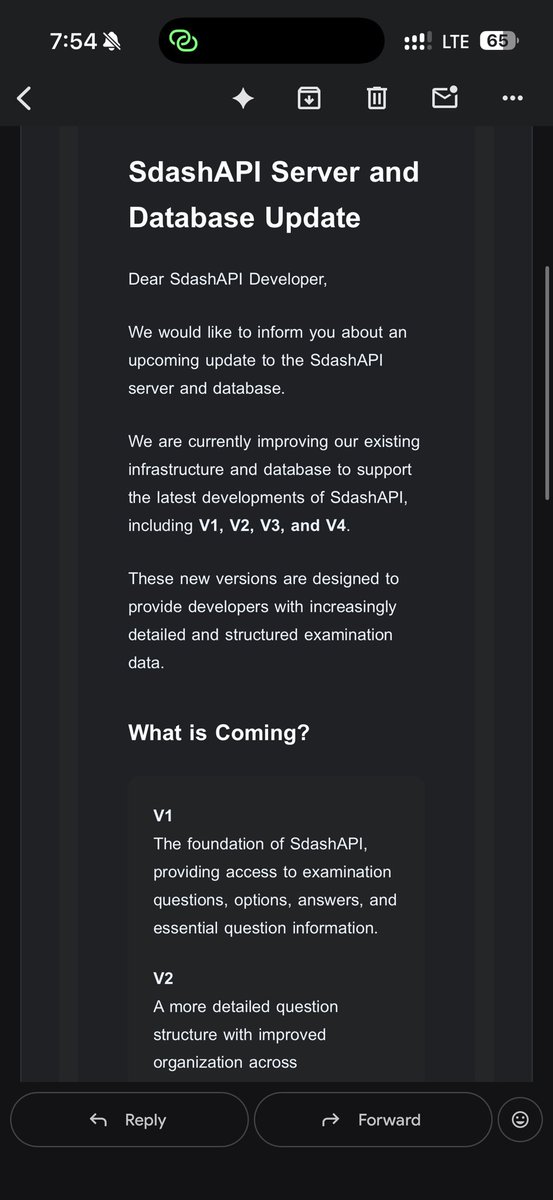
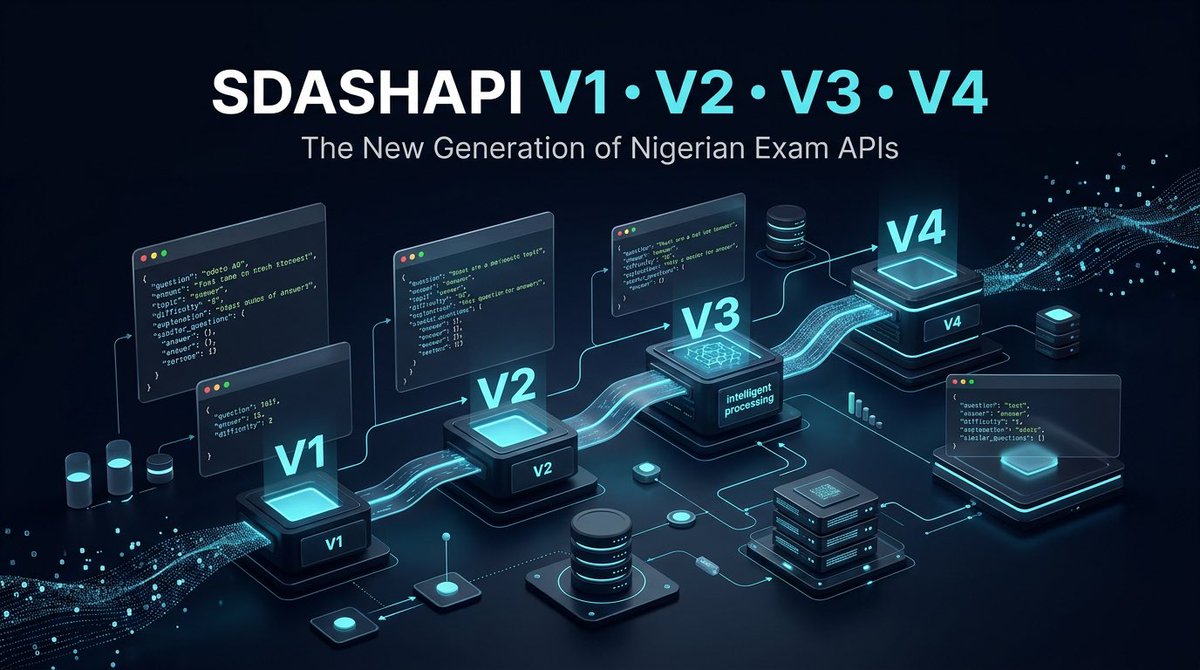
SdashAPI V1, V2, V3 & V4 are here!
Get more questions, detailed topics & subtopics, better explanations, and more question variations from across our database.
Practice smarter, discover new questions, and prepare better for your exams.
Try V1, V2, V3 & V4 today!
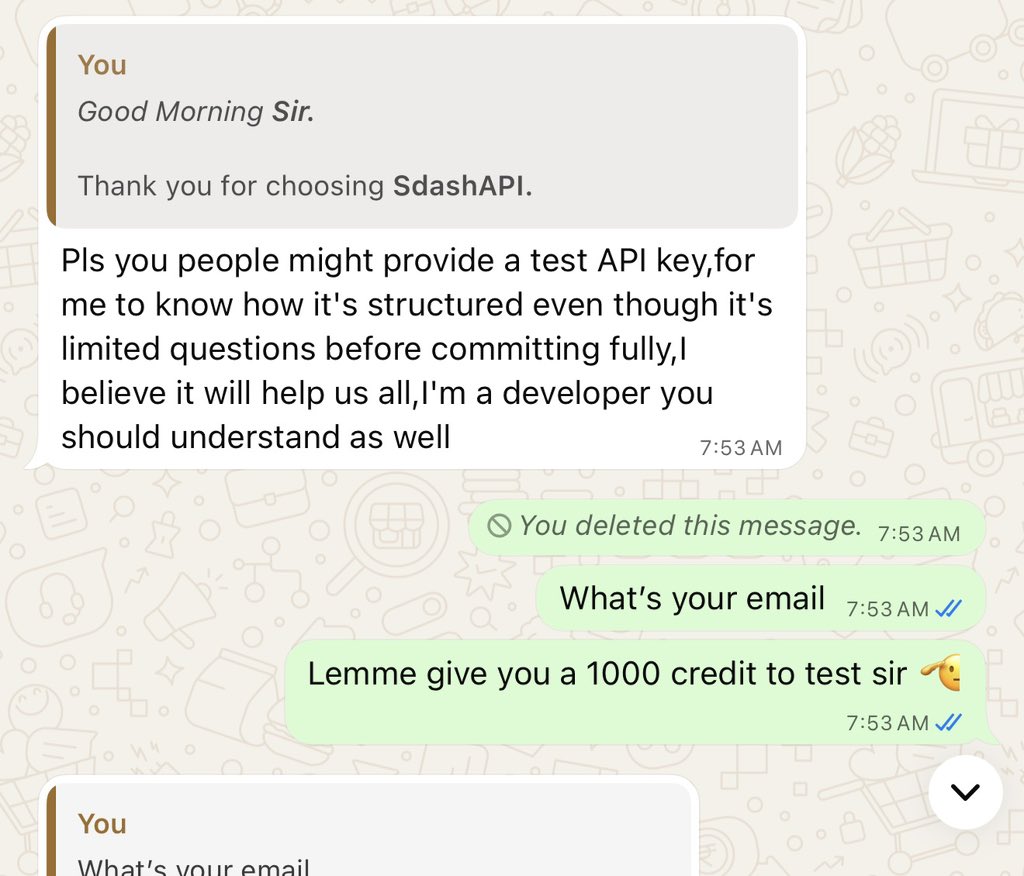
A developer asked us for a test API key to understand SdashAPI before committing.
Fair request.
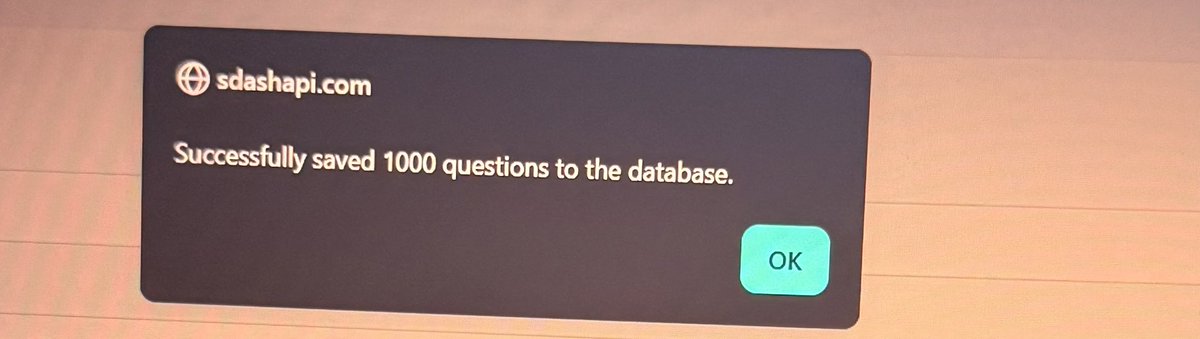
So we’re giving him 1,000 API credits to test SdashAPI and see how it works.
SdashAPI gives developers access to JAMB, WAEC, NECO, Post-UTME and more through one API.
@Sdashapi
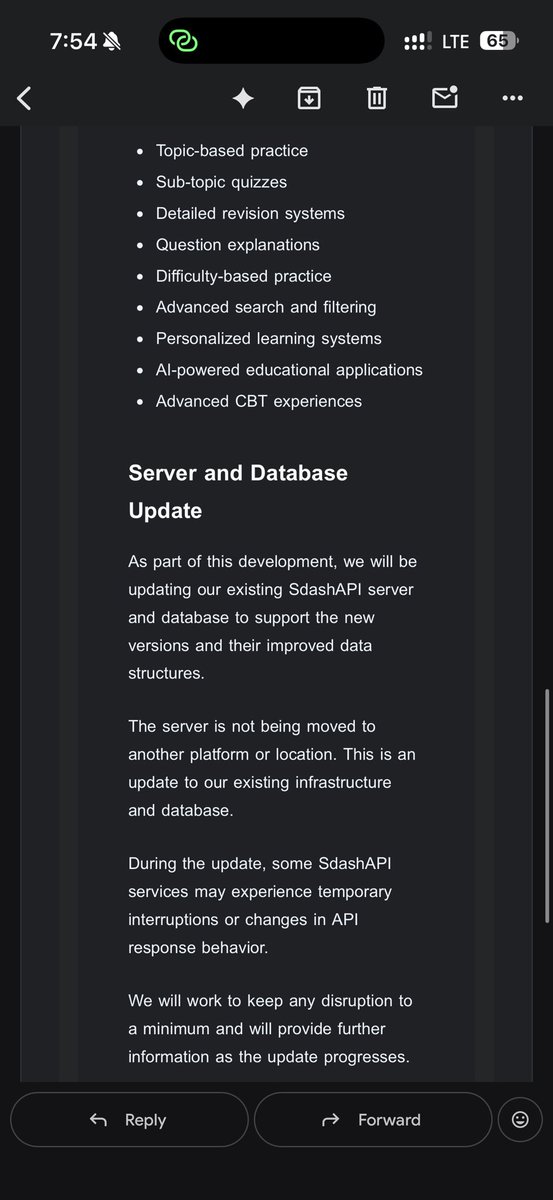
SdashAPI Update
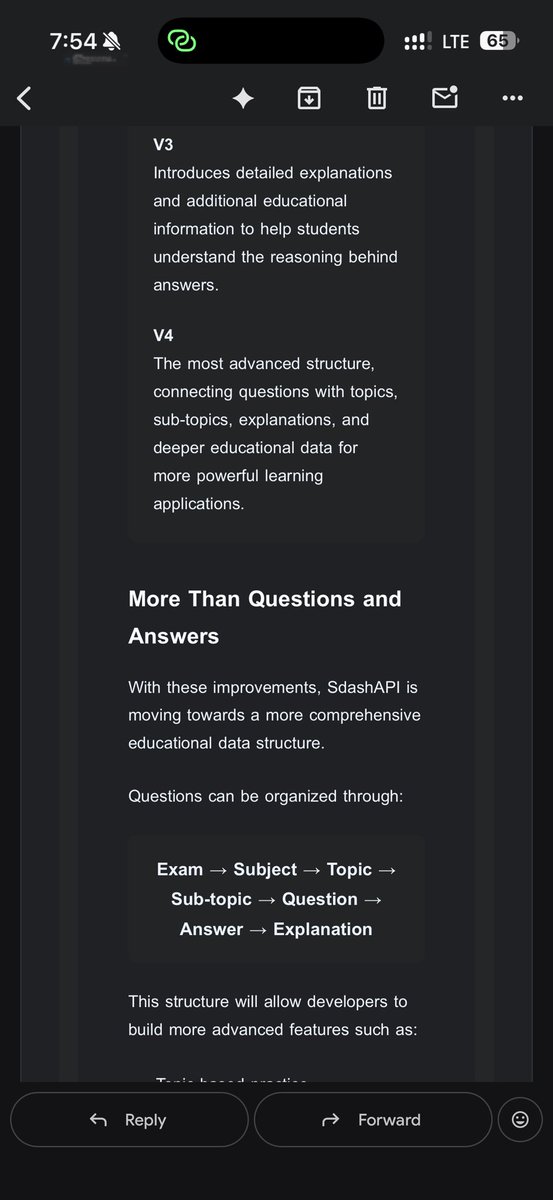
We’re upgrading our server & database infrastructure to power V1, V2, V3 & V4.
Better performance.
More structured exam data.
Stronger APIs.
We’re just getting started.
SdashAPI
@lightsilver323 Currently building with Sdashapi - APIs for JAMB, WAEC, NECO, Post-UTME and university CBT questions.
If you’re building an education app or CBT platform, you might want to check it out 👇
https://t.co/BcvlwSfCwx
Building a CBT or EdTech app?
Meet Sdashapi your developer-focused API for JAMB, WAEC, NECO, Post-UTME, CBT & past questions.
Build JAMB CBT apps, mock exams, quiz platforms, revision tools and AI-powered learning apps without building your question database from scratch.
When we are talking about the best, we are talking about Sdashapi.
Powerful CBT and examination APIs built for developers creating CBT apps, exam platforms and educational systems.
Simple. Reliable. Built for developers.
Build smarter with @Sdashapi.
I just searched “the best CBT API” on Google…
And guess who showed up #1?
SdashAPI.
No paid promotion. No “my guy said we’re the best.” 😂
Google just said it.
We’re building something developers can actually use.
@SdashAPI
I’ve noticed that a lot of developers use our SdashAPI between midnight and 3 AM. 😂
Is there any particular reason developers prefer working with APIs at that time?
@Sdashapi
A month ago, we launched Sdashapi and honestly, the journey so far has been exciting.
Sdashapi is built to provide reliable JAMB, WAEC, NECO, Post-UTME and University APIs, backed by a rich and continuously updated bank of detailed questions and solutions.
Today, we’ve grown to 55+ users, and we’re still building, improving and pushing forward.
Our API requests have maintained a 99.1% success rate, and one of our biggest focuses has been making our service faster and more reliable for developers.
But the last 2 days gave us a serious lesson.
Our parent company, where some of our data and files were hosted, experienced downtime. This affected Sdashapi for a few hours.
We immediately reached out to our users, explained what was happening, and thankfully, they understood and were patient with us.
But for us, it wasn’t just about getting back online.
It made us realize we need to prepare better.
So we’re working towards having backup systems and alternatives in place, so that when something goes wrong, our users don’t have to sit around waiting.
We’re still on the journey of building Africa’s best and most advanced SaaS past-questions API platform.
More questions.
More solutions.
More APIs.
More reliability.
More growth.
@Sdashapi the best among the rest.
Try Sdashapi today.
#Sdashapi
Quality is something we take seriously❤️
We dont just upload questions in bulk
Every question goes through a structured review process to verify the question answer, explanation, and formatting before its published We also continuously audit existing content fix inconsistencies and improve explanations based on new reviews and user feedback
Our workflow combines standardized review guidelines with internal quality checks so as the database grows the quality stays consistent instead of drifting
Its an ongoing process
and we are committed to improving the dataset every single day
Every single day since we launched SdashAPI in July, we’ve been improving.
Every subject is continuously updated with 1,000+ clearly solved, detailed questions and explanations, with even more content added regularly.
Whether you’re building a CBT app, an AI learning platform, a school portal, a quiz app, or any educational product, SdashAPI gives you reliable, structured, and developer-friendly educational data you can build on with confidence.
Our goal is simple: to make SdashAPI the go-to API for anyone building education technology in Africa.
We’re just getting started.
@Sdashapi