For 37 years, over 2,000 images taken by a Chinese state media photographer were hidden in a metal box, surviving brutal purges—until now.
These raw, powerful photos show the courage of the students, the scale of the protests, and the horror of what the Chinese Communist Party did.
Now, The @EpochTimes is making the photos public for the first time. [1/2]
Thousands of honest workers are losing their livelihoods every single month to a ruthless economic weapon. In an eye-opening analysis for The Atlantic, journalist Michael Schuman reveals how China’s export-driven manufacturing model under Xi Jinping has transformed into a destabilizing global force. Instead of fostering a thriving domestic middle class to buy global goods, Beijing is intentionally flooding international markets with artificially cheap electric vehicles, steel, and solar panels. This aggressive strategy, fueled by massive government subsidies, suppressed wages, and deliberate currency policies, is triggering a wave of "forced deindustrialization" across advanced economies. It is already costing Germany an estimated 10,000 manufacturing jobs every single month and threatening hundreds of thousands of garment workers in Indonesia.
The most tragic irony is that this brutal economic machine is built directly on the backs of suffering Chinese citizens. Xi Jinping's model ruthlessly prioritizes state-backed producers over ordinary consumers, forcing domestic households to effectively subsidize global shoppers while their own quality of life plummets. Domestically, China is trapped in a multi-year economic nightmare characterized by a collapsing property market, fierce job competition, underemployment, and persistent deflation spanning roughly ten quarters. Yet, instead of passing reforms to lift up his own citizens, Xi is doubling down on overinvesting in unprofitable factories to secure global dominance in tech, green energy, and robotics, all to give Beijing strategic leverage to suspend exports and force foreign nations into dependence.
As China’s manufactured goods trade surplus shatters records at a staggering $1.2 trillion, the rest of the world is frantically trying to erect economic defenses. The European Union has already retaliated with heavy anti-subsidy tariffs on Chinese electric vehicles, while leading economists warn of potentially "catastrophic" impacts on American automotive, semiconductor, and robotics industries if overcapacity is left unchecked. Despite these severe warnings, political responses remain dangerously volatile. During a May 2026 summit in Beijing, Donald Trump offered mixed signals by softening his previous tariff stance, calling Xi a "friend," and establishing a "board of trade". Ultimately, unless Beijing shifts away from absolute state control to boost domestic consumption, rampant nationalism and rising global protectionism risk weakening economies everywhere.
#GlobalEconomy #ChinaTrade #Manufacturing #EconomicWarfare #XiJinping #Deindustrialization #TheAtlantic
https://t.co/O0wtvM2uJV
🛩️ This is so cool: A Redditor living under SFO's takeoff path built a ceiling projection that maps every plane flying over their house in real time, using ADS-B, the open radio signal aircraft broadcast on 1090 MHz. Same feed as FlightRadar24, picked up with a cheap SDR dongle and beamed onto the ceiling.
People keep asking me what America is actually capable of, now that it has driven away every ally it has. The answer is not hypothetical. It is the Persian Gulf, right now.
Iran is a nation of 90 million people sitting on a mountain range that runs the entire length of its borders. Its military infrastructure is buried inside those mountains. Command centers, missile batteries, fuel depots, weapons production, all of it underground and dispersed across a country roughly the size of Western Europe. Operation Epic Fury struck approximately 6,000 targets.
Iran is still firing.
The Strait of Hormuz has been closed since late February. A quarter of the world’s daily oil supply has nowhere to go. The entrance is mined, patrolled and locked. And the most expensive military in human history is sitting outside it, unable to go in.
This is the moment to be honest about what America is missing.
Europe operates roughly 10,000 military aircraft. Not little propeller trainers. More than ten thousand combat-capable jets that would immediately transform the air campaign over the Gulf, free up American assets for the deep-penetration mountain missions that actually matter, and sustain an operational tempo no single nation can manage alone.
Britain fields two aircraft carriers and seven nuclear-armed hunter-killer submarines. France brings a nuclear carrier, fifteen frigates and its own nuclear submarine fleet. Belgium and the Netherlands operate the finest mine countermeasure vessels on earth, built specifically for strait-clearing operations of exactly this kind. Italy contributes two carriers and eight FREMM frigates. Poland has the largest land army in Europe. Norway has completed its conversion to the F-35 and fields fifty-two of them.
The map below shows some capabilities in Europe, but It represents only a fraction of what Europe actually has. It does not include Finland, Sweden, Spain, Romania, Greece or Portugal, each of which contributes substantial air power, naval tonnage and ground forces of their own. The full picture is considerably larger than what fits on one page.
And then there is Ukraine. Four years of industrial-scale warfare have produced the most battle-tested drone force in existence. Autonomous strike systems, mass swarm tactics and electronic warfare capabilities developed under live fire at a pace no peacetime military can replicate. An allied force with Ukrainian drone expertise integrated into it would look fundamentally different over the mountains of Iran than what America has there now.
European intelligence services have human networks inside Iran and across the Gulf that no satellite can replace. Germany and France maintained functioning diplomatic back-channels into Tehran until late 2025. That kind of quiet credibility is the difference between a negotiated shipping corridor and a permanent blockade. It cannot be improvised. It cannot be bombed into existence.
None of this is available, because Washington spent years treating its allies as freeloaders, adversaries and negotiating targets, and then went to war expecting the same loyalty it had spent years deliberately destroying.
The alliance built after 1945 was never charity. It was a force multiplier that no defense budget, however grotesque in size, can replace on its own. America is learning that now, at roughly a hundred million dollars per day in operational costs, with the strait still closed and the oil still not moving.
Trump was not acting in America’s interest. He was acting in the interest of a man who has never in his life had to live with the consequences of his own decisions. America is living with them now.
Stay connected,
Follow Gandalv @Microinteracti1
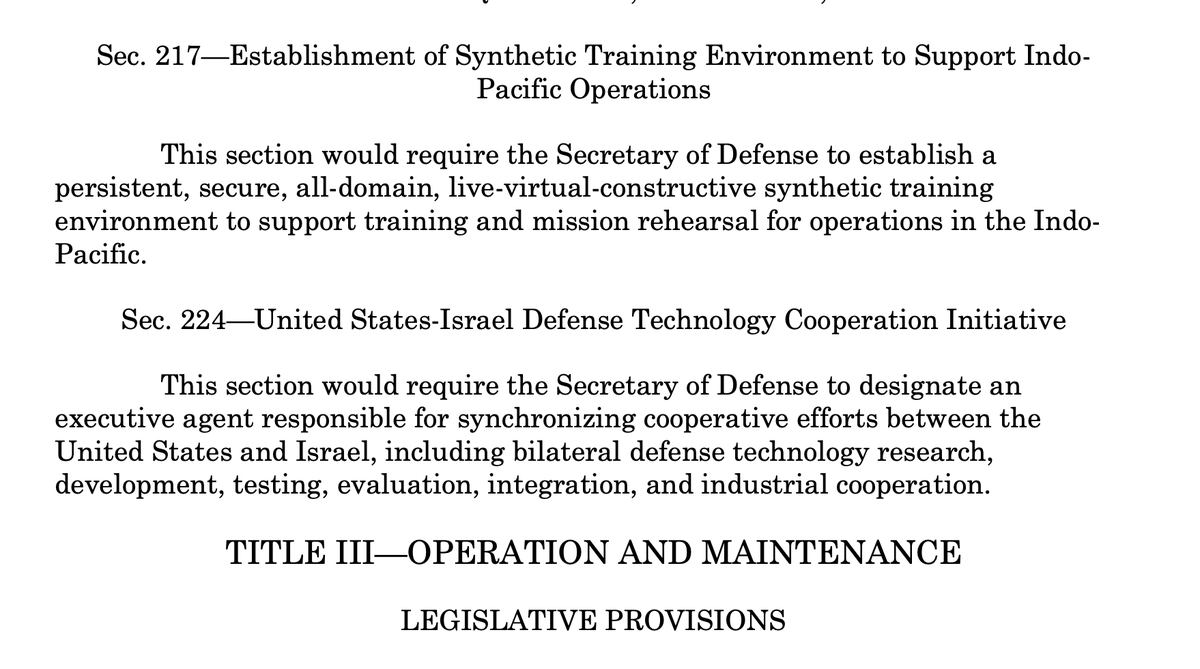
The misinformation around FY2027 NDAA Section 224 is actually impressive. The hate-filled accounts are banking on you never reading it yourself. No, Section 224 does NOT “fully merge the U.S. and Israeli militaries.” That’s ridiculous. It simply creates an office to better coordinate bilateral tech cooperation, expand joint R&D, and build on existing close ties for the benefit of the U.S. military. Anyone can Google the text. Few actually do. https://t.co/0tjzFz6XlS
@Supersonic_Red Very important case study in using older tech to defeat a technologically advanced platform
Employment of the lower tech AAA radar is key
Great explanation for the kids
I was reading an article this morning discussing stealth aircraft and China’s interpretation of the 1999 shootdown of an F-117 over Serbia. What fascinated me wasn’t the aircraft. It was the lesson.
The argument was that China viewed the event as a technological failure. The United States looked at the same event and saw a tactical failure. That distinction matters because much of our modern world is built on the idea that there is a technological solution to every problem. Buy the right software. Build the right machine. Create the right algorithm. Problem solved, right?
No, not exactly, it rarely works that way.
Technology is a tool. It is not wisdom.
One thing that jumped out at me in the article was the discussion of low frequency radar. Detecting an aircraft is not the same as successfully engaging it. Knowing something exists and being able to act on that information are two very different things. Detection is only one link in the chain.
Generation Jones has had a front row seat to this lesson. We grew up with paper maps, rotary phones, typewriters, and encyclopedias. We’ve watched calculators become computers, computers become smartphones, and smartphones become artificial intelligence. The technology changed. Human nature didn’t. One thing I have said many times, and I will continue to say, is:
“I expect humans to act human.”
The most successful people I have known were not necessarily the ones with the best tools. They were the ones who adapted when things went wrong. Pilots call it situational awareness. Some call it judgment. Business owners call it experience. Parents call it wisdom. Different names. Same thing.
Technology matters. It always has. But technology works best when paired with preparation, discipline, training, and the ability to think. A tool can help solve a problem. Character determines what you do when the tool breaks.
Perhaps that’s why this article resonated with me. It wasn’t really about stealth aircraft. It was about a lesson I’ve seen proven over and over throughout my lifetime. There is no silver bullet. Success usually comes from preparation, experience, resilience, and the ability to adapt when the plan inevitably falls apart.
The tool is important. The person using it is even more important.
https://t.co/mHNQFys8A3
Thirty-seven years ago tonight, the tanks began to roll into Beijing. What started as a peaceful cry for freedom ended in a brutal, state-sanctioned slaughter. The Chinese Communist Party has spent decades trying to erase the memory of Tiananmen Square, but they can never erase the truth.
To this day, "8964" remains the most heavily censored sequence of four numbers in China, scrubbed completely from their internet, yet forever burned into human history.
Watch the raw aftermath in this newly released archival footage, secretly filmed in the days immediately following the crackdown and made public for the first time in May 2026: https://t.co/aaiWaqjeHW
Honor their courage. Tomorrow, the world remembers. Never forget 8964.
#TiananmenSquare #NeverForget #Freedom #History #Censorship
Vantor collected new imagery showing the aftermath of the Ukrainian drone attacks on an oil terminal in St. Petersburg, Russia as well as the damaged Steregushchy-class corvette Boikiy in a naval dry dock at Kronstadt, Russia.
In Kronstadt, you can see fire crews working to control the fires onboard the ship with high-pressure water cannons.
📸@vantortech
The USMC’s AV-8B Harrier Has Flown Off Into The Sunset
The Harrier Sundown ceremony marks the end of more than 50 years of Marine Corps jump-jet operations.
https://t.co/r0Vsl43UAR
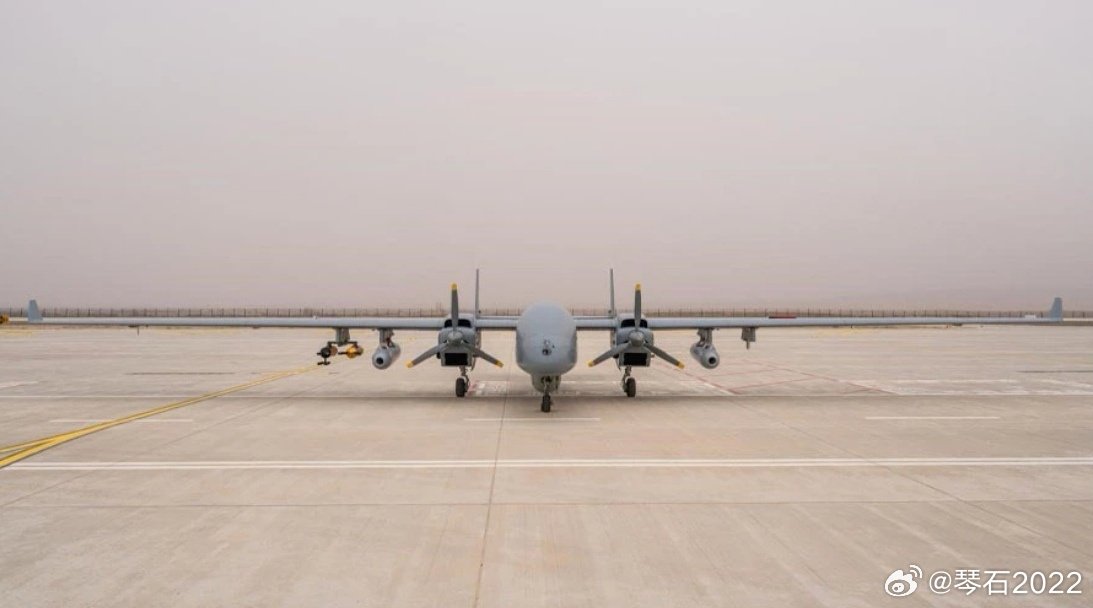
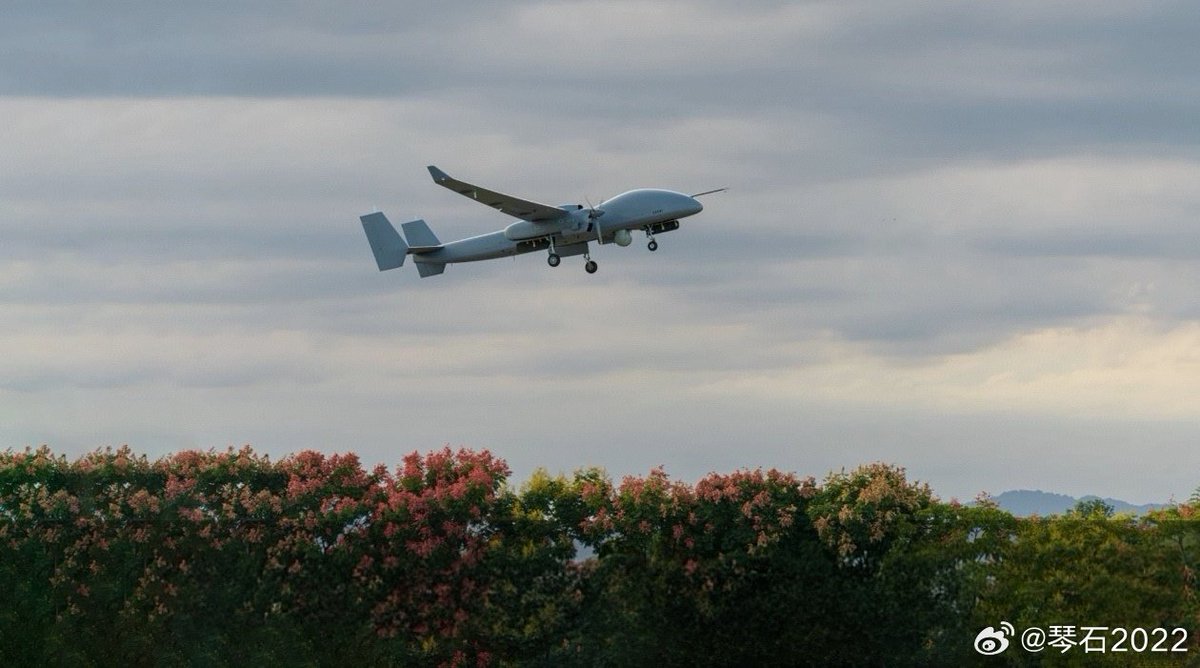
PS ... seems to be originally the Yunlong 3, a 2t-class MALE UAV. For the dimension it is 9.6 m long, has a span of 19.6 m and a height of 2.69 m. MTOW is 2200 kg, max. range is 7500 km, endurance is 40 hours and service ceiling is 10,000 m.
Apparently yet another larger twin-engined UAV - if I'm not mistaken from Chengdu (Chengdu Zongheng Automation Technology Co., Ltd.) made its maiden flight ...
(Via @琴石2022)
According to some new images from the PLANS-18 "Fujian", it seems as if the KJ-600 serial number 11 now has also gained the CEC dish antenna underneath the fuselage (first image), which was previously missing (second image):
We appear to have a new type of Chinese nuclear powered submarine on out hands. The most remarkable aspect about it is its construction at Jiangnan in Shanghai, in a dedicated new facility.
A few additional remarks in a quick thread.
https://t.co/aNAxlHb79r
" A Tour of China’s First Domestically Built Aircraft Carrier, the 'Shandong'[title] ...
The J-15T fighter (where "T" stands for "catapult-capable"). It is equipped with an Active Electronically Scanned Array (AESA) radar: the pitot tube is absent from the nose, the aperture of the Infrared Search and Track (IRST) system has been enlarged and fitted with a movable cover, and the radome features a sloped profile—a design choice necessitated by the tilted mounting of the AESA array. It is believed that this tilted mounting configuration reduces the aircraft's Radar Cross-Section (RCS) in the forward hemisphere: incoming radar signals from an adversary are reflected not back toward the source, but to the side, thereby attenuating the reflected signal. The actual effectiveness of this approach depends on the tilt angle, frequency, and antenna design. A similar solution has been implemented on the American F-22 and F-35, as well as the Chinese J-20 and J-35 fighters. One can also observe a reinforced nose landing gear strut featuring a tow bar for catapult launches; furthermore, the doors for the nose gear bay—unlike the single large door found on the Su-33—are configured as a pair of smaller panels. A key distinguishing feature of the J-15T is its capability to launch using either a catapult or a ski-jump ramp, making it a unified platform suitable for operations from all three of China's aircraft carriers. Regarding aircraft distribution across the carriers: J-15T variants are gradually appearing on both the *Liaoning* and *Shandong* as part of ongoing standardization and testing efforts. However, as of 2024–2026, the core of the air wings on both vessels still consists of production-model J-15s of the basic modification (J-15A)—a fact evident from publicly available satellite imagery and publications by the Japanese Ministry of Defense.
On the J-15T, the Head-Up Display (HUD) features a larger display area and a thinner bezel, thereby obstructing the pilot's field of view to a lesser extent." VO-Rus, 26 May
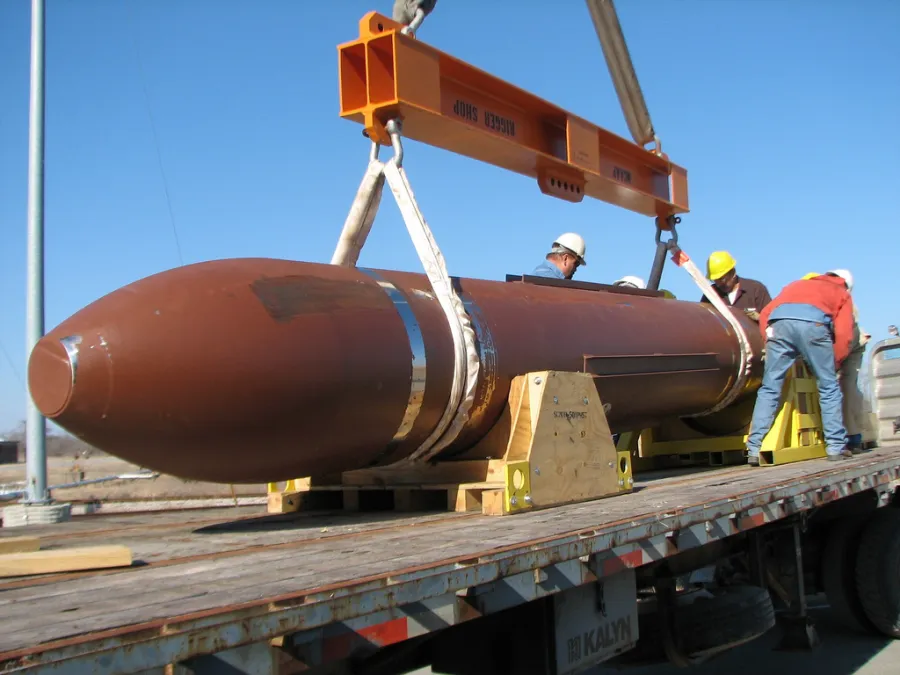
NEW: The U.S. Air Force has formally designated its GBU-57A/B Massive Ordnance Penetrator as the GBU-76/B.
The Next Generation Penetrator is set to be a 20,000-30,000 pound bunker buster, and the Air Force is now looking for contractors to deliver full cycle development work.
MORE: The Iranian regime’s decision to suspend negotiations and emphasize the Lebanon issue is almost certainly a response to US President Donald Trump’s recent amendments to the draft US-Iran memorandum of understanding (MoU).
The Iranian regime has likely focused on the Lebanon issue, as opposed to another key sticking point in negotiations, to try to curb Israeli operations against Hezbollah in Lebanon as part of the regime’s broader objective to preserve Hezbollah.
The regime also likely seeks to drive a wedge between the United States and Israel by falsely blaming Israel and its operations in Lebanon for the collapse of the US-Iran talks. The US-Iran negotiations have been at an impasse due to disagreements over other key sticking points for weeks, however.
Vahidi and his inner circle also likely calculate that the status quo will help them advance several other objectives, such as solidifying Iranian control over the Strait of Hormuz and maintaining the Iranian nuclear program.


![JanJekielek's tweet photo. For 37 years, over 2,000 images taken by a Chinese state media photographer were hidden in a metal box, surviving brutal purges—until now.
These raw, powerful photos show the courage of the students, the scale of the protests, and the horror of what the Chinese Communist Party did.
Now, The @EpochTimes is making the photos public for the first time. [1/2]](https://pbs.twimg.com/media/HJ91wfIX0AA7ZsO.jpg)
![JanJekielek's tweet photo. For 37 years, over 2,000 images taken by a Chinese state media photographer were hidden in a metal box, surviving brutal purges—until now.
These raw, powerful photos show the courage of the students, the scale of the protests, and the horror of what the Chinese Communist Party did.
Now, The @EpochTimes is making the photos public for the first time. [1/2]](https://pbs.twimg.com/media/HJ91RzVWkAAypoW.jpg)


![lylegoldstein's tweet photo. " A Tour of China’s First Domestically Built Aircraft Carrier, the 'Shandong'[title] ...
The J-15T fighter (where "T" stands for "catapult-capable"). It is equipped with an Active Electronically Scanned Array (AESA) radar: the pitot tube is absent from the nose, the aperture of the Infrared Search and Track (IRST) system has been enlarged and fitted with a movable cover, and the radome features a sloped profile—a design choice necessitated by the tilted mounting of the AESA array. It is believed that this tilted mounting configuration reduces the aircraft's Radar Cross-Section (RCS) in the forward hemisphere: incoming radar signals from an adversary are reflected not back toward the source, but to the side, thereby attenuating the reflected signal. The actual effectiveness of this approach depends on the tilt angle, frequency, and antenna design. A similar solution has been implemented on the American F-22 and F-35, as well as the Chinese J-20 and J-35 fighters. One can also observe a reinforced nose landing gear strut featuring a tow bar for catapult launches; furthermore, the doors for the nose gear bay—unlike the single large door found on the Su-33—are configured as a pair of smaller panels. A key distinguishing feature of the J-15T is its capability to launch using either a catapult or a ski-jump ramp, making it a unified platform suitable for operations from all three of China's aircraft carriers. Regarding aircraft distribution across the carriers: J-15T variants are gradually appearing on both the *Liaoning* and *Shandong* as part of ongoing standardization and testing efforts. However, as of 2024–2026, the core of the air wings on both vessels still consists of production-model J-15s of the basic modification (J-15A)—a fact evident from publicly available satellite imagery and publications by the Japanese Ministry of Defense.
On the J-15T, the Head-Up Display (HUD) features a larger display area and a thinner bezel, thereby obstructing the pilot's field of view to a lesser extent." VO-Rus, 26 May](https://pbs.twimg.com/media/HJxHjQQWcAAcfP6.jpg)
![lylegoldstein's tweet photo. " A Tour of China’s First Domestically Built Aircraft Carrier, the 'Shandong'[title] ...
The J-15T fighter (where "T" stands for "catapult-capable"). It is equipped with an Active Electronically Scanned Array (AESA) radar: the pitot tube is absent from the nose, the aperture of the Infrared Search and Track (IRST) system has been enlarged and fitted with a movable cover, and the radome features a sloped profile—a design choice necessitated by the tilted mounting of the AESA array. It is believed that this tilted mounting configuration reduces the aircraft's Radar Cross-Section (RCS) in the forward hemisphere: incoming radar signals from an adversary are reflected not back toward the source, but to the side, thereby attenuating the reflected signal. The actual effectiveness of this approach depends on the tilt angle, frequency, and antenna design. A similar solution has been implemented on the American F-22 and F-35, as well as the Chinese J-20 and J-35 fighters. One can also observe a reinforced nose landing gear strut featuring a tow bar for catapult launches; furthermore, the doors for the nose gear bay—unlike the single large door found on the Su-33—are configured as a pair of smaller panels. A key distinguishing feature of the J-15T is its capability to launch using either a catapult or a ski-jump ramp, making it a unified platform suitable for operations from all three of China's aircraft carriers. Regarding aircraft distribution across the carriers: J-15T variants are gradually appearing on both the *Liaoning* and *Shandong* as part of ongoing standardization and testing efforts. However, as of 2024–2026, the core of the air wings on both vessels still consists of production-model J-15s of the basic modification (J-15A)—a fact evident from publicly available satellite imagery and publications by the Japanese Ministry of Defense.
On the J-15T, the Head-Up Display (HUD) features a larger display area and a thinner bezel, thereby obstructing the pilot's field of view to a lesser extent." VO-Rus, 26 May](https://pbs.twimg.com/media/HJxHjQNXQAAZ28F.jpg)
![lylegoldstein's tweet photo. " A Tour of China’s First Domestically Built Aircraft Carrier, the 'Shandong'[title] ...
The J-15T fighter (where "T" stands for "catapult-capable"). It is equipped with an Active Electronically Scanned Array (AESA) radar: the pitot tube is absent from the nose, the aperture of the Infrared Search and Track (IRST) system has been enlarged and fitted with a movable cover, and the radome features a sloped profile—a design choice necessitated by the tilted mounting of the AESA array. It is believed that this tilted mounting configuration reduces the aircraft's Radar Cross-Section (RCS) in the forward hemisphere: incoming radar signals from an adversary are reflected not back toward the source, but to the side, thereby attenuating the reflected signal. The actual effectiveness of this approach depends on the tilt angle, frequency, and antenna design. A similar solution has been implemented on the American F-22 and F-35, as well as the Chinese J-20 and J-35 fighters. One can also observe a reinforced nose landing gear strut featuring a tow bar for catapult launches; furthermore, the doors for the nose gear bay—unlike the single large door found on the Su-33—are configured as a pair of smaller panels. A key distinguishing feature of the J-15T is its capability to launch using either a catapult or a ski-jump ramp, making it a unified platform suitable for operations from all three of China's aircraft carriers. Regarding aircraft distribution across the carriers: J-15T variants are gradually appearing on both the *Liaoning* and *Shandong* as part of ongoing standardization and testing efforts. However, as of 2024–2026, the core of the air wings on both vessels still consists of production-model J-15s of the basic modification (J-15A)—a fact evident from publicly available satellite imagery and publications by the Japanese Ministry of Defense.
On the J-15T, the Head-Up Display (HUD) features a larger display area and a thinner bezel, thereby obstructing the pilot's field of view to a lesser extent." VO-Rus, 26 May](https://pbs.twimg.com/media/HJxHjQFXAAAGSD4.jpg)


![JanJekielek's tweet photo. For 37 years, over 2,000 images taken by a Chinese state media photographer were hidden in a metal box, surviving brutal purges—until now.
These raw, powerful photos show the courage of the students, the scale of the protests, and the horror of what the Chinese Communist Party did.
Now, The @EpochTimes is making the photos public for the first time. [1/2]](https://pbs.twimg.com/media/HJ93AneWwAA6d7L.jpg)





![lylegoldstein's tweet photo. " A Tour of China’s First Domestically Built Aircraft Carrier, the 'Shandong'[title] ...
The J-15T fighter (where "T" stands for "catapult-capable"). It is equipped with an Active Electronically Scanned Array (AESA) radar: the pitot tube is absent from the nose, the aperture of the Infrared Search and Track (IRST) system has been enlarged and fitted with a movable cover, and the radome features a sloped profile—a design choice necessitated by the tilted mounting of the AESA array. It is believed that this tilted mounting configuration reduces the aircraft's Radar Cross-Section (RCS) in the forward hemisphere: incoming radar signals from an adversary are reflected not back toward the source, but to the side, thereby attenuating the reflected signal. The actual effectiveness of this approach depends on the tilt angle, frequency, and antenna design. A similar solution has been implemented on the American F-22 and F-35, as well as the Chinese J-20 and J-35 fighters. One can also observe a reinforced nose landing gear strut featuring a tow bar for catapult launches; furthermore, the doors for the nose gear bay—unlike the single large door found on the Su-33—are configured as a pair of smaller panels. A key distinguishing feature of the J-15T is its capability to launch using either a catapult or a ski-jump ramp, making it a unified platform suitable for operations from all three of China's aircraft carriers. Regarding aircraft distribution across the carriers: J-15T variants are gradually appearing on both the *Liaoning* and *Shandong* as part of ongoing standardization and testing efforts. However, as of 2024–2026, the core of the air wings on both vessels still consists of production-model J-15s of the basic modification (J-15A)—a fact evident from publicly available satellite imagery and publications by the Japanese Ministry of Defense.
On the J-15T, the Head-Up Display (HUD) features a larger display area and a thinner bezel, thereby obstructing the pilot's field of view to a lesser extent." VO-Rus, 26 May](https://pbs.twimg.com/media/HJxHjQWXMAAfSWW.jpg)