One percent of all active duty Navy members are Navy SEALs.
Tom Rinaldi shares the story of Steve Clagett Jr. and his journey becoming a SEAL, and how his path eventually led him to the Baltimore @Ravens organization. 🇺🇸
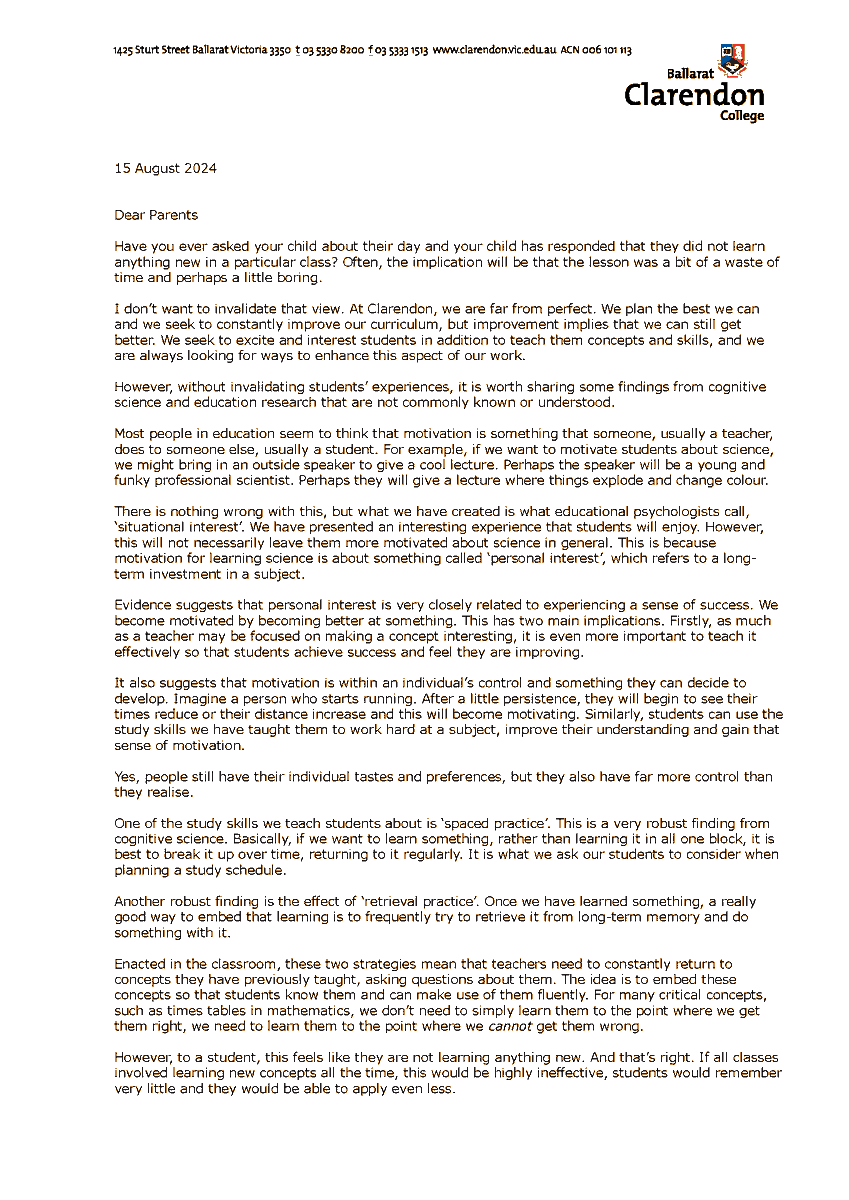
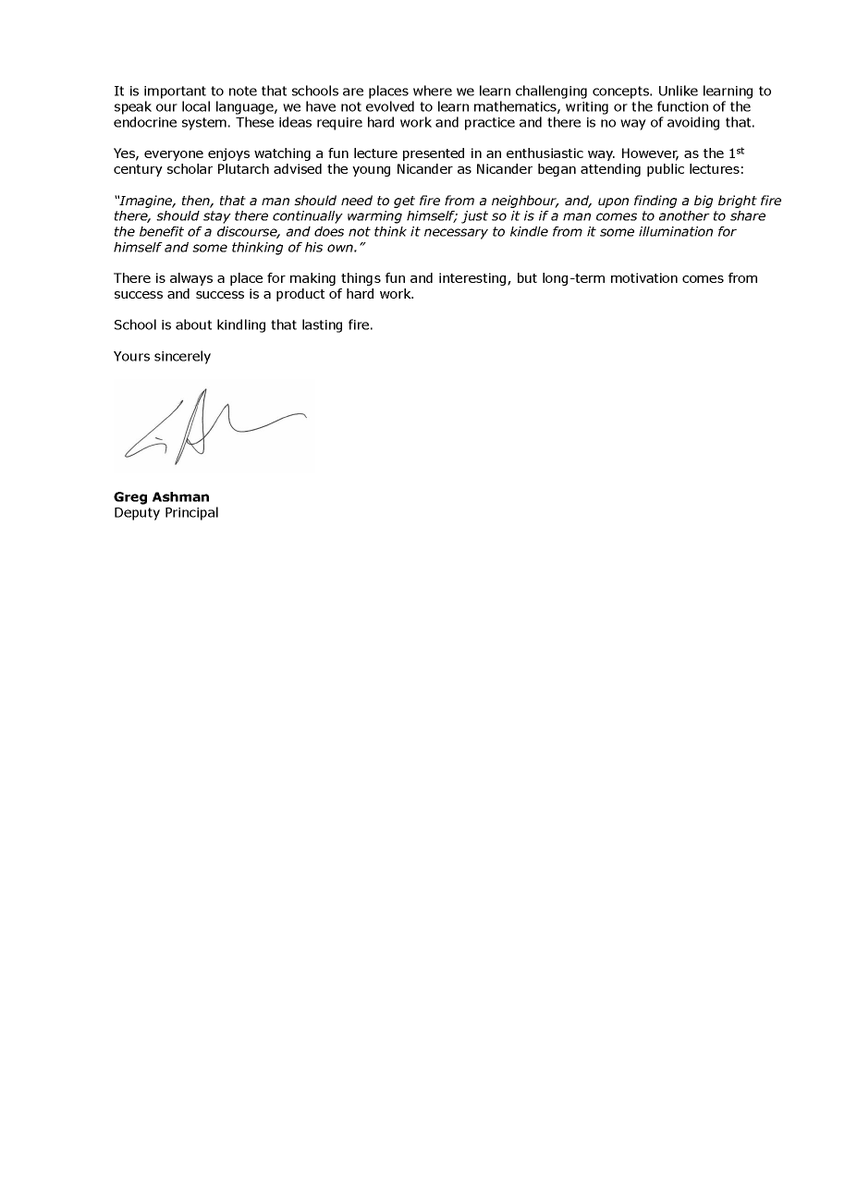
Really important new study: what learning strategies do successful students use? Key points:
▶️ Techniques backed by cognitive research, like elaborative study and retrieval practice, are positively correlated with student achievement.
▶️ Despite the effectiveness of techniques like retrieval practice, they are among the least used. Rote learning remains common, possibly due to its effectiveness for short-term success in examinations.
▶️ Higher use of effective study strategies correlates with positive beliefs, such as self-efficacy and growth mindset.
@MatRyanELATeach I do agree with you on this.
If you want to cause a little chaos, start to change the pie slice sizes by what you consider more or less important. Things will get real fun!
🏗️ Scaffolding Think, Pair, Share can help facilitate deep discussions and drive thinking from ALL students. This handy resource is designed to help students master the WHAT, WHY, and HOW of the process.
👊 Support my work by tapping REPOST and grab a FREE high-quality copy here: https://t.co/Xj2XpPGvnu
There is an important difference between a learning *style* and a learning *preference.*
Learning style: a mode of learning (e.g. visual, audial, kinaesthetic, writing notes) that is actually the best way for you to learn, and worse for someone else who doesn't have that learning style.
Learning preference: how you *like* to learn things, regardless of if it's the best way for you to learn. E.g. you might *like* to write notes or to have things presented visually/kinaesthetically as opposed to any pther way, but that might not be the best way for you to actually learn.
Learning styles do not exist. They are not backed by evidence. Broadly, everyone learns in the same way. All information is best presented in one way or another, but that would be the best way for 95%+ of the population.
Learning preferences do exist, but they aren't necessarily a good reason to make decisions. People can, and often are, mistaken about how they think they learn best.
"Independence is our goal but the only way to get there is, well, dependence."
John Holmes of @TGResearchSch explores supporting independent learning beyond classrooms.
Read more: https://t.co/Q0ZJkw08C3
It’s interesting how much people suddenly care about cheating in school. Research from @StanfordEd shows that the level of cheating in US high schools hasn't changed with the intro of generative AI tools.
Moral of story: cheating is a cultural issue not a technological one.
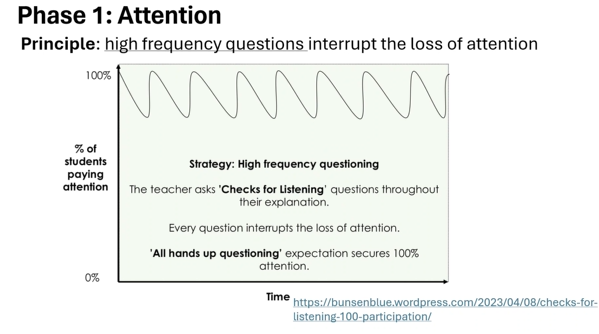
🧠 Rachael Cattrall, our cognitive science specialist, introduces a new resource to help teachers to avoid extraneous load.
Read more: https://t.co/Cff7msAuhj
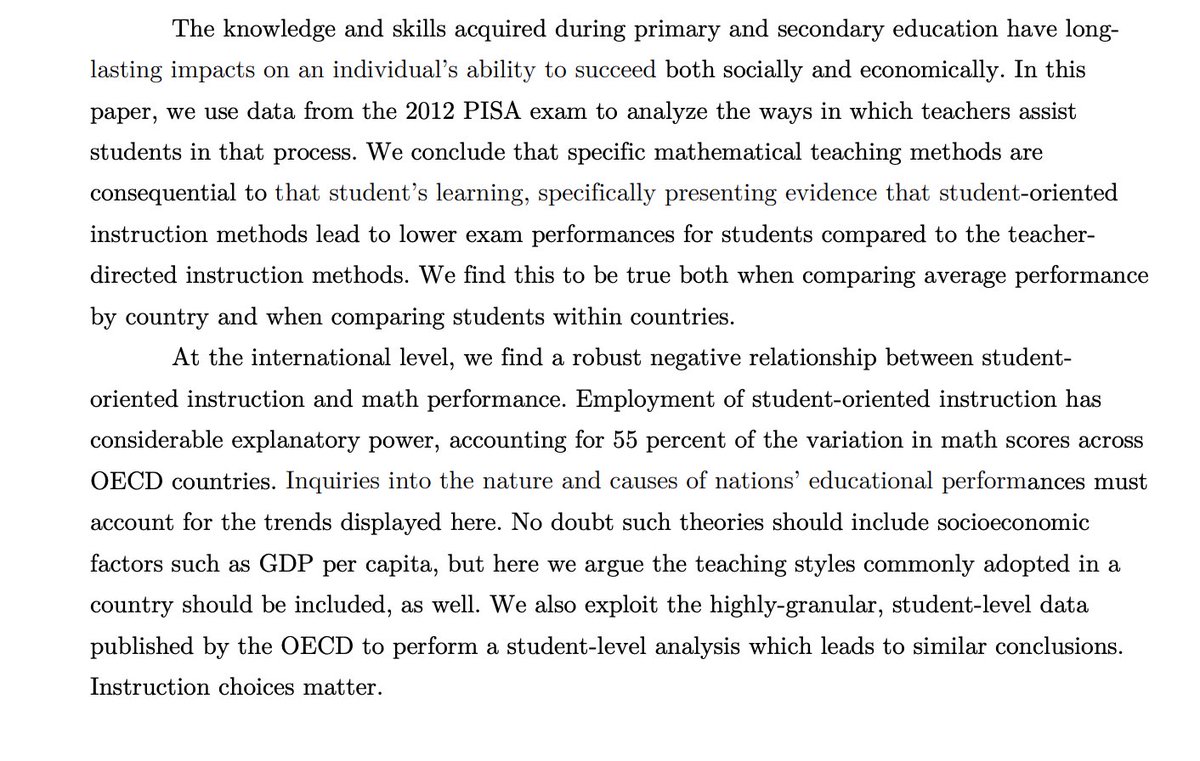
New study: "Student-oriented instruction methods lead to lower exam performances for students compared to the teacher directed instruction methods."
This is particularly damning: "These results contradict the teaching recommendations provided by the OECD and suggest that increased utilization of teacher-directed instructional methods could potentially improve U.S. math performance."
Really interesting research from @biggsag
Incredible: "The advantage of teacher-directed instruction over student-organized instruction exists across the entire spectrum of question difficulty."
This episode is brilliant with @isaacmoore7 and @PearceMrs explaining desirable difficulties so clearly! @teacherhead and @Emma_Turner75 always do a great job hosting and the analogies are 👌 https://t.co/wUfdPSoYfC
A masterclass in how to read educational research.
Nuanced, how to examine claims...
https://t.co/enFWloKXER
And I'd encourage you to read 'The Goldilocks Map' by @AndrewWatsonTTB ... the author of this blog.
It's brilliant.