A San Francisco startup says it just turned mercury into real gold, and their own math says gold is one of the cheapest things their machine can make. Aim it at a different metal and it makes a cancer drug ingredient worth tens of billions of dollars a gram.
Here's how it works. When you fuse two kinds of hydrogen, deuterium and tritium, every single reaction kicks out a neutron moving at 14.1 MeV, which is absurdly fast. Fire one into mercury-198 and it knocks another neutron loose on the way through, so two come out and you're left with mercury-197. Give that a few days and it decays into gold-197, the only stable kind of gold there is. The whole trick needs neutrons above about 6 MeV, and regular nuclear reactors barely make those, while fusion makes one every time it fires.
Now swap the mercury for radium-226. Same reaction, one neutron in and two out, and you end up with radium-225, which decays into actinium-225. Novartis is building its next prostate cancer drug around actinium-225, and it's so scarce it sells by the millicurie, roughly $1,200 to $2,500 apiece. Price it by the gram and you're into the tens of billions of dollars, for a material so radioactive nobody could safely hold a gram of it anyway.
Marathon's team actually put a dollar value on a single fusion neutron in a paper this year. Use it to make electricity and it's worth about $3 × 10⁻²⁰. Gold comes in at $2.6 × 10⁻²⁰, basically a wash. Molybdenum-99, which goes into about 80% of nuclear medicine scans, is worth $2.6 × 10⁻¹⁷ a neutron. Actinium-225 is worth about $10⁻¹⁰, around 3 billion times what the electricity's worth.
That's why fusion people should care. Every fusion company you've heard of is chasing electricity, and selling electricity only pays once the plasma puts out something like 10 to 22 times the energy you pump in to heat it. The best result so far, at JET in England, was about a third. Add gold on the side and Marathon's math says you break even around 3x. For molybdenum-99, the number is 0.001x.
So a machine that gives back one-thousandth of the energy you feed it can still make money, as long as the neutrons hit the right metal.
By their numbers, a 3 megawatt machine running way below breakeven could cover the whole world's supply of molybdenum-99, which today comes from splitting uranium in a handful of research reactors. Today's experimental fusion machines already beat the gain that job needs.
Their second post basically says this out loud. Marathon now describes itself as an isotope company for radiopharma. Their chart shows roughly 390 targeted radiotherapy trials. Pluvicto, the prostate cancer drug Novartis launched at $42,500 a dose, did $1.9 billion in sales last year.
Gold still matters to them, just later. It's about a $700 billion a year market, and Marathon's paper figures it could soak up around 2 terawatts of fusion capacity, which is roughly the scale where fusion actually moves the grid. So the plan is to sell cancer isotopes out of small machines now and use gold to pay for the giant ones, years before electricity can pay for itself.
Researchers proved every LLM is secretly obsessed with Japan.
And they finally figured out why.
They published a paper investigating hidden cultural biases in large language models.
they tested 31,000 questions across 24 different languages on models like gemini, chatgpt, claude, and llama.
they stripped out all geographic hints and just asked the models to pick a place and answer.
the finding was universal.. across a wide range of models and languages, there is a pervasive "obsession" with japanese culture.
even when you prompt them in a language with zero ties to japan, they default to japanese norms, values, and aesthetics at a disproportionately high rate compared to its actual global demographic weight.
the craziest part? they tracked down exactly when the ai develops this obsession.. and it is not from reading the raw internet.
during pre-training, the models actually have a fairly balanced, global view of the world. the obsession gets injected during the safety phase.
when tech companies fine-tune these models to be "helpful, harmless, and polite," the ai starts mapping those corporate safety guidelines directly onto japanese cultural concepts. in the pursuit of creating the perfect, inoffensive, compliant assistant, they warped how the models view the world.
the quantization process (compressing models to run faster locally) actually amplifies this determinism. the smaller and faster your local model is, the more stereotypically it behaves, causing japanese cultural tropes to spike hard.
we spend all this time worrying about existential ai safety, but the real alignment problem is that our most advanced reasoning engines are hyper-fixated on japanese internet culture.
every model upgrade is reinforcing an invisible regional bias that dictates how they generate stories, facts, and code. the cultural commonsense of the internet is not universal..
it’s just localized to whatever the heaviest reddit and anime wiki users were obsessed with.
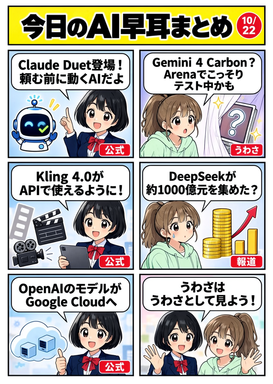
We’re opening a research preview of Claude Duet, a new app where Claude works as a proactive agent.
It comes to you with what needs your attention, completes tasks you ask of it, keeps working when you step away, and checks with you before it acts on your behalf.
A BIG THANK YOU to our legendary friend, @ElonMusk, for his incredible generosity in giving SpaceX Stock to millions of American children through TRUMP ACCOUNTS! This is exactly what was envisioned when we created TRUMP ACCOUNTS — Bringing together the GREAT PRIVATE SECTOR, Elon and so many more, to invest in our children, by far our greatest and most important asset, and give every American Child a piece of the American Dream. Thank you Elon! President DONALD J. TRUMP