Mexico sits next door to the US and gets most of the attention when people talk about China nearshoring.
Yet Brazil has drawn 2.7x more Chinese direct investment: $67 billion vs $24.8 billion.
Where the money went:
https://t.co/cN1NzGyICe
Brazil has a data center that pays an aluminum smelter's price for power, and that one number shows where heavy industry is headed next.
An aluminum smelter can only compete if it locks in power at about US$40 per megawatt-hour for 10 to 20 years.
In 2024, analysts estimated Microsoft would pay about US$110 to US$115 per megawatt-hour for 20 years of nuclear power to match the power its data centers use.
That is almost three times what a smelter can afford, so wherever the two fight over the same power, the smelter loses.
On March 15th, 2026, the Mozal smelter in Mozambique shut down after six years of failed talks over the price of its power.
It needed about 950 megawatts, day and night.
Brazil has the opposite problem.
In the first eight months of 2026, Brazil's Northeast switched off an average of 3,403 megawatts of wind and solar power its grid could not take.
That is more than twice what Mozal and the first phase of the giant data center being built for TikTok's owner in Brazil would use together.
At Pecém, in Ceará, that data center's developer locked in 20 years of wind power for about US$2 billion.
Spread over the full contract, that works out to roughly US$38 per megawatt-hour, under a smelter's ceiling.
Aluminum, green iron and fertilizer all need huge amounts of cheap power, and all of them ship anywhere in the world.
The plants that make them go where power stays cheap for twenty years, and Brazil throws that power away today.
The cheapest industrial address on the next map is the clean power Brazil switches off.
I broke down who pays what for power, how Brazil lost its smelters once before and how the deal gets built in the article below.
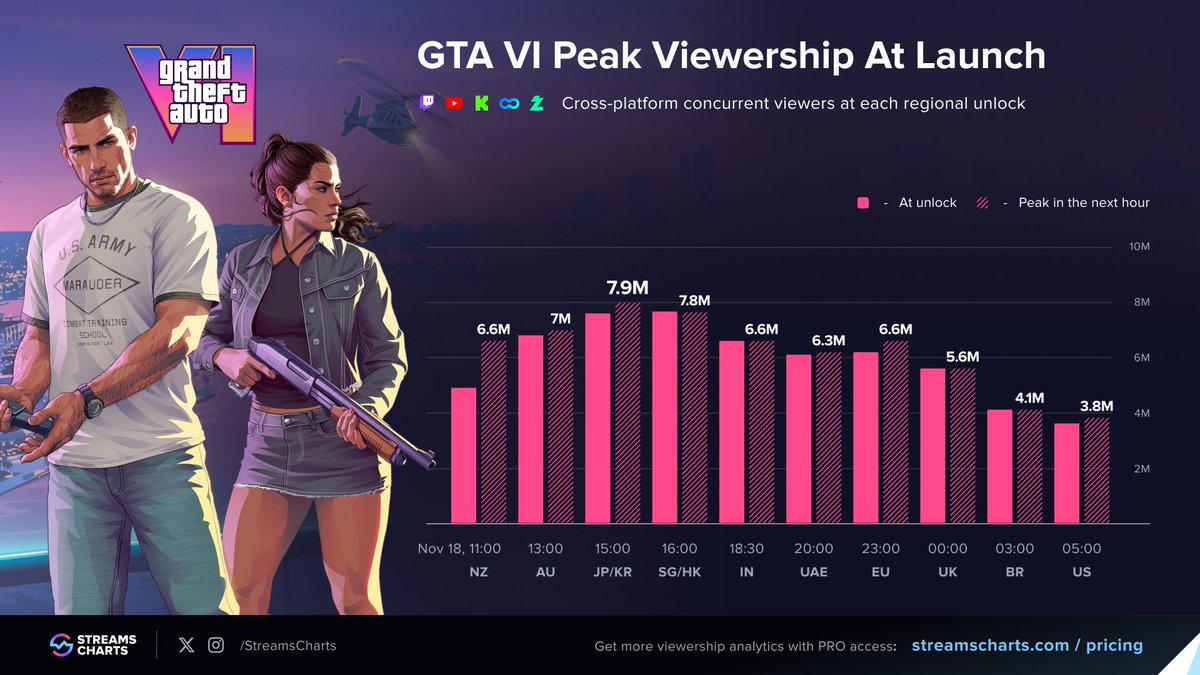
🚨 GTA 6's worldwide rollout is COMPLETE! 🌍
Worldwide peaks after the final regional unlocks:
🇬🇧 UK: 5.6M
🇧🇷 Brazil: 4.1M
🇺🇸 US: 3.8M
🏆 Global peak: 7.9 MILLION!
What a historic launch! 🔥
Check our Live Hub for more stats 👇
https://t.co/eN1dBC4aPR
@sf2invest Dólar só subiu mesmo em 2020. De lá pra cá, é estabilidade com oscilação. Essa subida de agora é o mercado lambendo as feridas da derrota do Flavinho