Budget Policies (summary) 1) G on health, education & infrastructure 2) Increase in min. wage but cut in benefits 3) Tax cuts for hospitality, retail and leisure 4) Commitment to corp tax, NI rise & income tax bracket freeze 5) Duty freezes 6) Northern towns ‘Levelling Up’ funds
With everyone back in lessons, some key UK economy stats from the recent Budget (summary): 1) 2021 Growth 6.5% 2) Peak Unemployment of 5.2% next year 3) Inflation more than 4% throughout 2021 4) Budget Deficit this year 7.9% GDP 5) Real Wage Growth 3.9% GDP 6) 2022 Growth 6%
Understanding commodity price changes impacting industries is always essential for Econ students. A lot to unpack for A level Economists.. but less to unpack for meat eating consumers. BBC News - Gas price rise: US boss holds crisis gas talks with UK
https://t.co/73Gr4ula1Q
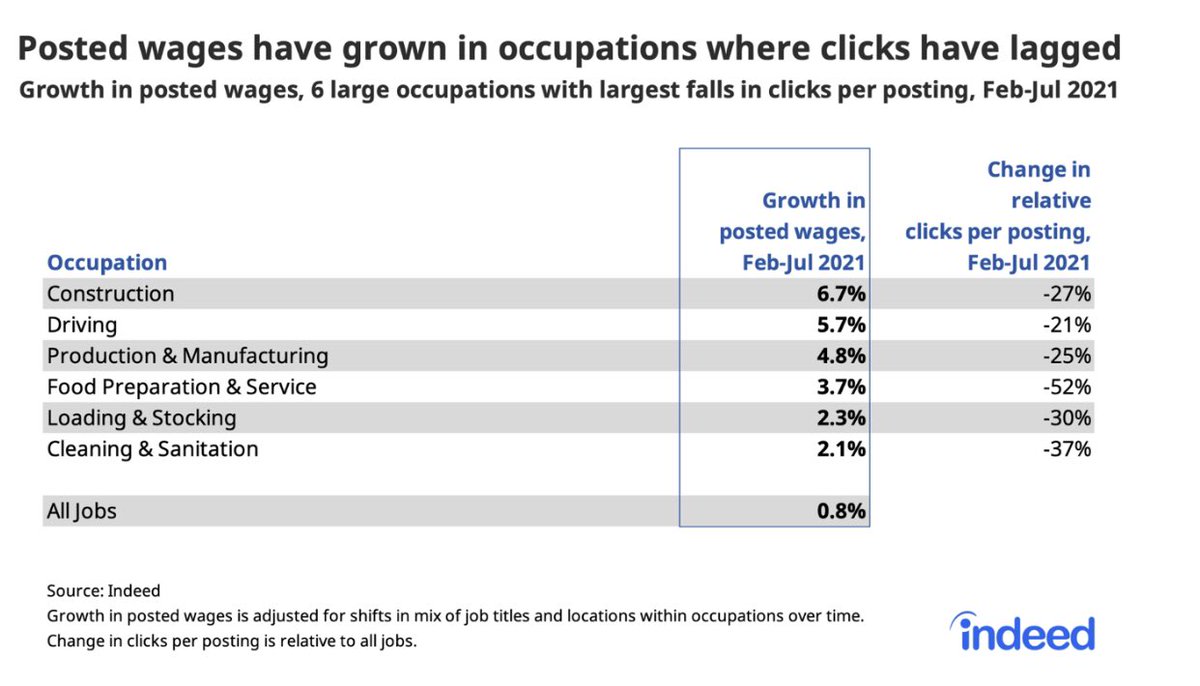
Fantastic bit of work from the Indeed team.
https://t.co/K1xB1WvfPp
Yes, we are now seeing some proper wage growth in the sectors reporting hiring difficulties. But (i) it’s not *super* fast and (ii) it’s limited to a few sectors.
Multi-Nationals do what they want - until they're stopped. 👏Morocco for fining Switzerland's Nestlé -the world's largest food company - US$111.5million, after Nestlé Morocco illegally transferred profits out of the country to pay less tax on earnings. https://t.co/b66QJw0Wid
Mastering A-Level Economics | Quantitative Skills
🆓 FREE online course for ALL A-Level Economics students
💯 Every quantitative skill covered
📹 Step-by-step videos by experienced teachers & examiners
97 videos, interactive resources and activities!
https://t.co/hFCLSCLlO7
Think negative externalities will be taught using vaping rather than smoking going forward here. Juul to Pay $40 Million to Settle N.C. Vaping Case https://t.co/jRUokSFhBT
Negative consequences of UK's current account deficit are; 1) Drag on growth, negative (X-M) means lower AD 2) Borrowing and debt to finance it 3) Downward pressure on the exchange rate which stokes inflation
UK's current account deficit stands at approx. 4% GDP (the long term average) driven by a huge trade deficit. Major long term causes have been; 1) Strong incomes domestically 2) Low Productivity 3) High relative minimum wages 4) Poor investment 5) Weak manufacturing base