@fucksimon_@imkylelambert@QCStudio They are very old freestyles I got for free from a restaurant refurb and cleaned up.
They're nothing special but with a bit of EQ they sound decent enough.
That is a keen eye! 😆🧐
been starting to use codegraph in projects.
It builds a local knowledge graph of every symbol, function, and connection in your code so agents can look things up instantly instead of grep-searching through thousands of files.
~35% cheaper · ~70% fewer tool calls · 100% local
Let me trace the timeline here because nobody's connecting it.
Step 1: Scrape the entire internet. Every book, every article, every conversation, every piece of art, every forum post. Do it without asking. Do it without paying.
Step 2: Train a model on all of it. Call it "artificial intelligence."
Step 3: Go to BlackRock's Infrastructure Summit and announce: "We see a future where intelligence is a utility, like electricity or water, and people buy it from us on a meter."
Step 3 is where you sell people's own knowledge back to them. On a meter.
They took the collective output of human thought, compressed it into a model, and now they want to charge you by the token to access a version of what you and everyone you know already created.
One Reddit user put it perfectly: "They stole all this data from us, the people, our life's work, creativity, art, by devouring the internet and blowing through all copyright laws. Now they want to sell it back to us in the form of a utility."
Imagine if someone photocopied every book in the public library, burned the library down, and then opened a subscription service for the copies.
That's the metered intelligence business model.
And they're pitching it to infrastructure investors as though they invented water.
The main improvement of Hermes over OpenClaw for me has been the memory, the self improvement is great.
How are you finding paperclip? I looked into it and thought it looked cool, but was a bit confused as to the value I'd get out of get out of it vs running multiple agents on Hermes/OpenClaw.
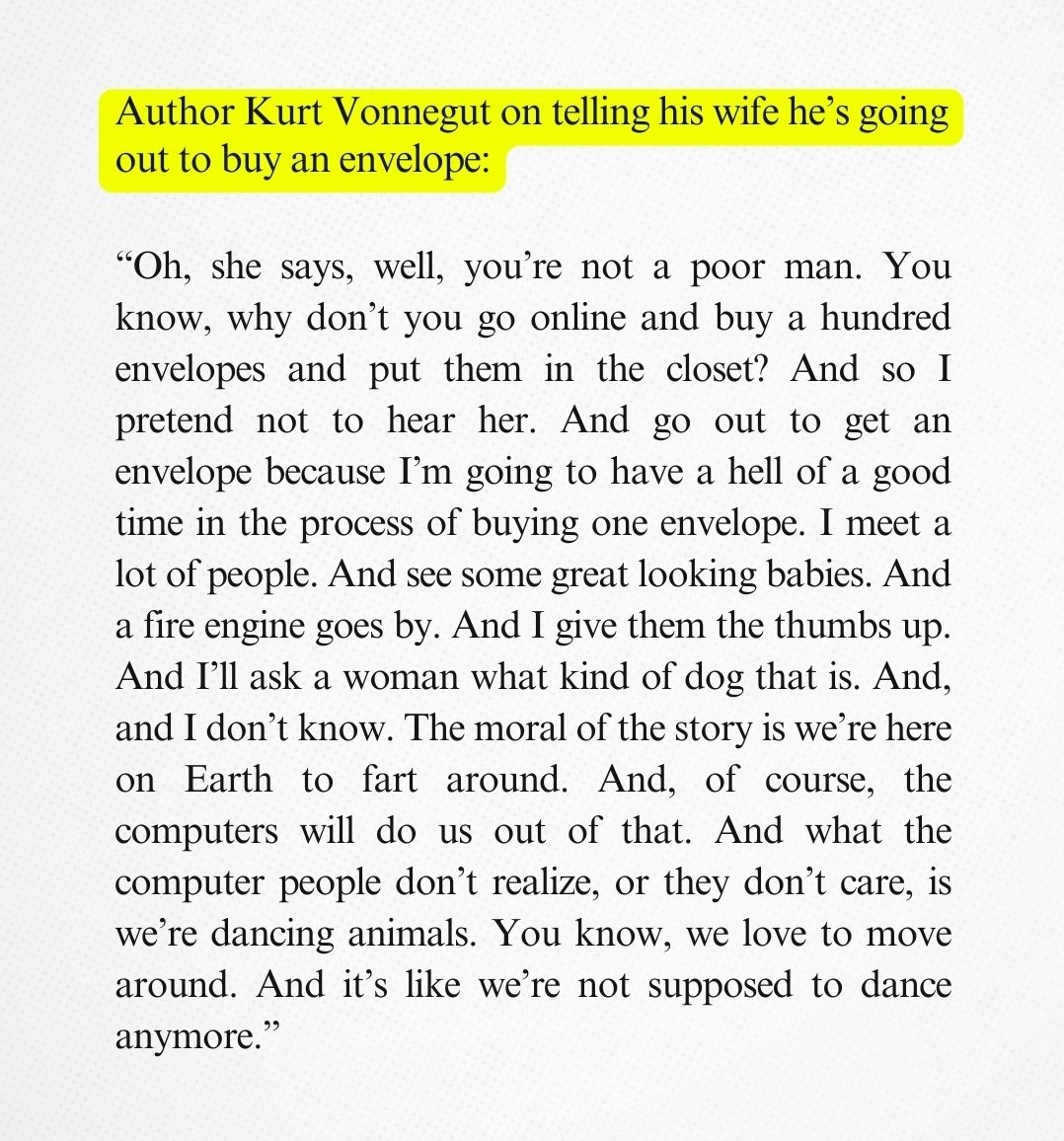
There's nothing remotely comparible between being deeply involved in a book and scrolling a never ending feed of short-form content.
The book is contiguous and, relatively speaking, narrowly focused. The reader's mind is held captive by the sphere of ideas held in the text. The only visual stimulation exists in the imagination of the reader, which in itself is an exercise: flexing a muscle which grows over time. The book ends, and importantly in a predictable fashion because the reader knows where the last page is.
Scrolling a newsfeed that flits between a POV video of a man on a waterslide, three sentences of political opinion, a time-lapse of a room being painted, ad infinitum. The reader is encouraged to pull just one more screen, one more post into view. Except it's never just one more screen.
The enjoyment in the book is delayed and of the high value, slow-release variety. The doomscroller is being repeatedly hit with dopamine from a well that is shallowing with each network request to replinish that bottomless footer.
Even if the reader does "just consume it blindly" as you say in the case of the book, it has still been a quieting act, meditative even. The event had purpose, and it reached a natural end.
The doomscroller has nothing close to the same yield.
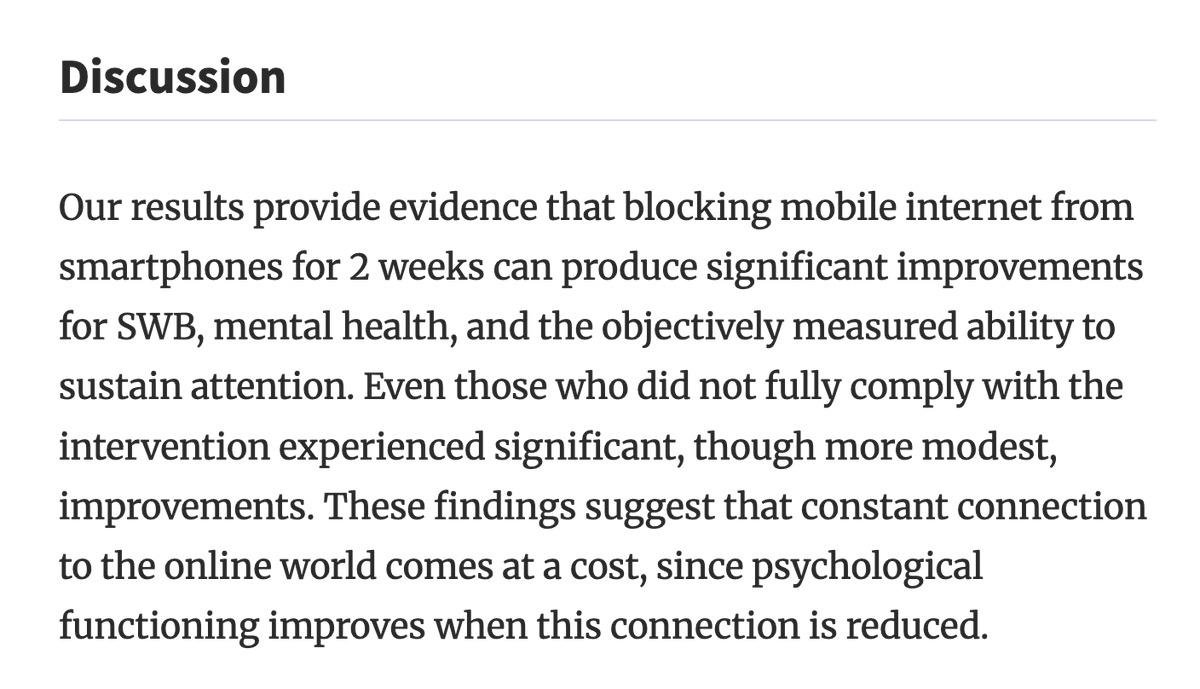
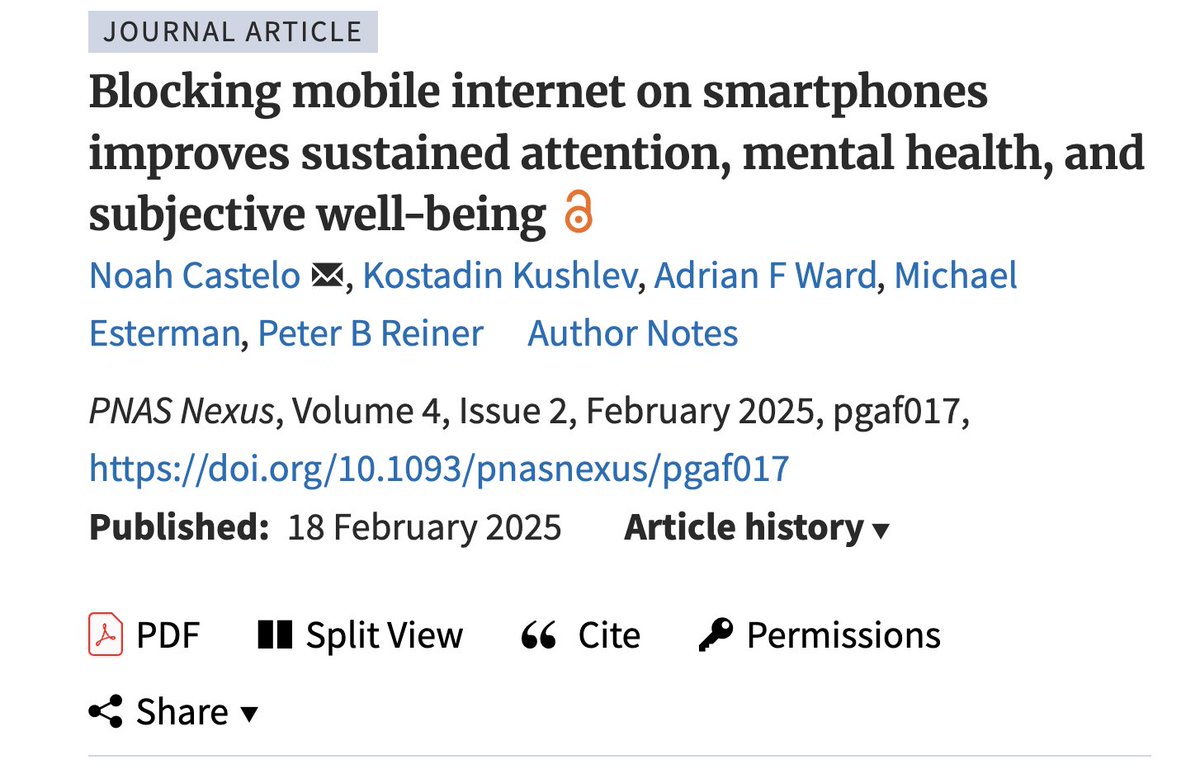
In adults, limiting smartphone functionality to texting and calls and blocking all social media and mobile internet for 2 weeks significantly improved attention, self-reported well-being and mental health. 90% of participants experienced a benefit.
🚨 The GBTT Weekly Briefing starts this Sunday 17 May.
Every week:
• key official data releases
• charts that matter
• the editor’s note
• what’s coming next
• what the numbers actually mean for Britain
Sign up at https://t.co/9QxjT2MXi8
Your Hermes Agent can now build full videos with the official HyperFrames skill by @HeyGen
HyperFrames videos are HTML-native, so your agent has total control over the final output
Video made entirely by Hermes using the HyperFrames skill
@JanHarp19131150@BBCPM@Docstockk Anyone can attend, but it is on a first come, first served basis for the public.
More info here: https://t.co/LmZaODhXeW
People have been telling me I’m being overly negative about this country. Too pessimistic. Too doom-laden.
I thought I was holding back. So let me lay it all out.
Welcome to the age of compounding crises.
Housing. Average home costs 8x the average salary. A generation locked out. Prices can’t fall without crashing the banks. Can’t rise without locking out more people.
Water. £85 billion extracted in dividends since privatisation. £70 billion in debt loaded onto companies sold debt-free. Victorian pipes leaking billions of litres. Raw sewage discharged for 3.6 million hours in a single year. Bills rising 36% by 2030.
Energy. Net importer. No sovereign strategy. One Gulf crisis and it costs the taxpayer £78 billion in emergency subsidies.
Pensions. One of the worst state pensions in the developed world. Trillions in unfunded public sector liabilities off the books. Median private pot £32,700. You need ten times that. 43% undersaving. The triple lock ratchets costs up automatically with no mechanism to bring them down.
NHS. 7.25 million on the waiting list. Staff leaving. Buildings crumbling. Cancer targets missed. Social care barely exists. A two-tier system emerging. A demographic wave about to make it all worse.
Transport. HS2: £66 billion for 140 miles. Spain built 2,500 miles for $70 billion. We pay 8.5x the European average and deliver a fraction of the result. Roads falling apart. The North still waiting.
Local government. Over half of councils expect bankruptcy within five years. Funding cut 29% in real terms since 2010. Libraries, youth services, social care… gone or going.
Public finances. Debt approaching 97% of GDP. Interest payments exceed the defence budget. Taxes at their highest since the 1940s. Spending plans include cuts the OBR says may be undeliverable.
Productivity. Flat for eighteen years. Worst record since the Industrial Revolution.
Economic inactivity. 1 in 5 working-age people not working. 2.8 million out sick, a record. The only G7 country with lower employment than before the pandemic.
Food. We import 48% of what we eat. 83% of our fruit. 12% of households are food insecure. One supply chain shock and the shelves thin out. We’ve seen it twice already and fixed nothing.
Education. School buildings crumbling. Teachers leaving. £267 billion in student debt, most of which will never be repaid.
Defence. Procurement Parliament called “broken and repeatedly wasting billions.” Equipment plan £19 billion short. A war in Europe and no money to respond properly.
Prisons. 72% overcrowded. Hit 99.7% occupancy. Nearly 40,000 released early because there was nowhere to put them. 23,000 cells don’t meet fire safety standards. Cost to fix: £2.8 billion. Allocated: £520 million.
Car finance. Biggest mis-selling scandal since PPI. 12 million agreements with hidden commissions. £7.5 billion in expected compensation. Another bill landing on an industry already stretched.
Regional inequality. London pulling away from everywhere else. A country where your postcode determines your life expectancy, school quality, job prospects and access to healthcare.
Underneath all of it, the same pattern. Sell the asset. Load it with debt. Extract the value. Defer the maintenance. Hand the bill to the next generation.
None of this is unfixable. This country has the talent and the people to turn every one of these around. But that requires a political class willing to be honest about the scale of what’s broken. What we have instead is a political class that would rather keep us fighting each other than confront the structural failures staring them in the face. Because fixing them is hard, unpopular, and takes longer than an electoral cycle. So they commission a review, blame the last lot, and nothing changes.
I’d love to be more optimistic. And the history and people of this country still make me somewhat hopeful. But our politics needs to drastically change if we’re going to get anywhere.