This multinational active surveillance study found that:
📊 The incidence of neonatal stroke in the UK is 9.0 per 100 000 live births (95% CI 6.9 to 11.6).
📋 Only a quarter of the reporting hospitals have a neonatal stroke guideline.
Read more here: https://t.co/Zv1tsQhG2o
🎓 Academic Trainees Day – 6 Nov
Join us for a free online event to boost your research skills!
Explore infrastructure, methods, collaboration & tools in expert-led sessions.
📋 Programme & registration : https://t.co/5cseCBRypk
Calling all healthcare professionals! 👀 Interested in a fully paid clinical PhD at @UniofNottingham with Prof Don Sharkey in developing 2 digital tools to support parent/carer mental health on the NICU. Email [email protected] for more info. https://t.co/bIUOHTpGoQ
Our analysis suggests BPD & s-BPD are increasing over time in UK with more use of NIV at 36 weeks. Interestingly a proportion wean off between 36-40weeks, consideration for optimal time of discharge? https://t.co/c6a1bs8cmf @BAPM_Official @NWNeonatalODN @NNAP_RCPCH#neotwitter
It’s the final day of the @CC4AIM AI & ML for Healthcare Summer School! 🎓
Thank you to everyone involved - from our funders, to speakers, to all of the participants! It’s been incredible to see such energy, ideas, and collaboration shaping the future of healthcare.
It’s the final day of the @CC4AIM AI & ML for Healthcare Summer School! 🎓
A huge thank you to our funders @AstraZeneca & @GSK, our keynote speakers, and all our speakers and participants for making this week so inspiring, advancing ideas that will shape the future of healthcare.
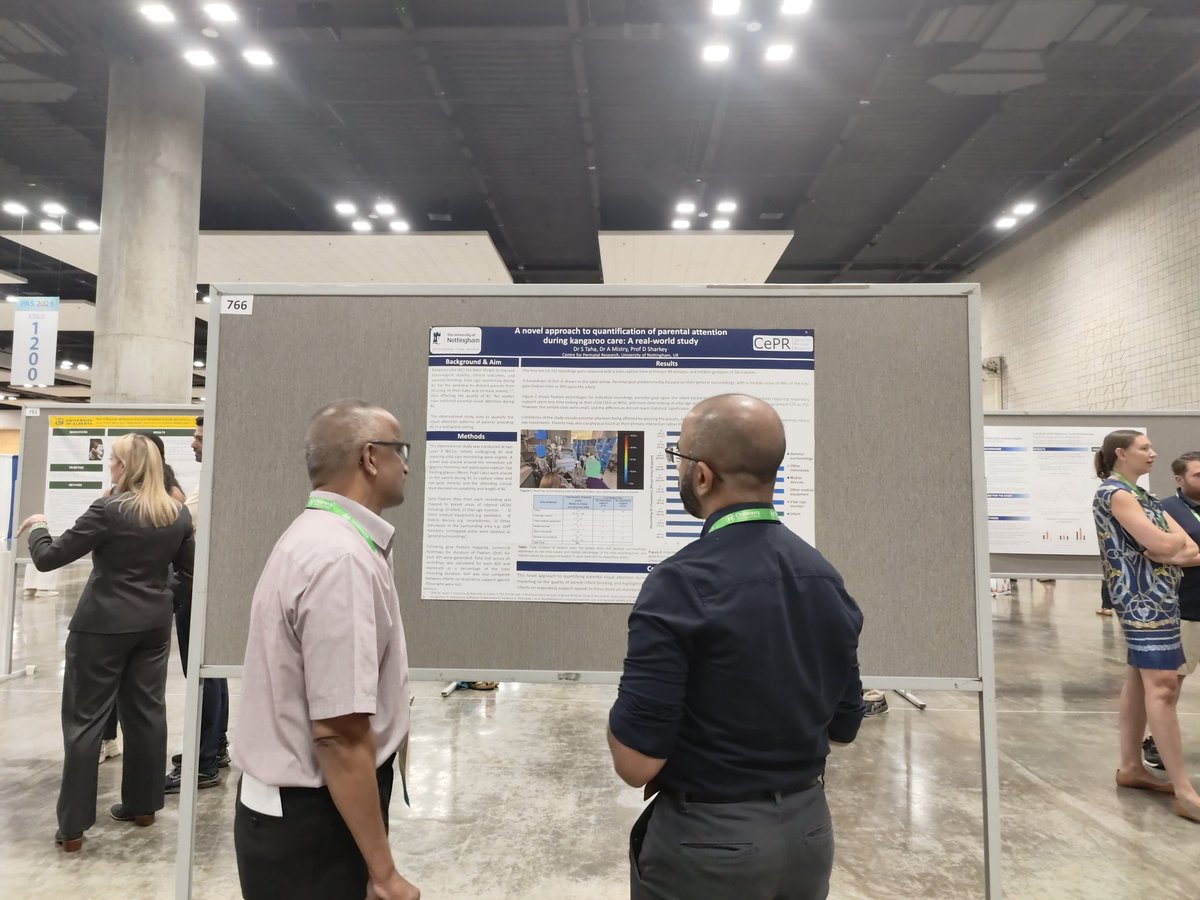
Come check our poster at board 766 presented by Dr S Taha @MedicineUoN. "A novel approach to quantification of parent attention during kangaroo care, a real word study" @PASMeeting in Honolulu🏝️
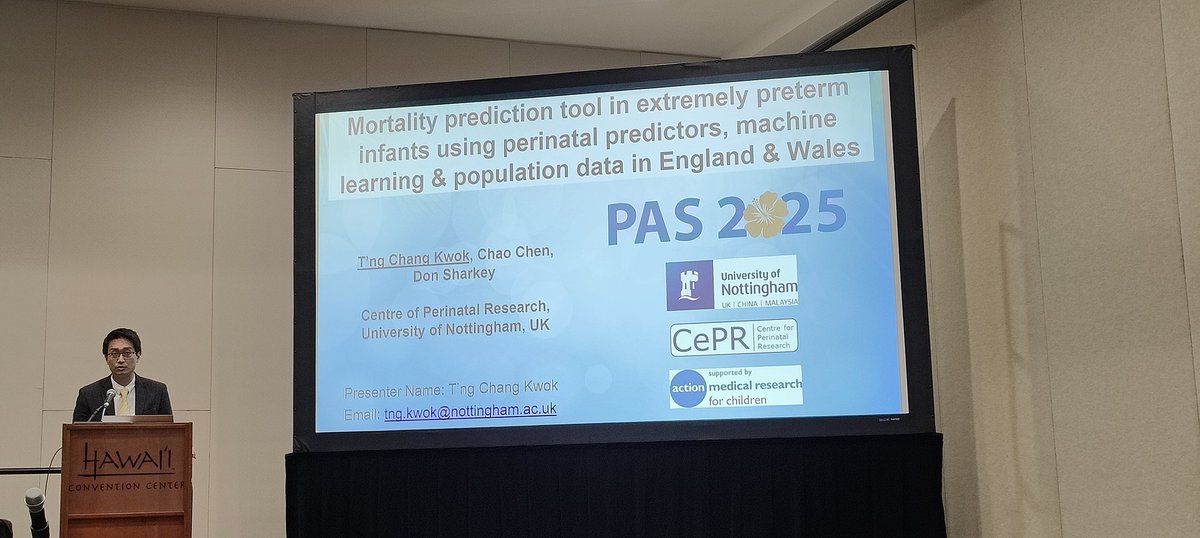
@TngChang presenting his work on the Nottingham EPI tool , using machine learning and relevant predictors to estimate neonatal mortality in <28weeks @MedicineUoN@PASMeeting
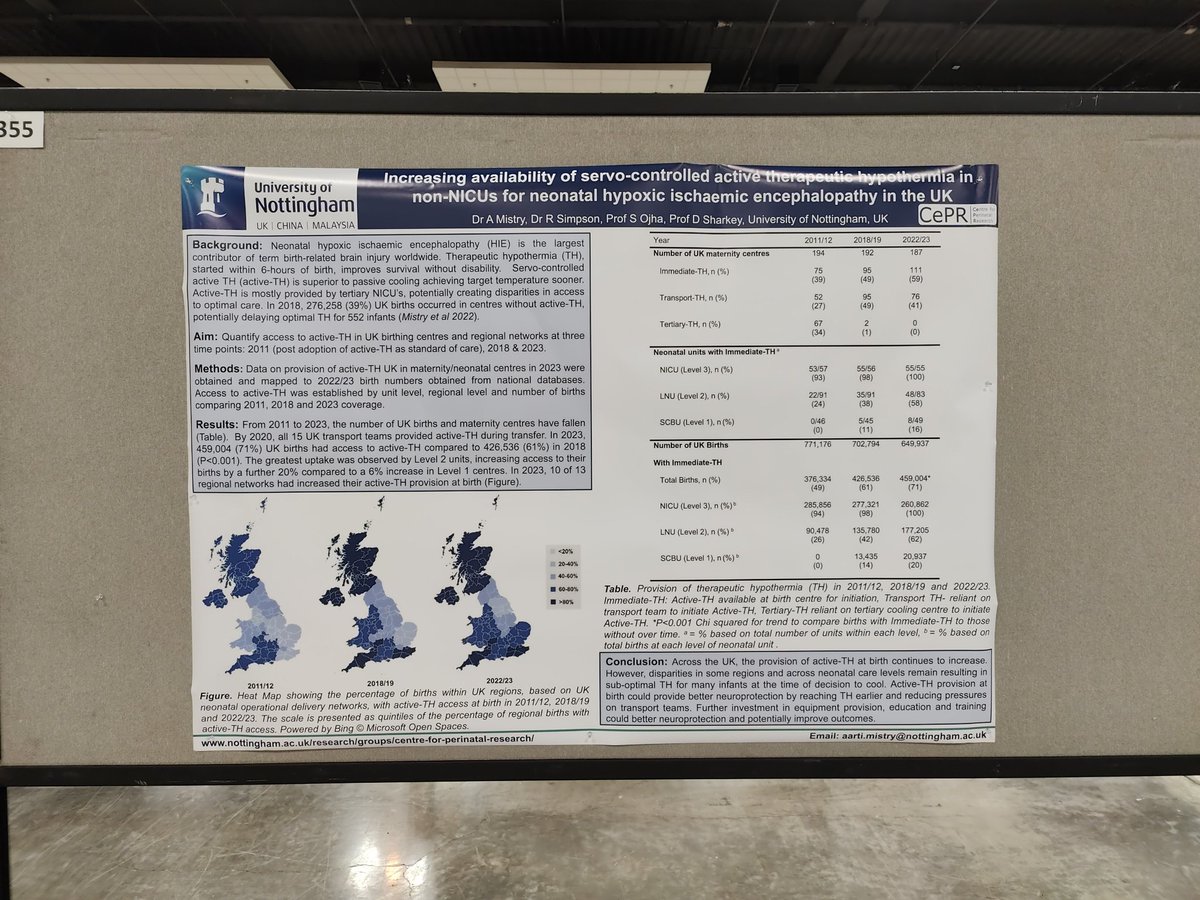
Come over to poster stand 355 at the 2.30-4.55pm poster session . Presenting UK data on Increasing availability of servo-controlled active-TH in non-NICUs for Neonatal HIE 🏝️ @PASMeeting Work from @MedicineUoN @DrDonSharkey @RozzieSimpson@shaliniojha7
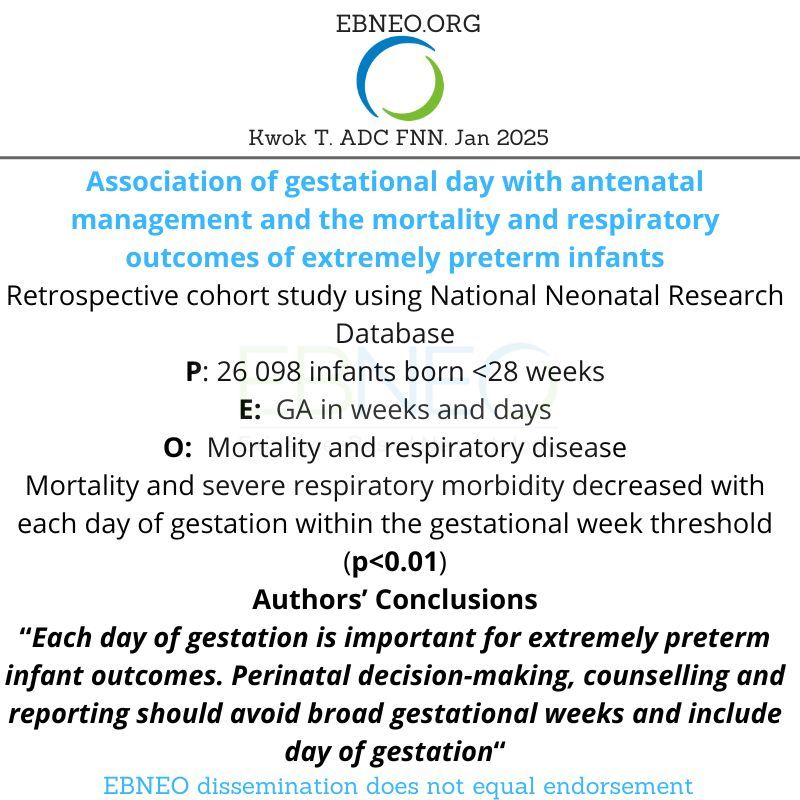
Everyday counts!
A new study reveals that the risk of death in extremely preterm infants decreases with each additional day of gestation
https://t.co/XoMk363BVr
@tngchang & @DrDonSharkey @ADC_FN#neoEBM#EBNEOAlerts
Check out our new paper on @ADC_FN highlighting the importance of each gestational day on neonatal outcomes. Crucially, outcomes at the start & end of each gest week differed from overall gest week, esp mortality in infants <27 weeks. https://t.co/FC1Z2rQXN8
@BrianKingNeo@AartiMistry5@jonathan_davis3 Completely agree. Yes definitely only if sample size and data available. The dating is mostly consistent based on national guidance.
@Dr_KSGautham@AartiMistry5@MedicineUoN@kate3539 @DrDonSharkey The mortality data included all infants admitted to neonatal unit. Usually when infants are admitted to neonatal unit, full intensive care is provided. Unfortunately we could not tease out if intensive care was withheld from the data we have, esp for the 23-24 week.
@Dr_KSGautham@AartiMistry5@MedicineUoN@kate3539 @DrDonSharkey Thank you. We didn’t do any multivariate analysis apart from describing the outcomes based on GA day. The mortality rates at 23-24 weeks is likely to be higher as the data is from 2010-2020 when the practice in the UK pre-2020 is to provide active care for infants >24 weeks GA
@BrianKingNeo@AartiMistry5@jonathan_davis3 We wanted to highlight that outcome at the start of the week is different from the end of the week, especially for the most premature babies as most national report and epidemiological studies focus on just the gest week rather than each day.