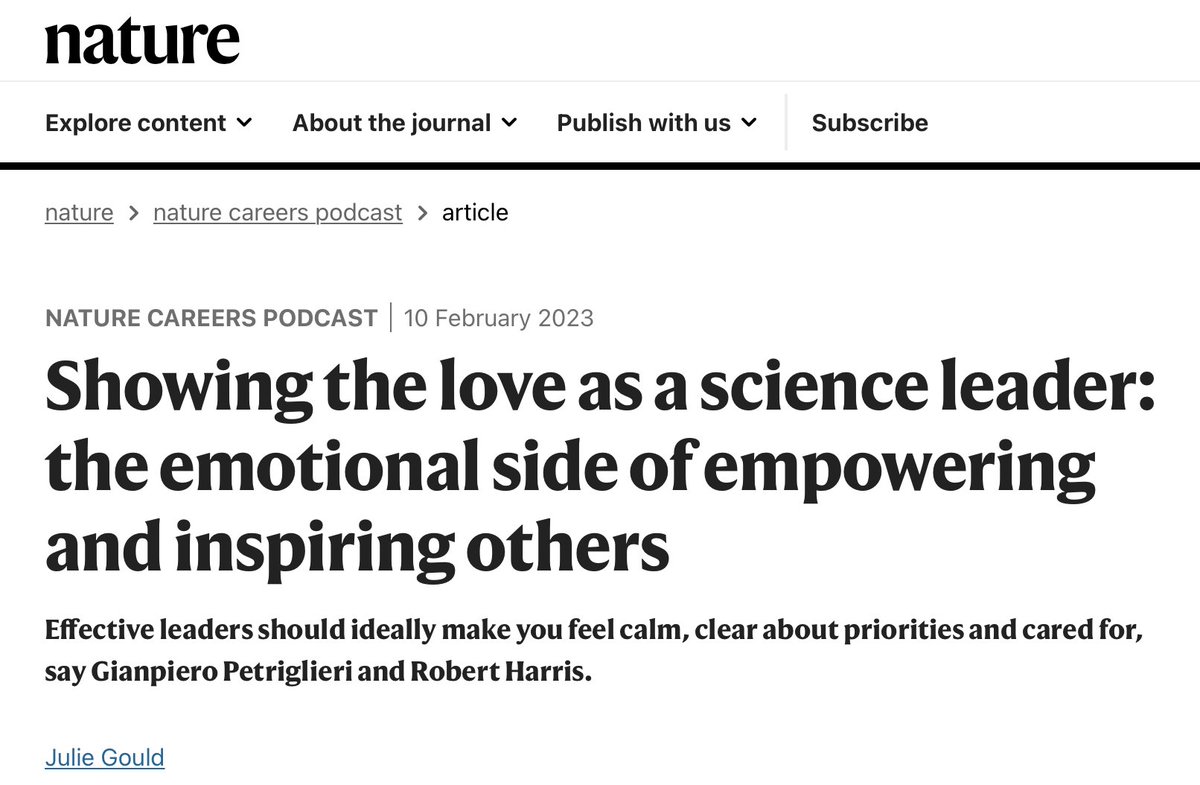
Congrats to my friend Navid, who is starting his lab at UCLA on sensory membrane proteins. I know that he'll be a great mentor and will create a nurturing training and research environment so please check his lab out if you're looking for a position in the near future
As a professor, pursue the careers of your PhD students and postdocs instead of pursuing your own.
I know it may sound strange and even provocative. But in fact it is how it’s supposed to be.
Unfortunately, a personal gain is the biggest motivation for many professors. More publications, more awards, more invited talks…
Why? In addition to personal recognition, it can result in more funding and higher salaries (especially in the U.S.).
Many PIs say that their personal growth also helps their students get a better visibility. Plus, more funding brings in more students, which is (kind of) “great” for those students.
Others will say that their “tenure requirements are too demanding” and if they stop focusing on personal gain, they will be denied tenure.
In either case, I want you to think about the following:
1. When we focus on personal achievements, we lose track of the wellbeing and personal preferences of team members. Although it often feels like we still track it, in fact we become far less efficient at it. Students' progress and personal development are impeded. Their career opportunities become less diverse or even missed.
2. Concentrating too much funding in one big lab is NOT a good idea because it leads to PhD students receiving far less mentorship and research advising (than in smaller labs).
3. Tenure requirements often look intimidating to young professors. However, in reality, very few professors are denied tenure. Why? First, because any university invest big resources into TT professors and don’t want get rid of them without a big reason. Second, because departments often exaggerate the tenure challenges to ensure their young hires are “hard-working faculties”.
Many PIs think I am too idealistic and propose unrealistic ideas. And a lot of people will never agree with this post. Even myself, I can easily come up with bitter criticism over it.
However, idealism is among the biggest driving forces. It can drive you through challenging times and help improve.
In either case, I want you to think about the following:
1. When we focus on personal achievements, we lose track of the wellbeing and personal preferences of team members. Although it often feels like we still track it, in fact we become far less efficient at it. Students' progress and personal development are impeded. Their career opportunities become less diverse or even missed.
2. Concentrating too much funding in one big lab is NOT a good idea because it leads to PhD students receiving far less mentorship and research advising (than in smaller labs).
3. Tenure requirements often look intimidating to young professors. However, in reality, very few professors are denied tenure. Why? First, because any university invest big resources into TT professors and don’t want get rid of them without a big reason. Second, because departments often exaggerate the tenure challenges to ensure their young hires are “hard-working faculties”.
My message is:
If we all pursue the careers of your students/postdocs in the first place, this shift in priorities will make academia a much better world to live in.
I see an increasing number of faculties trying to genuinely care for their team members, in all countries and academic environments. It is all possible. Just do it. Make science better.
Oh, and don’t forget:
Growth of your team members = Growth of yourself.
#AcademicTwitter #research #phdlife
Impactful words by @CarolynBertozzi today on how diversity in her trainees enabled creativity, not playing by the rules, and ultimately the work that built the field of bioorthogonal chemistry. Diverse science leads to better science!
This spoke to me. First gen. Dad came to 🇦🇺 fleeing war with nothing. Mum seeking economic opportunities. Grew up on social welfare. Education was a gateway to support them and younger bros. But science in academia can't really help with that. Ready for a change 🙏🏼
@jjanetzko@CellCellPress Hi John, I don't think it's necessarily true if your work has something niche on top of this work. Ask @ForceFromLipid and Prestin structures; Cell, Nature and Ncomms articles all within 4 months. Get it on preprint and submit! Good luck
Our manuscript published in FASEB J. "Ponesimod inhibits astrocyte-mediated neuroinflammation and protects against cingulum demyelination via S1P1-selective modulation" @tngo715 @PhdManisha
https://t.co/op7IGkyfTD
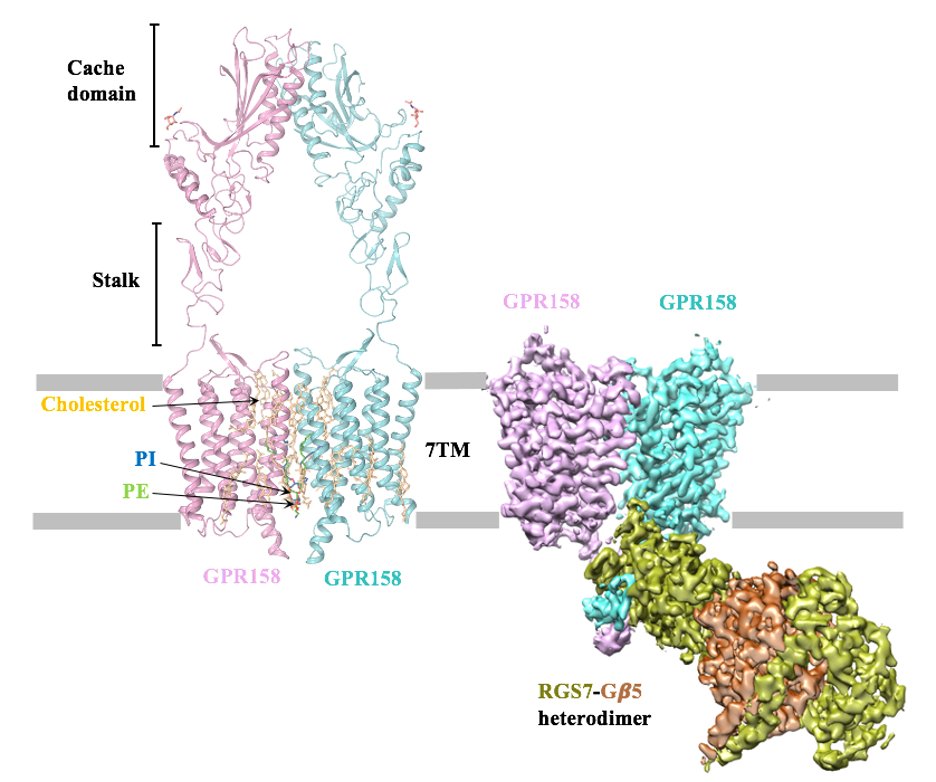
Can a #GPCR structure still surprise you? Happy to present #CryoEM structure of an orphan receptor GPR158.
https://t.co/uTvlX803ai
Couples to RGS instead of G proteins.
Features an extracellular Cache domain for ligand binding
Forms a unique tight dimer stapled by phospholipids
Please share: two open postdoc positions in my previous lab in computational/experimental GPCR biology. Strongly recommend the learning environment and lots of opportunities to network with the huge hub of GPCR researchers (and beyond) at UC San Diego
https://t.co/I2ooAbEuZw
Please share this great opportunity to incoming/current undergrad Science students who identifies as being part of historically excluded groups #diversityinSTEM
One promising minority student will be awarded a scholarship up to $40,000 to pursue their passion for science. Don’t wait – the deadline for application is January 31, 2021. We can’t wait to hear from great minds everywhere! To learn more visit: https://t.co/yZ9aj4UMS9
"Between May 1 and November 28, 2020, authorities were more than twice as likely to attempt to break up and disperse a left-wing protest than a right-wing one." https://t.co/RZynLQVMcg