After decades building a multi-billion dollar systematic trading firm, I’ve decided to share selected short-term research publicly.
Institutional frameworks.
Pattern durability.
Risk structure.
Notes here: https://t.co/XemCBLZPl8
Toby Crabel — founder of Crabel Capital Management (~$5B AUM) and author of the legendary Day Trading with Short Term Price Patterns and Intraday Breakouts (1990), the book that gave the world the opening range breakout and NR4/NR7 patterns — joins the show for a rare, wide-ranging conversation.
Toby traces his path from a pro tennis career to the Chicago trading floors, his formative stints with Victor Niederhoffer and his early connections to Monroe Trout and Paul Tudor Jones, and how zero-commission floor trading shaped his short-term edge from day one.
He unpacks why the "clean open" that powered ORB for decades has eroded under 24-hour markets and institutional flow, why studying historical price shocks (1987, COVID) is non-negotiable for systematic survival, and why PhDs and machine learning are no substitute for a causal, market-structure-driven research process.
For the solo systematic trader, Toby's advice is refreshingly practical: start with one market, build strict rules around a single idea, and know exactly when your edge has died. A must-watch for anyone serious about the history, robustness, and future of short-term systematic trading.
https://t.co/77aItLYkwr
@GoshawkTrades Good on you for actually testing it. We've run it back to 1923, edge's thinner now but still there. Happy to sit down and talk it through on your channel sometime. Working on a few books coming that get into it.
Enjoyed speaking at Battle of the Quants yesterday. Good group of people focused on the work — testing ideas, figuring out what holds up and what doesn’t. Thanks to the Battle of the Quants team, and especially Bartt.
The edge has changed as markets moved from a single open to nearly continuous trading.
The idea was never just the breakout, it was understanding when markets transition from mean reversion to momentum.
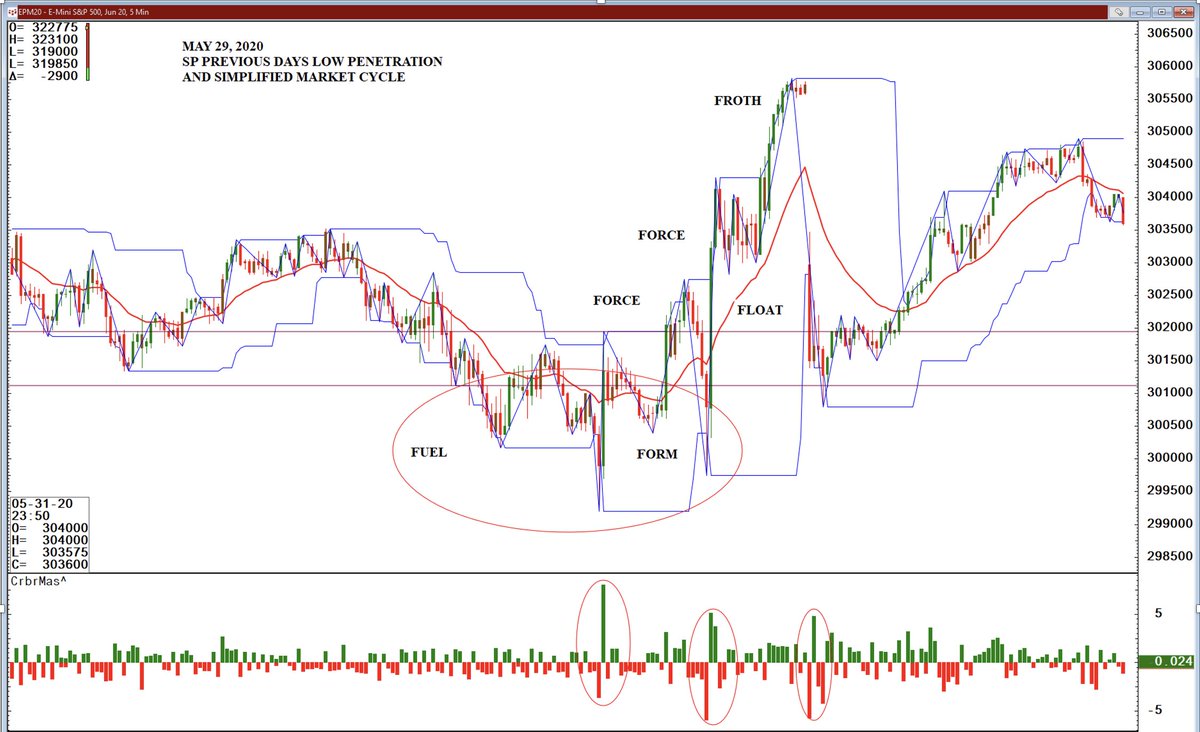
Activity expanded at the lows here, with volume and volatility increasing as price moved through the range.
When behavior changes at extremes, it often reflects imbalance rather than continuation.
Large markets often require multiple shakeouts before they can move higher.
Most of the activity here occurred below the prior day’s low, with volume expanding into the weakness.