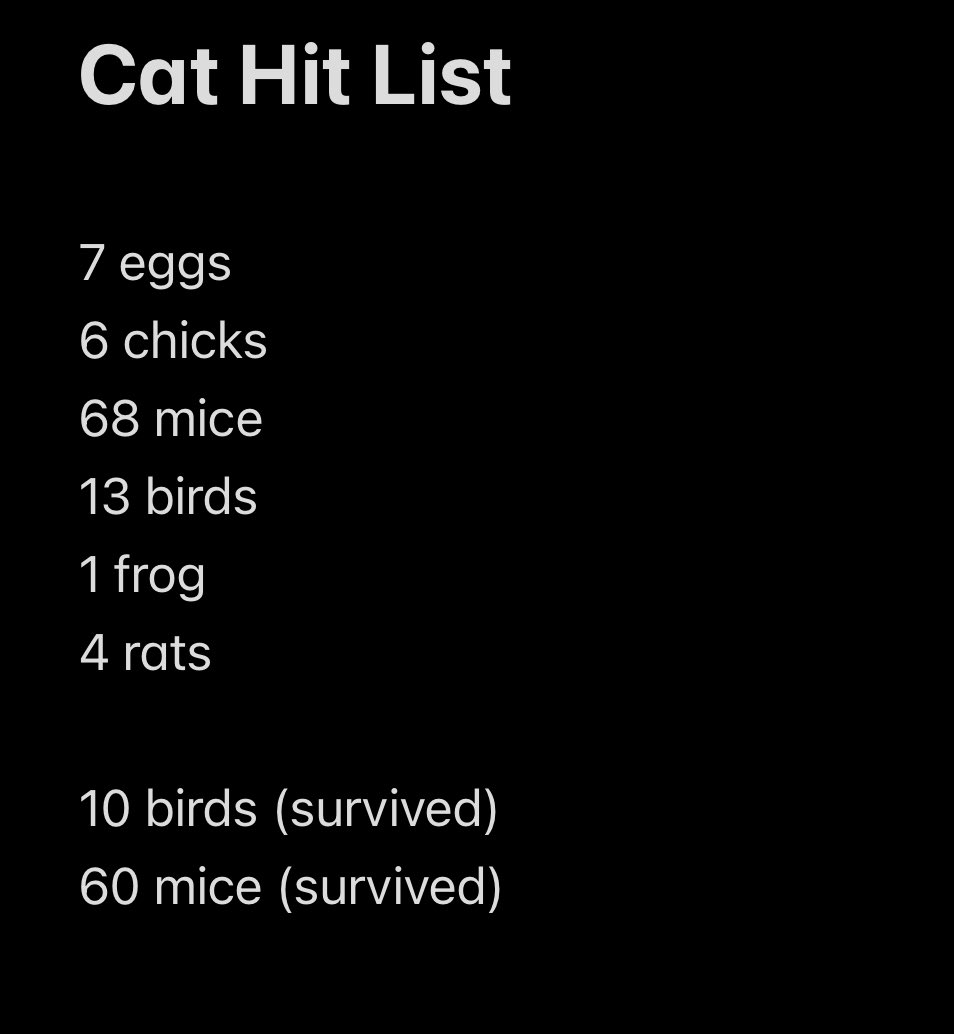
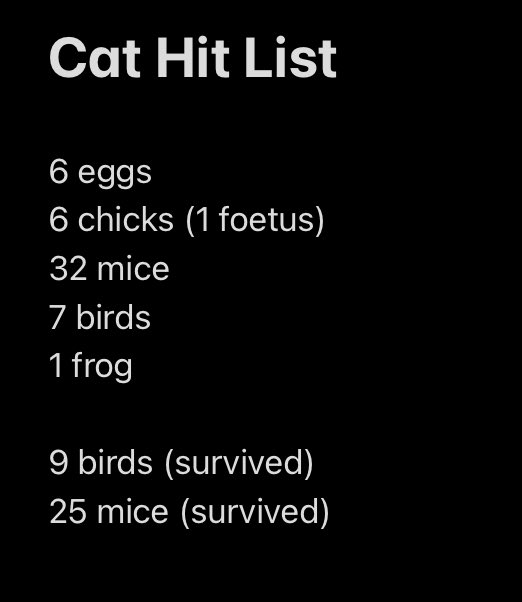
It’s that time of year for an update on Chickpea’s murder spree just over 2 years since her release in to the wild. For those new to this, I’ve kept a list of every victim and survivor my cat has brought inside. Recently she treated us to a robin for Xmas. Here’s the update:
For those of you keen for an update on the below. It has now been 1 year and 6 months since Chickpea’s release in to the wild (sorry wild). She has since brought home a number of “presents” which I have kept listed. Here is the up to date, slightly modified, list:
This is urgent. A disabled woman faces eviction and needs our help to pay her debts. Please consider donating or sharing to raise awareness. Every bit counts. Thank you. https://t.co/11Vrhr8hoE
For those of you keen for an update on the below. It has now been 1 year and 6 months since Chickpea’s release in to the wild (sorry wild). She has since brought home a number of “presents” which I have kept listed. Here is the up to date, slightly modified, list:
Just over 9 months ago my cat was allowed to roam outside for the first time. Since then I’ve kept a list of the “presents” she has brought in. Not all dead…
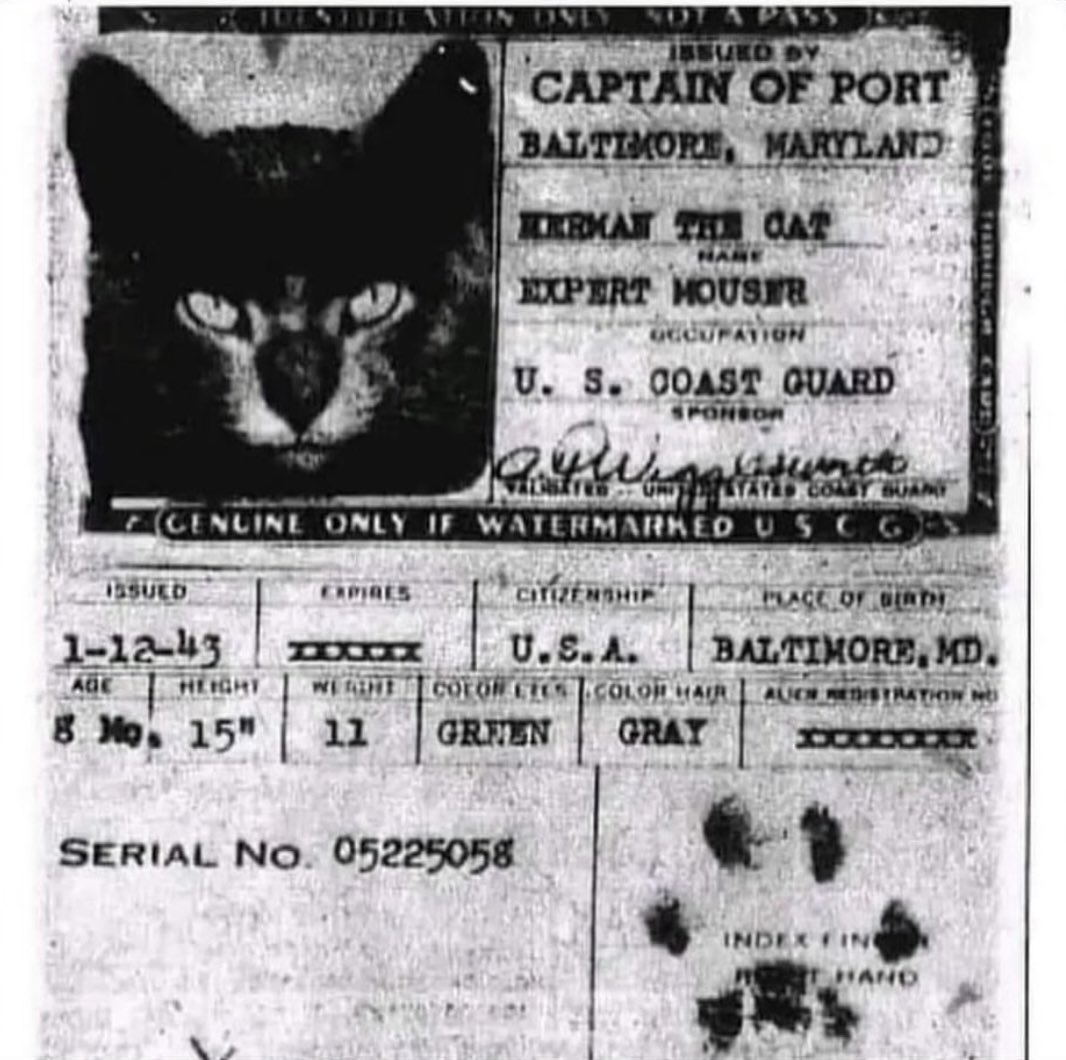
During the mid-20th century, cats played an important role on ships as skilled rodent catchers. Sailors realized that having cats aboard helped control the population of rats and mice, which were notorious for damaging supplies and spreading diseases. These ship cats became valued members of the crew and were even given passports to acknowledge their contribution and ensure their safety during international travels.
The passports for ship cats were a unique and lighthearted tradition. While they didn't serve any legal or official purpose, they were created to recognize the cats' role and provide a form of identification. The passports typically consisted of a small booklet with pages that included the cat's name, description, and an area for their paw print.
When it was time to depart or dock in a foreign port, the ship's captain or crew members would present the cat's passport to the authorities as a fun way to document the feline's presence onboard. The cat's paw print, obtained using ink or paint, was added to the designated page, providing a personalized and whimsical touch to the document. This practice not only amused the sailors but also showcased the camaraderie they shared with their feline companions.
While these ship cat passports were not legally recognized, they symbolized the close bond between humans and their feline shipmates. They served as a reminder of the cats' essential role in maintaining a clean and rodent-free ship, thus safeguarding the crew's provisions and health during long sea voyages.
However, as the mid-20th century progressed and maritime practices evolved, the reliance on ship cats diminished with the advent of more effective pest control methods. With the decline in the need for ship cats, the tradition of issuing passports gradually faded away. Nevertheless, the memory of these seafaring felines and their unique passports continues to fascinate and entertain those interested in maritime history and the unique relationships forged between humans and animals at sea.
There’s no sorrow quite like realising you’ve missed out on a meal deal. I forgot to buy crisps once. I wasn’t thinking. I just bought a sandwich and a drink. The crisps would’ve reduced the total price by over a quid (and I would’ve had crisps!). This was a few years ago now. I still think about it.