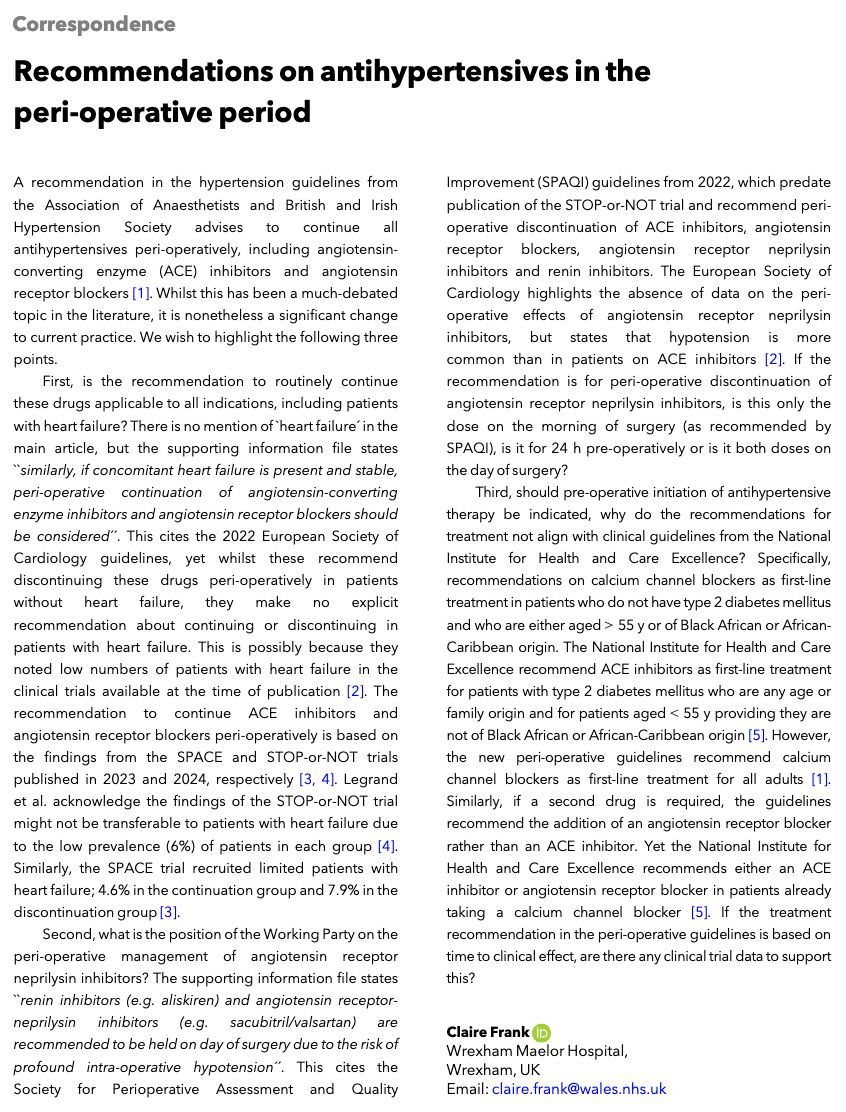
Recommendations on antihypertensives in the peri-operative period
Here are some questions to the authors of the hypertension guidelines from the Association of Anaesthetists and British and Irish Hypertension Society!
#anaesthesia#MedTwitter
https://t.co/ot0rROe7tZ
2026 Guideline for the Early Management of Patients With Acute Ischemic Stroke: A Guideline From the American Heart Association/American Stroke Association
CCR Journal Watch
https://t.co/Sp06oA6IDG
Does the time of day your cardiac surgery is performed affect how likely you are to die post-operatively?
Apparently yes!
The highest risk is seen in late morning procedures.
#anaesthesia#MedTwitter
https://t.co/v6pK4UfkJ2
The chance of having an allergic reaction to a neuromuscular blocking drug is:
• suxamethonium: ~1 in 1500 people
• rocuronium: ~1 in 3300 people
• atracurium: ~1 in 15,000 people
Women were up to eight times more likely to have a reaction than men.
#anaesthesia#MedTwitter #allergy
https://t.co/YVDmrFZ3PO
What impact can #perioperative#ketamine have on hospital #LOS in adult elective abdominal surgeries? New from the IMPAKT ERAS trial #anaesthesia
https://t.co/ksE4xgzDct
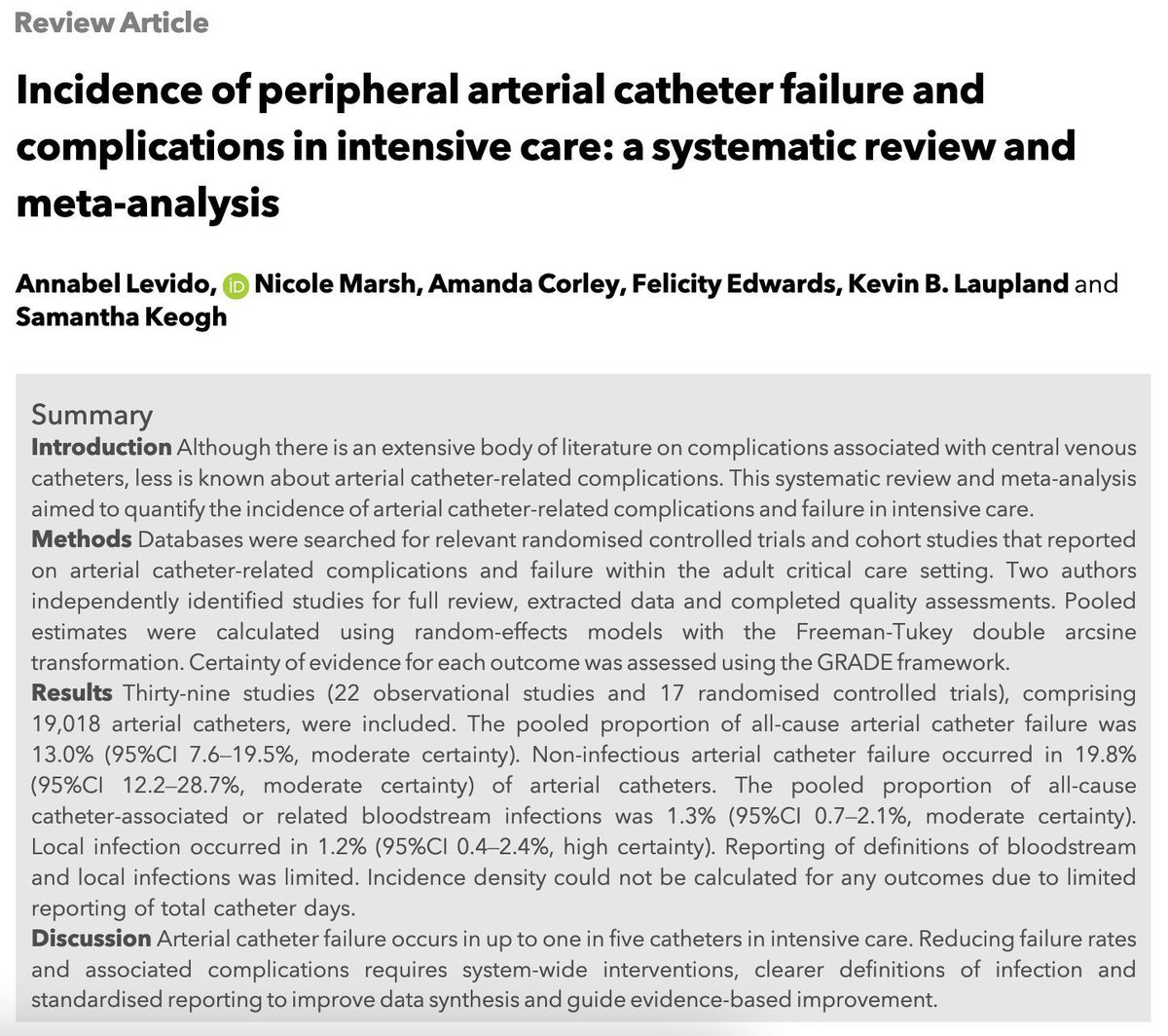
Complications associated with central venous catheters are widely known.
Less is known about arterial catheter-related complications.
Here's a systematic review which quantifies the incidence of arterial catheter-related complications and failure in ICU.
#ICU#Anaesthesia #MedTwitter
https://t.co/0PISNTUn2r
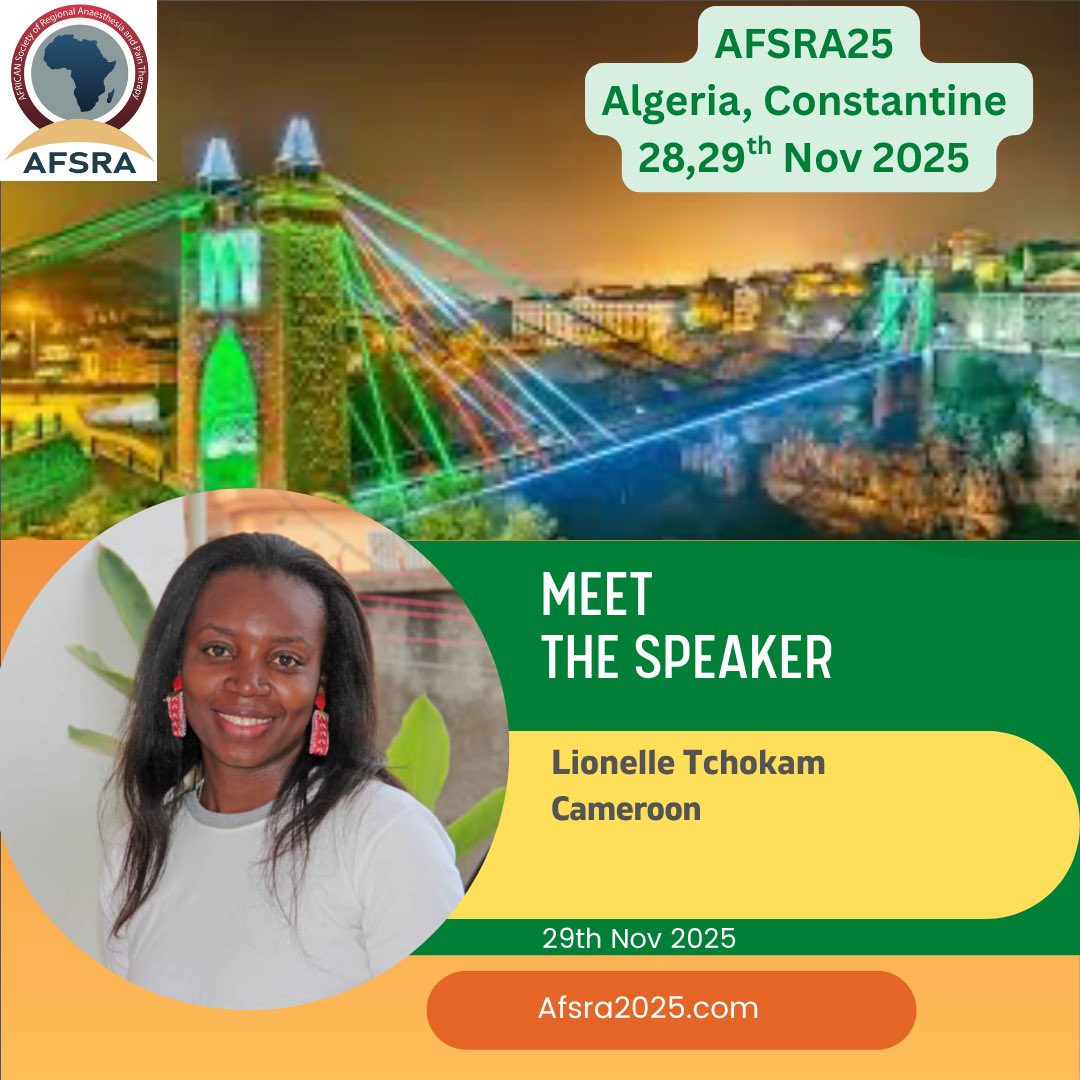
This year we having a real champion for #RegionalAnaesthesia in #Cameroon with her imminent efforts and dedication continue to inspire excellence and innovation across the continent.
We look forward to her valuable contributions @LionelleTc
Today's Paper of the Day is:
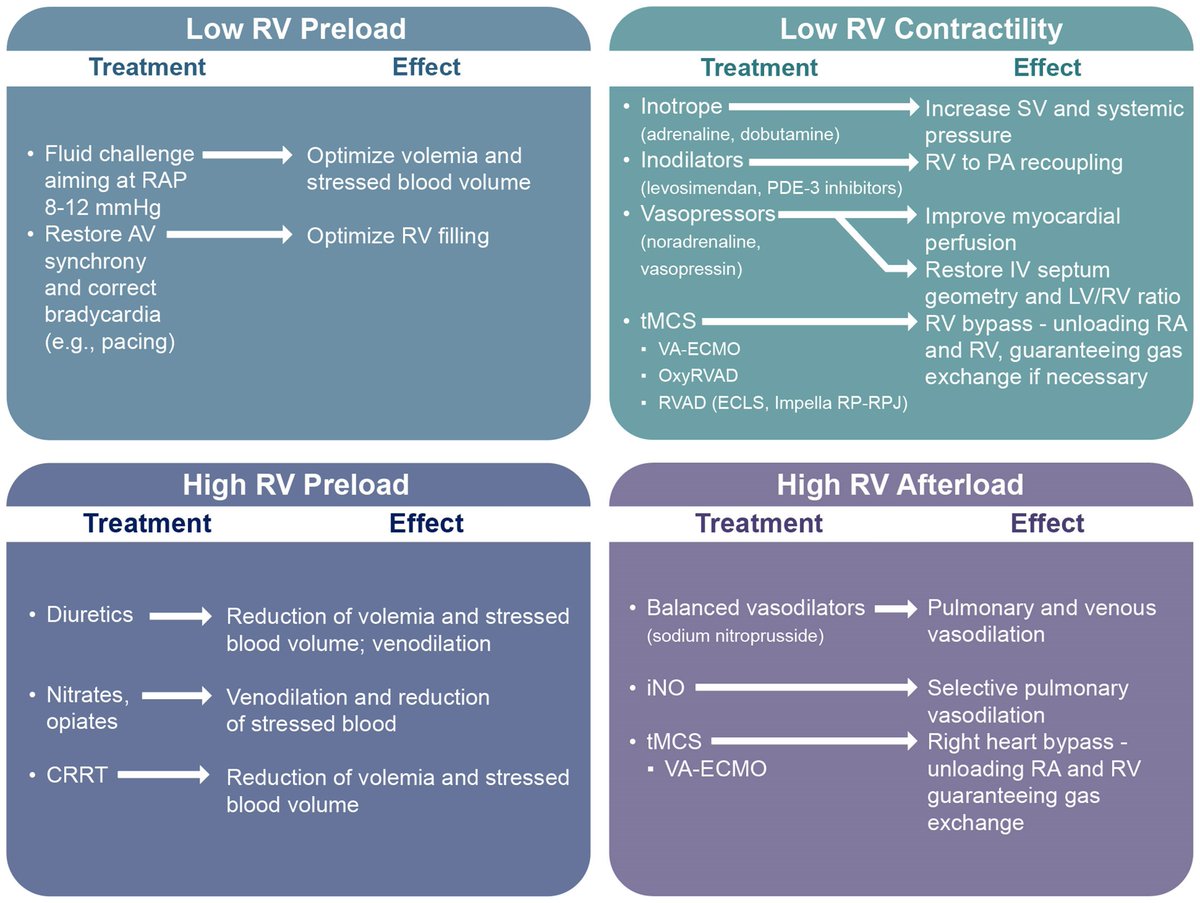
The application of mechanical circulatory support in special conditions
https://t.co/JKgcYjlUQ5
Join us to read 1 paper per day and stay up-to-date as we cover the spectrum of critical care across 2025
Perioperative renin-angiotensin system inhibitor management remains a debate: stopping reduces hypotension but increases hypertension, with no clear effect on mortality and major cardiovascular events or mortality. https://t.co/5uUtqvW4Cm
Today's Paper of the Day is:
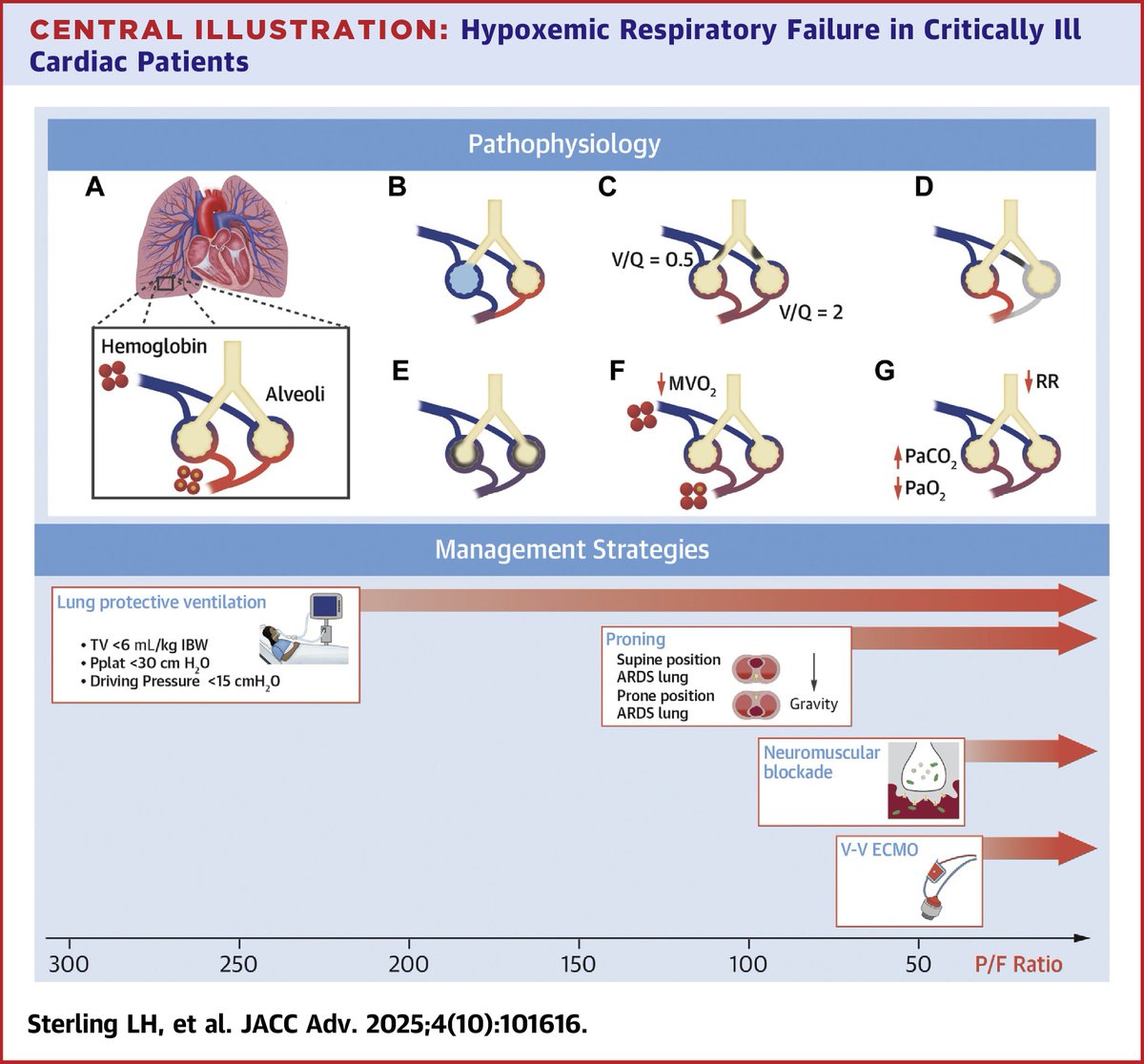
Navigating Hypoxemic Respiratory Failure in Critically Ill Cardiac Patients
https://t.co/JKgcYjlUQ5
Join us to read 1 paper per day and stay up-to-date as we cover the spectrum of critical care across 2025
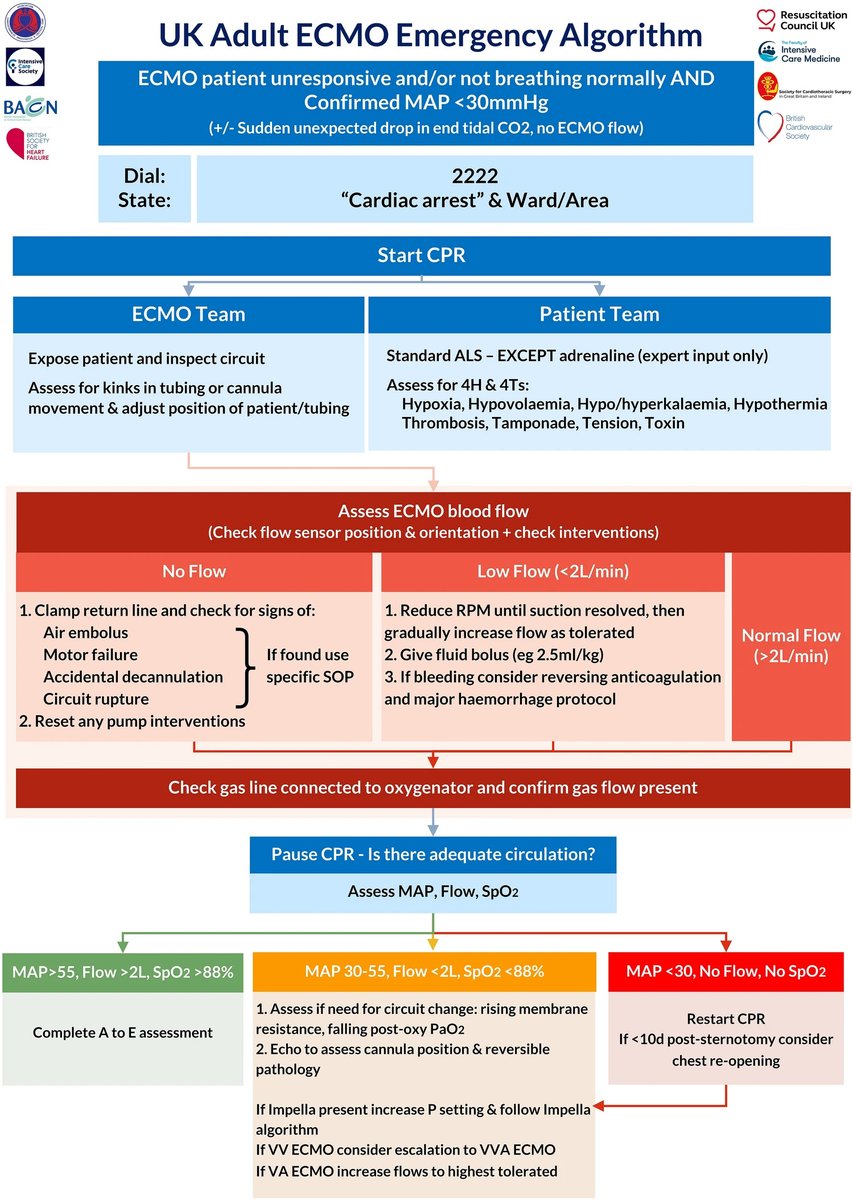
British societies guideline on the management of emergencies in patients on extracorporeal membrane oxygenation
CCR Journal Watch - tracking the critical care literature daily
https://t.co/Sp06oA6IDG
🌍 Ventilator-associated pneumonia (VAP) varies widely between regions — but why? Definitions, diagnosis & practice all play a role. A must-read review in BJA Education. #BJAEd https://t.co/RbEMLPOQ86
Patients with adult congenital heart disease (ACHD) are living longer 🫀➡️ increasing presentations for non-cardiac surgery. What does this mean for perioperative risk, planning & anaesthesia? 📘 New #BJAEd review. https://t.co/FAc3XKvaxo
Hypnosis & anaesthesia
Despite 142 identified studies describing 9238 patients, of which 59 were RCTs, the overall quality of the retrieved studies was weak and the level of evidence of the impact of hypnosis in this setting ranges from absent to moderate.
#anaesthesia #MedTwitter
https://t.co/swbeYJAyQA
Oooh, this is interesting!
"Surgical start timing was an independent risk factor for increased short- and long-term postoperative mortality, morbidity and healthcare resource utilisation."
#anaesthesia#MedTwitter
https://t.co/CdQylJjGN8
Today's Paper of the Day is:
Personalized antiseizure medication therapy in critically ill adult patients
https://t.co/JKgcYjlUQ5
Join us to read 1 paper per day and stay up-to-date as we cover the spectrum of critical care across 2025
🔍 Identify unique features of ICU airway management.
Critically ill patients have physiologically difficult airways due to hypoxaemia, shock, and poor reserve—very different from elective theatres.
Full article 👉 https://t.co/QrJhXRltSM
#ICU#AirwayManagement
Yay it's a new guideline!!
Association of Anaesthetists guidelines: safe vascular access 2025
Get reading!
#anaesthesa#MedTwitter
https://t.co/2QKLPWOYXl
When VL was used as the first-choice device:
⬇️ patients experiencing at least 1 complication (5.5% vs. 9.7%)
⬇️ 3+ intubation attempts (1.2% v 2%)
⬇️ need to change operator (1.8% vs. 4.9%)
⬇️ oesophageal intubation (0.5% vs. 1.4%)
#anaesthesia#MedTwitter
https://t.co/f10XvyQRSi