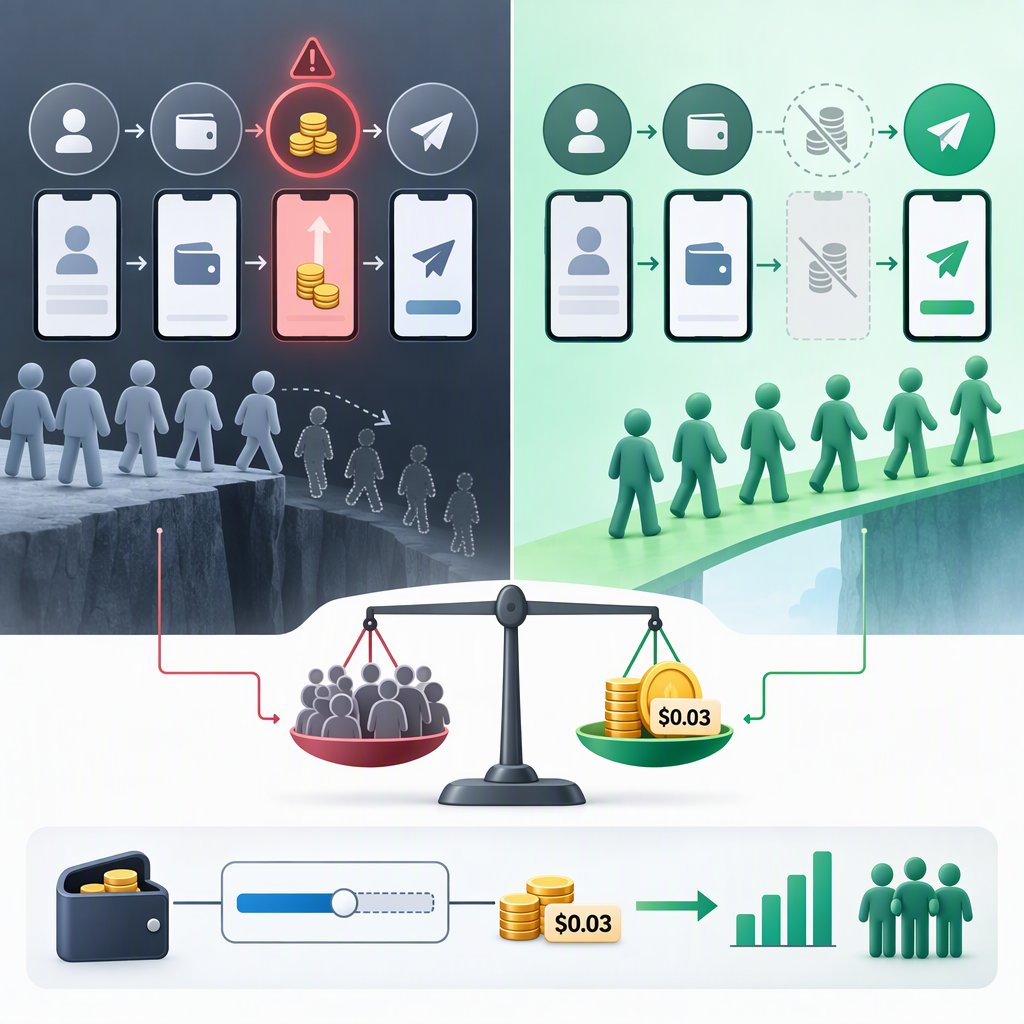
Our favourite payment metric is completed payments ÷ started payments. It puts abandoned flows in the picture. We'd track the fee-funding step alongside it to see where people get stuck. Every extra step deserves scrutiny. 📊
Suppose sponsoring a user's first transfer costs $0.03. We'd compare that with the users lost at the gas-funding step. Fee sponsorship belongs in the onboarding budget, with limits and a clear way to measure results. 🧮
The ECB launched Pontes, bringing central bank money into the settlement of tokenized assets.
The interesting part isn’t whether finance moves on-chain anymore, but how much blockchain complexity users and institutions will actually have to see.
You sign the message. A relayer validates and submits the transaction while handling the associated gas. The blockchain stays underneath.
This is how we make the annoying part stop being the user’s problem.
Ethereum opened an enormous world of applications, assets and smart contracts.
Our interest is simply to make interacting with that world less dependent on users thinking about gas.
Gasless doesn’t mean the blockchain stops charging fees.
It means you no longer make the user have to manage them. Instead, a relayer can handle the transaction and gas behind the scenes.
This is far less friction at the interface.
Wallet connect: 1,000 users.
First successful transaction: 340.
Every team has some version of this gap and blames the UI. It's usually not the UI. Or at least not just.
A project sends you $12 in tokens. Claiming them costs $9 in gas. So the allocation sits there until it expires, and the distribution the team paid for never reaches the people it was meant for.