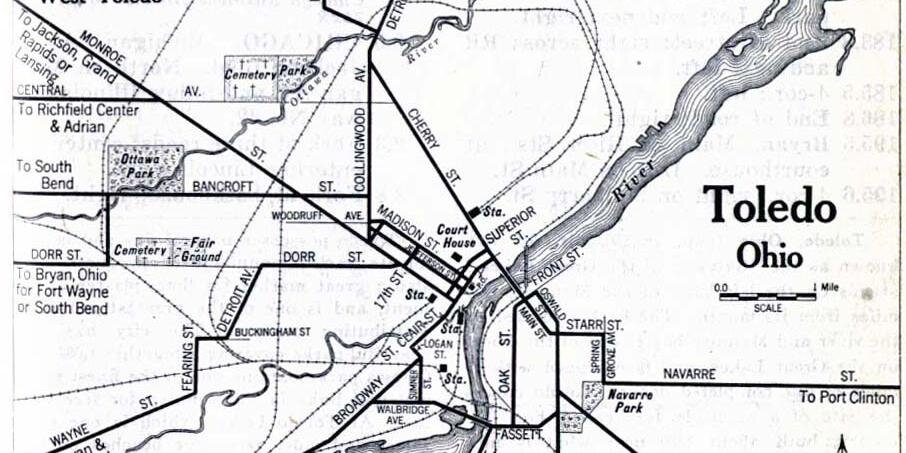
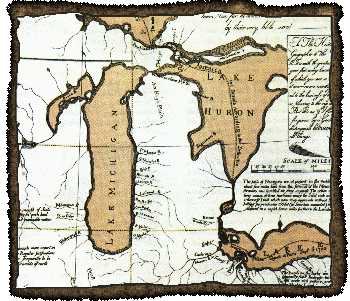
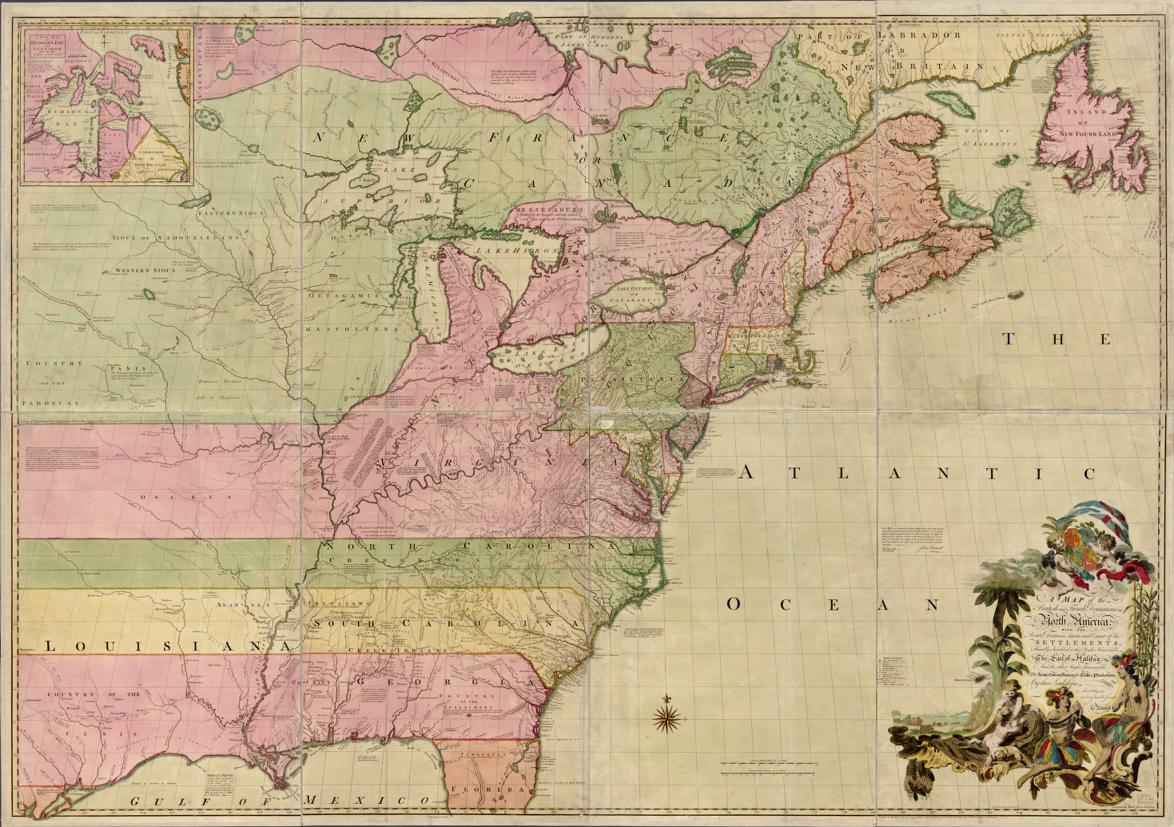
The Michigan-Ohio War was a largely bloodless boundary dispute between Michigan Territory and Ohio from 1835 to 1836 over the Toledo Strip, a narrow piece of land that both claimed because of conflicting early maps.
Congress ultimately settled the dispute by awarding Toledo to Ohio, while Michigan received most of the Upper Peninsula as compensation, allowing it to enter the Union as the 26th state in 1837.
At the time, many Michiganders believed they had accepted the worse deal because the Upper Peninsula was remote and sparsely populated. That perception changed after major deposits of iron and copper were discovered in the region, helping fuel Michigan's economy for decades.
Wisconsin had no say in the settlement because it did not yet exist as a territory, and much of the Upper Peninsula would likely have become part of Wisconsin had Congress not awarded it to Michigan.
Toledo grew rapidly during the 19th and early 20th centuries as a Great Lakes port and a center for glassmaking, automobile parts, and heavy manufacturing. Like many industrial cities in the Midwest, however, it was hit hard after the 1950s by factory closures, automation, suburbanization, and the loss of manufacturing jobs. Its population peaked at nearly 384,000 in 1970 and has since fallen to around 265,000.
#archaeohistories
Being in a good mood is the most courageous thing you can do. Because when you sulk, you brand yourself as a victim. You tell everyone around you to no longer expect greatness out of you. Without those expectations, you're free to continue blaming the world for your shortcomings
But if you choose positivity, you suddenly become a source of safety, inspiration, and optimism for everyone around you. You can't hide anymore. You have to actually believe in yourself now and finally take on the responsibility of a person who's capable of changing lives
Coast Guard rescue swimmer Scott Ruskan saved 165 lives in the Texas flash floods.
The 26-year-old, a former KPMG accountant, directed Army Blackhawk 60s and MH-65s to survivors and helped get them to safety, according to the New York Post.
“Ruskan spearheaded a high-risk rescue mission under the worst possible environmental conditions, which in the end saw 165 brought to safety,” the NYP reported.
“I’m just doing a job,” he told the NYP.
“This is what I signed up for, and I think that any single Coast Guard rescue swimmer or any single Coast Guard pilot, flight mechanic, whoever it may be, would have done the exact same thing in our situation.”
“That’s what we were asked to do and we’re gonna do it. Any one of us, if anyone else was on duty that day, they would have done the same thing as us.”
“We just happened to be the crew that got the case.”
I'll be at the Ohio GIS Conference this September 14-16. You can and should whip up an abstract before the deadline expires (you can just talk about whatever you want, just write a suitably vague abstract). See you there probably! hashtag#OHIOGIS25
Here is a fascinating map for your Friday! Cartographer Muhammad Al-Idrisi completed in 1154 one of the most detailed geographical works of the medieval period. This facsimile was made by Konrad Miller in 1928. You will notice that south is at the top!
https://t.co/kB3i540lXy
Congratulations to the first ever North Arrow March Madness winner (ArcMap edition): ESRI North 2. Thanks to everyone that participated in this -- it was a blast to get nerdy with north arrows with you. Did your favorite win? What do you think about North 2 winning?
Curious about our collections? Join Geography & Map Division staff next Tuesday, April 8, at 3pm Eastern for a virtual orientation to our collections and services!
Register here: https://t.co/E7Ld6QMg6N
As a lifelong Michigander, I was born to hate the state of Ohio.
Michigan vs. Ohio State, Detroit vs. Cleveland...you kind of just get thrown into the rivalry between the two states.
Then, I visited Toledo last week for the #NCAA Regionals. While the drive was...interesting, being downtown was pretty cool. It's like a miniature Detroit.
From having top-notch facilities at the rink and ballpark, to seeing the amount of support the @ToledoWalleye and @MudHens have around the city, not just at the venues, it was such a cool place to be. Getting to experience Hensville on opening weekend was fun, too!
I cannot express this enough: the amount of coverage of the local teams was incredible. Whether it be on TV or in the newspaper, you can tell the media wants people to know how the Fish and Hens are doing (I can't say the same for where I live)
So, while I might still loathe the Buckeyes and driving in the state of Ohio, I really enjoyed being in Toledo...I'll be back, for sure.