This Turkish man is the Turkish John Wick ! 😂
He won an Olympic medal with his hand in his pocket, as if he were going to the market, without using any equipment.
That's the next level!
5 Best Book to Learn Java
1. Head First Java - https://t.co/RV4UOa6hVP
2. Effective Java - https://t.co/j1LwgNxdPw
3. Head First Design Patterns - https://t.co/RATJ75Cx0y
4. Java Concurrency in Practice - https://t.co/WZfp6n13UL
5. Java By Comparison - https://t.co/6FrHzKtf5e
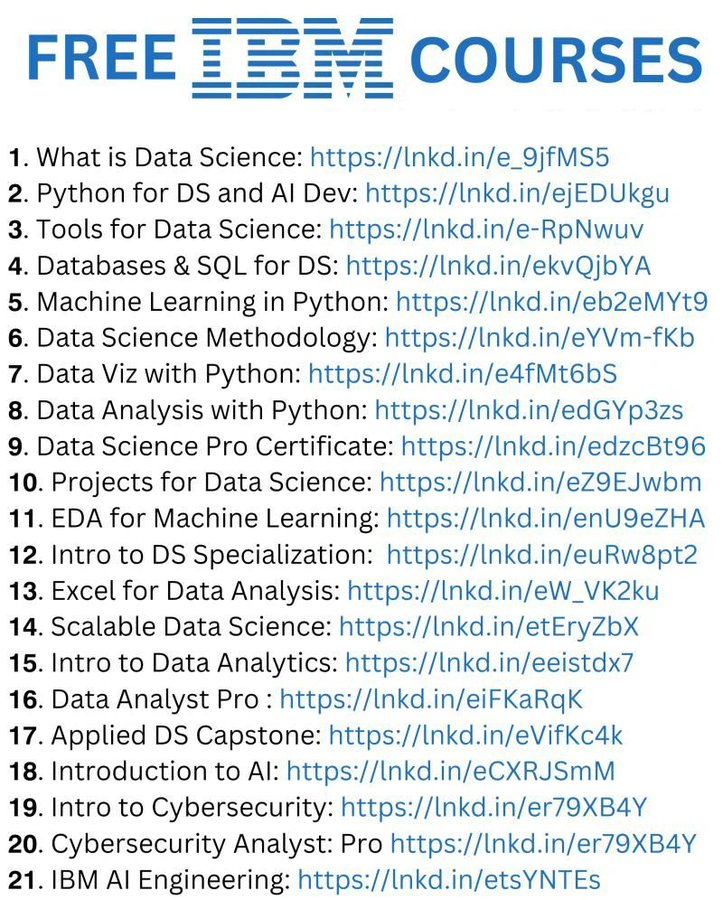
If you are looking for courses about Data Science, I have compiled the 20+ Best IBM Courses that I found super high quality and helpful.
🪢 7000+ Course Access : https://t.co/5swIKPmj5J
𝟭. What is Data Science: https://t.co/McLuYks9CK
𝟮. Python for DS and AI Dev: https://t.co/VhFcO2UkZv
𝟯. Tools for Data Science: https://t.co/At4eGOoQaw
𝟰. Databases & SQL for DS: https://t.co/rKtQbiRwCF
𝟱. Machine Learning in Python: https://t.co/73ehZG56su
𝟲. Data Science Methodology: https://t.co/xbqbqpncSN
𝟳. Data Viz with Python: https://t.co/W71jtXuJck
𝟴. Data Analysis with Python: https://t.co/YIsIewpLYb
𝟵. Data Science Pro Certificate: https://t.co/n74CBdIc3z
𝟭𝟬. Projects for Data Science: https://t.co/DPM9gOKzbY
𝟭𝟭. EDA for Machine Learning: https://t.co/9jbn5q3oeH
𝟭𝟮. Intro to DS Specialization: https://t.co/z76ZS9lngr
𝟭𝟯. Excel for Data Analysis: https://t.co/k4rX5smuQy
𝟭𝟰. Scalable Data Science: https://t.co/aFwS1V3qGJ
𝟭𝟱. Intro to Data Analytics: https://t.co/V5EthDirnL
𝟭𝟲. Data Analyst Pro : https://t.co/fRfwqGQ6qd
𝟭𝟳. Applied DS Capstone: https://t.co/0jkgoWOSVx
𝟭𝟴. Introduction to AI: https://t.co/h49rEPRYRa
𝟭𝟵. Intro to Cybersecurity: https://t.co/lW2vxJfJ5B
𝟮𝟬. Cybersecurity Analyst:https://t.co/OjP8oZ5lyC
𝟮𝟭. IBM AI Engineering: https://t.co/KtJ14s1MF8
**Note 7 days trial is Free
#datascience #dataengineering #ai #machinelearning
This week we will cover:
— How does SSO work
— Caching eviction strategies
— The main components of docker
— Strategies for cloud resource optimization
Don’t want to miss out? Subscribe to our free newsletter for a weekly deep dive & content roundup: https://t.co/o8ShggS5mk
What is Chaos Engineering, and how does it work?
We just released an article in our newsletter breaking down;
— Principles of Chaos Engineering
— Key practices
— Implementing Chaos Engineering
— And more...
Missed the issue? Check it out here: https://t.co/grSgoW9o3a
Top 5 Book to Learn Java
1. Head First Java - https://t.co/wGQFwEYgQN
2. Effective Java - https://t.co/KMdkgiqRfJ
3. Head First Design Patterns - https://t.co/TvnQWxM3tg
4. Java Concurrency in Practice - https://t.co/GkitmflPhw
5. Java By Comparison - https://t.co/bcjpFHhYgc
This week we will cover:
— API architectural styles
— Application profiling and optimization
— Linux permissions
— The most prominent deployment patterns
Don’t want to miss out? Subscribe to our free newsletter for a weekly deep dive & content roundup: https://t.co/nLXHushrhP
After integrating 100+ APIs, I created this list of questions.
I have 5 main areas:
- Technical Aspects
- Performance and Scalability
- Security Considerations
- Support
- Testing and Monitoring
Technical Aspects:
1. What type of API are we dealing with (REST, SOAP, GraphQL)?
2. What authentication method is required (API keys, OAuth, JWT)?
3. Are there different levels of access for different users?
4. What data formats does the API support (JSON, XML)?
5. What specific operations can each endpoint perform?
6. Are there any rate limits or quotas?
7. How does the API communicate errors? Are you following any standards for error messages?
Performance and Scalability
1. What is the expected response time?
2. Can the API handle the expected load? You have to do your diligence here and come up with what you expect as a consumer.
3. Are there mechanisms for scaling?
4. Is caching applicable? What are the appropriate caching strategies?
Security Considerations
1. What encryption standards are used? In some APIs, you will have to send your sensitive data encrypted.
2. Does the API meet industry compliance standards (GDPR, HIPAA)?
3. What are you doing with my info?
Support
1. Where can I find the API documentation? Are there code samples and use cases?
2. What level of support does the API provider offer? Are there SLAs in place?
3. How does the API handle versioning? What is the policy for deprecating older versions?
Testing and Monitoring
1. Is there a sandbox environment for testing?
2. What logging mechanisms are in place? When things fail, how can you see the logs on their side?
If you are building software, there are 99% you need to integrate with an API.
Never leave an integration meeting without an answer to these questions.
What other questions would you add?
Con un profundo dolor, quiero compartir la noticia del fallecimiento de nuestra querida Cristina Pacheco. La recordaremos siempre como la mujer que enalteció al Canal Once y a quien le entregó su vida. Mi más sinceras condolencias a su hija y a todos sus seres queridos.
El @CanalOnceTV está de luto ante la partida de una mujer extraordinaria, en toda la extensión de la palabra.
Hasta siempre, Sra. Pacheco. Me quedo con las últimas palabras que hablamos, esa cena pendiente y ese caluroso abrazo, que lo tendré en mi corazón toda la vida.
Explaining JSON Web Token (JWT) with simple terms.
We've made a video (YouTube Link at the end).
Imagine you have a special box called a JWT. Inside this box, there are three parts: a header, a payload, and a signature.
The header is like the label on the outside of the box. It tells us what type of box it is and how it's secured. It's usually written in a format called JSON, which is just a way to organize information using curly braces { } and colons : .
The payload is like the actual message or information you want to send. It could be your name, age, or any other data you want to share. It's also written in JSON format, so it's easy to understand and work with.
Now, the signature is what makes the JWT secure. It's like a special seal that only the sender knows how to create. The signature is created using a secret code, kind of like a password. This signature ensures that nobody can tamper with the contents of the JWT without the sender knowing about it.
When you want to send the JWT to a server, you put the header, payload, and signature inside the box. Then you send it over to the server. The server can easily read the header and payload to understand who you are and what you want to do.
Over to you: When should we use JWT for authentication? What are some other authentication methods?
Watch and subscribe here: https://t.co/ceOyyonas5
MVC vs MVP architecture — what’s the difference?
MVC (Model View Controller) and MVP (Model View Presenter) are design patterns that separate an application into distinct components. Both patterns aim to separate concerns, but they have some differences in their approach.
𝗧𝗼 𝗴𝗲𝘁 𝗮 𝗰𝗹𝗲𝗮𝗿 𝗽𝗶𝗰𝘁𝘂𝗿𝗲 of how each pattern works and the differences between them, 𝗹𝗲𝘁’𝘀 𝗯𝗿𝗲𝗮𝗸 𝗱𝗼𝘄𝗻 𝗵𝗼𝘄 𝘁𝗵𝗲𝘆 𝗼𝗽𝗲𝗿𝗮𝘁𝗲:
𝟭) 𝗨𝘀𝗲𝗿 𝗶𝗻𝘁𝗲𝗿𝗮𝗰𝘁𝗶𝗼𝗻
Both patterns start when a user interacts with the application's UI, which is managed by the View.
𝟮) 𝗘𝘃𝗲𝗻𝘁 𝗵𝗮𝗻𝗱𝗹𝗶𝗻𝗴
The view recognizes user activities that cause events, such as button clicks or keystroke events. In MVC, the View forwards the event to the corresponding Controller. Whereas, in MVP, the View forwards the event to the related Presenter.
𝟯) ��𝘂𝘀𝗶𝗻𝗲𝘀𝘀 𝗹𝗼𝗴𝗶𝗰
In both patterns, the Controller and Presenter take over at this stage. Both components process the event and apply any business logic required. They also decide if data manipulation is necessary, and if so they interact with the Model.
𝟰) 𝗠𝗼𝗱𝗲𝗹 𝗨𝗽𝗱𝗮𝘁𝗲
The process at this stage is again very similar for both patterns. If data changes are required, then both the Controller and Presenter will instruct the Model to update its data. The Model will then handle the data manipulation and persist the changes.
𝟱) 𝗨𝗜 𝘂𝗽𝗱𝗮𝘁𝗲𝘀
𝗧𝗵𝗶𝘀 𝗶𝘀 𝘁𝗵𝗲 𝗺𝗮𝗶𝗻 𝗮𝗿𝗲𝗮 𝘄𝗵𝗲𝗿𝗲 𝘁𝗵𝗲 𝘁𝘄𝗼 𝗱𝗲𝘀𝗶𝗴𝗻 𝗽𝗮𝘁𝘁𝗲𝗿𝗻𝘀 𝗱𝗶𝗳𝗳𝗲𝗿. In the MVC pattern, the 𝗩𝗶𝗲𝘄 𝗹𝗶𝘀𝘁𝗲𝗻𝘀 𝗳𝗼𝗿 𝗰𝗵𝗮𝗻𝗴𝗲𝘀 𝗶𝗻 𝘁𝗵𝗲 𝗠𝗼𝗱𝗲𝗹 𝗮𝗻𝗱 𝘂����𝗱𝗮𝘁𝗲𝘀 𝗶𝘁𝘀𝗲𝗹𝗳 𝗮𝗰𝗰𝗼𝗿𝗱𝗶𝗻𝗴𝗹𝘆. In MVP, the 𝗣𝗿𝗲𝘀𝗲𝗻𝘁𝗲𝗿 𝗽𝗹𝗮𝘆𝘀 𝗮𝗻 𝗮𝗰𝘁𝗶𝘃𝗲 𝗿𝗼𝗹𝗲. It fetches the new data from the Model and directly updates the View to reflect those changes.
𝗠𝗩𝗣 𝘄𝗮𝘀 𝗲𝘀𝘁𝗮𝗯𝗹𝗶𝘀𝗵𝗲𝗱 𝗮��𝘁𝗲𝗿 𝗠𝗩𝗖 to improve on the drawbacks of MVC. Both patterns aim to separate concerns and improve maintainability. However, their 𝗽𝗿𝗼𝗰𝗲𝗱𝘂𝗿𝗲 𝗱𝗶𝘃𝗲𝗿𝗴𝗲𝘀 𝘄𝗵𝗲𝗻 𝗶𝘁 𝗰𝗼𝗺𝗲𝘀 𝘁𝗼 𝘄𝗵𝗼 𝗵𝗮𝗻𝗱𝗹𝗲𝘀 𝘁𝗵𝗲 𝗯𝘂𝘀𝗶𝗻𝗲𝘀𝘀 𝗹𝗼𝗴𝗶𝗰 and 𝗵𝗼𝘄 𝘁𝗵𝗲 𝗨𝗜 𝗴𝗲𝘁𝘀 𝘂𝗽𝗱𝗮𝘁𝗲𝗱. 𝗠𝗩𝗖 𝗶𝘀 𝘁𝘆𝗽𝗶𝗰𝗮𝗹𝗹𝘆 𝗹𝗲𝘀𝘀 𝗰𝗼𝗺𝗽𝗹𝗲𝘅 but it 𝗰𝗮𝗻 𝗵𝗮𝘃𝗲 𝘁𝗶𝗴𝗵𝘁𝗹𝘆 𝗰𝗼𝘂𝗽𝗹𝗲𝗱 𝗰𝗼𝗺𝗽𝗼𝗻𝗲𝗻𝘁𝘀. Whereas, 𝗠𝗩𝗣 𝗶𝘀 𝗴𝗲𝗻𝗲𝗿𝗮𝗹𝗹𝘆 𝗺𝗼𝗿𝗲 𝗰𝗼𝗺𝗽𝗹𝗲𝘅 but 𝗵𝗮𝘀 𝗺𝗼𝗿𝗲 𝗱𝗲𝗰𝗼𝘂𝗽𝗹𝗲𝗱 𝗰𝗼𝗺𝗽𝗼𝗻𝗲𝗻𝘁𝘀.