𝗦𝘁𝗮𝘁𝗲𝗳𝘂𝗹 𝘃𝘀 𝗦𝘁𝗮𝘁𝗲𝗹𝗲𝘀𝘀 𝗗𝗲𝘀𝗶𝗴𝗻.
Do you know the differences?
A 𝘀𝘁𝗮𝘁𝗲𝗹𝗲𝘀𝘀 service keeps nothing between requests. Each request carries what the server needs, like a token or an ID, so any instance can handle it. Scaling is simple: add instances behind a load balancer, and losing one loses nothing.
A 𝘀𝘁𝗮𝘁𝗲𝗳𝘂𝗹 service remembers. A session, an open connection or a shopping cart lives on the server between requests. Interactions get richer, but requests now have to reach the right instance, and losing it means losing that state.
If you're building AI agents that need to remember, here's a great breakdown → https://t.co/uApj7mfxpR
Most systems get both by keeping services stateless and moving state into a shared store, a database or cache every instance can reach.
Stateless = easy to scale. Stateful = continuity. Externalised state = both.
LLMs are stateless too. Every call starts fresh, and the model only knows what's in the prompt. An agent that "remembers" is doing the same trick: keeping its state outside the model and loading it back in.
But an agent's state is harder than a shopping cart.
The current conversation has to stay small enough to fit.
What a user said last month has to be found by meaning, not by key.
And one user's memories can never surface for another.
That changes how agent memory should be designed.
What else would you add?
——
💾 Save it for later.
🙏 Thanks to @OracleDevs for sponsoring this post.
➕ Follow Nikki Siapno to improve at system design and AI engineering.
𝗠𝗖𝗣 𝘃𝘀 𝗔𝗣𝗜.
An 𝗔𝗣𝗜 defines how software systems communicate through specific endpoints, requests, and responses. It gives applications a structured way to access data or trigger functionality in another system.
𝗠𝗖𝗣 gives AI applications a standardized way to discover and use external tools, data, and resources. Instead of building custom integrations for every AI client, an MCP server exposes capabilities through a common protocol.
MCP doesn't replace APIs. Most MCP servers wrap them.
APIs expose the service. MCP makes it usable by a model. Or a human. The barrier to entry for non-technical people to interact with platforms has been drastically reduced.
But once a model decides what to call, the work it does gets harder to track.
Agents finish tasks without status updates while people shift priorities. Permissions limit what an agent can touch, but they don't show whether its work still matches the strategy that funded it.
Tempo Loop connects to the tools teams already use, like Jira, to 𝘁𝗿𝗮𝗰𝗸 𝗮𝗻𝗱 𝗴𝗼𝘃𝗲𝗿𝗻 𝗵𝘂𝗺𝗮𝗻 𝗮𝗻𝗱 𝗔𝗜 𝘄𝗼𝗿𝗸, 𝗮𝗻𝗱 𝘄𝗵𝗮𝘁 𝗶𝘁 𝗰𝗼𝘀𝘁𝘀, 𝗶𝗻 𝗼𝗻𝗲 𝗹𝗶𝘃𝗲 𝘃𝗶𝗲𝘄. When work drifts, it recommends a fix while there's still time to act, then updates those tools once the change is approved.
𝗦𝗲𝗲 𝗵𝗼𝘄 𝗧𝗲𝗺𝗽𝗼 𝗟𝗼𝗼𝗽 𝘄𝗼𝗿𝗸𝘀 → https://t.co/uP3DzJ7lFc
What else would you add?
——
💾 Save it for later.
🙏 Thanks to @TempoHQ for sponsoring this post.
𝗢𝗔𝘂𝘁𝗵 𝘃𝘀 𝗔𝗣𝗜 𝗞𝗲𝘆 𝘃𝘀 𝗕𝗮𝘀𝗶𝗰 𝗔𝘂𝘁𝗵 𝘃𝘀 𝗺𝗧𝗟𝗦.
Do you know the differences?
They all help secure access, but what they actually verify, and how they do it, is very different.
𝗢𝗔𝘂𝘁𝗵 𝟮.𝟬 uses scoped access tokens to let applications access resources without sharing user passwords. Tokens can expire and access can be revoked.
𝗔𝗣𝗜 𝗞𝗲𝘆𝘀 use a shared secret to identify and authenticate the calling application. They're simple to implement, but the key itself doesn't prove who holds it.
𝗕𝗮𝘀𝗶𝗰 𝗔𝘂𝘁𝗵 sends a username and password with every request. It's straightforward, but credentials must be protected with HTTPS.
𝗺𝗧𝗟𝗦 uses certificates to authenticate both the client and server during the TLS handshake. It's useful for service-to-service communication where both sides need to verify identity.
But choosing an authentication method is only part of the problem. You also need to manage credentials throughout their lifecycle.
Take CI/CD pipelines. A deployment might depend on a long-lived API key or deploy key stored in its secrets.
Even if it's stored securely, that credential can still be leaked, copied, or forgotten. And rotating it can break deployments that depend on it.
One approach is to replace static credentials with 𝘀𝗵𝗼𝗿𝘁-𝗹𝗶𝘃𝗲𝗱, 𝗶𝗱𝗲𝗻𝘁𝗶𝘁𝘆-𝗯𝗮𝘀𝗲𝗱 𝗮𝗰𝗰𝗲𝘀𝘀.
Instead of retrieving a stored secret, the pipeline proves its identity and receives a credential scoped to what it needs. That credential expires automatically.
Teleport Machine ID implements this approach by letting CI/CD runners use their platform identity to obtain short-lived certificates instead of storing deploy keys.
This reduces the need to manage long-lived credentials while keeping access tied to specific machine identities.
𝗟𝗲𝗮𝗿𝗻 𝗵𝗼𝘄 𝘁𝗼 𝗲𝗹𝗶𝗺𝗶𝗻𝗮𝘁𝗲 𝘀𝘁𝗮𝘁𝗶𝗰 𝗰𝗿𝗲𝗱𝗲𝗻𝘁𝗶𝗮𝗹𝘀 → https://t.co/IcYTejXqHH
What else would you add?
——
💾 Save it for later.
🙏 Thanks to @goteleport for sponsoring this post.
➕ Follow Nikki Siapno to improve at system design and AI engineering.
𝗖𝗼𝗻𝘁𝗮𝗶𝗻𝗲𝗿𝘀 𝘃𝘀 𝗩𝗶𝗿𝘁𝘂𝗮𝗹 𝗠𝗮𝗰𝗵𝗶𝗻𝗲𝘀 𝘃𝘀 𝗦𝗮𝗻𝗱𝗯𝗼𝘅𝗲𝘀.
Do you know the differences?
Containers isolate processes.
VMs isolate operating systems.
Sandboxes restrict what untrusted code can access.
But when the code comes from an AI agent, containing the run is only half of it.
The agent's output still has to land somewhere: the company's codebase, its live product. A sandbox limits what code can touch while it runs, not what ships afterwards.
So the boundary has two parts: an isolated place for the agent to work, and a review step before changes reach production.
Replit runs agents in isolated cloud environments, away from employee laptops. For work on an existing company codebase, agents turn their work into proposed changes for engineering to review.
The agent proposes the change.
Engineering decides what ships.
𝗦𝗲𝗲 𝗵𝗼𝘄 𝗥𝗲𝗽𝗹𝗶𝘁 𝗿𝘂𝗻𝘀 𝗮𝗴𝗲𝗻𝘁𝘀 𝗳𝗼𝗿 𝗰𝗼𝗺𝗽𝗮𝗻𝗶𝗲𝘀 → https://t.co/Q3hwKAwPRy
Read the post below for more details on 𝗖𝗼𝗻𝘁𝗮𝗶𝗻𝗲𝗿𝘀 𝘃𝘀 𝗩𝗶𝗿𝘁𝘂𝗮𝗹 𝗠𝗮𝗰𝗵𝗶𝗻𝗲𝘀 𝘃𝘀 𝗦𝗮𝗻𝗱𝗯𝗼𝘅𝗲𝘀.
Thanks to @Replit for sponsoring this post.
𝗦𝗟𝗢 𝘃𝘀 𝗦𝗟𝗜 𝘃𝘀 𝗦𝗟𝗔.
An 𝗦𝗟𝗜 (Service Level Indicator) measures what’s actually happening in your system; like request latency, error rate, or uptime. It’s the raw signal that tells you how your service is performing.
An 𝗦𝗟𝗢 (Service Level Objective) defines the acceptable range for an SLI, like “99.9% of requests succeed within 200ms.” It’s what your team aims to achieve to maintain reliability.
An 𝗦𝗟𝗔 (Service Level Agreement) is a formal contract with users or customers, often tied to penalties if targets aren’t met. It defines the consequences, not just the goal.
But a service isn't the only thing teams hold to a target.
A roadmap is a target too: which initiatives get the people, time and budget. Most roadmaps have no SLI behind them. People move, priorities shift, AI agents take on work without status updates, and the gap between plan and reality grows quietly.
Measuring that gap starts with the data work already produces. Tempo Loop connects time, capacity, spend and financials into one continuously updated view of whether the work still matches the strategy that funded it, for human and AI work alike.
𝗘𝘅𝗽𝗹𝗼𝗿𝗲 𝗧𝗲𝗺𝗽𝗼 𝗟𝗼𝗼𝗽 → https://t.co/zB2PlJ4Ouw
What else would you add?
——
♻️ Repost to help others learn and grow.
🙏 Thanks to @TempoHQ for sponsoring this post.
➕ Follow me ( Nikki Siapno ) to improve at AI and system design.
𝗧𝗼𝗽 𝟴 𝗗𝗲𝗽𝗹𝗼𝘆𝗺𝗲𝗻𝘁 𝗣𝗮𝘁𝘁𝗲𝗿𝗻𝘀.
Do you know the differences?
These patterns all help ship changes, but what actually happens in each strategy is very different and they work at different layers.
Infrastructure Layer.
𝟭) 𝗥𝗼𝗹𝗹𝗶𝗻𝗴: the default for stateless services when two versions can safely overlap. Cheap to run, but rollback is just another slow rollout.
𝟮) 𝗕𝗹𝘂𝗲-𝗴𝗿𝗲𝗲𝗻: when you need fast rollback and can afford two environments. A shared database makes it harder than it looks.
𝟯) 𝗦𝗵𝗮𝗱𝗼𝘄: when you're rewriting a critical path and want to test it against real traffic first. You pay for duplicate load and must isolate side effects.
𝟰) 𝗜𝗺𝗺𝘂𝘁𝗮𝗯𝗹𝗲 𝗶𝗻𝗳𝗿𝗮𝘀𝘁𝗿𝘂𝗰𝘁𝘂𝗿𝗲: when config drift keeps causing surprises. Replacing instances with tested images improves consistency, but requires reliable image builds and provisioning.
Release Layer.
𝟱) 𝗙𝗲𝗮𝘁𝘂𝗿𝗲 𝗳𝗹𝗮𝗴𝘀: when you want to decouple code deployment from releasing 100% of your changes to everyone instantly. Every flag is a code path you'll have to clean up.
𝟲) 𝗖𝗮𝗻𝗮𝗿𝘆: when a change is risky and your metrics catch regressions fast. A small group of real users still hits the bug.
𝟳) 𝗣𝗿𝗼𝗴𝗿𝗲𝘀𝘀𝗶𝘃𝗲 𝗱𝗲𝗹𝗶𝘃𝗲𝗿𝘆: when you want to control exposure using real production signals. Rollouts can advance or stop based on metrics, but reliable observability is essential.
𝟴) 𝗔/𝗕 𝘁𝗲𝘀𝘁𝗶𝗻𝗴: when the question is "is this better?", not "is this safe?". Results need enough traffic to mean anything.
But these patterns only protect the changes that actually use them.
Feature flags can power canaries, A/B tests, and progressive rollouts. But deciding which changes need flags, setting rollout rules, and cleaning them up still falls to engineers.
LaunchDarkly's new Release Autopilot uses AI agents to automate that setup.
It classifies changes by risk, adds feature flags when needed, and progressively releases changes while monitoring live production signals against defined guardrails. It also helps clean up flags after release.
𝗘𝘅𝗽𝗹𝗼𝗿𝗲 𝗥𝗲𝗹𝗲𝗮𝘀𝗲 𝗔𝘂𝘁𝗼𝗽𝗶𝗹𝗼𝘁 → https://t.co/64qWYbIt6b
What else would you add?
——
♻️ Repost to help others learn deployment patterns.
🙏 Thanks to @LaunchDarkly for sponsoring this post.
➕ Follow me ( Nikki Siapno ) to improve at system design and AI.
Concurrency is 𝗡𝗢𝗧 Parallelism.
These terms are often used interchangeably. But they describe very different ideas.
As Rob Pike (one of the creators of Go) put it:
𝗖𝗼𝗻𝗰𝘂𝗿𝗿𝗲𝗻𝗰𝘆 is about 𝙙𝙚𝙖𝙡𝙞𝙣𝙜 𝙬𝙞𝙩𝙝 lots of things at once.
𝗣𝗮𝗿𝗮𝗹𝗹𝗲𝗹𝗶𝘀𝗺 is about 𝙙𝙤𝙞𝙣𝙜 lots of things at once.
Here’s the difference in practice:
Concurrency
↳ Multiple tasks are in progress.
↳ Work is interleaved to use resources efficiently
Parallelism
↳ Multiple tasks are executing simultaneously
↳ Work happens at the same time across cores or systems
In other words: concurrency helps manage complexity, while parallelism increases throughput.
But switching only stays cheap when the scheduler knows which task is ready. An event loop doesn't check every connection in turn: the OS tells it which ones have data.
With coding agents running in parallel, the scheduler is you. Opening each session to see whether it's done, stuck or waiting on input is the expensive way to switch.
JetBrains Air in IDEs applies the same idea. It runs sessions from the agents you choose across your open projects, and tracks unread updates, changed files and outgoing commits in one place, so your attention goes where it's needed.
𝗧𝗿𝘆 𝗔𝗶𝗿 𝗶𝗻 𝘆𝗼𝘂𝗿 𝗝𝗲𝘁𝗕𝗿𝗮𝗶𝗻𝘀 𝗜𝗗𝗘, 𝗳𝗿𝗲𝗲 𝗳𝗼𝗿 𝗮 𝗹𝗶𝗺𝗶𝘁𝗲𝗱 𝘁𝗶𝗺𝗲 𝘄𝗶𝘁𝗵 𝗝𝘂𝗻𝗶𝗲 𝗟𝗶𝘁𝗲 → https://t.co/8XvR1U6lCG
What else would you add?
——
♻️ Repost to help others learn and grow.
🙏 Thanks to @jetbrains for sponsoring this post.
➕ Follow me ( Nikki Siapno ) to improve at system design and AI.
𝗖𝗼𝗻𝘁𝗮𝗶𝗻𝗲𝗿𝘀 𝘃𝘀 𝗩𝗶𝗿𝘁𝘂𝗮𝗹 𝗠𝗮𝗰𝗵𝗶𝗻𝗲𝘀 𝘃𝘀 𝗦𝗮𝗻𝗱𝗯𝗼𝘅𝗲𝘀.
Do you know the differences?
A 𝗰𝗼𝗻𝘁𝗮𝗶𝗻𝗲𝗿 isolates processes on a shared kernel. Namespaces control what each process can see, and cgroups control what resources it can use. They start fast and pack densely on one host.
For stronger isolation, 𝘃𝗶𝗿𝘁𝘂𝗮𝗹 𝗺𝗮𝗰𝗵𝗶𝗻𝗲𝘀 run their own operating systems. A hypervisor gives each VM virtual hardware and a separate guest kernel, creating a stronger boundary between workloads.
When the code itself can’t be trusted, that’s where 𝘀𝗮𝗻𝗱𝗯𝗼𝘅𝗶𝗻𝗴 comes in. Sandboxes restrict what code can access, such as system calls, network connections, and files. Often built on containers or lightweight VMs, they can use technologies like gVisor, Firecracker, or seccomp filters.
Containers isolate processes. VMs isolate operating systems. Sandboxes restrict what untrusted code can access.
But when the code comes from an AI agent, containing the run is only half of it.
The agent's output still has to land somewhere: the company's codebase, its live product. A sandbox limits what code can touch while it runs, not what ships afterwards.
So the boundary has two parts: an isolated place for the agent to work, and a review step before changes reach production. Replit runs agents in isolated cloud environments, away from employee laptops. For work on an existing company codebase, agents turn their work into proposed changes for engineering to review.
The agent proposes the change. Engineering decides what ships.
𝗦𝗲𝗲 𝗵𝗼𝘄 𝗥𝗲𝗽𝗹𝗶𝘁 𝗿𝘂𝗻𝘀 𝗮𝗴𝗲𝗻𝘁𝘀 𝗳𝗼𝗿 𝗰𝗼𝗺𝗽𝗮𝗻𝗶𝗲𝘀 → https://t.co/Q3hwKAwPRy
What else would you add?
——
♻️ Repost to help others learn and grow.
🙏 Thanks to @Replit for sponsoring this post.
➕ Follow me ( Nikki Siapno ) to improve at system design and AI.
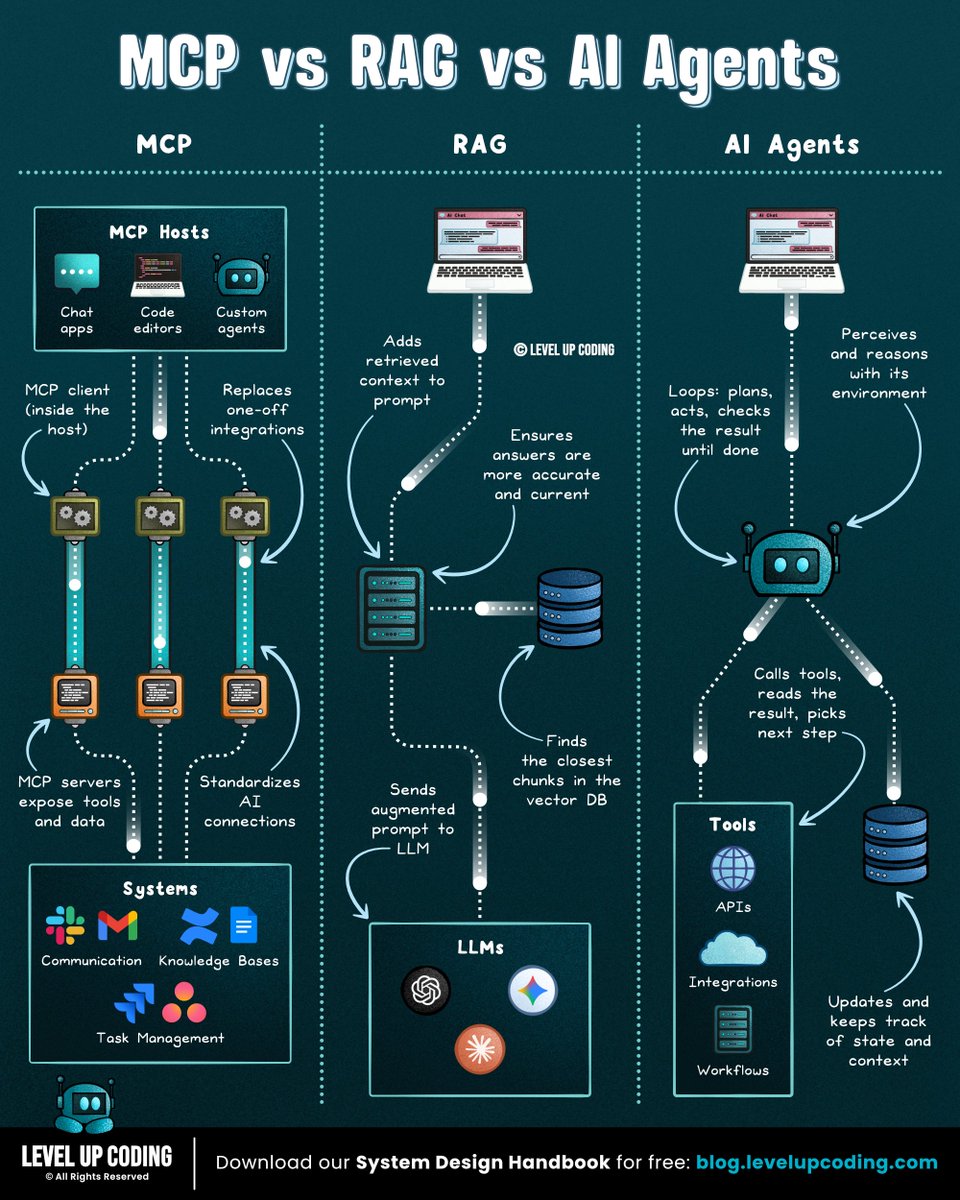
𝗠𝗖𝗣 𝘃𝘀 𝗥𝗔𝗚 𝘃𝘀 𝗔𝗜 𝗔𝗴𝗲𝗻𝘁𝘀.
𝗠𝗖𝗣 𝗶𝘀 𝘁𝗵𝗲 𝗰𝗼𝗻𝗻𝗲𝗰𝘁𝗶𝗼𝗻 𝗹𝗮𝘆𝗲𝗿. It gives AI systems a standard way to connect to external systems and capabilities. MCP servers expose tools for querying databases, calling APIs, or taking actions, without requiring custom integrations for every client. But it handles connectivity, not retrieval.
That's where 𝗥𝗔𝗚 comes in. It searches your docs at query time, pulling relevant chunks into the prompt so answers can draw from your data. Keeping it current means updating an index, not retraining the model. In a basic RAG pipeline, the flow is straightforward: retrieve, then answer.
Now with 𝗔𝗜 𝗔𝗴𝗲𝗻𝘁𝘀, the model runs in a loop: plan a step, call a tool, read the result, repeat until the goal is met. That handles multi-step tasks, at the cost of more latency, tokens, and failure points.
So the choice comes down to the gap you're closing: access to systems, knowledge from your data, or action over many steps.
But executing a task successfully doesn't necessarily mean it's still the right task.
Priorities shift, budgets change, and teams move between projects. Both humans and AI agents can keep executing work that no longer aligns with the bigger plan.
The problem is that strategy, capacity, spend, and execution data often live in different systems. By the time a quarterly review reveals the gap between plan and reality, time and budget have already been spent.
Catching that drift early means continuously connecting what was planned with the work actually happening, across both human teams and AI agents.
Tempo Loop brings together time, capacity, spend, and execution data in one unified view across human and AI-agent work.
It answers a simple question without chasing status updates: Are we still working on the right things?
When something drifts, Loop identifies the gap, recommends corrective actions with tradeoff context, and orchestrates approved changes back into the systems teams already use, like Jira.
𝗔𝗴𝗲𝗻𝘁𝘀 𝗹𝗼𝗼𝗽 𝗼𝗻 𝘁𝗮𝘀𝗸𝘀. 𝗧𝗵𝗶𝘀 𝗼𝗻𝗲 𝗹𝗼𝗼𝗽𝘀 𝗼𝗻 𝗽𝗿𝗶𝗼𝗿𝗶𝘁𝗶𝗲𝘀.
𝗦𝗲𝗲 𝗵𝗼𝘄 𝗧𝗲𝗺𝗽𝗼 𝗟𝗼𝗼𝗽 𝘄𝗼𝗿𝗸𝘀 → https://t.co/gG53bFKIYa
What else would you add?
——
♻️ Repost to help others learn AI.
🙏 Thanks to @TempoHQ for sponsoring this post.
➕ Follow me ( Nikki Siapno ) to improve at AI and system design.
Kubernetes visually explained.
Want to learn more? Deep dive is available in my newsletter.
PS: System design is must for engineers. Download my 218 page System Design Handbook for free and join 35,000+ engineers who get my free weekly newsletter → https://t.co/2dn91uoVrJ
8 Deployment Patterns Engineers Should Know:
These patterns all help ship changes, but what actually happens in each strategy is very different and they work at different layers.
Infrastructure Layer
𝟭) 𝗥𝗼𝗹𝗹𝗶𝗻𝗴: the default for stateless services when two versions can safely overlap. Cheap to run, but rollback is just another slow rollout.
𝟮) 𝗕𝗹𝘂𝗲-𝗴𝗿𝗲𝗲𝗻: when you need fast rollback and can afford two environments. A shared database makes it harder than it looks.
𝟯) 𝗦𝗵𝗮𝗱𝗼𝘄: when you're rewriting a critical path and want to test it against real traffic first. You pay for duplicate load and must isolate side effects.
𝟰) 𝗜𝗺𝗺𝘂𝘁𝗮𝗯𝗹𝗲 𝗶𝗻𝗳𝗿𝗮𝘀𝘁𝗿𝘂𝗰𝘁𝘂𝗿𝗲: when config drift keeps causing surprises. Replacing instances with tested images improves consistency, but requires reliable image builds and provisioning.
Release Layer
𝟱) 𝗙𝗲𝗮𝘁𝘂𝗿𝗲 𝗳𝗹𝗮𝗴𝘀: when you want to decouple code deployment from releasing 100% of your changes to everyone instantly. Every flag is a code path you'll have to clean up.
𝟲) 𝗖𝗮𝗻𝗮𝗿𝘆: when a change is risky and your metrics catch regressions fast. A small group of real users still hits the bug.
𝟳) 𝗣𝗿𝗼𝗴𝗿𝗲𝘀𝘀𝗶𝘃𝗲 𝗱𝗲𝗹𝗶𝘃𝗲𝗿𝘆: when you want to control exposure using real production signals. Rollouts can advance or stop based on metrics, but reliable observability is essential.
𝟴) 𝗔/𝗕 𝘁𝗲𝘀𝘁𝗶𝗻𝗴: when the question is "is this better?", not "is this safe?". Results need enough traffic to mean anything.
But these patterns only protect the changes that actually use them.
Feature flags can power canaries, A/B tests, and progressive rollouts. But deciding which changes need flags, setting rollout rules, and cleaning them up still falls to engineers.
LaunchDarkly's new Release Autopilot uses AI agents to automate that setup.
It classifies changes by risk, adds feature flags when needed, and progressively releases changes while monitoring live production signals against defined guardrails. It also helps clean up flags after release.
𝗘𝘅𝗽𝗹𝗼𝗿𝗲 𝗥𝗲𝗹𝗲𝗮𝘀𝗲 𝗔𝘂𝘁𝗼𝗽𝗶𝗹𝗼𝘁 → https://t.co/64qWYbIt6b
What else would you add?
——
♻️ Repost to help others learn deployment patterns.
🙏 Thanks to @LaunchDarkly for sponsoring this post.
➕ Follow me ( Nikki Siapno ) to improve at system design and AI.
𝗠𝗖𝗣 𝘃𝘀 𝗥𝗔𝗚 𝘃𝘀 𝗔𝗜 𝗔𝗴𝗲𝗻𝘁𝘀.
𝗠𝗖𝗣 is the connection layer. It gives AI systems a standard way to connect to external systems and capabilities. MCP servers expose tools for querying databases, calling APIs, or taking actions, without requiring custom integrations for every client. But it handles connectivity, not retrieval.
That's where 𝗥𝗔𝗚 comes in. It searches your docs at query time, pulling relevant chunks into the prompt so answers can draw from your data. Keeping it current means updating an index, not retraining the model. In a basic RAG pipeline, the flow is straightforward: retrieve, then answer.
Now with 𝗔𝗜 𝗔𝗴𝗲𝗻𝘁𝘀, the model runs in a loop: plan a step, call a tool, read the result, repeat until the goal is met. That handles multi-step tasks, at the cost of more latency, tokens, and failure points.
So the choice comes down to the gap you're closing: access to systems, knowledge from your data, or action over many steps.
But executing a task successfully doesn't necessarily mean it's still the right task.
Priorities shift, budgets change, and teams move between projects. Both humans and AI agents can keep executing work that no longer aligns with the bigger plan.
The problem is that strategy, capacity, spend, and execution data often live in different systems. By the time a quarterly review reveals the gap between plan and reality, time and budget have already been spent.
Catching that drift early means continuously connecting what was planned with the work actually happening, across both human teams and AI agents.
Tempo Loop brings together time, capacity, spend, and execution data in one unified view across human and AI-agent work.
It answers a simple question without chasing status updates: Are we still working on the right things?
When something drifts, Loop identifies the gap, recommends corrective actions with tradeoff context, and orchestrates approved changes back into the systems teams already use, like Jira.
𝗔𝗴𝗲𝗻𝘁𝘀 𝗹𝗼𝗼𝗽 𝗼𝗻 𝘁𝗮𝘀𝗸𝘀. 𝗧𝗵𝗶𝘀 𝗼𝗻𝗲 𝗹𝗼𝗼𝗽𝘀 𝗼𝗻 𝗽𝗿𝗶𝗼𝗿𝗶𝘁𝗶𝗲𝘀.
𝗦𝗲𝗲 𝗵𝗼𝘄 𝗧𝗲𝗺𝗽𝗼 𝗟𝗼𝗼𝗽 𝘄𝗼𝗿𝗸𝘀 → https://t.co/gG53bFKIYa
What else would you add?
——
♻️ Repost to help others learn AI.
🙏 Thanks to @TempoHQ for sponsoring this post.
➕ Follow me ( Nikki Siapno ) to improve at AI and system design.
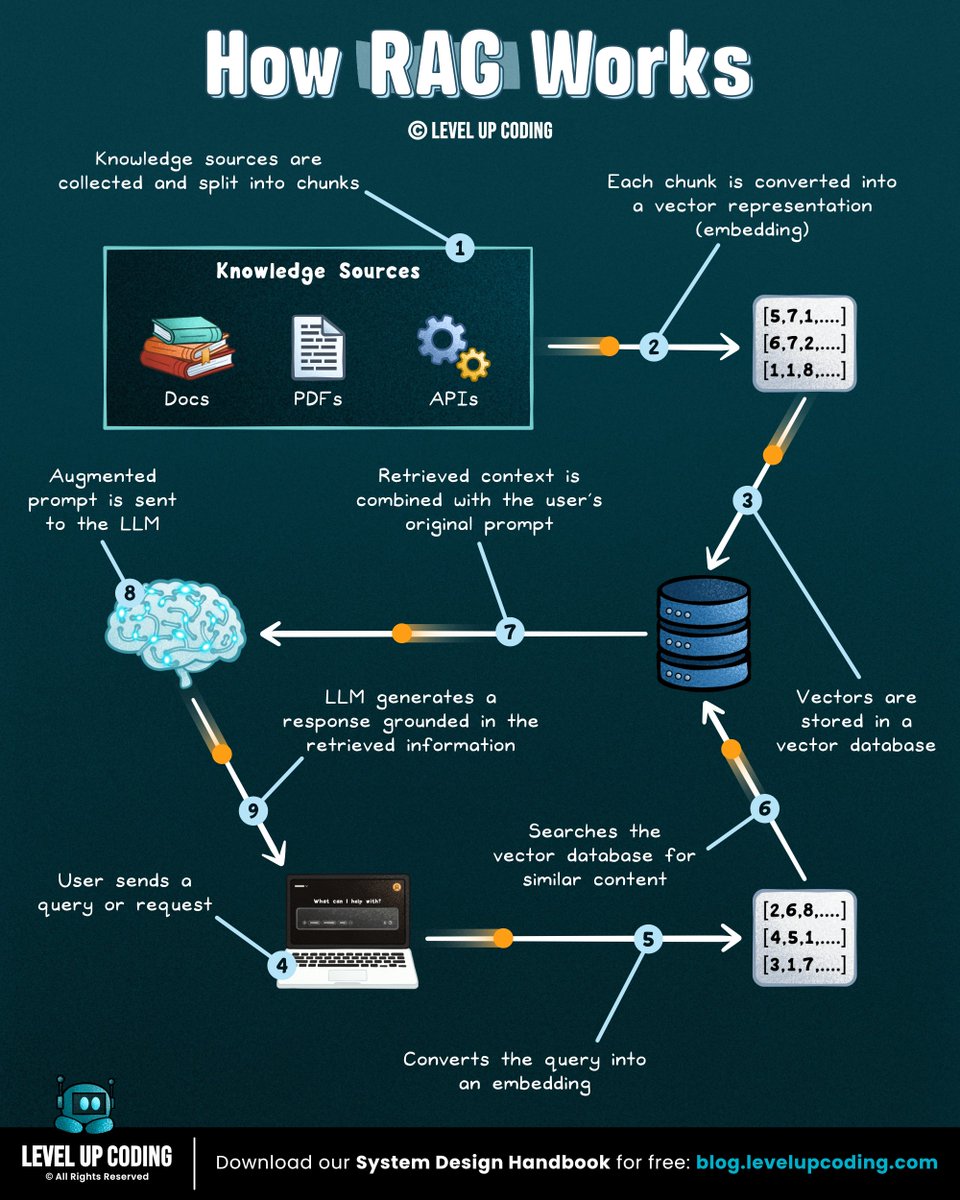
𝗛𝗼𝘄 𝗥𝗔𝗚 𝗮𝗰𝘁𝘂𝗮𝗹𝗹𝘆 𝘄𝗼𝗿𝗸𝘀
(clearly explained in under 2 mins):
LLMs are powerful, but they only know what’s already in their context.
RAG changes that by retrieving relevant external knowledge before the model answers.
Here's how it works:
𝟭) 𝗜𝗻𝗴𝗲𝘀𝘁 𝘁𝗵𝗲 𝗱𝗮𝘁𝗮
↳ Collect documents, PDFs, or other data sources
↳ Clean and split the content into smaller chunks
𝟮) 𝗖𝗿𝗲𝗮𝘁𝗲 𝗲𝗺𝗯𝗲𝗱𝗱𝗶𝗻𝗴𝘀
↳ Convert each chunk into a vector representation
↳ Semantically similar content produces nearby vectors
𝟯) 𝗦𝘁𝗼𝗿𝗲 𝘁𝗵𝗲 𝘃𝗲𝗰𝘁𝗼𝗿𝘀
↳ Save embeddings in a vector database
↳ Index them for efficient similarity search
𝟰) 𝗥𝗲𝘁𝗿𝗶𝗲𝘃𝗲 𝗿𝗲𝗹𝗲𝘃𝗮𝗻𝘁 𝗰𝗼𝗻𝘁𝗲𝘅𝘁
↳ Convert the user's query into an embedding
↳ Find and retrieve the most relevant chunks
𝟱) 𝗚𝗲𝗻𝗲𝗿𝗮𝘁𝗲 𝘁𝗵𝗲 𝗮𝗻𝘀𝘄𝗲𝗿
↳ Combine the query and retrieved context into a prompt
↳ The LLM uses that context to generate its response
The harder part is connecting chunking, embeddings, storage, retrieval, and generation into one working pipeline.
MongoDB's free RAG course walks you through the entire process, from preparing data and generating embeddings to implementing vector search and connecting everything to an LLM.
You'll build a working RAG application using LangChain and MongoDB, with a Skill Badge to earn along the way.
𝗦𝘁𝗮𝗿𝘁 𝘁𝗵𝗲 𝗙𝗿𝗲𝗲 𝗥𝗔𝗚 𝗖𝗼𝘂𝗿𝘀𝗲 → https://t.co/CCKvpdoebm
What else would you add?
——
💾 Save it
🙏 Thanks to @MongoDB for sponsoring this post.
➕ Follow me ( Nikki Siapno ) to improve at system design and AI.
Canva’s restructure today affects over 1,200 people.
It's heartbreaking knowing some of the people I worked with are among those affected.
During my time at Canva, I had the privilege of working with some of the most talented, hardworking, and dedicated people I've ever met. People who genuinely cared about their work, their teams, and the things they were building.
If you're hiring and looking for some of the best talent in the industry, please reach out. I'd be more than happy to connect you with some amazing people.
And to everyone affected, whether at Canva or elsewhere, I hope you know that losing your job doesn't take away from everything you've accomplished.
My heart goes out to everyone going through this right now. I hope the next chapter brings even better things your way ❤️
♻️ Repost to help this reach someone who's hiring.
3 important shifts coming to customer experience, as @maltekosub put it:
→ Personal AI agents will drive explosive volumes.
→ AI in CX becomes a revenue driver.
→ AI agents evolve into self-improving systems.
The third is the one I'm watching most.
An agent that learns from its own conversations needs strong evaluation and observability, or it can get worse with confidence. Parloa is bringing this to its first customers in the next few months.
𝗥𝗔𝗚 𝘃𝘀 𝗔𝗴𝗲𝗻𝘁𝗶𝗰 𝗥𝗔𝗚.
With 𝗥𝗔𝗚, retrieval is a step, not a decision. The query goes in, the top documents come back, and the model answers with whatever it found. If that first retrieval misses, the answer can miss with it.
That's where 𝗔𝗴𝗲𝗻𝘁𝗶𝗰 𝗥𝗔𝗚 changes the flow. An agent wraps retrieval in a loop. It can rewrite a weak query, search another source, or decide the context isn't good enough and try again before committing to an answer.
But more flexible retrieval doesn't necessarily mean better answers.
Whether retrieval is predefined or agent-driven, the system still needs to find the right evidence. Keyword search works well for exact matches, vector search for semantic similarity, and SQL for structured data. Hybrid search can combine approaches when needed.
The challenge is knowing which approach actually retrieves the most relevant evidence.
Oracle's guide to Production RAG Evaluation explores how to compare these retrieval strategies, measure answer quality, and test for common production failures like stale data and missing evidence.
𝗥𝗲𝗮𝗱 𝘁𝗵𝗲 𝗳𝘂𝗹𝗹 𝗴𝘂𝗶𝗱𝗲 → https://t.co/svbiCIYucf
What else would you add?
——
♻️ Repost to help others learn RAG.
🙏 Thanks to @OracleDevs for sponsoring this post.
➕ Follow me ( Nikki Siapno ) to improve at system design and AI.
𝗥𝗔𝗚 𝘃𝘀 𝗔𝗴𝗲𝗻𝘁𝗶𝗰 𝗥𝗔𝗚.
With 𝗥𝗔𝗚, retrieval is a step, not a decision. The query goes in, the top documents come back, and the model answers with whatever it found. If that first retrieval misses, the answer can miss with it.
That's where 𝗔𝗴𝗲𝗻𝘁𝗶𝗰 𝗥𝗔𝗚 changes the flow. An agent wraps retrieval in a loop. It can rewrite a weak query, search another source, or decide the context isn't good enough and try again before committing to an answer.
But more flexible retrieval doesn't necessarily mean better answers.
Whether retrieval is predefined or agent-driven, the system still needs to find the right evidence. Keyword search works well for exact matches, vector search for semantic similarity, and SQL for structured data. Hybrid search can combine approaches when needed.
The challenge is knowing which approach actually retrieves the most relevant evidence.
Oracle's guide to Production RAG Evaluation explores how to compare these retrieval strategies, measure answer quality, and test for common production failures like stale data and missing evidence.
𝗥𝗲𝗮𝗱 𝘁𝗵𝗲 𝗳𝘂𝗹𝗹 𝗴𝘂𝗶𝗱𝗲 → https://t.co/TxiYGKnTiR
What else would you add?
——
♻️ Repost to help others learn RAG.
🙏 Thanks to @OracleDevs for sponsoring this post.
➕ Follow me ( Nikki Siapno ) to improve at system design and AI.