@ShaneDPhillips@AAAArch @dfdunham @TheUrbanAce @holz_bau One last anecdote: for years Seattle has gone the opposite route, allowing 5 floors of Type V construction (not Type III) because of timber industry lobbying. Last time I checked, Seattle hadn't burnt down.
@ShaneDPhillips@AAAArch @dfdunham @TheUrbanAce @holz_bau If the concern is fire during construction, there are ways to address that. I don't think building sweeping legislation on one [questionable] fire makes sense. It doesn't sound like it even bans wood if Type III is still allowed! It just makes it more expensive wood.
@ShaneDPhillips@AAAArch @dfdunham @TheUrbanAce @holz_bau I can't really see any benefits. Even smaller Type V apartment buildings need to be sprinklered. Maybe you can make the case that concrete is more durable and higher quality, but not at the expense of making the vast majority of housing economically infeasible to build
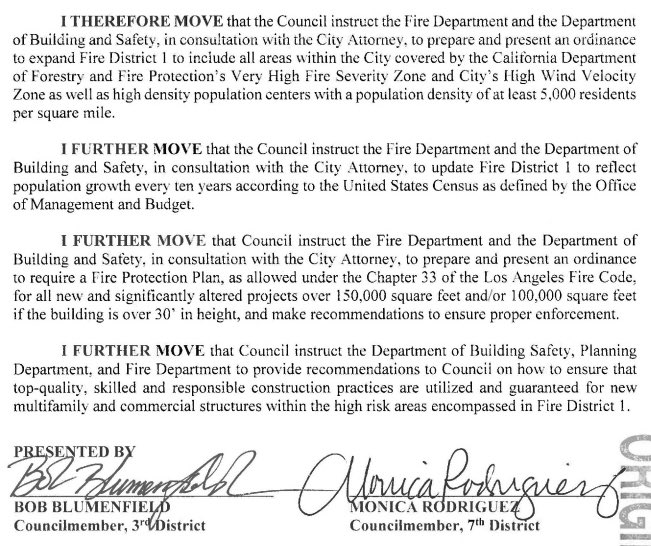
@ShaneDPhillips@AAAArch @dfdunham @TheUrbanAce @holz_bau OK, that's what I remember seeing re: 100K sf: the Fire Protection Plan during construction. So if Type V is banned across most the city, but Type III is still allowed, you can still build out of wood. It's just going to make it more expensive by +10% (?)
@ShaneDPhillips@AAAArch @dfdunham @TheUrbanAce @holz_bau Most smaller infill housing projects are Type V. Does the proposed legislation still allow Type V up to 100K sf in Fire District 1? I don't like the proposed rule but it might not be as devastating if smaller Type V projects are still allowed.
@ShaneDPhillips@AAAArch @dfdunham @TheUrbanAce @holz_bau Whenever you see 5 floors of wood above a podium (or at grade) it's almost certainly Type III-A. That uses fire treated wood and exterior walls are 2-hour rated. Type V-A allows 4 floors of wood over a podium or at-grade.
@matthewplan@dillonliam @kerryc_latimes Approximately what % are by-right projects? Do you think these are in areas with unused zoning capacity that were overlooked previously?
@VamonosLA @alfred_twu that said, there are no significant building code challenges to build the 7 story building @anniefryman posted. It’s all zoning code, so we’re making a political choice not to build more of those. It’s not a life and safety issue.
@VamonosLA Thanks @VamonosLA! There have been code updates since that post went up (over 5 years ago!) But high rise code in CA still more restrictive than NYC, Vancouver and Seattle (the later 2 in seismic zones) making towers less efficient.
@ShaneDPhillips@matthewplan Maybe so (I might have misread). If all res projects have to be Type III, regardless of size, that would really deter small infill projects we need - the missing middle so to speak.
@ShaneDPhillips@matthewplan If all residential buildings had to be built out of concrete or steel, we can kiss any goals of new unit construction goodbye.
@matthewplan@ShaneDPhillips I’d be curious to know what’s prompting the ordinance. There’s a reason why model building codes require what they do. Why modify in these neighborhoods?
@matthewplan@ShaneDPhillips It doesn’t preclude wood frame construction (Type III) but it does require some extra fire rating and using treated lumber. I’d guess it adds 5-8% cost of construction.
@ShaneDPhillips What I would hate to see if if this applies to heavy timber structures (Type IV) which is getting a big overhaul in the next code update.
@ShaneDPhillips I would think so. The ord is limited to buildings over 100k SF, so it wouldn’t apply to smaller infill developments. Maybe they’re concerned of about a bunch of big bldgs close together. But there’s a reason why base building codes exist.
@ShaneDPhillips There’s a reason why 4 stories of wood is one type and 5 is another. Why, as you get closer to a property line, you have to limit your exterior openings more and more. It’s all in the bldg code now!